Перейти к основному содержимому

2 записи с тегом "wi-fi"

Посмотреть все теги

Кейс: как VPN для Wi-Fi роутера для стриминга преобразил домашние развлечения Алекса

· 9 мин. чтения

Представьте, что вы смотрите свои любимые шоу без границ, прямо с вашего Wi-Fi роутера — история Алекса показывает, как эта мечта стала реальностью. В этом кейсе мы рассматриваем, как Алекс использовал VPN для Wi-Fi роутера для стриминга, чтобы упростить доступ к умным телевизорам, планшетам и стриминговым приборам. Вместо установки отдельных приложений на каждом экране в доме, он перенес VPN-соединение на сетевой уровень с BeFreeVPN и уменьшил повседневные проблемы с просмотром международного контента.

Путь Алекса полезен, потому что отражает общую проблему. Многие домохозяйства имеют несколько стриминговых устройств, но не все из них поддерживают VPN-приложения. Настройка на базе роутера может сделать подключение дома более стабильным, при условии, что роутер поддерживает конфигурацию VPN и служба правильно настроена.

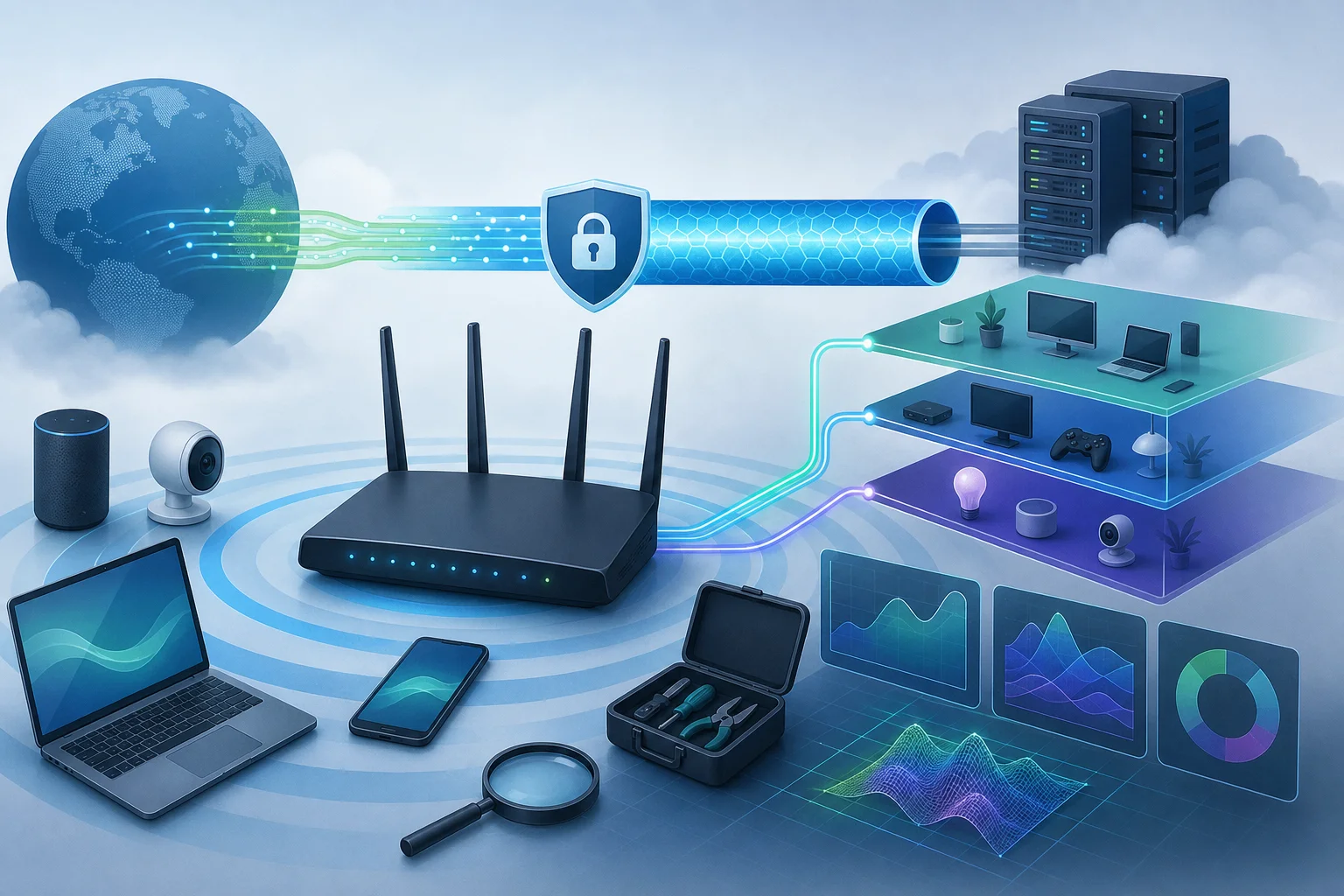
VPN для настройки роутера для стриминга

Познакомьтесь с Алексом: увлеченным стримером

Алекс — это тот тип зрителя, который всегда готов к просмотру. Он следит за международными драмами, документальными фильмами, живыми мероприятиями и нишевыми коллекциями фильмов. Он разбирается в базовых сетевых концепциях, но не хочет проводить каждую вечер, устраняя проблемы в настройках устройств.

Его домашняя настройка развивалась со временем. В гостиной у него был умный телевизор и стриминговая палочка. В спальне еще один умный телевизор принимал поздние шоу. Члены семьи также смотрели на планшетах, ноутбуках и телефонах. Все эти устройства подключались через один центральный Wi-Fi роутер.

Сначала эта настройка работала хорошо. Местные стриминговые приложения загружались быстро, и каждый в доме мог смотреть то, что хотел. Проблема возникла, когда Алекс попытался получить доступ к контенту, доступному в других регионах. Некоторые шоу отображались в онлайн-рекомендациях, но были недоступны в его регионе. Другие сервисы показывали ограниченные каталоги, когда он путешествовал или менял учетные записи.

Этот разрыв заставил Алекса искать лучшее решение. Ему не нужна была сложная система уровня предприятия. Он хотел практичный способ направлять стриминговый трафик через VPN, сохранить процесс простым и избежать настройки каждого устройства по отдельности.

Проблема: контент с гео-ограничениями

Контент с гео-ограничениями был главной фрустрацией. Алекс мог видеть, что многие стриминговые платформы предлагают разные библиотеки по странам. В некоторых случаях шоу было доступно на международном уровне, но не в его регионе. В других случаях само приложение работало, но выбор контента изменялся в зависимости от сетевого местоположения.

Сначала Алекс пробовал традиционные VPN-приложения на отдельных устройствах. Это работало на его ноутбуке и телефоне, где установка приложения была простой. Однако это стало менее удобным для остальной настройки в доме.

Умные телевизоры были самой сложной частью. У некоторых из них были ограниченные магазины приложений. Другие не поддерживали VPN-приложения напрямую. Стриминговая палочка поддерживала больше приложений, но переключение настроек вручную все равно было раздражающим. Члены семьи хотели, чтобы стриминг казался нормальным: включить телевизор, открыть приложение и смотреть.

У Алекса также было три практических беспокойства:

  • Покрытие устройств: Каждый экран в доме нуждался в одном и том же доступе к стримингу.
  • Удобство использования: Решение должно было работать без повторных входов или сложных шагов.
  • Стабильность сети: VPN не должен был делать повседневный стриминг медленным или ненадежным.

Установка VPN на каждое устройство не решила всей проблемы. Это добавило обслуживания, создало непоследовательный доступ и оставило некоторые устройства без покрытия. Алекс нуждался в одной настройке, которая защищала бы соединение на уровне роутера и применялась ко всем устройствам в Wi-Fi сети.

Решение: реализация BeFreeVPN на Wi-Fi роутере

Алекс решил протестировать BeFreeVPN, потому что он соответствовал нескольким его приоритетам. Он предлагал бесплатный вариант VPN, не требовал регистрации и мог использоваться без создания другого аккаунта для управления домом. Для кого-то, сосредоточенного на удобстве стриминга, модель без регистрации также уменьшила затраты времени на настройку.

Ключевая идея была проста: вместо установки VPN-клиента на каждое устройство, Алекс настроил Wi-Fi роутер на передачу поддерживаемого сетевого трафика через BeFreeVPN. После подключения совместимые устройства в домашней сети могли автоматически получать преимущества от VPN-соединения.

Первый важный шаг состоял в том, чтобы проверить, поддерживает ли его роутер настройку VPN. Поддержка VPN роутером отличается в зависимости от модели и прошивки. Некоторые роутеры имеют встроенные настройки VPN-клиента. Другим может потребоваться совместимая прошивка или они могут вообще не поддерживать использование VPN на уровне роутера. Эта проверка помогла Алексу избежать потери времени на неправильный путь настройки.

Процесс настройки VPN роутера, который следовал Алекс

Точные шаги могут варьироваться в зависимости от модели роутера, но процесс Алекса следовал четкому шаблону:

  1. Проверил совместимость роутера
    Алекс вошел в панель администратора своего роутера и искал опции VPN-клиента. Он подтвердил, что его роутер может подключаться к внешнему VPN-сервису.

  2. Просмотрел детали настройки BeFreeVPN
    Он собрал информацию о конфигурации, необходимую для роутера. Это включало тип подключения и детали VPN-сервера, доступные для его настройки.

  3. Создал резервную копию настроек роутера
    Прежде чем что-либо менять, Алекс сохранил копию текущей конфигурации роутера. Это упростило восстановление предыдущей настройки в случае необходимости.

  4. Ввел конфигурацию VPN
    В разделе VPN-клиента роутера Алекс добавил детали подключения BeFreeVPN и сохранил профиль.

  5. Подключил и протестировал сеть
    После включения профиля VPN он перезагрузил роутер и протестировал стриминговые приложения на умном телевизоре, ноутбуке и планшете.

  6. Отрегулировал группы устройств при необходимости
    Для нескольких устройств, которым не нужно было прокладывать путь через VPN, Алекс оставил их на отдельной Wi-Fi полосе или отрегулировал настройки роутера, где это было возможно.

Этот поэтапный подход помог Алексу сохранить проект управляемым. Вместо того, чтобы менять каждый экран в доме, он сосредоточился на одной центральной точке: Wi-Fi роутере.

Почему BeFreeVPN подошел для стриминга Алекса

BeFreeVPN работал для Алекса, потому что он устранял распространенные барьеры. Служба была бесплатной, так что он мог протестировать подход VPN на базе роутера без платных обязательств. Она также не требовала регистрации, что означало, что ему не нужно было делиться дополнительными личными данными просто для начала.

Для стриминговых домохозяйств такая простота имеет значение. VPN на роутере должен снизить усилия, а не добавлять еще больше задач. Как только он был настроен, дом Алекса не нужно было помнить, какой телевизор имел приложение VPN, какой планшет был подключен или поддерживала ли стриминговая палочка ручную настройку VPN.

Вот как Алекс сравнил свои варианты перед выбором подхода с роутером:

ВариантПокрытие домохозяйстваУровень настройкиЛучший для
VPN приложение на одном ноутбукеНизкийНизкийПериодический одиночный стриминг
VPN приложения на каждом устройствеСреднийВысокийДома с совместимыми с VPN устройствами
VPN на Wi-Fi роутереВысокийСреднийНесколько умных телевизоров и общие стриминговые устройства

Опция роутера предложила лучший баланс для его ситуации. Она требовала больше заботы на старте, но затем снизила повторную работу.
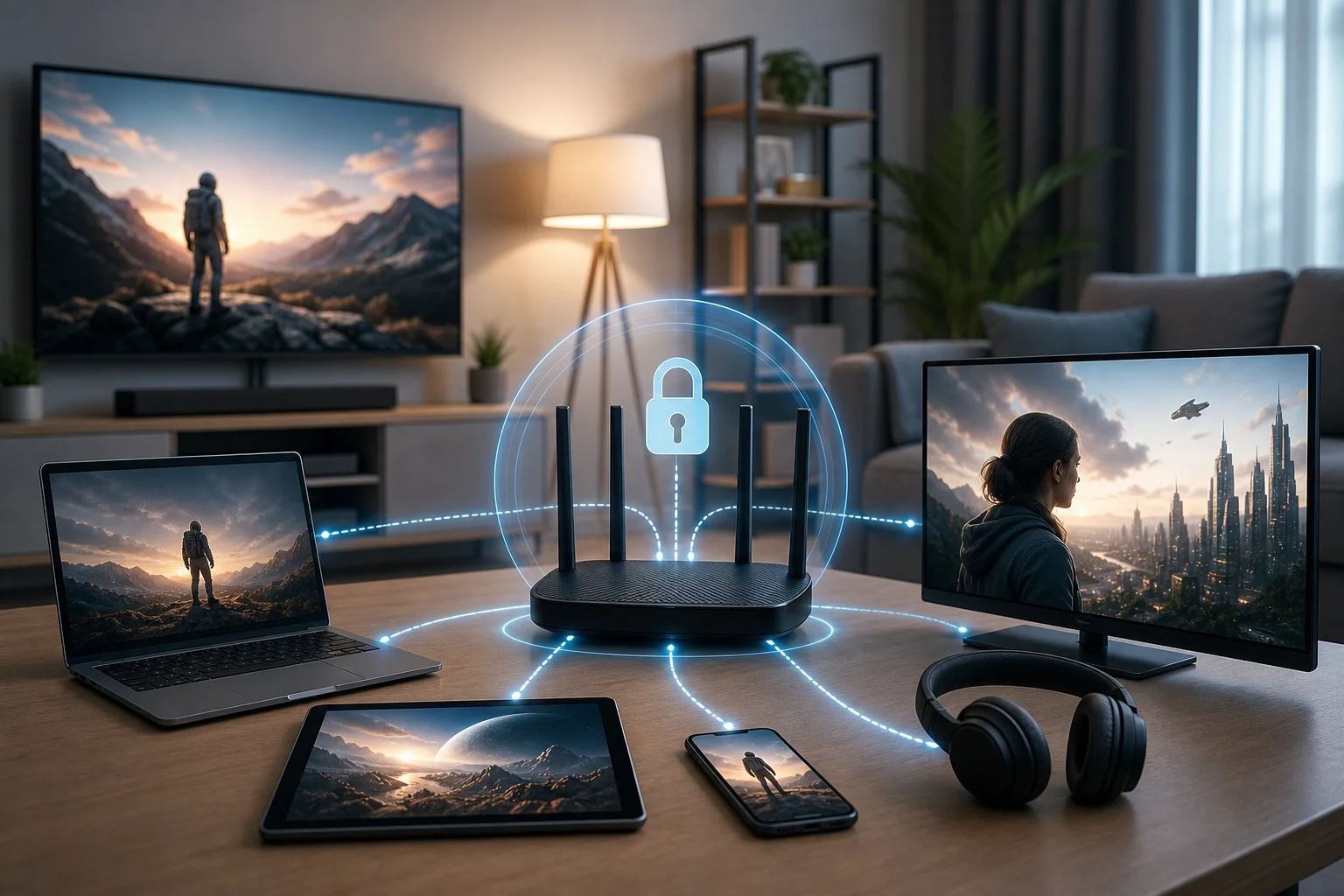
Рабочий процесс стриминга роутера BeFreeVPN

Результаты: открытие мира стриминговых возможностей

После завершения настройки роутера Алекс сразу увидел наибольшую выгоду: опыт стриминга стал единым. Телевизор в гостиной, телевизор в спальне, планшеты и ноутбуки все использовали одно и то же VPN-соединение на сетевом уровне при подключении к настроенной Wi-Fi сети.

Алекс мог получать доступ к более широкому выбору международного стримингового контента из поддерживаемых служб. Вместо постоянного переключения устройств или тестирования разных обходных путей, он мог сесть и просматривать с того экрана, который предпочитал. Для домохозяйства с несколькими зрителями такое удобство сделало настройку VPN оправданной.

Стабильность также была важна. Алекс следил за соединением во время обычных сеансов просмотра. Он хотел плавного воспроизведения, достаточной скорости загрузки и отсутствия постоянного буферизации. В его случае BeFreeVPN обеспечил стабильное и безопасное соединение для повседневного стриминга, не создавая заметных замедлений на его домашней сети. Как и с любым VPN, производительность может зависеть от аппаратного обеспечения роутера, силы сигнала Wi-Fi, нагрузки на сервер и используемой стриминговой платформы.

Безопасность и конфиденциальность были вторичными целями, но все равно имели значение. С работающим на уровне роутера VPN Алекс уменьшил необходимость управлять отдельными настройками VPN на устройствах. Модель без регистрации BeFreeVPN также поддержала его предпочтение в более удобной настройке конфиденциальности.

Самое главное изменение заключалось не только в доступе. Это была последовательность. Члены семьи не нуждались в инструкциях для каждого устройства. Они подключались к обычной Wi-Fi сети, открывали свое любимое стриминговое приложение и смотрели как обычно.

Выводы: ключевые уроки из опыта Алекса

Кейс Алекса показывает, что VPN, установленный непосредственно на роутере, может упростить доступ к стримингу по всему дому. Это особенно полезно, когда домохозяйство зависит от умных телевизоров, стриминговых палочек, игровых консолей и планшетов, которые не все поддерживают VPN-приложения в равной степени.

Самый важный урок — начинать с роутера, а не со стримингового приложения. Если роутер не может поддерживать настройки VPN-клиента, план может потребовать другого роутера, поддерживаемой прошивки или уровня устройства VPN. Ранняя проверка совместимости экономит время.

Второй урок заключается в том, что пользовательский опыт важен. Мощный VPN не поможет, если настройка слишком запутанная для повседневного использования. Бесплатный доступ BeFreeVPN и политика без регистрации сделали Алекса более уверенным в тестировании решения. Он мог сосредоточиться на том, работает ли настройка VPN роутера для стриминга, а не на управлении учетными записями и подписками.

Наконец, Алекс понял, что конфиденциальность и удобство могут работать в унисон. Сервис VPN без регистрации уменьшает количество шагов, необходимых для начала работы. Когда этот VPN настроен на роутере, он также может сократить количество устройств, требующих отдельной настройки.

ЧАВО о использовании VPN на Wi-Fi роутере для стриминга

Могу ли я использовать VPN на любом Wi-Fi роутере для стриминга?

Не всегда. Ваш роутер должен поддерживать конфигурацию VPN-клиента. Некоторые роутеры включают эту функцию, в то время как другие — нет. Проверьте панель администратора вашего роутера или документацию производителя перед началом.

Будет ли работать роутер VPN с умными телевизорами?

Да, если умный телевизор подключается через Wi-Fi роутер, на котором работает VPN-соединение. Это одна из причин, почему настройки VPN на роутере полезны для стриминговых устройств, которые не поддерживают VPN-приложения напрямую.

Может ли VPN улучшить доступ к международным стриминговым библиотекам?

VPN может помочь направить ваше соединение через другое местоположение, что может повлиять на то, какой контент отображается на некоторых платформах. Доступность все еще зависит от политики каждой стриминговой службы, правил лицензирования и условий использования.

Подходит ли BeFreeVPN для начинающих?

BeFreeVPN разработан, чтобы уменьшить трение при настройке, потому что он бесплатный и не требует регистрации. Настройка роутера все еще зависит от вашего оборудования, но модель сервиса упрощает тестирование для пользователей, которые хотят простой старт.

Заключение: более простой способ стриминга по всему дому

Опыт Алекса показывает, почему VPN на базе роутера может быть практическим решением для стриминговых домохозяйств. Он централизует соединение, сокращает настройку устройства по отдельности и помогает умным телевизорам и другим Wi-Fi устройствам делиться одной сетью с поддержкой VPN. Для Алекса BeFreeVPN преобразовал разбросанную настройку стриминга в более простую и последовательную систему.

Готовы преобразить свой опыт стриминга, как Алекс? Попробуйте BeFreeVPN для вашего Wi-Fi роутера и наслаждайтесь бесшовным доступом к глобальному контенту бесплатно, без регистрации.
VPN for Wi-Fi Router Setup: A Technical Deep Dive

· 17 мин. чтения

In restrictive regions, setting up a VPN on your Wi-Fi router can be your best bet to bypass censorship and access the open internet. But how does it really work? A vpn for wi-fi router setup moves encrypted tunneling from individual devices to the network edge, protecting phones, laptops, smart TVs, consoles, and IoT devices through one router-level connection. This deep dive explains the architecture, protocol choices, firmware options, performance limits, and troubleshooting steps advanced users should understand before deploying a router VPN.

Router-based VPN deployment is powerful, but it is not magic. It depends on router CPU capacity, firmware support, VPN protocol behavior, DNS handling, and the censorship techniques used on the network. Used correctly, it can simplify privacy controls and make censorship circumvention more consistent across a home or small office network.

Understanding VPNs and Wi-Fi routers

A virtual private network, or VPN, creates an encrypted tunnel between a client and a remote VPN server. Traffic leaving the client is encapsulated, encrypted, and sent to the server. The server then forwards that traffic to its destination on the public internet. Replies return through the same tunnel.

The core functions of a VPN are:

  • Encryption: Prevents local observers, such as public Wi-Fi operators or an ISP, from reading packet contents.
  • Tunneling: Wraps network traffic inside a VPN protocol so it can cross untrusted networks.
  • IP address substitution: Websites and services see the VPN server IP address instead of the client’s public IP.
  • Traffic routing control: Sends selected or all traffic through the tunnel, depending on policy.
  • Integrity protection: Helps prevent tampering with packets in transit.

A Wi-Fi router plays a different role. It is the gateway between your local network and the internet. In a typical home network, the router performs several jobs at once:

  • Creates the wireless LAN using 2.4 GHz, 5 GHz, or 6 GHz radios.
  • Assigns local IP addresses using DHCP.
  • Translates private IP addresses to a public IP using NAT.
  • Applies firewall rules between WAN and LAN.
  • Routes traffic between wired, wireless, guest, and sometimes VLAN-based networks.
  • Provides DNS forwarding or relaying.

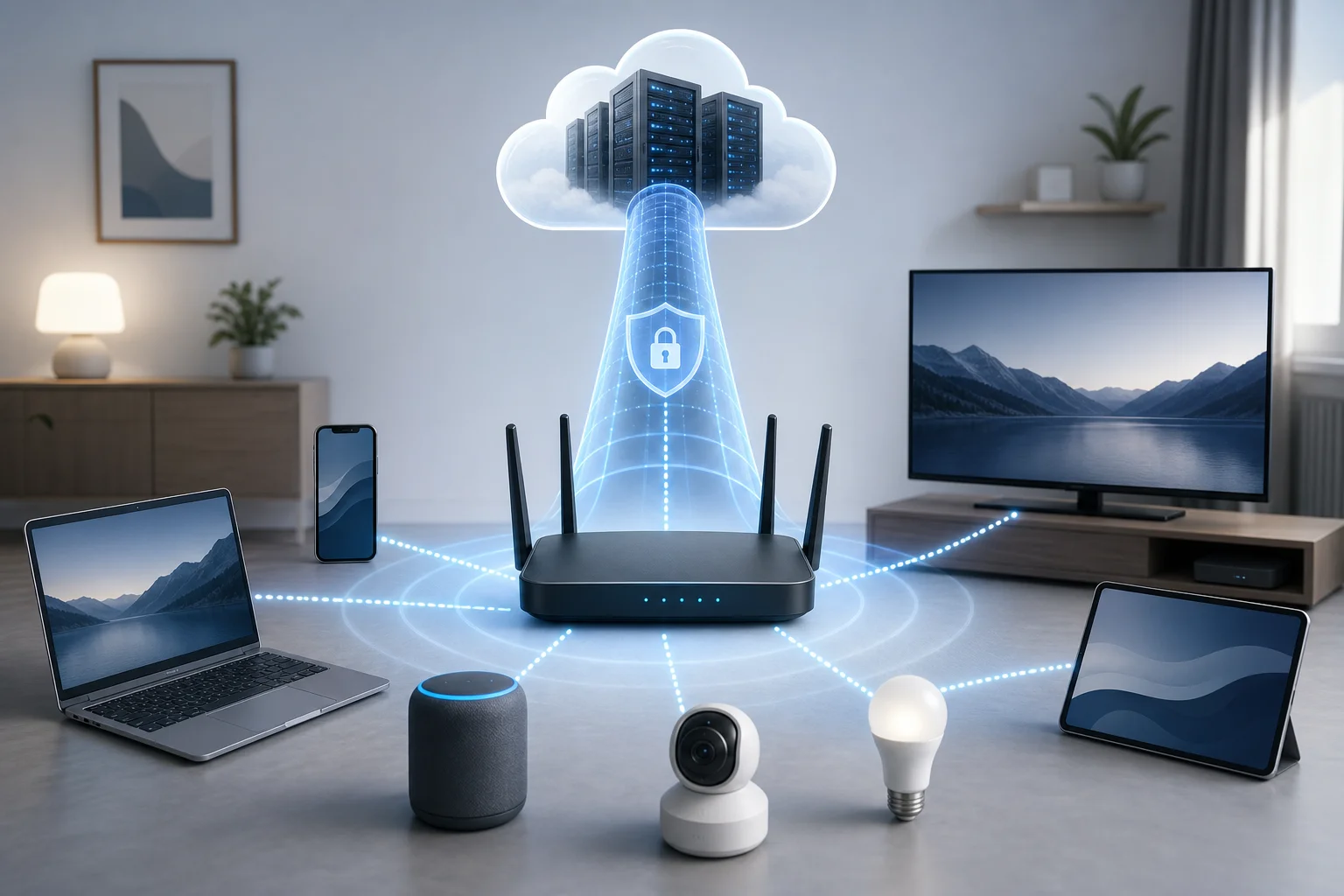
When a VPN runs on a laptop or phone, only that device uses the encrypted tunnel. When a VPN runs on the router, the router becomes the VPN client. Devices behind the router send normal local traffic to the gateway. The router then encrypts and forwards that traffic through the tunnel.

This collaboration changes the privacy model. Instead of installing and maintaining a VPN app on every endpoint, you centralize VPN enforcement at the network boundary. This is especially useful for devices that cannot run VPN apps, such as game consoles, some streaming boxes, older smart TVs, and embedded IoT hardware.

vpn router network diagram

However, router-level VPNs also shift responsibility to the gateway. DNS, firewall rules, split tunneling, kill switch behavior, and firmware updates must be handled carefully. A weak router configuration can leak traffic even when the VPN tunnel appears connected.

Why use a VPN on your Wi-Fi router?

A router VPN is mainly about coverage, consistency, and control. Instead of depending on users to enable VPN apps correctly, you make encrypted routing the default for the network.

The main advantages include:

  • Network-wide protection: Every device connected to the selected Wi-Fi network can use the VPN tunnel.
  • Support for non-VPN devices: Smart TVs, consoles, and IoT devices can benefit without local VPN clients.
  • Centralized policy: Routing rules, DNS settings, and firewall controls are managed in one place.
  • Reduced setup friction: Guests and secondary devices do not need separate VPN configuration.
  • Location flexibility: You can route traffic through a VPN region that improves access to blocked sites or region-limited content.

For users in restrictive regions, the most important benefit is consistent circumvention. If censorship is implemented through DNS blocking, IP blocking, or basic traffic filtering, a properly configured VPN tunnel can make local network restrictions harder to enforce. The ISP sees an encrypted connection to the VPN server rather than direct connections to blocked destinations.

That said, censorship systems vary. Some networks use deep packet inspection, active probing, VPN server blacklists, or protocol throttling. In those environments, router VPN success depends heavily on the protocol, port, server reputation, and obfuscation capabilities. You should also understand local laws and risks before attempting circumvention.

From a privacy standpoint, a VPN on your router hides destination details from the local ISP, but it does not make you anonymous. The VPN provider can see metadata such as connection times and the VPN server can see traffic leaving toward the internet unless end-to-end encryption, such as HTTPS, also protects it. Browser fingerprinting, account logins, cookies, and device identifiers can still identify you.

Security improves when the VPN is combined with good router hygiene: strong admin passwords, updated firmware, disabled remote management, segmented guest networks, and DNS leak prevention. In other words, a router VPN should be part of a layered network security design, not the whole design.

Step-by-step guide to setting up a VPN on your router

Before starting, confirm that your router can act as a VPN client. Many consumer routers support VPN server mode, which lets you connect back home from outside, but not VPN client mode, which routes home traffic through a commercial or external VPN provider. Those are different features.

Step 1: Audit your network and router capabilities

Record your current network settings before changing anything:

  1. Router model and hardware revision.
  2. Current firmware version.
  3. WAN connection type, such as DHCP, PPPoE, static IP, or cellular modem.
  4. LAN subnet, DHCP range, and reserved IP addresses.
  5. DNS configuration.
  6. Existing port forwards, VLANs, guest networks, or parental controls.
  7. ISP modem mode, such as bridge mode or router mode.

Then verify hardware limits. VPN encryption is CPU-intensive. Older routers with low-power MIPS or ARM chips may only handle modest throughput over OpenVPN. Newer routers with AES acceleration, multi-core ARM processors, or WireGuard support usually perform better.

Step 2: Confirm VPN compatibility and firmware options

Check whether your firmware supports VPN client configuration. Common options include:

Firmware or platformVPN client supportBest fitNotes
Stock AsusWRTOften yesAdvanced home usersGood OpenVPN support on many Asus models
OpenWrtYesTechnical usersHighly flexible, strong package ecosystem
DD-WRTYesLegacy and enthusiast routersModel support varies by build
FreshTomatoYesBroadcom-based routersUseful interface, limited device range
pfSense or OPNsenseYesDedicated firewall appliancesExcellent routing, firewall, and policy controls
MikroTik RouterOSYesNetwork engineersPowerful but requires careful configuration
ISP-provided firmwareOften limitedBasic networksUsually lacks advanced VPN client features

If the stock firmware lacks VPN client support, you may install third-party firmware only if your exact hardware revision is supported. Flashing the wrong image can brick the router. Download firmware from the official project site, verify checksums when available, and keep a recovery method ready.

Step 3: Choose the router VPN topology

There are three common deployment patterns:

  • Full-tunnel VPN: All LAN traffic exits through the VPN. This is simple and strong for censorship resistance.
  • Split-tunnel VPN: Only selected devices, domains, or destination IP ranges use the VPN. This improves speed and compatibility.
  • Dual-SSID design: One Wi-Fi network routes through the VPN, while another uses the normal ISP path. This is practical for households with mixed needs.

Advanced users often prefer a dual-SSID or VLAN-based design. For example, wifi-vpn can route through the VPN tunnel, while wifi-direct uses the ISP route. This avoids breaking services that reject VPN traffic, such as some banking sites or local streaming platforms.

Step 4: Import VPN credentials and configuration

Your VPN provider should supply configuration files or manual settings. For OpenVPN, this is usually an .ovpn file plus credentials or certificates. For WireGuard, it is a peer configuration containing private and public keys, endpoint details, and allowed IPs.

Typical OpenVPN parameters include:

  • Server hostname or IP address.
  • Port and transport, such as UDP 1194 or TCP 443.
  • Cipher and authentication settings.
  • CA certificate and client certificate if required.
  • Username and password if used.
  • Redirect gateway option for full-tunnel routing.
  • DNS push options.

Typical WireGuard parameters include:

  • Local private key.
  • Peer public key.
  • Endpoint hostname and port.
  • Allowed IPs, commonly 0.0.0.0/0 and ::/0 for full tunnel.
  • Persistent keepalive, often useful behind NAT.

Store private keys and credentials securely. Anyone with those details may be able to use your VPN account.

Step 5: Configure routing, DNS, and firewall behavior

After the tunnel connects, routing determines whether traffic actually uses it. For a full-tunnel setup, the default route should point through the VPN interface. For split tunneling, use policy-based routing by source IP, source subnet, VLAN, or destination.

DNS is equally important. If LAN clients still use ISP DNS servers, blocked domain lookups may fail or leak. Configure the router to forward DNS through the VPN or use secure DNS resolvers reachable inside the tunnel. Also block outbound DNS from LAN clients except to the router if you want stricter control.

A basic leak-resistant design includes:

  • DHCP hands out the router IP as DNS server.
  • The router forwards DNS through the VPN tunnel.
  • Firewall rules block LAN-to-WAN DNS on port 53 when VPN policy requires tunneling.
  • IPv6 is either routed through the VPN or disabled if unsupported.
  • A kill switch blocks WAN egress if the VPN tunnel drops.

Step 6: Test the setup before relying on it

Do not assume the VPN is working because the interface says “connected.” Test from a client device attached to the VPN Wi-Fi network.

Check the following:

  1. Public IP address matches the VPN server, not the ISP.
  2. DNS leak tests show VPN or chosen resolver addresses.
  3. IPv6 does not expose the ISP address.
  4. Blocked sites load as expected.
  5. Non-VPN SSIDs or VLANs still behave as intended.
  6. Throughput and latency are acceptable.
  7. The kill switch works by stopping the VPN process and confirming traffic does not escape through WAN.

Common pitfalls include double NAT from ISP gateways, wrong time settings that break certificate validation, MTU problems that cause partial loading, and DNS settings that are overwritten by WAN renewals. Document every change so you can roll back quickly.

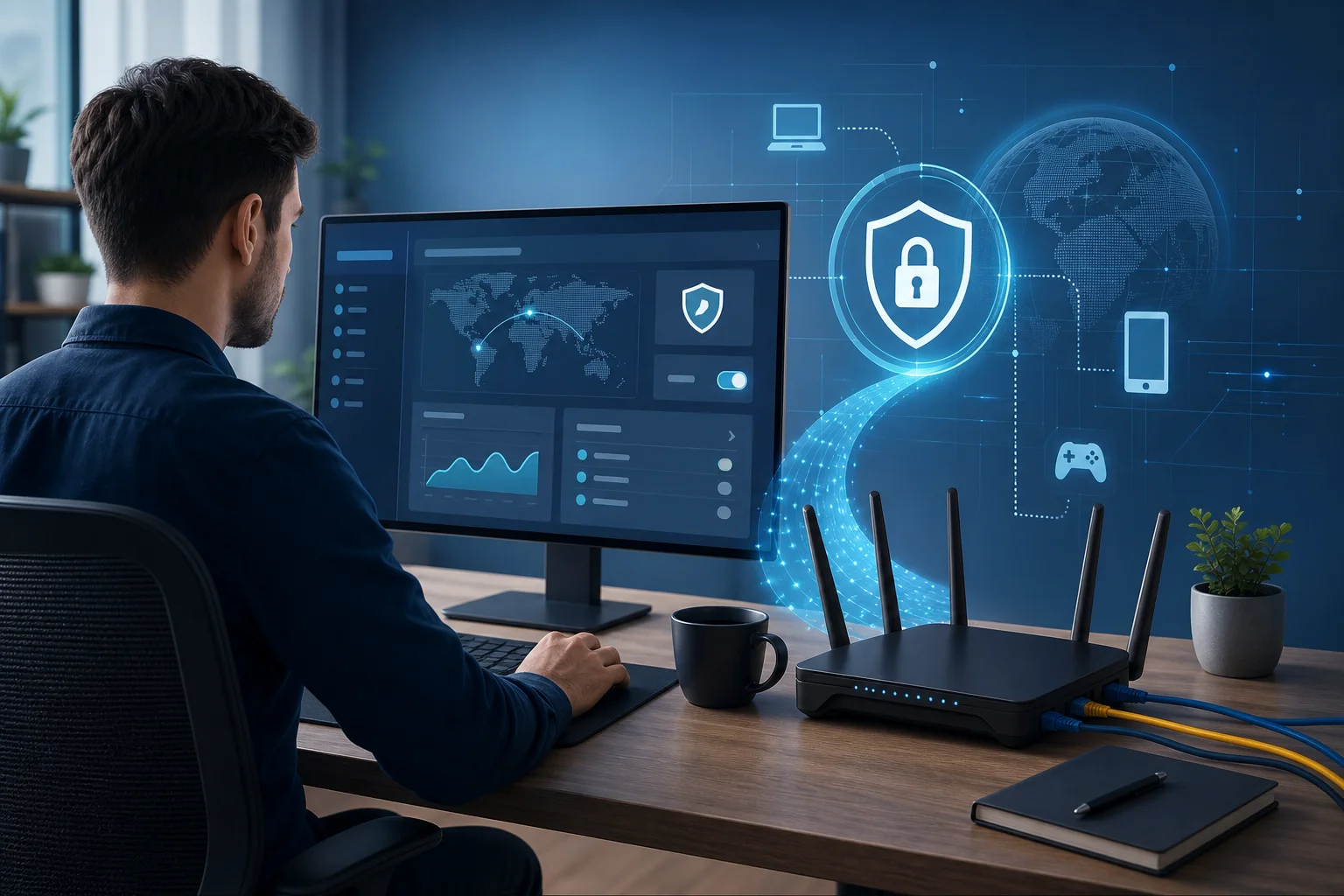
router VPN setup dashboard

Exploring VPN protocols and their impact

Protocol choice has a direct effect on speed, stability, censorship resistance, and router CPU load. The best option depends on both your hardware and the filtering environment.

OpenVPN

OpenVPN is mature, widely supported, and highly configurable. It can run over UDP for better performance or TCP for easier traversal of restrictive networks. TCP 443 can resemble normal HTTPS at the port level, although deep packet inspection may still identify it as VPN traffic.

On routers, OpenVPN can be slower than newer protocols because it often runs in user space and may not fully use hardware acceleration. Still, it remains a strong option because many router firmwares support it well.

WireGuard

WireGuard is lightweight and often much faster than OpenVPN on modern routers. It uses a lean codebase and modern cryptography. Configuration is simple, and roaming behavior is excellent.

The tradeoff is that WireGuard traffic can be easier to fingerprint in some restrictive environments unless the provider adds obfuscation or wraps it in another transport. For raw performance on supported firmware, it is usually one of the best choices.

L2TP/IPSec and IKEv2/IPSec

L2TP/IPSec is common but older. It can be blocked easily because it uses recognizable ports and protocols. It may also struggle behind strict NAT unless NAT traversal works correctly.

IKEv2/IPSec is more modern and stable for mobile devices, but router support varies. It can be fast when hardware acceleration is available. However, like L2TP/IPSec, it may be easier for restrictive networks to block than highly adaptable OpenVPN configurations.

PPTP

PPTP should be avoided for security-sensitive use. It is outdated and has known weaknesses. It may still appear in old router interfaces, but it is not suitable for privacy or censorship circumvention.

Protocol recommendations for restrictive regions

For restrictive regions, prioritize reliability and adaptability:

  • Use OpenVPN over TCP 443 when networks block common VPN ports.
  • Use OpenVPN over UDP when speed matters and UDP is not throttled.
  • Use WireGuard when your provider supports stable endpoints and the network does not aggressively fingerprint it.
  • Consider obfuscated or stealth modes if your VPN provider offers them for router-compatible configs.
  • Avoid PPTP and do not rely on L2TP/IPSec where blocking is common.

Protocol choice also affects MTU. Encapsulation adds overhead, so packets may need a smaller maximum size. Symptoms of MTU problems include sites that partially load, video players that hang, and TLS handshakes that fail. Adjusting MTU or MSS clamping on the router often fixes this.

Technical challenges and solutions in router VPN setup

Router VPN deployments fail in predictable ways. Most problems come from hardware limits, routing mistakes, DNS leaks, or conflicts between ISP equipment and router firmware.

Common setup and usage issues

Low throughput is the most common complaint. Encryption may overwhelm the router CPU. Check CPU usage during speed tests. If one core is pinned, the protocol or hardware is the bottleneck.

Tunnel connects but traffic does not pass usually indicates routing or firewall errors. Confirm that default routes, NAT rules, and policy routing tables point to the tunnel interface.

DNS leaks happen when clients use ISP DNS, hardcoded public DNS, or IPv6 DNS outside the tunnel. Block direct DNS egress and force DNS through the router.

Streaming or banking sites fail because some services block VPN IP ranges. Use split tunneling or a direct-access SSID for services that require the ISP path.

Frequent disconnects may be caused by unstable WAN, blocked keepalives, overloaded routers, or VPN server congestion. Try another server, change transport, or tune keepalive settings.

IPv6 leaks occur when IPv4 is tunneled but IPv6 remains routed through the ISP. Either configure IPv6 through the VPN or disable IPv6 on the VPN network.

Solutions for better performance

Start with protocol selection. If available, test WireGuard and OpenVPN UDP before OpenVPN TCP. TCP-over-TCP tunneling can create poor performance under packet loss because both layers retransmit.

Next, optimize routing. Policy-based routing reduces unnecessary VPN load. For example, route only sensitive devices or specific VLANs through the VPN. Keep latency-sensitive local traffic, such as gaming or local media, on the direct path if privacy requirements allow it.

Then tune packet size. If you suspect fragmentation, lower tunnel MTU or enable MSS clamping. Common VPN MTU values vary by protocol and WAN type, so test rather than copy blindly.

Hardware may also be the limiting factor. For sustained high-speed VPN use, consider:

  • A router with strong ARM CPU and AES acceleration.
  • A mini PC running pfSense, OPNsense, or OpenWrt.
  • A dedicated VPN gateway behind your existing router.
  • VLAN-capable switches and access points for cleaner segmentation.

Best practices for security and speed

Use a security baseline before enabling the VPN:

  • Change default router admin credentials.
  • Disable WAN-side administration unless strictly needed.
  • Update firmware regularly.
  • Back up router configuration after successful setup.
  • Use strong Wi-Fi encryption, preferably WPA2-AES or WPA3.
  • Separate IoT devices from trusted laptops and phones.
  • Apply least-privilege firewall rules between VLANs.
  • Monitor logs for tunnel drops and authentication failures.

For speed, keep the configuration simple. Avoid stacking multiple VPN tunnels unless you understand the latency and MTU impact. Choose nearby VPN servers when censorship bypass does not require a distant region. Finally, schedule periodic tests because VPN servers, ISP routes, and blocking patterns change over time.

VPN performance troubleshooting

Common misconceptions about VPNs and routers

Router VPN setups are often misunderstood. The following FAQ-style answers clarify the most common assumptions advanced users should challenge.

Does a VPN on my router make every device anonymous?

No. It changes the public IP address seen by websites and encrypts traffic between your router and the VPN server. It does not remove browser fingerprints, account logins, cookies, device telemetry, or tracking pixels. Use privacy-focused browser settings, compartmentalized accounts, and end-to-end encryption when anonymity matters.

Will any Wi-Fi router work with a VPN?

No. The router must support VPN client mode, and it must be powerful enough for the throughput you need. Some routers advertise “VPN support” but only provide VPN server features. Always confirm client support for the protocol you plan to use.

Is router VPN performance the same as using a VPN app?

Usually not. Phones and laptops often have faster CPUs and optimized VPN apps. Routers may have weaker processors and limited cryptographic acceleration. WireGuard on capable hardware can be fast, but OpenVPN on older routers may be much slower.

Can a VPN always bypass censorship?

No. A VPN can bypass many forms of filtering, especially DNS and basic IP blocking. However, advanced censorship can block known VPN servers, fingerprint protocols, throttle encrypted tunnels, or disrupt handshakes. Obfuscation, alternate ports, and server rotation may be needed.

Does a router VPN protect me from malicious websites?

Not by itself. A VPN encrypts transport between you and the VPN server. It does not automatically block phishing, malware, unsafe downloads, or compromised websites. Use secure DNS filtering, browser protections, endpoint security, and careful browsing habits.

Should I disable IPv6 when using a router VPN?

If your VPN and router do not support IPv6 tunneling correctly, disabling IPv6 on the VPN-routed network may prevent leaks. If you need IPv6, configure it deliberately and test it with leak-checking tools.

Final considerations for advanced users

Before deploying a VPN on a Wi-Fi router, review your actual network requirements. Ask what must be protected, what must be fast, and what must remain compatible with local services. A full-tunnel setup is simpler, but it may not be ideal for every device. A segmented design with VPN and non-VPN SSIDs often gives better operational control.

Plan for ongoing management. Keep copies of working configurations, certificates, keys, and firmware images in a secure location. Track which devices use the VPN route. Check DNS and IP leaks after firmware upgrades. Review logs when connectivity changes. If users depend on uncensored access, configure fail-closed firewall behavior so traffic does not silently fall back to the ISP path.

Future-proofing matters because restrictions evolve. Choose firmware with active maintenance, protocols with strong community support, and a VPN provider that offers multiple connection methods. Where possible, use routers or firewall appliances that support WireGuard, OpenVPN, VLANs, policy routing, custom firewall rules, and DNS control. This gives you room to adapt when a protocol is blocked or a server range becomes unreliable.

A well-designed router VPN setup can provide durable, network-wide privacy and more reliable access in restrictive regions. It works best when treated as an engineered system: tested, monitored, documented, and tuned. Equip your Wi-Fi router with BeFreeVPN to effortlessly bypass censorship and enjoy a secure, registration-free browsing experience.