Setting up a VPN for Google TV: a deep dive
Are you looking to bypass regional restrictions and secure your streaming on Google TV? This in-depth guide examines the technical steps necessary to set up a VPN effectively. If you need a vpn for google tv setup in a restrictive region, the goal is not only smoother access to apps and media. It is also to reduce exposure to network surveillance, ISP throttling, DNS filtering, and content blocking while keeping your streaming device stable and fast.
Google TV is built on Android TV, which makes VPN deployment more flexible than on many smart TV platforms. However, censorship-heavy networks, weak routers, app-store restrictions, and protocol blocking can complicate the process. This guide covers the technical choices, setup paths, performance tuning, privacy controls, misconceptions, and advanced bypass methods you should understand before relying on a VPN for streaming or censorship circumvention.
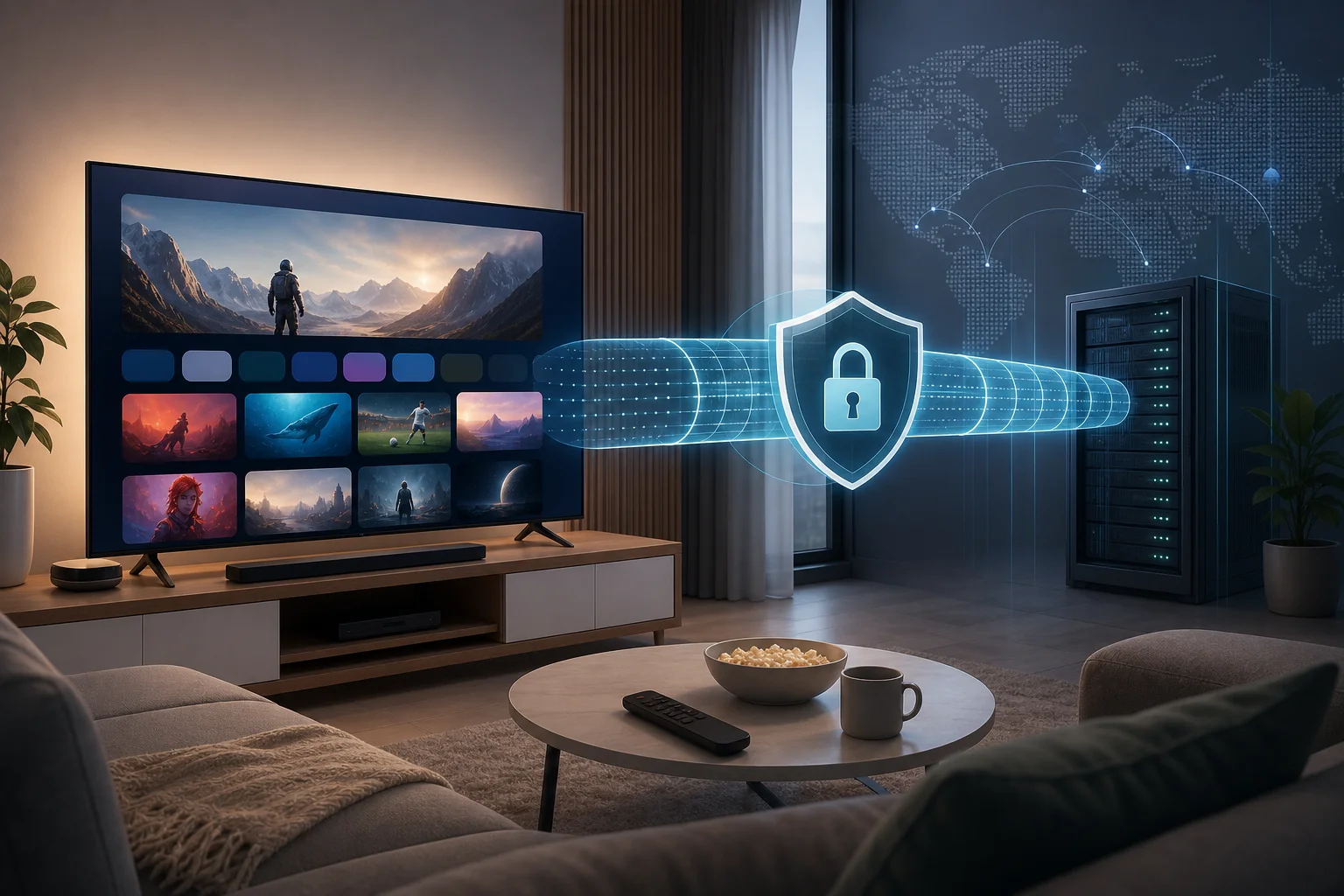
1. Introduction to VPNs for Google TV
A VPN, or virtual private network, creates an encrypted tunnel between your Google TV device and a remote VPN server. Instead of sending traffic directly through your ISP or local network operator, your traffic is wrapped inside an encrypted connection and exits through the VPN provider’s server.
For Google TV users in open internet environments, this may mainly improve privacy or help access region-specific streaming libraries. In restrictive regions, the role is more serious. A VPN can help route traffic around blocks, reduce DNS manipulation, and make it harder for local intermediaries to inspect what services you are using.
Why use a VPN on Google TV in restrictive regions
Restrictive networks often use a mix of blocking methods. These may include DNS poisoning, IP blocking, deep packet inspection, app-store filtering, or throttling of known streaming endpoints. Google TV depends on cloud services, app updates, streaming APIs, and DNS lookups, so even partial censorship can break the experience.
A VPN can help by:
- Encrypting traffic between Google TV and the VPN server.
- Replacing local DNS resolution with VPN-controlled DNS.
- Masking your visible IP address from streaming platforms and websites.
- Routing around local ISP blocks and network firewalls.
- Reducing some forms of traffic classification and throttling.
However, a VPN is not magic. If the VPN protocol itself is blocked, if the VPN app is removed from the local Play Store, or if streaming services flag a crowded VPN server, you may need advanced configuration.
Benefits of VPNs for streaming and privacy
The main benefits of a VPN on Google TV are practical:
- Streaming access: You can connect through a server in a supported country to access apps or libraries available in that region.
- Network privacy: Your ISP sees that you are connected to a VPN server, but not the exact streaming domains or media requests inside the encrypted tunnel.
- Safer public or shared networks: If your Google TV is connected in a hotel, dorm, office apartment, or shared housing setup, a VPN reduces local network exposure.
- DNS integrity: A good VPN forces DNS queries through encrypted or provider-controlled resolvers, helping prevent DNS hijacking.
- Consistency: With a stable server and protocol, you may avoid inconsistent routing caused by local ISP filtering.
Challenges faced without a VPN
Without a VPN, Google TV traffic is usually visible to multiple parties: the ISP, Wi-Fi administrator, DNS provider, and in some cases regional network gateways. In restrictive regions, this can lead to blocked apps, interrupted streams, failed logins, and app-store access problems.
You may also see symptoms that look like device problems but are actually network interference:
- Streaming apps load but videos never start.
- Play Store search results are incomplete.
- Google services work intermittently.
- DNS errors appear only on certain apps.
- Streams downgrade quality despite a fast connection.
- Specific foreign news, education, or entertainment apps fail.
A correct VPN configuration can solve many of these issues, but the protocol and setup method matter.
2. Understanding VPN Protocols and Mechanisms
The VPN protocol controls how your encrypted tunnel is built, authenticated, maintained, and transported across the network. In restrictive regions, protocol choice can determine whether the VPN connects at all.
Common VPN protocols for Google TV
| Protocol | Strengths | Weaknesses | Best use case on Google TV |
|---|---|---|---|
| OpenVPN UDP | Mature, widely supported, configurable | Can be detected or throttled; may need extra obfuscation | Flexible setup, manual configuration, restrictive networks with custom ports |
| OpenVPN TCP | More reliable on unstable networks; can use port 443 | Slower than UDP due to TCP-over-TCP overhead | Networks that block UDP or allow only web-like traffic |
| IKEv2/IPsec | Fast reconnection, good for mobile networks | Easier to block in some regions; app support varies | Stable home networks or ISP connections without aggressive filtering |
| WireGuard | Very fast, modern cryptography, low overhead | Distinct traffic pattern; may be blocked without obfuscation | High-speed streaming where censorship is moderate |
| Proprietary stealth protocols | Designed to hide VPN signatures | Less transparent; depends on provider implementation | High-censorship environments where standard protocols fail |
For a VPN for Google TV setup, OpenVPN and WireGuard are common because many Android TV VPN apps support them. Still, stealth or obfuscated modes may be necessary where VPN blocking is aggressive.
How protocols help bypass censorship
Censorship systems usually look for one or more signals:
- Destination IP addresses linked to banned services.
- DNS requests for blocked domains.
- Traffic signatures that match VPN protocols.
- TLS handshake metadata or server name indications.
- Unusual packet timing or connection behavior.
VPN protocols help by encrypting content and tunneling requests through another server. Obfuscation goes further. It attempts to make VPN traffic look like ordinary HTTPS or another permitted protocol. For example, OpenVPN over TCP port 443 may resemble standard encrypted web traffic at a basic firewall level. More advanced stealth systems wrap or disguise VPN packets to reduce protocol fingerprinting.
Considerations for choosing the right protocol
Choose based on your threat model and network constraints:
- For speed: Start with WireGuard or OpenVPN UDP.
- For reliability: Try IKEv2 or OpenVPN TCP.
- For restrictive networks: Use OpenVPN TCP on port 443, stealth mode, or a provider-specific obfuscated protocol.
- For privacy: Prefer providers with strong encryption, leak protection, and clear no-logs policies.
- For compatibility: Confirm the provider has an Android TV or Google TV app, or supports router-level setup.
Also consider whether your Google TV device has enough CPU headroom. Entry-level devices may struggle with high-bitrate 4K streaming over heavy encryption, especially with OpenVPN.
3. Step-by-Step VPN Setup for Google TV
There are three main ways to set up a VPN on Google TV: install a VPN app directly, sideload an Android APK, or configure the VPN on your router. Direct installation is simplest. Router configuration is stronger when the device cannot run the VPN app or when you want all traffic covered.
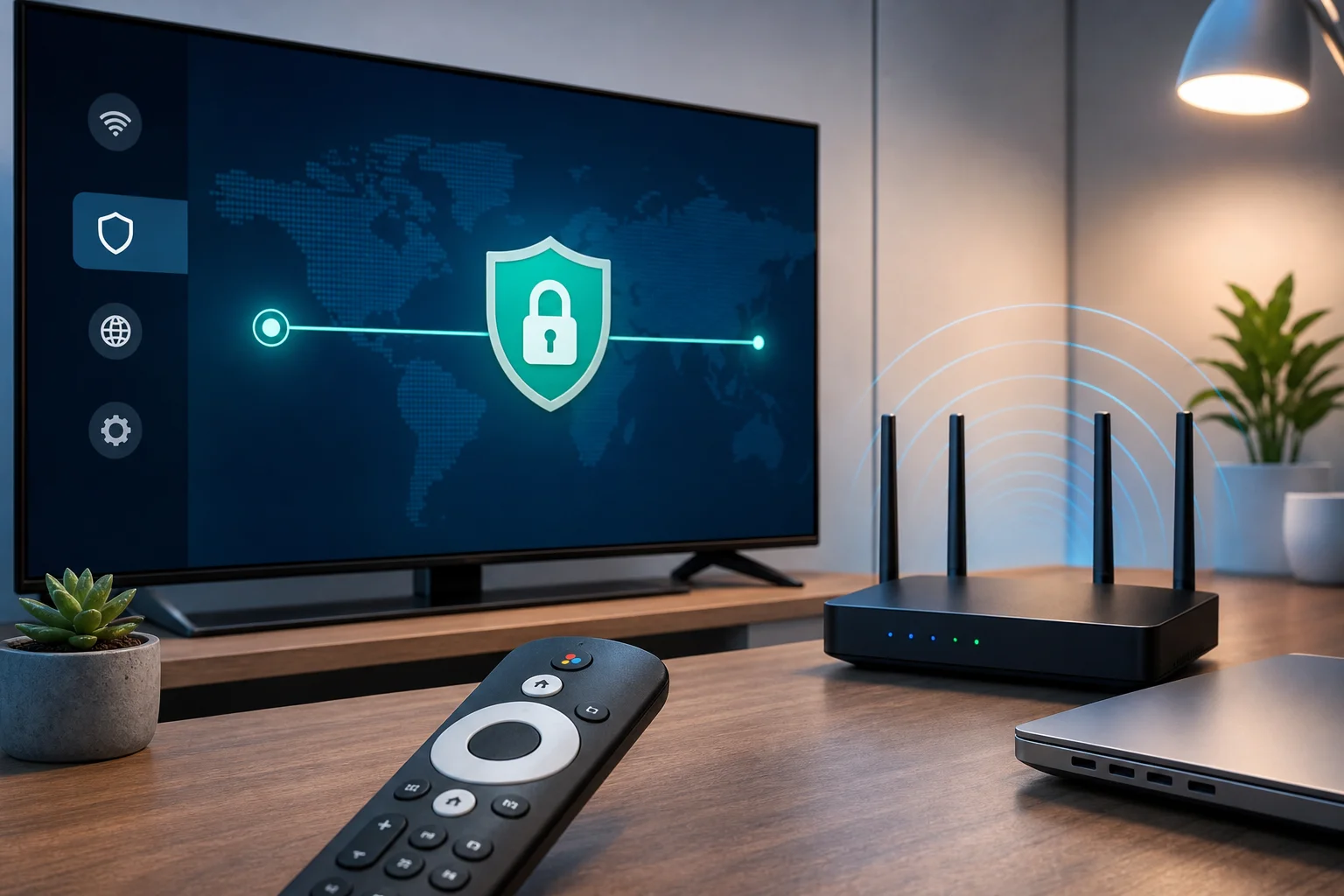
Pre-installation requirements and considerations
Before you start, verify the following:
- Your Google TV device is updated to the latest available system version.
- You have a stable internet connection.
- Your Google account can access the Play Store, or you have a safe APK source.
- Your VPN provider supports Android TV, Google TV, OpenVPN, WireGuard, or router setup.
- You know which region or server you need.
- You understand local rules and risks related to VPN use in your jurisdiction.
If you are in a restrictive region, download required apps, configuration files, and backup APKs before traveling or before blocks become active. Store OpenVPN .ovpn files and credentials securely.
Method 1: Install a VPN app from Google Play on Google TV
This is the preferred method when available.
- Open Google TV Home. Use the remote to navigate to the top menu.
- Go to Apps. Open the app search function.
- Search for your VPN provider. Use the exact provider name to avoid clones.
- Install the official app. Check the developer name before installing.
- Open the VPN app. Sign in or activate according to the provider’s process.
- Choose a server. Select a location close to your target content region or a nearby low-latency server.
- Select a protocol. Start with WireGuard or OpenVPN UDP. If blocked, switch to OpenVPN TCP or stealth mode.
- Approve the VPN connection request. Android TV will show a system prompt.
- Test streaming and DNS. Open your target app and check whether content loads correctly.
This setup gives you device-level protection. Only Google TV traffic goes through the VPN, not your entire home network.
Method 2: Sideload a VPN APK
If the VPN app is not available in your Play Store region, sideloading may work. Use caution because malicious APKs are common.
- Install a trusted file manager from the Play Store.
- Download the APK from the VPN provider’s official website on another device.
- Transfer it by USB drive, cloud storage, or local network share.
- On Google TV, enable installation from unknown sources for the file manager.
- Open the APK and install it.
- Disable unknown-source permission after installation.
- Launch the VPN app and connect.
Only sideload APKs from official sources. Avoid modified apps, cracked VPN clients, or unofficial mirrors. They can leak data or contain malware.
Method 3: Configure VPN on your router
Router-level VPN is useful when the Google TV app cannot connect, when you want network-wide coverage, or when you want to use custom OpenVPN/WireGuard configs.
General steps:
- Confirm your router supports VPN client mode. Many ISP routers do not.
- Install compatible firmware if needed, such as OpenWrt, DD-WRT, AsusWRT-Merlin, or vendor VPN firmware.
- Download the VPN configuration files from your provider.
- Upload OpenVPN or WireGuard settings to the router.
- Enter credentials, certificates, keys, and DNS settings.
- Route your Google TV through the VPN tunnel.
- Test for IP and DNS leaks from another device on the same network.
- Connect Google TV to that router or VPN-enabled Wi-Fi network.
Advanced users may prefer policy-based routing. This sends only Google TV through the VPN while keeping gaming consoles, smart home devices, or local services outside the tunnel.
Troubleshooting common setup issues
VPN app installs but will not connect. Switch protocols. Try OpenVPN TCP port 443, stealth mode, or another server. Check whether your network blocks UDP.
Streaming app detects the VPN. Change servers, clear app cache, restart Google TV, and avoid overloaded locations. Some platforms block known VPN IP ranges.
Internet stops after connecting. Check DNS settings, kill switch behavior, and router firewall rules. If using router VPN, verify default gateway and NAT rules.
VPN connects but location does not change. Force stop the streaming app. Clear cache. Confirm the VPN server IP geolocates to the expected country.
Remote navigation is broken in sideloaded app. Some mobile Android VPN apps are not optimized for TV. Use a Bluetooth mouse, remote-control app, or provider with Android TV support.
Captive portal blocks VPN. Hotels and shared networks may require browser login before VPN traffic is allowed. Authenticate first, then connect the VPN.
4. Optimizing VPN Performance on Google TV
A working VPN is not always an optimized VPN. Streaming requires consistent throughput, low packet loss, and stable DNS. In restrictive regions, a slow but stable stealth connection may be better than a fast protocol that disconnects often.
Techniques to enhance VPN speed and connection quality
Start with the basics:
- Use Ethernet instead of Wi-Fi where possible.
- If using Wi-Fi, prefer 5 GHz or 6 GHz over congested 2.4 GHz.
- Place the router near the Google TV device.
- Close unused background apps.
- Restart the VPN app after changing protocol.
- Keep Google TV firmware and VPN app updated.
Then tune the VPN:
- Try WireGuard for speed if it is not blocked.
- Try OpenVPN UDP for a balance of compatibility and performance.
- Reduce encryption overhead only if the app safely supports it; do not disable encryption.
- Use split tunneling for non-sensitive apps if available.
- Avoid distant servers unless required for a specific content region.
Adjusting settings for optimal streaming experience
For 4K streaming, stability matters more than peak speed. A VPN that spikes to high bandwidth but drops packets will buffer. Use these settings where available:
- Auto-connect on boot: Ensures Google TV is protected before apps launch.
- VPN kill switch: Blocks traffic if the tunnel drops, reducing accidental exposure.
- DNS leak protection: Forces DNS through the VPN.
- Protocol fallback: Lets the app switch if one protocol fails.
- Split tunneling: Routes only selected apps through the VPN.
If your provider supports app-based split tunneling, route streaming apps, browser apps, and blocked services through the VPN. Leave local media servers or LAN apps outside the tunnel if they need local discovery.
Impact of server selection on performance
Server selection affects latency, throughput, detection risk, and reliability. A nearby server is usually faster, but a target-country server may be required for regional content. In restrictive areas, some nearby countries have better peering and less packet loss than distant popular locations.
Use this decision path:
- Need a specific streaming region? Choose that country first.
- Multiple cities available? Test the least crowded or closest city.
- Connection blocked? Switch to stealth-supported servers.
- Speeds unstable? Try a nearby country with better routing.
- VPN detected? Rotate to another server or residential-style location if offered.
Avoid assuming that the most popular server is best. Popular servers can be overloaded and more likely to appear on blocklists.
5. Ensuring Privacy and Security on Google TV
A VPN protects the network path, but Google TV privacy also depends on account settings, app permissions, DNS behavior, and device hygiene. Advanced users should treat the VPN as one layer in a broader security model.
How VPNs protect data and identity
A VPN can protect against local network observation by encrypting traffic from Google TV to the VPN server. This helps hide app traffic patterns from Wi-Fi operators and ISPs. It also replaces your public IP address with the VPN server’s IP address when you access remote services.
However, a VPN does not make you anonymous by itself. Streaming accounts, Google account activity, device identifiers, cookies, and payment methods can still identify you. If you log in to a personal account, the service knows it is you, even if your network location changes.
Additional security settings on Google TV
Review these Google TV settings:
- Disable installation from unknown sources after sideloading.
- Remove unused apps and old APK installers.
- Review app permissions, especially location, microphone, and storage.
- Turn off personalized recommendations if privacy is more important than convenience.
- Keep automatic updates enabled when possible.
- Use a separate Google account for high-risk travel or restrictive environments.
- Disable Bluetooth pairing when not needed.
If your VPN app has a kill switch or always-on VPN option, enable it. On some Android TV builds, always-on VPN options may be limited compared with phones. Test behavior by disconnecting the VPN and confirming whether traffic is blocked or allowed.
Best practices for maintaining privacy
Use a privacy routine:
- Connect the VPN before opening restricted apps.
- Verify the server location if access matters.
- Clear app cache after changing regions.
- Avoid logging into sensitive accounts over unknown networks without VPN protection.
- Keep backup servers and protocols ready.
- Do not install unofficial streaming or VPN apps from random sources.
- Recheck settings after firmware updates.
Also, separate goals. If your goal is censorship circumvention, prioritize stealth and reliability. If your goal is streaming quality, prioritize low latency and server reputation. If your goal is privacy, prioritize leak protection and account compartmentalization.
6. Common Misconceptions About VPNs on Google TV
VPNs are powerful tools, but overestimating them can create false confidence. It is better to understand their limits before depending on them in a restrictive region.
Misbeliefs about VPN effectiveness in restrictive regions
Misconception: Any VPN will bypass censorship.
Not true. Some VPNs use easily detected protocols or blocked server ranges. In strict networks, you may need obfuscation, rotating servers, TCP 443 support, or router-based configuration.
Misconception: A VPN guarantees access to every streaming service.
Streaming platforms can block data-center IPs or enforce account-region rules. A VPN improves routing options, but it does not guarantee availability.
Misconception: Once installed, it will always work.
Censorship systems change. Servers get blocked. Apps update. Keep multiple protocols and server locations ready.
Explaining bandwidth issues and server load
When users blame the VPN for slow streaming, the cause may be one of several layers:
- Local Wi-Fi interference.
- ISP throttling or congestion.
- Long-distance routing to the VPN server.
- Overloaded VPN server.
- Weak Google TV hardware.
- Heavy encryption overhead.
- Streaming platform rate limits.
Test systematically. Compare speeds with and without VPN. Test several servers. Try Ethernet. Change protocols. If only one streaming app is slow, the issue may be platform-specific rather than VPN-wide.
Clarifying the myth that VPN usage is illegal
VPN legality depends on jurisdiction. In many countries, VPN use is legal for privacy, remote work, and security. In some restrictive regions, VPN access may be regulated, limited to approved providers, or risky in certain contexts.
The key point is this: VPN technology itself is not inherently illegal, but how and where it is used can matter. Before using a VPN to bypass censorship, review local laws and understand potential consequences. This article provides technical information, not legal advice.
FAQ: Common questions about VPN for Google TV setup
Can I install a VPN directly on Google TV?
Yes. If the VPN provider offers an Android TV or Google TV app, install it from the Play Store, sign in, choose a server, and approve the VPN connection prompt.
What is the best VPN protocol for Google TV streaming?
WireGuard is often fastest, while OpenVPN UDP is widely compatible. In restrictive regions, OpenVPN TCP on port 443 or a stealth protocol may work better.
Should I use a router VPN instead of a Google TV app?
Use a router VPN if the app is unavailable, blocked, or unstable. Router setup also protects all selected devices, but it requires more technical configuration.
Will a VPN stop buffering on Google TV?
Not always. A VPN may reduce throttling or routing problems, but it can also add overhead. Choose nearby servers, use Ethernet, and test protocols for the best result.
7. Advanced Tips for Bypassing Censorship
Advanced censorship circumvention requires flexibility. Do not depend on one protocol, one server, or one installation method. Prepare fallback options before you need them.

Using stealth VPN features to avoid detection
Stealth VPN features are designed to reduce VPN fingerprinting. Depending on the provider, they may be called obfuscation, camouflage mode, stealth mode, bridge mode, or anti-censorship mode.
Useful tactics include:
- Running OpenVPN over TCP port 443.
- Using obfuscated servers designed for restrictive networks.
- Switching to provider-specific stealth protocols.
- Avoiding default VPN ports that are easy to block.
- Using DNS leak protection to prevent local resolver exposure.
In high-censorship regions, test stealth servers at different times of day. Some networks apply heavier filtering during political events, exams, protests, or major broadcasts.
Insights into split tunneling and its benefits
Split tunneling lets you choose which apps use the VPN. On Google TV, this can improve performance and reduce detection risk. For example, you may route a streaming app and browser through the VPN while leaving local media playback outside it.
Benefits include:
- Lower VPN bandwidth usage.
- Better performance for apps that do not need the VPN.
- Fewer issues with local network discovery.
- Reduced chance of triggering fraud checks on unrelated apps.
However, split tunneling can also create leaks if misconfigured. If privacy is critical, route all traffic through the VPN and enable a kill switch. If performance is the priority, split only low-risk apps outside the tunnel.
Case studies of successful VPN usage in restricted zones
Consider these realistic scenarios:
Scenario 1: App store filtering.
A traveler in a restrictive region cannot find the VPN app in the Play Store on Google TV. They download the official APK before travel, sideload it, enable stealth mode, and connect over TCP 443. The app then works without relying on local app-store availability.
Scenario 2: UDP blocking.
A home ISP blocks or throttles UDP VPN traffic. WireGuard and OpenVPN UDP fail. Switching to OpenVPN TCP resolves connection failures, although speed drops slightly. For streaming HD content, the stable TCP tunnel performs better than unstable UDP.
Scenario 3: Streaming service VPN detection.
A user connects to a popular server and the streaming app blocks playback. They clear the app cache, switch to a less crowded city in the same country, and reconnect before launching the app. Playback resumes because the new server IP is not flagged.
Scenario 4: Router-level resilience.
A Google TV device cannot run a VPN app reliably after an update. The user configures WireGuard on an OpenWrt router and uses policy-based routing for the TV only. This restores VPN coverage while keeping other household devices on the normal connection.
These examples show why a strong vpn for google tv setup is not just about installing an app. It is about building a resilient configuration with multiple fallback paths.
Conclusion: Build a resilient VPN setup for Google TV
A reliable VPN for Google TV requires the right protocol, a clean installation method, careful server selection, and ongoing privacy discipline. In restrictive regions, add stealth features, backup servers, APK access, router options, and split tunneling where appropriate. Start simple with the official Google TV app if available, then move to sideloading or router configuration when censorship, detection, or performance issues demand it.
Discover the simplicity and security of BeFreeVPN, a free, no-registration VPN that works seamlessly with Google TV to help you bypass censorship effortlessly.