The battle of no-credit-card VPNs: myths vs facts
Tired of signing up and providing credit card details just to protect your online privacy? Explore VPN options that require neither and debunk myths surrounding them. If you are searching for a vpn without credit card without registration, the real challenge is not finding one. It is knowing which services are safe, which are genuinely free, and which hide trade-offs behind friendly marketing.
This comparison takes a myths-versus-facts approach. We will look at security, privacy policies, access barriers, speed, and real-world use cases. The goal is simple: help you choose a no-credit-card VPN that fits your needs without giving away more data than necessary.
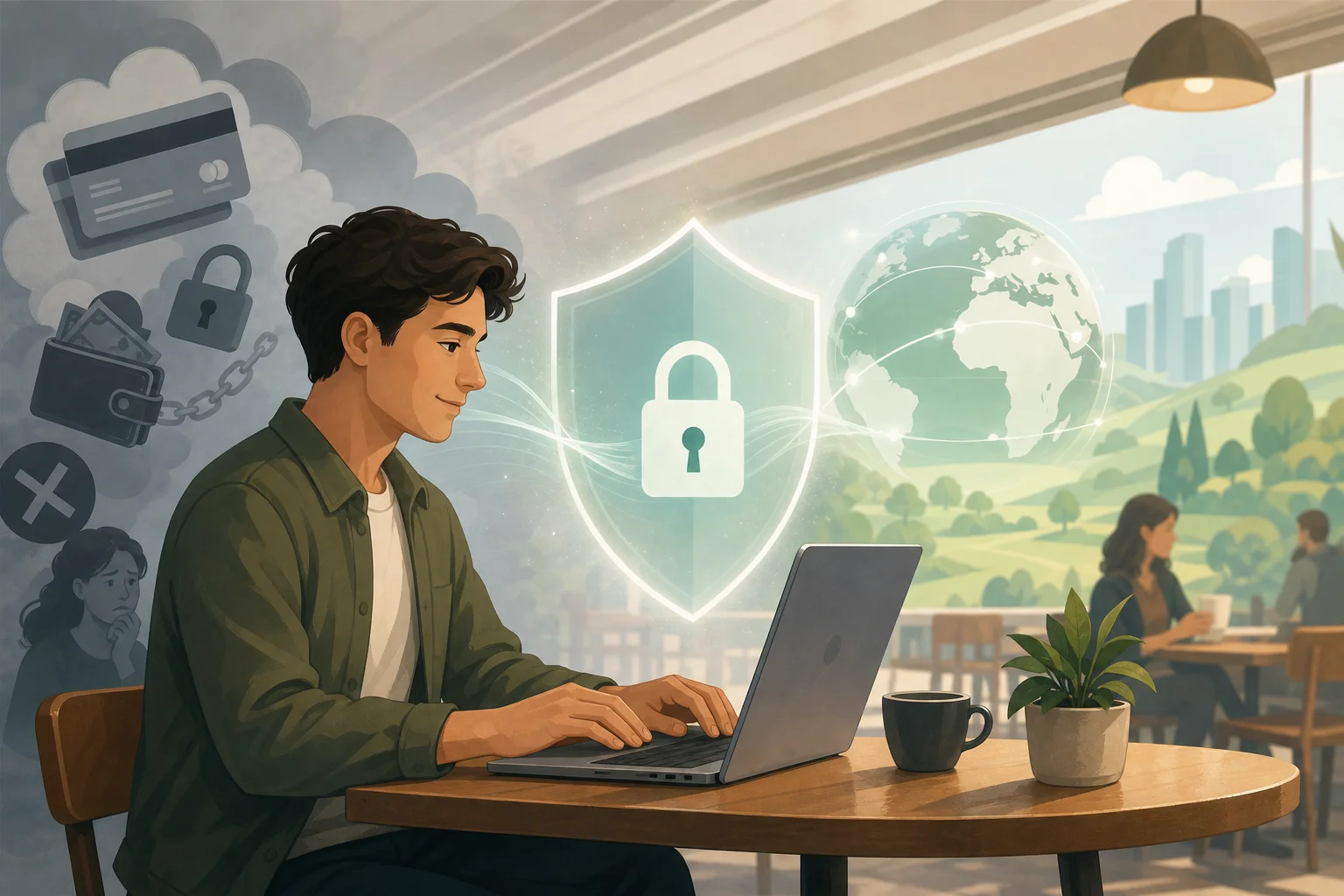
1. Myth: All No-Credit-Card VPNs Are Unsafe
The myth is understandable. Many people assume that if a VPN does not ask for payment details or registration, it must be cutting corners. In reality, safety depends less on whether a VPN asks for a credit card and more on how it handles encryption, logging, app permissions, and traffic routing.
A VPN can be no-credit-card and still use modern encryption. It can also be paid and still collect too much data. Therefore, the first question should not be “Is it free?” but “What does the provider do with my traffic and metadata?”
What makes a no-credit-card VPN safe?
A safer no-registration VPN usually has several clear traits:
- Strong encryption: Look for industry-standard protocols and encrypted tunnels that protect traffic on public Wi-Fi and shared networks.
- Transparent privacy policy: The provider should explain what it collects, why it collects it, and how long it keeps it.
- Minimal data requirements: A VPN without registration should not demand an email, phone number, billing address, or card details.
- Limited app permissions: Mobile apps should not ask for unnecessary access to contacts, photos, or location unless there is a clear technical reason.
- Simple access model: The fewer steps required to connect, the fewer personal identifiers you may need to share.
BeFreeVPN stands out in this category because its core promise is privacy without financial barriers. By offering access without credit card details or mandatory registration, it reduces the amount of personal information needed before you can start using a VPN. That does not mean users should ignore privacy policies. However, it does remove two common data collection points: payment information and account creation.
The real risk is not “free”; it is opacity
Some risky VPNs hide behind vague language. They may say “no logs” but fail to define what logs means. Others may collect device identifiers, browsing metadata, or usage events for analytics. For intermediate users, this is where reading the privacy policy matters.
In short, not all no-credit-card VPNs are unsafe. Some are built to lower access barriers while still protecting traffic. The safer choice is the service that combines easy access with clear privacy practices.
2. Fact Check: Are Free and No-Registration VPNs Actually Free?
“Free” can mean different things in the VPN market. Some services are genuinely free for basic use. Others are free trials that later require a credit card. Some limit access until you create an account. A few may fund the service through advertising, analytics, or partner offers.
So, are free and no-registration VPNs actually free? Sometimes yes. But you need to check what you are paying with if you are not paying with money.
Common hidden costs to watch for
A free VPN may include hidden trade-offs such as:
- Mandatory account creation: You may not pay with a card, but you still provide an email and create a profile.
- Trial-to-paid billing: Some “free” VPNs ask for payment details upfront and charge later unless you cancel.
- Data limits: You may get only a small amount of monthly data before being pushed to upgrade.
- Speed restrictions: The free tier may be usable only for light browsing.
- Ads or tracking: Some free services rely on advertising models that may involve analytics or user profiling.
- Limited server access: You may be restricted to crowded locations, which can affect performance.
BeFreeVPN’s appeal is its straightforward access model: it is positioned as a truly free VPN option without credit card barriers and without mandatory registration. Compared with services that claim to be free but still require an account, this matters. Registration creates a persistent identity. Even if you use a burner email, it adds friction and increases the amount of data linked to your usage.
Free vs no-registration: they are not the same
A VPN can be free but still require registration. A VPN can avoid credit cards but still ask for an email. A VPN can offer no registration but restrict important features. This is why users searching for a VPN with no signup and no payment details should compare the full access process, not just the headline claim.
For privacy-focused users, no-registration access is especially useful when:
- You are using a temporary device.
- You want quick protection on public Wi-Fi.
- You do not want another account to manage.
- You prefer not to share billing or identity data.
The best free VPN experience is not only about price. It is about reducing unnecessary data exposure while keeping the service practical.
3. Quick Comparison Table: BeFreeVPN vs Competitors
The table below compares BeFreeVPN with two typical market alternatives: VPN X and VPN Y. These are representative competitor profiles, not endorsements or claims about a specific brand. Use the criteria as a checklist when evaluating any no-credit-card VPN.
| Feature | BeFreeVPN | VPN X | VPN Y |
|---|---|---|---|
| Requires credit card | No | No for free tier, yes for trial upgrade | Yes for trial access |
| Requires registration | No mandatory registration | Email account required | Account and billing profile required |
| Ease of access | Fastest: open and connect | Moderate: create account first | Slower: signup and payment step |
| Privacy barrier | Low data exposure before use | Email-linked usage possible | Billing identity linked to account |
| Security focus | Encrypted VPN access with privacy-first onboarding | Depends on plan and settings | Often strong, but tied to paid account model |
| Speed expectation | Suitable for everyday browsing and light private use | May vary by free server load | Often strong after payment setup |
| Best for | Quick private access without signup | Users willing to register for a free tier | Users who want a paid trial and do not mind card details |
| Main drawback | Advanced premium features may be limited compared with paid suites | Registration reduces anonymity | Not ideal for users avoiding credit cards |
How to read the comparison
If your priority is the fastest path to private browsing, BeFreeVPN has the advantage because it removes both credit card and registration friction. If you are comfortable creating an account, VPN X-style services may work, but they are not true no-registration VPNs. If you need advanced paid features and do not mind sharing payment information, VPN Y-style options may be acceptable, but they do not match the search intent of users looking for a free VPN without credit card or signup.
4. Which Should You Choose?
The right VPN depends on your threat model, habits, and tolerance for trade-offs. A journalist, remote worker, casual streamer, and coffee-shop browser do not all need the same setup. However, the choice becomes easier when you match the VPN type to the scenario.
Step-by-step: choosing the right no-credit-card VPN
- Define your main use case. Are you protecting public Wi-Fi traffic, browsing privately, accessing region-specific content, or testing VPN basics?
- Check whether registration is required. If the service asks for an email, it is not fully no-registration.
- Look for credit card traps. Avoid “free” trials that require billing details if your goal is no payment data.
- Read the privacy policy. Focus on logs, identifiers, analytics, and retention periods.
- Test speed with your normal activities. Try browsing, messaging, video calls, or streaming at the quality you actually use.
- Review limitations. Free services may have server, speed, or feature limits. Make sure they match your needs.
Best choice by scenario
For anonymous browsing: Choose a VPN that requires no account and no payment details. BeFreeVPN is a strong fit here because it minimizes identity-linked onboarding data.
For public Wi-Fi protection: Prioritize fast connection and simple setup. A VPN you can activate quickly is more useful than one with a long signup flow. BeFreeVPN’s no-registration access helps in airports, hotels, libraries, and cafes.
For streaming: Free VPNs can be hit or miss. Streaming platforms may block VPN traffic, and performance depends on server load and location. If your goal is casual viewing and privacy, BeFreeVPN may be enough. If you need consistent access to specific streaming libraries, a paid specialist may offer more location options.
For remote work: Check company policy first. Some employers require approved VPN tools. A free no-registration VPN can help protect general browsing, but it should not replace a corporate VPN for sensitive internal systems.
For travel: A VPN without credit card and without registration is convenient when you need quick access on unfamiliar networks. It also avoids billing verification problems while abroad.
Overall, BeFreeVPN stands out for most privacy-first everyday cases because it reduces friction while preserving the core benefit users want: encrypted access without handing over card details or creating another account.

5. Myth Debunked: Free VPNs Are Slow and Unreliable
Another common claim is that every free VPN is slow, unstable, or unusable. This is too broad. Some free VPNs are overloaded, heavily restricted, or designed mainly to push upgrades. Others are practical for everyday browsing, messaging, and light media use.
Speed depends on several factors:
- Distance to the VPN server
- Server load at the time you connect
- Your original internet connection
- VPN protocol efficiency
- Device performance
- Network restrictions from your ISP, school, office, or public hotspot
Because of these variables, no honest VPN comparison should promise perfect speed for every user. A better question is whether the VPN is reliable enough for your normal tasks.
What users should test
Before judging any free VPN, test it in real conditions:
- Connect from your usual network.
- Open several websites you use daily.
- Test messaging apps or email.
- Try a short video stream if that is part of your routine.
- Disconnect and reconnect to check stability.
- Repeat at different times of day.
This simple process gives you more useful data than generic speed claims. If a VPN connects quickly, keeps pages loading smoothly, and does not drop often, it may be reliable enough for everyday privacy.
BeFreeVPN challenges the “free equals unusable” myth by focusing on easy access and practical browsing protection. It may not replace every premium VPN suite for power users who need dozens of countries, advanced routing, or dedicated IPs. However, for users who want a no-credit-card VPN with no registration for daily privacy, it can be a strong and convenient option.
FAQ: VPN Without Credit Card Without Registration
Is there really a VPN without credit card without registration?
Yes. Some VPNs let you connect without entering payment details or creating an account. BeFreeVPN is designed around that no-credit-card, no-registration experience.
Is a no-registration VPN more private?
It can be. No-registration access means there is no required email-based account linked to your use. Still, you should review the provider’s privacy policy to understand what technical data, if any, is collected.
Are free VPNs safe for banking?
Use caution. A VPN can encrypt your connection on public Wi-Fi, but banking safety also depends on HTTPS, device security, strong passwords, and avoiding phishing. For sensitive tasks, choose a provider with clear security practices and avoid unknown apps.
Do no-credit-card VPNs work for streaming?
Sometimes. Performance and access vary by service, server load, and the streaming platform’s VPN detection. A free no-registration VPN may work for casual use, but dedicated paid streaming VPNs may offer more consistent location choices.
What is the biggest red flag in a free VPN?
The biggest red flag is unclear data handling. If a VPN does not explain its logging, tracking, ownership, or revenue model, be careful. Free is not the issue; lack of transparency is.
Final Verdict: Myths vs Facts
The search for a vpn without credit card without registration is not about avoiding payment alone. It is about reducing unnecessary exposure. Credit card forms, signup pages, and account profiles all create extra links between your identity and your VPN use. In some cases, that may be acceptable. In others, it defeats the purpose.
The myths do not hold up across the board. No-credit-card VPNs are not automatically unsafe. Free VPNs are not always fake-free. No-registration services are not always slow. The facts are more practical: compare encryption, privacy policies, access steps, speed, and limitations before choosing.
Choosing a VPN shouldn't be complicated. Try BeFreeVPN for a truly free, no-registration experience that doesn't compromise your security.