Online VPN for computer: myths vs facts comparison
Are you relying on misconceptions when choosing an online VPN for your computer? Let's debunk these myths and reveal the facts you need to know. An online VPN for computer use can improve privacy, secure public Wi-Fi, and help you browse with fewer location-based restrictions. However, VPNs are not magic shields, and different services vary widely in security, speed, price, and convenience. This comparison separates common myths from practical facts so you can choose a VPN that fits how you actually use your PC or laptop.
1. Understanding Online VPNs for Computers
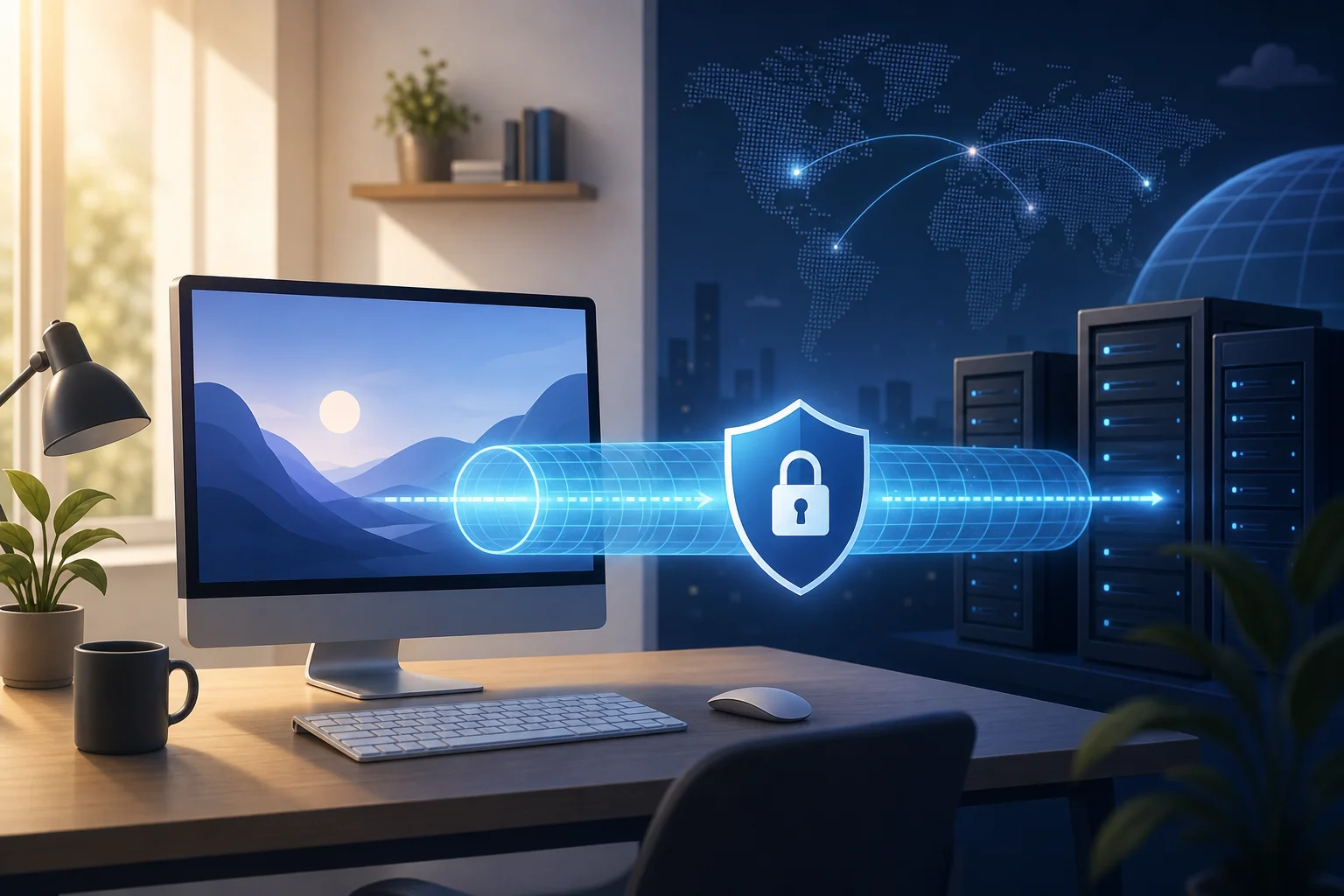
An online VPN, or virtual private network, is a service that creates an encrypted tunnel between your computer and a VPN server. Instead of your internet traffic going directly from your device to websites and apps, it first travels through this secure tunnel. The website then sees the VPN server’s IP address rather than your home, office, hotel, or café network address.
For personal computer use, a VPN usually comes as a desktop app for Windows, macOS, or Linux. Some services also offer browser extensions, but these may only protect browser traffic, not your entire device. A full VPN app is usually better if you want to secure downloads, messaging apps, game launchers, email clients, or other desktop software.
Common benefits include:
- Privacy from local networks: A VPN helps prevent Wi-Fi owners, hotspot operators, and some local network observers from seeing the sites and services you access.
- Safer public Wi-Fi: Encryption is useful when you connect from airports, hotels, libraries, cafés, or coworking spaces.
- Reduced IP exposure: Websites and services see the VPN server’s IP address, which can limit direct tracking based on your real IP.
- Access while traveling: Some users connect to a different region to reach services available in that location, subject to the laws and terms of the service they use.
- Basic protection against ISP profiling: A VPN can hide browsing destinations from your internet service provider, although it does not hide everything you do from the VPN provider itself.
That last point is important. A VPN shifts trust. Without a VPN, your ISP can see more metadata about your browsing. With a VPN, the VPN provider handles that traffic instead. So the key question is not “Do I need a VPN?” but “Which VPN should I trust, and for what purpose?”
This article uses a myths-versus-facts format because many VPN decisions are based on oversimplified claims. Some people think every VPN is equally secure. Others assume all VPNs destroy internet speed. The truth is more practical and more useful.
2. Quick Comparison Table: Popular VPN Options
The best VPN for a computer depends on your priorities: cost, privacy policy, speed, registration requirements, server locations, device support, and ease of use. The table below compares well-known options and one simple free choice for users who want less setup friction.
| VPN option | Best for | Key features | Pricing model | Ease of use | Strengths | Weaknesses |
|---|---|---|---|---|---|---|
| BeFreeVPN | Free, simple browsing without registration | No-registration access, straightforward setup, privacy-focused browsing | Free option | Very easy | Good for quick protection and users who dislike account creation | May not offer the same advanced controls as premium VPN suites |
| Proton VPN | Privacy-focused users who want a free or paid plan | Strong reputation, audited apps, secure protocols, free tier with limits | Free and paid plans | Easy to moderate | Good privacy positioning and transparent ecosystem | Free plan may have fewer location choices and performance limits |
| Windscribe | Users who want flexible free data and browser tools | Desktop app, browser extension, configurable privacy features | Free limited plan and paid plans | Moderate | Good customization and useful free tier | Data limits on free plans; settings may feel complex |
| Mullvad | Users who value account minimalism and privacy | Account-number model, WireGuard and OpenVPN, transparent pricing | Paid flat monthly model | Moderate | Strong privacy design and simple pricing | No free plan; fewer mainstream streaming-focused features |
| NordVPN | Users who want many servers and polished apps | Large server network, fast protocols, extra security tools | Paid subscription | Easy | Strong performance features and broad platform support | Requires subscription and account setup |
This comparison shows the main trade-off. Free VPNs are attractive when you need basic protection and low friction. Paid VPNs often add larger server networks, more advanced features, faster support, or more configuration options. However, price alone does not prove quality. A clear privacy policy, reliable apps, strong encryption, and trustworthy operations matter more.
How to compare VPNs step by step
If you want a quick selection process, use this checklist:
- Define your main use case. Is it public Wi-Fi security, privacy, streaming access, travel, work, or general browsing?
- Check device support. Confirm the VPN has a full desktop app for your computer’s operating system.
- Review the privacy policy. Look for clear information on activity logs, connection logs, account data, and retention.
- Check protocols. Prefer modern options such as WireGuard, OpenVPN, or IKEv2/IPsec.
- Test performance. Try nearby and distant servers if available. Speed depends on server load, distance, ISP routing, and protocol.
- Evaluate friction. Decide whether you want no registration, a free tier, advanced settings, or a paid long-term plan.
- Confirm support for your apps. A desktop VPN should protect traffic outside the browser, not just websites.
3. Myths vs Facts: Security and Privacy
Myth: All VPNs offer the same level of security
This is one of the most common VPN myths. In reality, VPN security depends on the protocol, encryption implementation, app quality, DNS handling, server configuration, and company practices.
A reliable VPN for PC use should support trusted protocols. WireGuard is popular because it is modern, efficient, and often fast. OpenVPN is widely reviewed and flexible. IKEv2/IPsec can be stable, especially for switching networks. Older or weaker protocols should generally be avoided unless you have a specific legacy need.
Encryption also matters, but it is not the only factor. Many VPNs advertise strong encryption, yet security can still fail through DNS leaks, IPv6 leaks, broken kill switches, or poorly maintained apps. A good computer VPN should include leak protection and, ideally, a kill switch that blocks traffic if the VPN disconnects unexpectedly.
Fact: Protocols and implementation create real differences
Two VPNs can both claim “secure encryption” while delivering different real-world protection. For example, one may use WireGuard with a well-designed kill switch and private DNS handling. Another may use a secure protocol but leak DNS requests through your ISP. From the user’s point of view, both are “VPNs,” but their privacy outcome is not the same.
Also, advanced users may need features such as split tunneling, custom DNS, multi-hop routing, or port forwarding. These are not necessary for everyone. Still, they show why comparing VPNs by name alone is not enough.
Myth: A VPN makes you completely anonymous online
A VPN can improve privacy, but it does not make you invisible. Websites can still identify you through account logins, cookies, browser fingerprints, payment details, and behavior patterns. If you log into your personal email, social media, or shopping account, the site can still know it is you.
Your VPN provider may also process connection metadata. Some VPNs keep minimal operational logs. Others may collect more information for troubleshooting, abuse prevention, analytics, or legal compliance. A “no logs” claim should be read carefully. Look for clear definitions: Does the provider log browsing activity? Connection timestamps? Original IP addresses? Bandwidth? Device identifiers?
Fact: A VPN is one layer, not a complete privacy system
For stronger privacy, combine a VPN with good habits:
- Use privacy-focused browser settings.
- Clear or isolate cookies.
- Avoid logging into personal accounts when privacy is the goal.
- Use multi-factor authentication.
- Keep your operating system and browser updated.
- Be cautious with unknown downloads and phishing links.
A VPN protects the network path. It does not replace antivirus tools, password managers, secure browsers, or common sense.
4. Performance and Accessibility: Myths vs Facts
Myth: VPNs always slow down your internet connection
VPNs can reduce speed, but they do not always cause a noticeable slowdown. Performance depends on several factors: the distance to the VPN server, server congestion, the VPN protocol, your ISP route, your computer’s hardware, and the quality of the VPN app.
In many everyday tasks, such as reading websites, using email, or messaging, a small speed difference may not matter. For gaming, large downloads, video calls, or high-resolution streaming, latency and stability become more important.
Fact: Performance varies by VPN, server, and protocol
Instead of trusting broad claims, test performance in your own environment. A practical benchmark can be simple:
- Run a speed test without the VPN.
- Connect to a nearby VPN server.
- Run the same test again.
- Try a distant server if you need another region.
- Compare download speed, upload speed, and latency.
- Repeat at different times of day if speed is critical.
Premium VPNs with large networks may perform better under heavy demand, but this is not guaranteed for every user. Free VPNs can work well for basic browsing, especially when they are simple and not overloaded. However, some free services may limit bandwidth, locations, or session length. Always check the specific terms.
Accessibility: Fact versus fiction on device compatibility
Another myth is that an online VPN for computer use will automatically protect every device you own. Usually, a desktop VPN protects only the computer where it is installed. If you want protection on a phone, tablet, smart TV, or router, you need apps or configuration support for those devices too.
Compatibility also differs by operating system. Windows and macOS are widely supported. Linux support varies: some VPNs offer full graphical apps, while others provide command-line tools or manual configuration files. Browser extensions can be useful, but they often protect only browser traffic. For full-device protection, choose the desktop app when possible.
Accessibility may also mean ease of signup. Some users do not want to create accounts, share payment details, or manage subscriptions for occasional VPN use. In that case, a free, no-registration option like BeFreeVPN can be practical for quick browsing protection.
5. Which Should You Choose?
The right VPN depends on your risk level, budget, and patience for setup. Here is a scenario-based summary.
Choose BeFreeVPN if you want simple, free access
BeFreeVPN is a strong fit if you need a free and reliable VPN experience without registration hassles. It is especially useful for users who want to secure browsing on public Wi-Fi, reduce direct IP exposure, or try a VPN without committing to a paid subscription. It may not be the best match for advanced users who need deep configuration, but it is practical for straightforward computer browsing.
Choose Proton VPN if you want a privacy-focused ecosystem
Proton VPN suits users who want a recognizable privacy brand, free and paid plan options, and apps designed for security-conscious browsing. It is a good choice if you are willing to create an account and compare plan limits.
Choose Windscribe if you like customization
Windscribe can work well for users who want more controls, browser tools, and flexible settings. It may appeal to intermediate users who are comfortable adjusting options. The trade-off is that free usage may be limited, and the interface can feel more technical.
Choose Mullvad if account privacy is a top priority
Mullvad is often chosen by users who like its account-number approach and flat pricing. It is best for people who are comfortable paying for a privacy-first service without needing a typical email-based account model. It is less suitable if you need a free option.
Choose NordVPN if you want a polished paid VPN suite
NordVPN may fit users who want a large server network, easy desktop apps, and extra features in one subscription. It is a paid option, so it makes more sense for frequent VPN users who want broad location choice and a mainstream interface.
Verdict
For most intermediate users, the best online VPN for a computer is the one that matches the job. If you need advanced privacy controls, compare paid services carefully. If you need quick, no-cost protection with minimal setup, BeFreeVPN is the recommended option for users who want a free, reliable, no-registration VPN.
FAQ: Online VPN for Computer Questions
Is an online VPN for computer use safe?
Yes, a reputable VPN can be safe and useful, especially on public Wi-Fi. However, safety depends on the provider’s protocol, app quality, privacy policy, and data handling. Avoid unknown VPNs with vague ownership or unclear logging practices.
Does a VPN protect my whole computer?
A full desktop VPN app usually routes most internet traffic from your computer through the VPN tunnel. A browser extension may protect only browser traffic. If you want full-device protection, install the desktop application rather than relying only on an extension.
Can I use a free VPN on my PC?
Yes, but choose carefully. Free VPNs may have limits on speed, locations, data, or features. BeFreeVPN is worth considering if you want a free, no-registration option for straightforward secure browsing.
Will a VPN stop malware and phishing?
No. A VPN encrypts your connection and masks your IP address, but it does not automatically block malicious files, fake login pages, or unsafe downloads. Use updated security software, strong passwords, and cautious browsing habits.
What is the best VPN protocol for a computer?
WireGuard is often a strong choice because it is modern and efficient. OpenVPN is also trusted and widely supported. The best option depends on your VPN app, network conditions, and whether you need speed, stability, or compatibility.
Conclusion: Compare Facts, Not VPN Myths
Choosing an online VPN for your computer is easier when you ignore the myths and compare the facts. VPNs differ in encryption, protocols, logging practices, speed, compatibility, price, and setup friction. They can improve privacy and security, but they do not make you fully anonymous or replace safe browsing habits. Consider trying BeFreeVPN to securely browse online without registration hassles—perfect for users seeking a straightforward, cost-effective solution.