Anonymous VPN for computer: myths vs facts
Ever wondered if your online privacy could be compromised by the very VPN that's supposed to protect it? If you are searching for an anonymous VPN for computer use, the answer is more nuanced than most ads suggest. A VPN can hide your IP address, encrypt traffic, and reduce tracking, but it is not a magic invisibility cloak. This guide compares common VPN anonymity claims, separates myths from facts, and explains why BeFreeVPN can be a smart option for everyday privacy on a computer.
Choosing a VPN is easier when you understand what it can and cannot do. Below, we use a myths-vs-facts approach, plus a practical comparison table, to help you make a clear decision.
1. Understanding VPN Anonymity: Myth vs Fact
A virtual private network routes your internet traffic through an encrypted tunnel and a remote server. As a result, websites usually see the VPN server’s IP address instead of your real one. Your internet provider also has less visibility into the sites and services you access.
However, “anonymous” can mean different things. For some users, it means hiding an IP address from websites. For others, it means reducing tracking, avoiding registration, or limiting data collection. These goals overlap, but they are not identical.
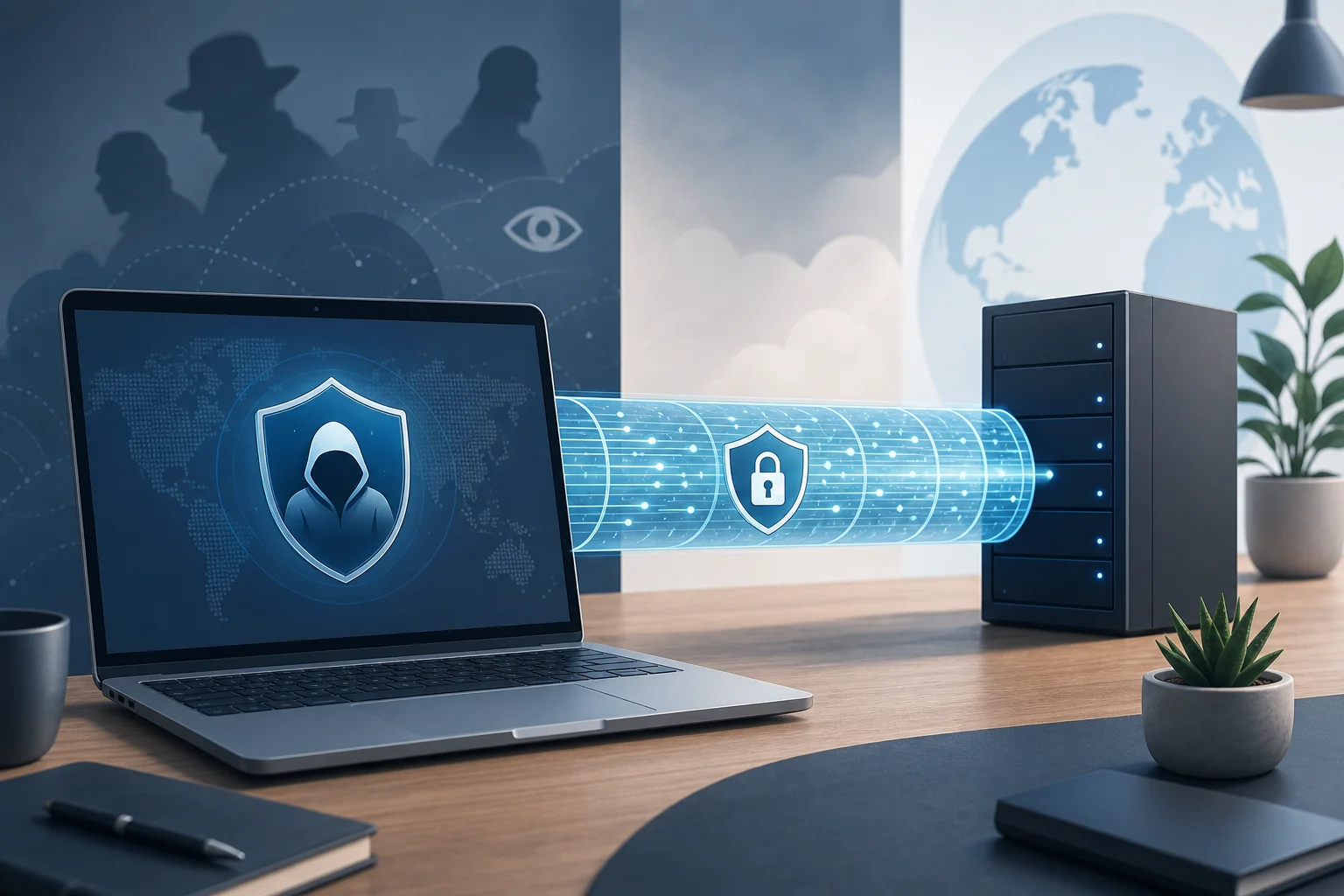
Myth: All VPNs offer complete anonymity
Many people assume that once a VPN is on, nobody can identify them online. That is not true. A VPN improves privacy, but your identity can still be exposed in other ways.
For example, you may still be tracked if you:
- Log in to personal accounts such as email, social media, or banking.
- Accept browser cookies and tracking scripts.
- Use a browser fingerprint that reveals device details.
- Download unsafe files or install malicious software.
- Use a VPN provider with weak privacy practices.
So, while an anonymous VPN for PC or Mac can reduce exposure, it does not erase every digital trace.
Fact: VPNs enhance privacy but do not guarantee complete anonymity
A VPN is best understood as one layer in a privacy setup. It protects network traffic between your computer and the VPN server. This can be valuable on public Wi-Fi, shared networks, or home connections where you want more control over your browsing privacy.
Still, complete anonymity requires more than a VPN. You may also need privacy-focused browser settings, tracker blocking, strong passwords, multi-factor authentication, and careful account habits. In short, a VPN helps a lot, but your behavior matters too.
Myth: Only paid VPNs provide anonymity
Paid VPNs often market advanced privacy features, and many premium providers invest heavily in infrastructure. Yet price alone does not prove that a VPN is private. A paid service can still collect too much data, require excessive personal information, or use unclear policies.
Likewise, a free VPN is not automatically unsafe. The real question is how the service handles data, how easy it is to use, and whether it asks for unnecessary registration details.
Fact: Some free VPNs like BeFreeVPN can also protect your privacy
BeFreeVPN is designed for users who want simple privacy protection on a computer without paying upfront or creating an account. The no-registration approach is important because it reduces the personal information you need to provide before connecting.
For intermediate users, this matters. A VPN that is easy to start and does not demand personal details can support better everyday privacy habits. Of course, you should still review any VPN’s privacy policy, available features, and limitations before relying on it for sensitive tasks.
2. Quick Comparison Table: VPN Anonymity Features
The table below compares BeFreeVPN with two common types of VPN products: a typical paid privacy VPN and a typical basic free VPN. “VPN A” and “VPN B” are representative categories, not specific brands.
| Feature | BeFreeVPN | VPN A: Typical paid privacy VPN | VPN B: Typical basic free VPN |
|---|---|---|---|
| Cost | Free | Paid subscription | Free, often limited |
| Registration | No registration required | Usually requires an account and payment details | Often requires an account or app profile |
| IP address masking | Yes | Yes | Usually yes |
| Traffic encryption | Yes | Yes | Usually yes, but features vary |
| Logging policy focus | Users should review the policy; privacy is a core concern | Often markets no-log or minimal-log policies | Policies can be unclear or ad-supported |
| Ease of use on computer | Designed for simple use | Can be feature-rich but more complex | Often simple, but may include restrictions |
| Speed approach | Optimized for a smooth experience | Usually strong, depending on server load | May be slower due to limits or congestion |
| Best fit | Users who want free computer privacy with minimal friction | Users who need advanced settings and paid support | Casual users with low privacy demands |
For a computer user, the most useful anonymity features are not always the most technical ones. In practice, the essentials are clear: no unnecessary registration, reliable encryption, IP masking, stable speeds, and a user-friendly interface. If a VPN is difficult to use, people often turn it off. That weakens privacy more than a missing advanced feature would.
3. Debunking VPN Security Myths
VPN security is often misunderstood. A VPN protects data in transit, but it is not a full cybersecurity suite. Understanding this difference helps you avoid risky assumptions.
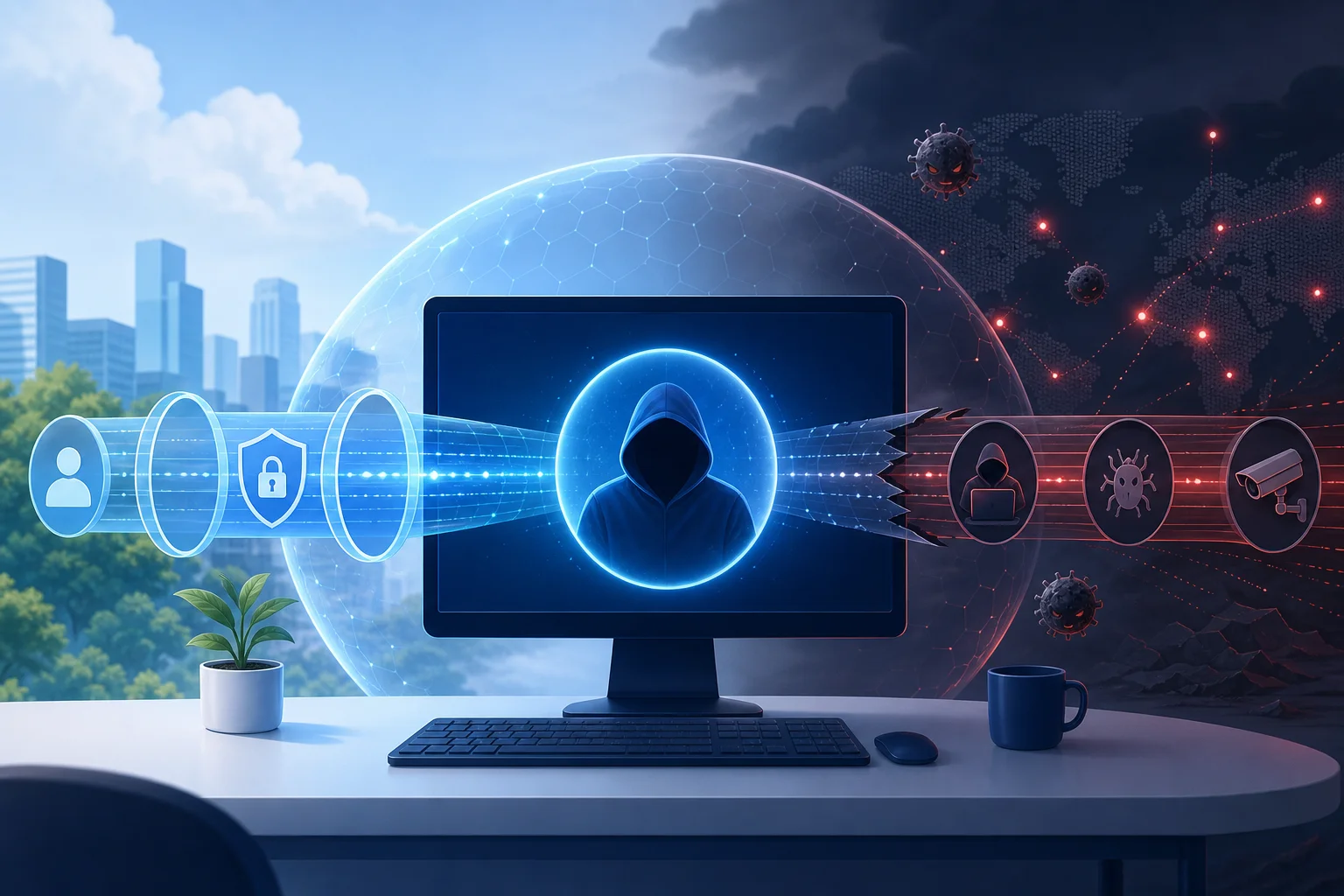
Myth: VPNs make computers invulnerable to hacking
A VPN can protect your connection, especially on networks you do not trust. For instance, when you connect to public Wi-Fi at a hotel, airport, or café, a VPN can encrypt your traffic so others on the network cannot easily inspect it.
But a VPN cannot stop every cyberattack. It will not automatically block phishing emails, fake login pages, malicious attachments, weak passwords, or infected software. It also cannot fix outdated operating systems or unsafe browser extensions.
Fact: VPNs encrypt data but can't prevent all cyberattacks
Think of a VPN as a secure tunnel, not a full shield. It helps protect the route your data takes, but it does not guarantee that the destination is safe. If you enter your password on a fake website, the VPN may encrypt the connection, but it cannot know your intent.
For better computer security, combine a VPN with:
- System and browser updates.
- Reputable anti-malware protection.
- Strong, unique passwords.
- Multi-factor authentication.
- Caution with downloads and links.
- Privacy-focused browser settings.
This layered approach is more realistic than expecting one tool to do everything.
Myth: VPNs slow down internet speed significantly
VPNs can affect speed because traffic travels through an extra server and encryption adds overhead. However, the impact is not always dramatic. It depends on server distance, network quality, encryption method, local internet speed, and device performance.
Some slowdowns come from overloaded servers or poorly optimized apps. Others happen because users connect to faraway locations when a nearby server would work better.
Fact: Reputable VPNs like BeFreeVPN optimize speed and security
A well-designed VPN balances privacy with performance. BeFreeVPN focuses on a user-friendly experience and optimized speeds, which helps make daily computer use smoother. That matters if you browse, stream, work, or study with the VPN enabled.
Even so, you can improve VPN performance by choosing a nearby location when available, closing bandwidth-heavy apps, updating the VPN app, and testing your connection at different times of day. The goal is not only maximum speed. The goal is dependable privacy without making your computer feel slow.
4. Which Should You Choose? Factors to Consider
The best anonymous VPN for computer use depends on your needs. A student using campus Wi-Fi, a remote worker handling files, and a casual browser may all value different features. Use the checklist below to compare your options.
Step-by-step checklist for choosing a computer VPN
- Check the registration requirements. If a VPN asks for your name, email, payment details, or extra profile data, decide whether that trade-off is worth it. No-registration access can reduce exposure.
- Review the logging policy. Look for clear language about what is collected, why it is collected, and how long it is stored. Avoid vague promises with no details.
- Confirm encryption and IP masking. A VPN should protect traffic and hide your real IP address from the sites you visit.
- Test speed on your computer. Try browsing, video calls, downloads, and streaming if those are part of your normal use. A private VPN is most useful when you keep it on.
- Evaluate ease of use. The interface should make connecting, disconnecting, and changing settings simple.
- Look at platform fit. Make sure the VPN works well with your operating system and does not conflict with your normal apps.
- Consider support and transparency. Helpful documentation and responsive support can save time when something breaks.
Consider logging policies and commitment to no logs
Logging is one of the most important privacy topics. Some logs are technical, such as crash reports or connection diagnostics. Others may be more sensitive, such as source IP addresses, browsing activity, or timestamps.
When a VPN says “no logs,” read the details. The strongest policies clearly explain what is not stored. If you cannot find the policy, or if it is written in confusing terms, be cautious.
Evaluate speed performance and impact on computer functions
Speed should be tested in real conditions. Do not rely only on marketing claims. Turn the VPN on and try your normal tasks. If web pages load smoothly, video calls stay stable, and downloads remain practical, the VPN is doing its job well.
Also check battery use on laptops. Encryption and background network activity can affect battery life, especially on older computers.
Assess ease of use for computer users and customer support
Intermediate users often want enough control without too much complexity. A clean app, fast connection process, and minimal setup are valuable. BeFreeVPN stands out here because it is free, requires no registration, and aims to keep the experience simple.
Support also matters. Even if you rarely need help, clear setup instructions and troubleshooting guides can make the difference between using a VPN consistently and abandoning it.
Quick FAQ before you decide
Is an anonymous VPN for computer use enough to hide my identity?
Not completely. It can hide your IP address and encrypt traffic, but accounts, cookies, browser fingerprinting, and unsafe habits can still reveal information about you.
Can I use a free VPN on my PC safely?
Yes, but choose carefully. Look for transparent privacy practices, no unnecessary registration, reliable encryption, and a simple app. BeFreeVPN is a practical option for users who want free privacy protection without creating an account.
Will a VPN protect me on public Wi-Fi?
A VPN can greatly improve privacy on public Wi-Fi by encrypting your connection. However, you should still avoid suspicious links, keep your system updated, and use secure websites.
Should I keep my VPN on all the time?
For everyday privacy, keeping it on is often helpful. If a specific app or website has issues, you can troubleshoot settings or reconnect before turning protection off entirely.
5. Verdict: Why BeFreeVPN is a Smart Choice
BeFreeVPN is a smart choice for computer users who want privacy without a complicated setup or monthly cost. It offers crucial VPN benefits at no cost, requires no registration, and supports a user-friendly experience. That combination is especially useful if you want to improve online privacy quickly without handing over extra personal details.
It is also a practical choice because it focuses on optimized speeds. A VPN that slows your computer too much may push you to disconnect. BeFreeVPN’s smoother experience helps make privacy easier to maintain during normal browsing, work, and entertainment.
That said, the right VPN depends on your threat model. If you need advanced enterprise controls, dedicated IP options, or highly specialized configurations, a paid VPN may be worth comparing. But if your goal is simple protection, IP masking, encryption, and less friction on your computer, BeFreeVPN makes a strong case.
Ready to enhance your online privacy effortlessly? Try BeFreeVPN for your computer—it's free, requires no registration, and optimizes speed for a seamless experience.