4 posts tagged with "laptop-security"

View All Tags

Mastering VPN for Laptop Setup: A Guide for Remote Workers

· 11 min read

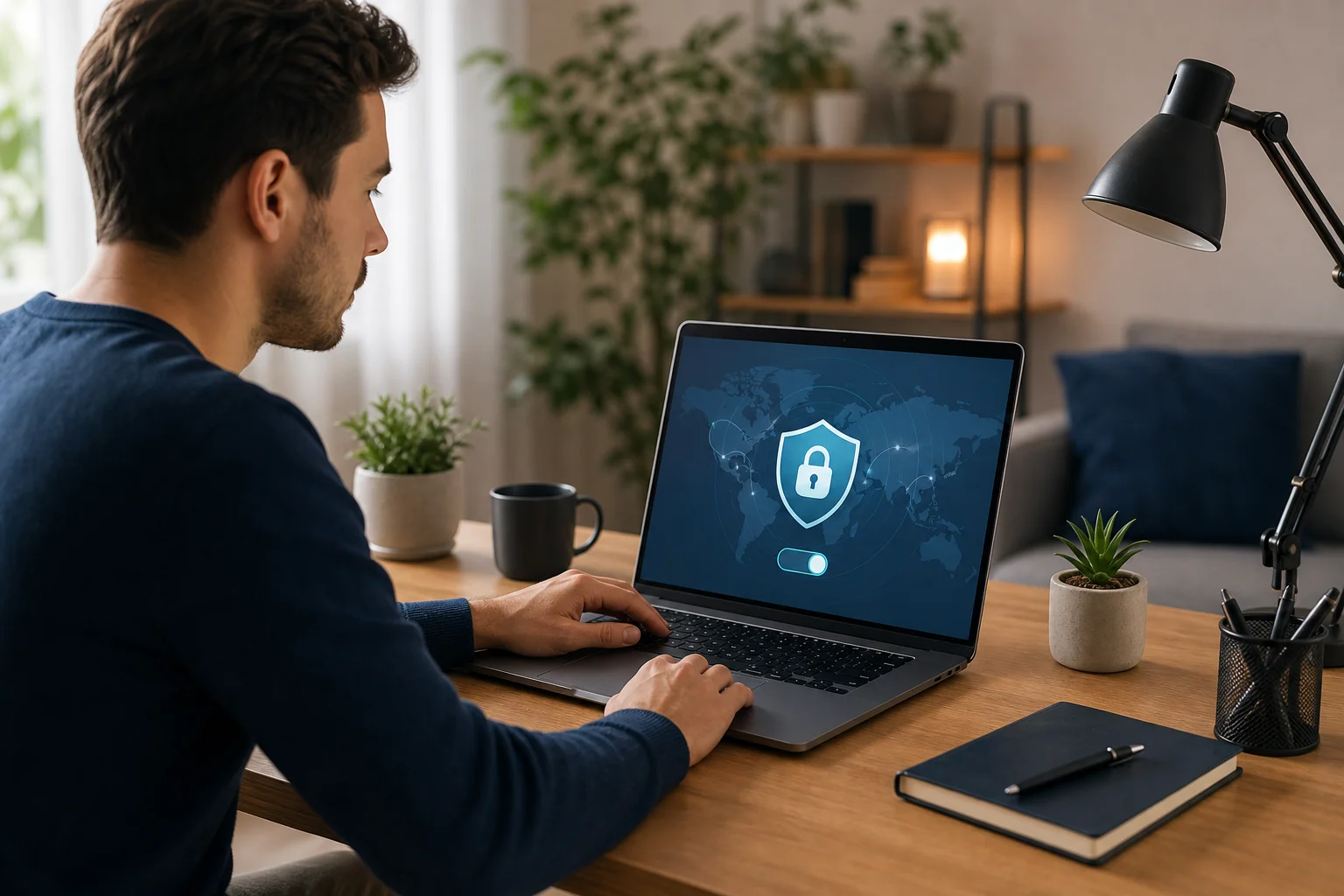
Ever wondered how to secure your laptop while working remotely? A VPN might just be your best friend. This guide explains vpn for laptop setup in plain English, so you can protect your home office, coffee shop sessions, and hotel Wi-Fi connections without feeling lost in technical jargon. You will learn why VPNs matter, how they work, how to install one, which features to look for, and how to keep it running smoothly.

Why a VPN is Essential for Your Laptop's Security

Your laptop is like a portable office. It may hold work emails, cloud documents, banking sessions, client files, login details, and private messages. When you connect it to the internet, especially outside your home, that office suddenly has doors and windows facing a busy street.

A Virtual Private Network, or VPN, helps close those windows. It creates a private, encrypted connection between your laptop and the internet. This makes it much harder for others on the same network to see what you are doing.

Public Wi-Fi Is Convenient, But Risky

Public Wi-Fi in airports, cafés, coworking spaces, and hotels is useful. However, it is often less secure than a trusted home network. Remote workers may face risks such as:

  • Wi-Fi snooping: Someone on the same network may try to monitor unprotected traffic.
  • Fake hotspots: An attacker can create a network with a name that looks legitimate.
  • Session hijacking: Poorly protected connections may expose login sessions.
  • Data leaks: Apps and websites may send small pieces of information in ways you do not notice.
  • Man-in-the-middle attacks: A third party may try to sit between your laptop and the service you are using.

A VPN does not make you invincible. You still need strong passwords, software updates, and safe browsing habits. But it adds a strong privacy layer, especially when you do not fully trust the network.

How a VPN Keeps Your Connection Private

When your VPN is on, your internet traffic travels through an encrypted connection before reaching websites and services. Your internet provider, public Wi-Fi operator, or other people on the network cannot easily read the contents of that traffic.

For remote workers, this is useful when checking email, using project tools, joining video calls, accessing cloud storage, or logging into business platforms from different locations.
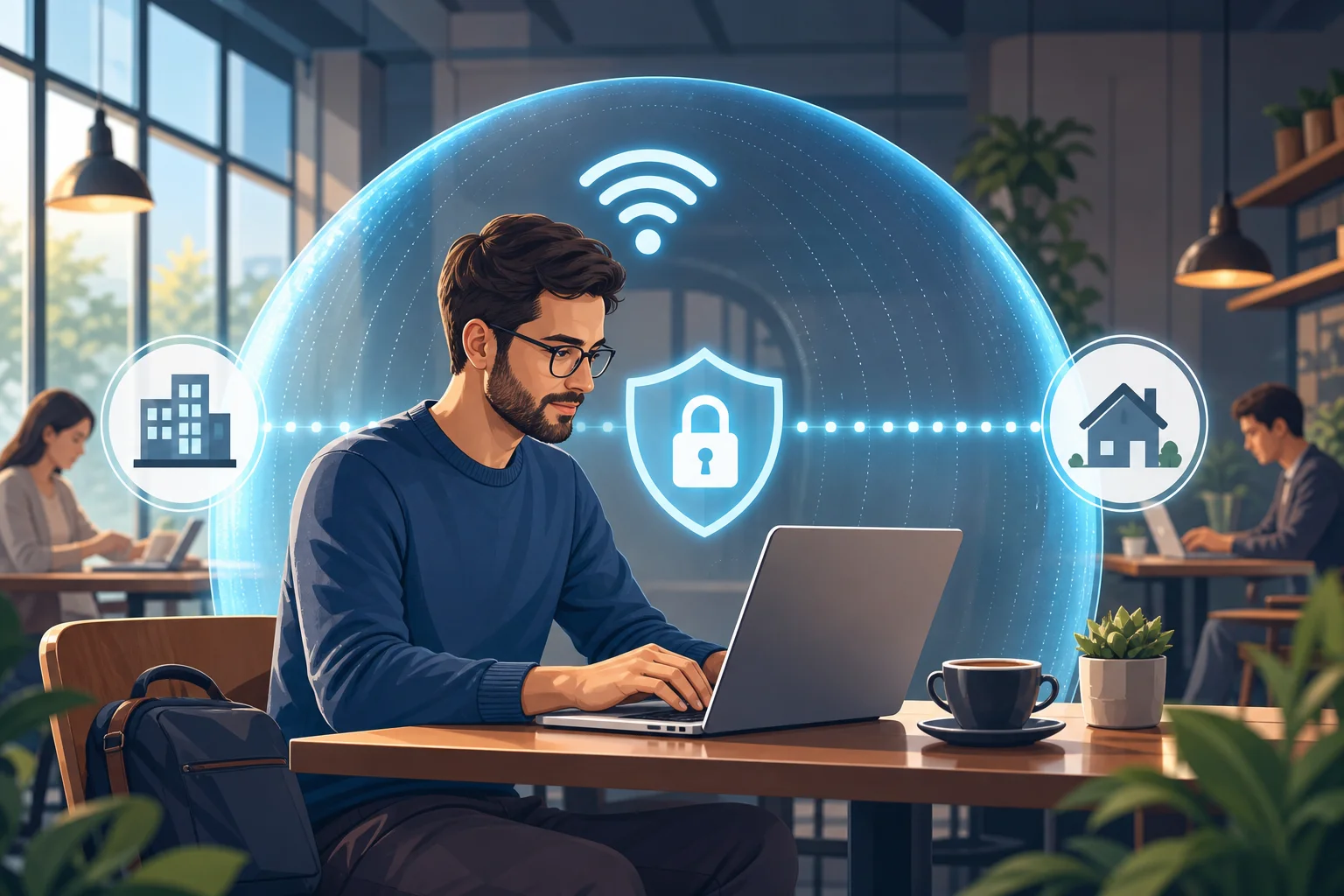
vpn laptop security on public wifi

How VPNs Work: The Tunnel of Security

Think of a VPN like a secure tunnel for your data. Without a VPN, your laptop sends information across the internet more like a postcard. Some parts may be protected by HTTPS, but the route and some connection details can still be visible.

With a VPN, your data is placed inside a locked container before it leaves your laptop. That container travels through a tunnel to a VPN server. From there, it continues to the website or service you want to use.

Encryption in Simple Terms

Encryption is the process of scrambling data so it cannot be read by people who do not have the right key. Imagine writing a note in a code that only you and the intended receiver understand. If someone else finds the note, it looks like nonsense.

A VPN uses encryption to protect your internet traffic between your laptop and the VPN server. This helps keep your browsing, app activity, and data transfers more private on shared networks.

Protected vs. Unprotected Data: A Real-World Example

Imagine you are working in a café and need to upload a client proposal to cloud storage.

  • Without a VPN: Your connection may still be partly protected by the cloud service, but people on the same Wi-Fi could see connection metadata, such as which services you are using. If you connect to a fake hotspot or a poorly configured site, the risk increases.
  • With a VPN: Your traffic first goes through an encrypted tunnel. Others on the café network have a much harder time seeing your activity or interfering with your connection.

In short, a VPN turns a public road into a private lane. You still need to drive carefully, but you are less exposed.

Steps to Set Up a VPN on Your Laptop

Setting up a VPN on a laptop is usually simple. Most VPN providers offer apps for Windows, macOS, and sometimes Linux. The exact screens may vary, but the process is similar.

Step-by-Step VPN for Laptop Setup

  1. Choose a reliable VPN provider
    Look for a VPN with laptop apps, clear privacy policies, strong encryption, and good performance. If you are using a work laptop, check whether your employer requires a specific company VPN.

  2. Download the official VPN app
    Go to the provider’s official website or a trusted app store. Avoid random download sites, as they may bundle unsafe software.

  3. Install the app
    Open the installer and follow the prompts. On macOS or Windows, you may need to approve network permissions. This is normal for VPN software.

  4. Open the VPN and sign in if required
    Some VPNs require an account. Others may work without registration. Follow the provider’s setup flow.

  5. Choose a server location
    For speed, pick a nearby server. If you need access to work systems in a specific country or region, choose the location that matches your need.

  6. Turn on the VPN connection
    Click or tap the connect button. Wait until the app says you are connected.

  7. Check that it works
    Open a browser and search “what is my IP.” The location should reflect the VPN server, not your exact local connection.

  8. Enable security settings
    Turn on features like a kill switch, auto-connect on public Wi-Fi, and leak protection if available.

Common VPN Setup Issues and Quick Fixes

ProblemLikely causeSimple fix
VPN will not connectServer is busy or blockedTry another server or restart the app
Internet becomes slowDistant server or weak Wi-FiChoose a closer server and test your network
Work app stops loadingCompany blocks unknown VPNsAsk IT or use the approved business VPN
Login verification keeps appearingNew VPN IP addressConfirm the login and save the device if trusted
VPN disconnects oftenUnstable networkEnable auto-reconnect or move closer to the router

If you are on a company-managed laptop, do not change security settings without permission. Some organizations use their own VPN to control safe access to internal tools.

Choosing the Right VPN Features for Remote Work

Not every VPN is ideal for remote work. Beginners often focus only on price, but features matter more when your laptop is your main workspace.

Essential VPN Features for Laptop Users

Look for these features when choosing a VPN for remote work:

  • Kill switch: Stops internet access if the VPN drops, helping prevent accidental exposure.
  • No-log policy: States that the provider does not store your browsing activity. Read the policy carefully.
  • Strong encryption: Modern VPN protocols such as WireGuard or OpenVPN are common choices.
  • Auto-connect: Turns on the VPN automatically when you join untrusted Wi-Fi.
  • DNS leak protection: Helps keep DNS requests inside the VPN tunnel.
  • Laptop compatibility: Make sure it supports your operating system, such as Windows, macOS, or Linux.
  • Good speed: Remote work often includes video calls, file sharing, and cloud apps, so performance matters.

Free vs. Paid VPN Options for Laptops

Free VPNs can be useful, especially for basic privacy on public Wi-Fi. However, you should choose carefully. Some free services limit speed, data, server choices, or features. Others may use unclear business models.

Paid VPNs often provide more servers, faster speeds, customer support, and advanced settings. They may be better if you work remotely every day or handle sensitive information.

Here is a simple comparison:

OptionBest forWatch out for
Free VPNLight browsing, occasional public Wi-Fi useData limits, fewer servers, limited support
Paid VPNDaily remote work, large files, streaming callsMonthly cost, renewal terms
Company VPNAccessing internal business systemsMay not be designed for personal browsing

Examples of VPNs Known for Laptop Compatibility

Many well-known VPN services support laptop operating systems. Examples include NordVPN, Proton VPN, Surfshark, ExpressVPN, Mullvad, and CyberGhost. BeFreeVPN is also designed to work across common devices and can be a practical option for users who want a simple start without registration.

Before installing any VPN, check current compatibility on the provider’s website. App support can change, and business laptops may have restrictions.
vpn features for remote work laptop

Maintaining Your VPN for Optimal Performance

A VPN is not something you set once and forget forever. Like antivirus software or your operating system, it works best when you keep it updated and test it from time to time.

Keep Your VPN Updated and Secure

Start with these habits:

  • Install VPN app updates when they are available.
  • Update your laptop operating system to patch security issues.
  • Use strong device passwords and enable screen lock.
  • Turn on auto-connect for public or unknown networks.
  • Review VPN settings after major app updates.
  • Remove old VPN apps you no longer use to avoid conflicts.

Also, pay attention to browser extensions. A VPN app protects more of your laptop traffic than a browser-only extension, which usually covers only that browser.

How to Test VPN Performance Regularly

You do not need advanced tools. Once a month, or whenever your connection feels strange, run these simple checks:

  1. Check your IP address: Confirm that websites see the VPN server IP, not your regular network IP.
  2. Run a speed test: Compare speeds with the VPN on and off. Some slowdown is normal, but it should not make work impossible.
  3. Test video calls: Join a short call or meeting test room to check stability.
  4. Open work tools: Make sure email, cloud storage, chat apps, and dashboards load correctly.
  5. Try another server: If one location is slow, switch to a nearby server.

Performance Problems and Fixes

If your VPN feels slow, first check your base internet connection. Disconnect the VPN briefly and test your speed. If your normal connection is also slow, the VPN is not the main issue.

If only the VPN is slow, try these fixes:

  • Switch to a closer server.
  • Change the VPN protocol in the app settings, if available.
  • Restart the VPN app and your laptop.
  • Move closer to your Wi-Fi router.
  • Pause large downloads during video calls.
  • Contact the VPN provider if a specific server keeps failing.

For remote workers, reliability is more important than chasing the highest speed number. A stable connection that keeps your laptop protected is the goal.

Frequently Asked Questions About VPN for Laptop Setup

Do I need a VPN on my laptop at home?

A VPN is most useful on public or shared Wi-Fi, but it can also add privacy at home by reducing what your internet provider can see. If you handle work files or sensitive accounts, using a VPN at home can be a smart habit.

Will a VPN protect me from all online threats?

No. A VPN protects your connection, but it does not replace antivirus tools, password managers, software updates, or careful browsing. Think of it as one strong lock, not the whole security system.

Should I leave my VPN on all the time?

For many remote workers, yes. Leaving it on reduces the chance of forgetting it when switching networks. If a specific app does not work with the VPN, try another server or ask your IT team for guidance.

Can I use a VPN on both Windows and Mac laptops?

Yes, many VPN providers offer apps for both Windows and macOS. Some also support Linux. Always download the correct version from the official source.

Is a free VPN safe for laptop use?

Some free VPNs are safe, but you need to be selective. Look for clear privacy terms, no forced tracking, and trustworthy app sources. Avoid unknown VPNs that make unrealistic promises.

Final Thoughts

A good VPN for laptop setup is one of the easiest ways to improve privacy and security while working remotely. It helps protect your data on public Wi-Fi, creates an encrypted tunnel for your connection, and gives you more confidence when using cloud tools, email, and business apps away from the office. Choose a VPN with the right features, keep it updated, and test it regularly so it stays reliable.

Secure your laptop with BeFreeVPN today—it's free, requires no registration, and works seamlessly on most devices to keep your home office connections safe and private.


The Ultimate Guide to Using VPN for Laptops with Fast Servers

· 16 min read

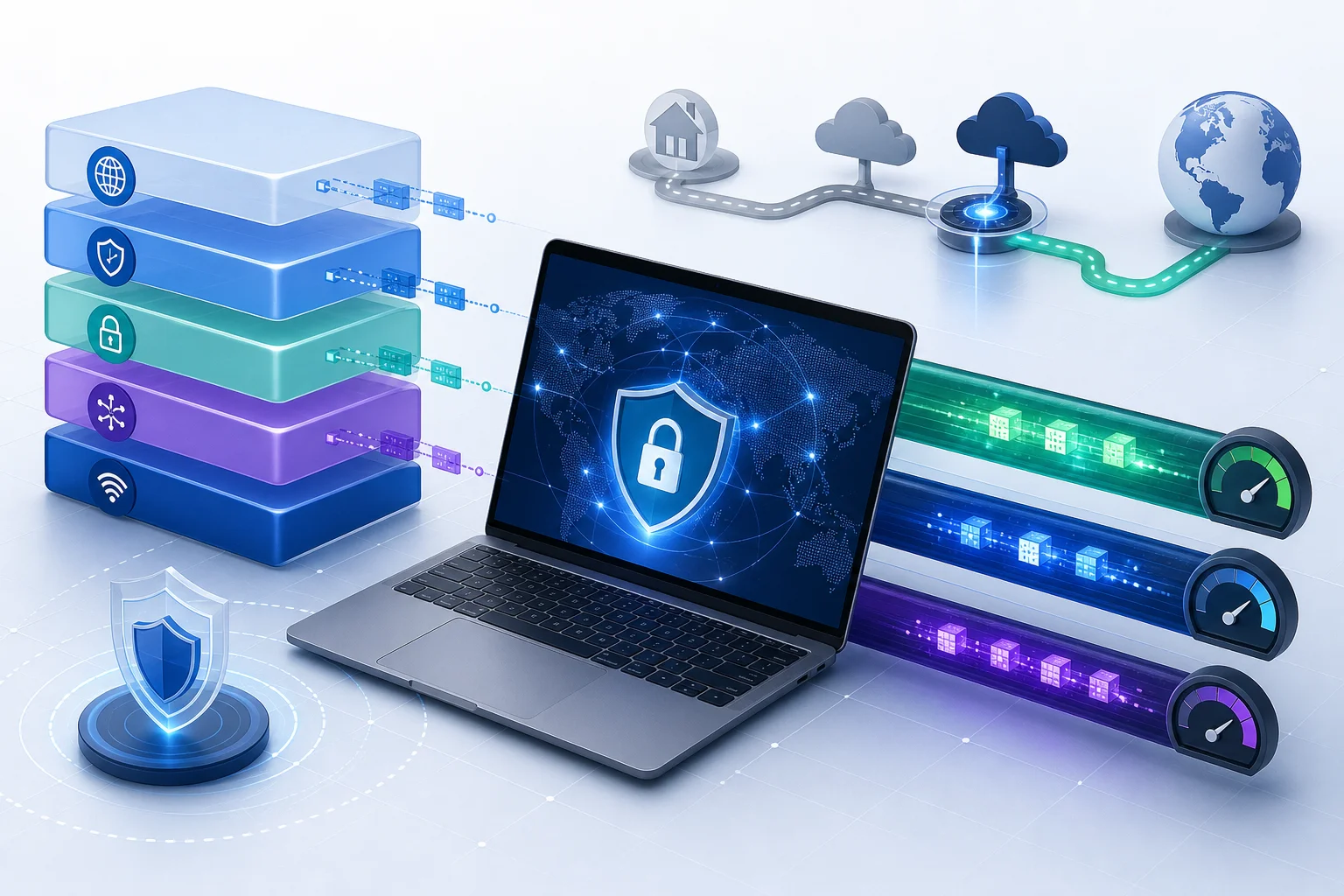
Wondering if you need to pay for a VPN on your laptop? Think again—there's a free option with fast servers ready to go. If you are looking for a vpn for laptop with fast servers, this guide explains what matters most: speed, privacy, ease of setup, and whether a free VPN can be good enough for everyday browsing, streaming, and public Wi-Fi protection. We will focus on BeFreeVPN as a no-registration, no-fee option for laptop users who want a simple way to connect securely without getting locked into a subscription.

A laptop is often your main device for work, study, travel, shopping, streaming, and messaging. That makes VPN performance important. A slow VPN can turn basic tasks into a frustrating wait. A fast VPN, on the other hand, should feel nearly invisible while helping protect your connection.

vpn for laptop fast servers

1. Introduction: Why Go for a VPN with Fast Servers?

A VPN, or virtual private network, routes your internet traffic through an encrypted connection. This can help protect your data on public Wi-Fi, reduce exposure to network snooping, and give you a more private browsing experience. However, a VPN is only useful if it is practical to keep turned on. That is where fast servers matter.

When a VPN server is overloaded, far away, or poorly configured, you may notice:

  • Pages loading slowly
  • Video buffering more often
  • File downloads taking longer
  • Video calls becoming unstable
  • Apps timing out or disconnecting

For laptop users, this is especially annoying because laptops are used in many different environments. You may connect from home, a hotel, an airport, a library, a café, or a campus network. In each case, speed and reliability can change.

The challenge is cost. Many VPN providers reserve their fastest servers for paid plans. Free tiers often come with strict data limits, long queues, ads, limited locations, or heavy throttling. As a result, people assume that a fast VPN for laptop use must be expensive.

The quick answer: BeFreeVPN is positioned as a free alternative that does not require subscription fees or registration. For users who want a simple VPN for a laptop with fast servers and minimal friction, it can be a practical starting point. As with any VPN, your final speed depends on your base internet connection, distance to the server, server load, laptop performance, and network conditions.

2. What is a VPN and Why is Server Speed Crucial?

A VPN creates a secure tunnel between your laptop and a VPN server. Instead of your laptop sending traffic directly to websites and apps, the traffic first goes through the VPN tunnel. The website then sees the VPN server as the connection point rather than your local network.

In simple terms, a VPN can help with three everyday goals:

  1. Privacy on shared networks — It helps protect traffic from casual snooping on public Wi-Fi.
  2. Safer browsing while traveling — It adds a layer of protection when you do not control the network.
  3. More consistent access and location flexibility — Depending on the server options available, it can help you connect through another region.

How server speed affects your laptop experience

Server speed is not just about a single download number. It includes several factors:

  • Latency: How long data takes to travel between your laptop and the server. Lower latency helps with video calls, gaming, and responsive browsing.
  • Download speed: How quickly your laptop receives data. This matters for streaming, downloads, cloud documents, and web pages.
  • Upload speed: How quickly your laptop sends data. This matters for video meetings, file uploads, backups, and remote work.
  • Server load: How many users are using the same server. A crowded server can slow down even if the infrastructure is strong.
  • Connection stability: How often the VPN stays connected without drops.

A fast VPN server should reduce the impact of encryption and routing. No VPN can make every connection faster in every situation, because your traffic has to travel through an extra step. But a well-performing VPN should keep that extra delay low enough that normal browsing feels smooth.

Free vs. paid VPN services

Paid VPNs often promote large server networks, advanced features, and dedicated support. However, not every user needs all of that. If your main goal is safe, everyday laptop browsing, a free VPN with fast servers and no account requirement may be enough.

FeatureTypical free VPN issueWhat laptop users should look for
CostFree plans may push upgradesTruly free access without surprise fees
RegistrationSome require email or account setupNo-registration connection if privacy and speed matter
SpeedSome free servers are throttledFast available servers and easy switching
Data limitsDaily or monthly caps can interrupt useEnough access for normal browsing needs
Ease of useComplex setup can discourage useOne-click or simple laptop setup
PrivacySome free apps rely on aggressive ads or trackingClear privacy practices and minimal personal data required

This is why BeFreeVPN stands out for users who want to avoid paying before they even know whether a VPN fits their workflow. A free laptop VPN should be easy to test, easy to uninstall if it is not right, and simple enough for non-technical users.

3. How BeFreeVPN Offers Speed without Cost

BeFreeVPN’s main appeal is simple: it is presented as a free VPN option that does not require subscription fees or registration. That matters because many people do not want to share an email address, create another password, or enter payment details just to secure a laptop connection.

No subscription fees or registration needed

A no-registration VPN reduces the friction between deciding you need protection and actually turning it on. For laptop users, this is useful in real situations:

  • You are about to use airport Wi-Fi.
  • You need to join a video call from a hotel.
  • You are working from a café.
  • You want extra privacy while using a shared network.
  • You need a quick VPN without setting up an account.

With BeFreeVPN, the benefit is not only that it is free. It is that the setup aims to be quick. That makes it more likely that users will actually use the VPN when they need it.

Server locations and infrastructure

A VPN’s speed depends heavily on its server network. In general, the best server for speed is usually the one closest to your physical location with the lowest current load. Some users may also choose a server in a specific country or region depending on their needs.

Because server availability can change over time, the best approach is to check the current server list inside BeFreeVPN and test a few nearby options. Look for servers that provide:

  • Low ping or latency
  • Stable connection over several minutes
  • Smooth page loading
  • Good video playback without repeated buffering
  • Reliable uploads for documents or calls

Infrastructure also matters. A fast VPN service should balance users across servers, keep connection drops low, and make server switching simple. If one server feels slow, changing to another nearby server can often improve the experience.

fast vpn servers for laptop

Comparison with other free services

Not all free VPNs are the same. Some free providers limit speed so strongly that the VPN becomes hard to use. Others cap data, show disruptive ads, or require registration before you can connect.

Here is a practical comparison:

VPN factorCommon free VPN experienceBeFreeVPN angle for laptop users
Upfront costFree trial or limited free tierFree access without a paid plan requirement
Sign-upEmail or account often requiredNo registration needed
Server speedCan vary widelyFocus on fast available servers for everyday use
SetupMay involve several stepsDesigned for simple laptop use
Best use caseOccasional light browsingQuick secure browsing without fees or sign-ups

The key point is realistic expectation. BeFreeVPN can be a strong choice if you want a free VPN for laptop browsing, travel, and general privacy. If you need specialized enterprise controls, dedicated IP addresses, or advanced administrative tools, a business-grade paid VPN may still make sense.

4. Quick Answer Box: Is a Free VPN Really Fast?

Is a free VPN really fast enough for a laptop?

Yes, a free VPN can be fast enough for laptop use if it has responsive servers, simple routing, and no severe throttling. BeFreeVPN is worth trying because it removes two major barriers: payment and registration. However, performance should always be tested on your own network because VPN speed depends on location, Wi-Fi quality, server distance, and device settings.

What performance metrics should I check?

Do not rely only on marketing claims. Run a quick before-and-after test:

  1. Test your normal internet speed with the VPN off.
  2. Connect to the nearest available BeFreeVPN server.
  3. Test download speed, upload speed, and ping.
  4. Open several websites you use daily.
  5. Try a short video stream or video call test.
  6. Switch servers if performance feels slow.

The most useful metrics are:

  • Ping: Lower is better for responsiveness.
  • Download speed: Higher is better for streaming and browsing.
  • Upload speed: Higher is better for calls and cloud work.
  • Jitter: Lower is better for stable calls and streaming.
  • Connection drops: Fewer drops mean better reliability.

A good result is not always the highest speed-test number. It is a connection that feels stable for your real tasks.

What do users usually say about fast free VPNs?

When people review a fast free VPN, they usually focus on practical signs rather than technical details. Common positive feedback includes quick connection times, smooth browsing, fewer interruptions, and easy server switching. Common negative feedback for poor free VPNs includes slow starts, crowded servers, frequent disconnects, and too many upgrade prompts.

For BeFreeVPN, the best way to judge reliability is to test it during the times you actually use your laptop. Evening streaming, morning work calls, and public Wi-Fi sessions can all behave differently.

Can a VPN make my internet faster?

Sometimes a VPN may feel faster if your local network or internet provider is routing certain traffic poorly. However, this is not guaranteed. In most cases, the goal of a VPN is to protect and route traffic with as little slowdown as possible, not to magically increase your base internet speed.

5. Setting Up BeFreeVPN on Your Laptop

Setting up a VPN should not feel like a technical project. A good laptop VPN is easy to install, easy to connect, and easy to disable when needed. The exact steps may vary slightly depending on your operating system, but the general process is straightforward.

setting up laptop vpn

Step-by-step installation guide

Follow these steps to start using BeFreeVPN on your laptop:

  1. Go to the official BeFreeVPN source
    Use the official website or trusted app listing. Avoid downloading VPN installers from random third-party sites.

  2. Download the laptop version
    Choose the correct version for your operating system, such as Windows, macOS, or another supported platform.

  3. Install the application
    Open the installer and follow the on-screen instructions. If your laptop asks for permission to add VPN configurations, review the prompt and continue only if it matches the app you downloaded.

  4. Open BeFreeVPN
    Launch the app after installation. Since BeFreeVPN is promoted as not requiring registration, you should be able to move toward connection without creating an account.

  5. Choose a server
    Start with the nearest or recommended server. Nearby servers usually provide lower latency and better speed.

  6. Connect the VPN
    Click the connect button and wait for confirmation. Once connected, your laptop traffic should route through the VPN tunnel.

  7. Test your connection
    Open a browser, load a few websites, and run a speed test if needed. Check whether browsing feels smooth.

  8. Adjust if necessary
    If speed is not ideal, disconnect and try another server. Small changes can make a noticeable difference.

Configuration for optimal speed

After installation, use these settings and habits to improve performance:

  • Choose the closest server first. Shorter distance usually means lower latency.
  • Use a stable Wi-Fi network. Weak Wi-Fi can make any VPN seem slow.
  • Close heavy background apps. Cloud backups, game downloads, and system updates can consume bandwidth.
  • Keep the VPN app updated. Updates may improve stability and compatibility.
  • Restart the connection if it becomes slow. A fresh server connection can help.
  • Avoid unnecessary browser extensions. Some extensions slow pages or interfere with privacy tools.

Troubleshooting common speed issues

If BeFreeVPN feels slow on your laptop, try this quick checklist:

ProblemLikely causeWhat to try
Websites load slowlyHigh server load or weak Wi-FiSwitch server, move closer to router
Video buffersLow download speedTry a nearby server, lower video quality briefly
Video calls freezeHigh ping or unstable Wi-FiUse a closer server, close background uploads
VPN disconnectsNetwork switching or sleep settingsDisable aggressive sleep mode, reconnect manually
Speed test drops sharplyServer distance or congestionCompare several servers and test again

Also remember to compare performance with the VPN off. If your base connection is already slow, the VPN may not be the main issue.

6. Advanced: Optimizing VPN Performance on Laptops

Once BeFreeVPN is installed, you can improve speed further by understanding how servers, laptop settings, and security habits work together.

Choosing the best server for maximum speed

The fastest server is not always the one with the most attractive location. For speed, start with these rules:

  1. Pick the closest available server. This usually lowers ping.
  2. Avoid crowded servers when possible. If the app shows load, choose a less busy option.
  3. Test at different times. Speeds can change during peak hours.
  4. Use task-based choices. For video calls, prioritize low latency. For downloads, prioritize download speed.
  5. Switch if performance drops. Do not stay on a slow server out of habit.

A simple routine works well: connect, test real browsing, then switch only if you notice problems.

Laptop settings that affect VPN performance

Your laptop can slow down a VPN even when the server is fine. Check these areas:

  • Power mode: Battery saver modes can reduce network and processor performance. Use balanced or performance mode when speed matters.
  • Wi-Fi signal: A weak signal causes packet loss and delays. Move closer to the router or use a stronger network.
  • Background syncing: Cloud storage, photo backups, and software updates can use bandwidth.
  • Browser load: Too many tabs and extensions can make browsing feel slow even when the VPN is working well.
  • Security software conflicts: Firewalls and antivirus tools may inspect VPN traffic. If there is a conflict, check settings rather than disabling protection completely.
  • Operating system updates: Outdated network drivers or system components can affect stability.

For the best laptop VPN experience, treat speed as a full-device issue. The VPN server matters, but your local setup matters too.

Security tips when using free VPNs

Free VPNs can be convenient, but you should still use them wisely. BeFreeVPN’s no-registration approach is attractive because it reduces the amount of personal information needed to start. Even so, follow basic security habits:

  • Download only from official or trusted sources.
  • Review permissions during installation.
  • Keep your operating system and browser updated.
  • Use HTTPS websites whenever possible.
  • Avoid logging into sensitive accounts on suspicious public Wi-Fi unless the VPN is connected.
  • Use strong, unique passwords and a password manager.
  • Enable multi-factor authentication for important accounts.
  • Disconnect from public Wi-Fi when you are finished.

A VPN is one layer of protection. It does not replace safe browsing, good passwords, device updates, or common sense.

When paying for a VPN might still make sense

This guide focuses on why paying for a VPN may be unnecessary for many laptop users. Still, there are cases where a paid plan could be appropriate:

  • You need a specific country or city server every day.
  • You require dedicated business support.
  • You need advanced features such as dedicated IPs or team management.
  • You have strict compliance requirements.
  • You need guaranteed service-level commitments.

For general browsing, public Wi-Fi protection, and simple laptop privacy, trying BeFreeVPN first is a reasonable move. You can evaluate speed and usability before spending money elsewhere.

7. Key Takeaways and Final Thoughts

A vpn for laptop with fast servers should be simple, reliable, and quick enough that you actually keep it on when you need protection. Fast servers matter because they affect every part of the experience, from browsing and streaming to video calls and downloads.

Here are the main points to remember:

  • A VPN encrypts your laptop traffic and routes it through a secure server.
  • Server speed affects latency, downloads, uploads, and connection stability.
  • Free VPNs vary widely, so real testing is important.
  • BeFreeVPN offers a free, no-registration approach that removes common barriers.
  • The nearest server is usually the best starting point for speed.
  • Laptop settings, Wi-Fi strength, and background apps can affect VPN performance.
  • Paying for a VPN is not always necessary for everyday privacy and browsing.

BeFreeVPN is especially appealing for users who want a low-friction option. You do not need to begin with a subscription, and you do not need to create an account just to see whether it works for your laptop. That makes it practical for students, travelers, remote workers, casual streamers, and anyone who uses public Wi-Fi.

The best approach is to test it in your normal routine. Connect to BeFreeVPN, choose a nearby server, browse your usual websites, try a stream or call, and compare the experience. If it is fast and stable for your needs, there may be no reason to pay for a VPN.

Try BeFreeVPN today to enjoy fast and secure browsing on your laptop without the hassle of sign-ups or fees.

VPN for Laptop Download: A Deep Dive into Advanced Options

· 16 min read

In a world where internet freedom is increasingly curtailed, a VPN for laptop download can be your key to uncensored access—especially crucial for those in restrictive regions. This guide explains how laptop VPNs work, which protocols matter, how to install them securely, and what advanced users should check before trusting any provider. It also addresses legal limits, common myths, and practical ways to strengthen privacy beyond the VPN tunnel.

A laptop is often the main device for work, study, research, and cross-border communication. That makes VPN selection more than a convenience choice. In censorship-heavy environments, the wrong protocol, weak DNS handling, or a poorly implemented kill switch can expose traffic at the worst time. The goal is not just to “download a VPN.” The goal is to choose, verify, and operate one with a clear threat model.

vpn for laptop download in restrictive regions

1. Understanding the Need for VPNs in Restrictive Regions

Internet censorship can take many forms. Some governments block news sites, messaging apps, search engines, cloud storage, or social networks. Others use keyword filtering, DNS poisoning, IP blocking, deep packet inspection, or throttling to make certain services unreliable. In some regions, access may change during elections, protests, conflicts, or public emergencies.

For users, the effects are direct. Students may lose access to research platforms. Journalists may be unable to contact sources. Remote workers may be locked out of productivity tools. Families may struggle to communicate across borders. Even when a site is not fully blocked, slow or unstable access can make it unusable.

A VPN helps by creating an encrypted tunnel between your laptop and a remote VPN server. Your internet service provider can usually see that you are connecting to a VPN endpoint, but it cannot read the contents of your traffic inside the tunnel. Websites and apps see the VPN server’s IP address instead of your local IP address. As a result, a VPN can help bypass regional restrictions when the VPN server is located in a less restricted network environment.

However, a VPN is not magic. It does not remove all risks. Local laws still apply, and the legal status of VPN use differs by country. In some places, VPNs are legal for business and privacy. In others, only approved providers are allowed. Some regions restrict or penalize circumvention tools. Before using a VPN in a restrictive country, review current local rules and assess personal risk. This article is technical guidance, not legal advice.

Ethically, VPNs can support access to information, secure communication, and basic privacy. They can also be misused. Advanced users should focus on legitimate purposes: protecting sensitive data, reaching open information sources, and securing communications on hostile networks.

2. Key Protocols Behind VPN for Laptop Download

The protocol is the engine of a VPN connection. It defines how encryption, authentication, routing, and session management work. For laptop users, the main choices are OpenVPN, IKEv2/IPsec, and WireGuard. Each has strengths and trade-offs.

OpenVPN

OpenVPN is one of the most established VPN protocols. It uses the OpenSSL library and can run over UDP or TCP. UDP is usually faster and better for normal browsing, streaming, and calls. TCP can be useful when networks block or degrade UDP, although TCP-over-TCP may cause performance issues on unstable links.

OpenVPN is popular in restrictive regions because it is flexible. It can run on common ports such as TCP 443, the same port used by HTTPS. This may help traffic blend with normal encrypted web traffic, although advanced filtering systems can still detect OpenVPN patterns. Some providers add obfuscation layers to make OpenVPN harder to fingerprint.

Security depends on configuration. Strong cipher suites, certificate validation, and modern TLS settings are essential. Poorly configured OpenVPN can be weaker than its reputation suggests.

IKEv2/IPsec

IKEv2/IPsec is known for fast reconnection. It is useful on laptops that switch between Wi-Fi networks, mobile hotspots, and sleep states. When the network changes, IKEv2 can often restore the tunnel quickly.

It is generally secure when implemented with strong algorithms. It is also supported by many operating systems, sometimes with native clients. That reduces the need for extra software in some enterprise setups.

The downside is censorship resistance. IKEv2/IPsec uses ports and traffic patterns that may be easier to block in some environments. If a country or network blocks IPsec traffic broadly, IKEv2 may fail even when other protocols work.

WireGuard

WireGuard is modern, lean, and fast. Its codebase is smaller than older VPN protocols, which can help security auditing. It uses modern cryptographic primitives and is often efficient on laptops, including older hardware.

For speed, WireGuard is usually a strong choice. It can reduce latency and CPU usage compared with older setups. This makes it attractive for video calls, large downloads, and remote work.

For censorship-heavy regions, the picture is mixed. Standard WireGuard traffic can be recognizable. It also uses UDP by default. If the network blocks UDP or fingerprints WireGuard, the connection may fail. Some providers solve this with obfuscation, TCP wrapping, or custom stealth modes. Without those layers, WireGuard may be fast but not always the best for hostile networks.

Protocol Comparison Table

ProtocolSpeedSecurityCompatibilityCensorship resistanceBest use case
OpenVPN UDPGoodHigh if configured wellVery broadModerate to high with obfuscationGeneral use in restrictive regions
OpenVPN TCP 443ModerateHigh if configured wellVery broadOften better on locked-down networksNetworks that block UDP
IKEv2/IPsecGood to very goodHigh with strong settingsStrong native OS supportLow to moderateRoaming between networks
WireGuardVery highHigh with modern designBroad and growingModerate unless obfuscatedSpeed-focused laptop use

For advanced users in restrictive regions, the best VPN for laptop download is often one that supports more than one protocol. If WireGuard is blocked, switch to OpenVPN TCP. If a captive Wi-Fi network breaks OpenVPN UDP, test IKEv2 or a stealth mode. Flexibility matters.

vpn protocols for laptop security

3. How to Download and Install a VPN on Your Laptop

Downloading a VPN in a restricted environment requires care. Fake installers, cloned websites, and tampered packages are common risks. Use a clean process and verify what you install.

Step-by-Step VPN Download and Installation Guide

  1. Define your threat model. Decide what you need most: censorship bypass, privacy from local networks, protection on public Wi-Fi, or stable access to work tools. Your choice of protocol and provider should match that risk.

  2. Use the official source. Download the VPN app from the provider’s official website or trusted app store. Avoid third-party download portals. They may bundle unwanted software or outdated clients.

  3. Check domain authenticity. Look for HTTPS, correct spelling, and a valid certificate. Be alert for lookalike domains, especially if the VPN is popular in your region.

  4. Verify the installer when possible. Advanced users should check digital signatures, hashes, or package signatures. On Windows, inspect the publisher signature. On macOS, check notarization. On Linux, prefer signed repositories or verified packages.

  5. Install with least surprise. Read permission prompts. A VPN client needs network extension or adapter rights, but it should not request unrelated access such as browser passwords or document folders.

  6. Choose the right protocol. Start with the provider’s recommended protocol. If censorship blocks it, try OpenVPN TCP 443, an obfuscated mode, or another supported option.

  7. Enable security controls before browsing. Turn on the kill switch, DNS leak protection, and auto-connect on untrusted networks. Test them before relying on the VPN.

  8. Run a leak test. Check your public IP address, DNS resolver, and WebRTC behavior. If your ISP DNS still appears, fix settings before using sensitive sites.

Secure Installation on Windows, macOS, and Linux

On Windows, install from a signed executable or Microsoft Store listing if available. Avoid running installers as administrator unless required. After setup, check that the VPN network adapter is created by the expected vendor. Also review startup entries so you know what launches at boot.

On macOS, use apps that are notarized and distributed through the official site or App Store. macOS may ask for permission to add VPN configurations or network extensions. Confirm that the provider name matches. If the app uses a system extension, keep it updated.

On Linux, prefer repository-based installation when offered. Signed APT, RPM, Flatpak, or Snap packages reduce tampering risk. If you import a repository key, confirm the fingerprint from the provider’s official documentation. For manual OpenVPN or WireGuard configs, protect private keys with correct file permissions.

Troubleshooting Download and Installation Issues

If the VPN website is blocked, try a mirror link from the provider, a trusted app store, or a secure connection from another network. Some users keep offline installers on encrypted storage before traveling to restrictive regions.

If installation fails, remove older VPN drivers, reboot, and reinstall. Conflicts can occur when several VPN apps compete for routing and DNS control. If connections fail after installation, test a different protocol and server. Also check local firewalls, corporate endpoint tools, and captive portals.

If speeds are unusable, switch from TCP to UDP when possible, choose a nearby server, or test WireGuard. If the connection drops under censorship pressure, try TCP 443 or stealth options.

4. Features to Look for in a VPN for Laptops

Not every VPN client is suitable for advanced laptop use. Marketing claims are easy to make. Implementation quality is harder to verify. Focus on features that reduce real exposure.

No-Log Policy and Strong Encryption

A no-log policy means the provider claims not to store activity records that can identify what you do online. Look for clear language. The policy should explain what is not collected, what minimal operational data may be processed, and how long any data is retained. Independent audits can help, but read their scope. An audit of one server system does not always cover every app, protocol, or business process.

Encryption should be modern and well configured. OpenVPN should use strong TLS settings. WireGuard should use its standard modern primitives. Avoid providers that still promote obsolete protocols such as PPTP for privacy or censorship bypass.

Kill Switch and DNS Leak Protection

A kill switch blocks internet traffic if the VPN drops. This is critical in restrictive regions because a brief disconnect can expose your real IP address or DNS queries. A strong kill switch should work at the firewall or system networking level, not only inside the app interface.

DNS leak protection ensures your DNS requests go through the VPN tunnel. Without it, your ISP or local resolver may still see the domains you visit. Advanced users should test DNS behavior after every major app or OS update.

Also check IPv6 handling. Some VPNs tunnel IPv4 but leak IPv6 traffic. If the provider does not support IPv6 safely, the app should block it while connected.

Speed, Server Availability, and Censorship Bypass

Speed is not just about comfort. Slow VPNs can make secure tools impractical, pushing users toward unsafe shortcuts. Server availability also matters. If only one server works in your region, it may become blocked or overloaded.

Look for multiple regions, automatic server selection, and manual control. In restrictive environments, the ability to rotate servers is useful. However, more servers do not always mean better service. Quality, routing, and resistance to blocking matter more than raw server count.

5. Common Misconceptions About VPNs for Laptop Download

VPNs are powerful, but misunderstandings can lead to poor decisions. Advanced users should separate useful protection from unrealistic promises.

Myth 1: A VPN Provides Complete Anonymity

A VPN hides your traffic from the local network and masks your IP address from websites. It does not make you fully anonymous. Browser fingerprints, account logins, cookies, payment records, malware, and user behavior can still identify you.

If you log in to a personal account, that service knows who you are. If your browser has a unique fingerprint, sites may track you across IP changes. If your laptop is compromised, the VPN cannot protect data before it enters the tunnel.

VPN laws vary. In many countries, VPNs are legal privacy tools. In others, they are restricted, regulated, or blocked. Some governments allow only licensed services. Others may punish use during sensitive periods.

Do not rely on outdated forum posts. Laws and enforcement practices change. Review current local information and consider your personal risk level.

Myth 3: Free VPNs Are Always Unsafe, and Paid VPNs Are Always Safe

The free-versus-paid debate is more complex than it seems. Some free VPNs fund operations through ads, tracking, or limited data plans. That can be a poor fit for privacy. Yet payment alone does not guarantee good security. A paid provider can still keep excessive logs, use weak apps, or offer poor support.

Evaluate the model. Ask how the service is funded, what data it collects, what limits apply, and whether it requires registration. A VPN with free access and no registration can reduce account-linked exposure, but users should still test leaks and review technical safeguards.

6. Enhancing Security Measures Beyond VPNs

A VPN is one layer. For users in high-risk regions, security should be layered. Combine network privacy with safer browsing, device hardening, and cautious habits.

VPN with Tor for Added Anonymity

Tor routes traffic through multiple volunteer relays. It can provide stronger anonymity than a VPN alone, but it is slower and may attract attention on some networks. There are two common models:

  • VPN then Tor: You connect to the VPN first, then open Tor Browser. Your ISP sees the VPN, not direct Tor use. The VPN sees your IP, but not your Tor destination.
  • Tor then VPN: This is more complex and less common. It may help in special cases but can also weaken anonymity if configured poorly.

For most users, Tor Browser over a trusted VPN is simpler. Do not install random browser extensions into Tor Browser. They can break fingerprint protection.

Firewalls, Antivirus, and Endpoint Security

A VPN cannot stop malware, phishing, or malicious documents. Keep your operating system updated. Use reputable antivirus or endpoint protection where appropriate. Enable the built-in firewall and block unnecessary inbound connections.

Advanced users should also review application permissions. A messaging app, browser extension, or cracked software package can leak more than your ISP ever could. Avoid pirated VPN clients. They are a common malware vector.

Best Practices for Public Wi-Fi with a VPN

Public Wi-Fi is risky because local attackers may monitor traffic, spoof captive portals, or attempt device discovery. A VPN reduces exposure, but habits still matter:

  • Disable auto-join for unknown networks.
  • Use HTTPS websites and secure apps even when the VPN is on.
  • Enable the VPN before logging in to email, banking, or work tools.
  • Avoid accepting unknown certificates.
  • Turn off file sharing and AirDrop-like discovery features.
  • Use your phone hotspot if the Wi-Fi network seems hostile.

secure laptop vpn on public wifi

7. Top Considerations When Choosing a VPN Provider

Choosing a provider is a trust decision. You are moving visibility from the local network to the VPN operator. That does not mean VPNs are unsafe. It means the provider’s reputation, design, and transparency matter.

Reputation and User Reviews

Look for long-term reputation, consistent app updates, and clear privacy documentation. User reviews can reveal connection problems in specific countries or on specific laptop platforms. However, reviews can be manipulated. Give more weight to detailed technical reports than generic praise.

Check whether the provider responds to security issues. A good provider fixes bugs, explains changes, and updates clients promptly. Silence after a serious vulnerability is a warning sign.

Customer Support and Reliability

Support matters more in restrictive regions because blocks change. You may need new servers, alternate protocols, or manual configuration files. Useful support should offer practical steps, not only scripted replies.

For advanced users, documentation is part of support. Look for setup guides, protocol notes, troubleshooting pages, and clear explanations of kill switch behavior. If a VPN provides Linux configuration, WireGuard files, or OpenVPN profiles, it should explain how to use them safely.

Why Consider BeFreeVPN for Laptop Access

BeFreeVPN is positioned for users who need simple access without barriers. Its key benefits include free access, no registration, and security features aimed at helping users bypass censorship effectively. No registration can be useful because it reduces account setup friction and avoids linking routine VPN use to an email address.

For laptop users, that matters. When a network blocks information quickly, the ability to download and connect without a long onboarding flow can save time. As with any VPN, advanced users should still test DNS behavior, confirm kill switch settings, and choose the protocol that works best on the local network.

FAQ: VPN for Laptop Download Questions

What is the safest way to download a VPN for a laptop?

Use the provider’s official website or a trusted app store. Verify the installer signature when possible. Avoid third-party download sites, cracked clients, and unknown mirror links.

Which VPN protocol is best for censorship-heavy regions?

OpenVPN TCP 443 with obfuscation is often reliable on restrictive networks. WireGuard is usually faster, but it may need stealth features when deep packet inspection is active.

Can a VPN make me completely anonymous?

No. A VPN masks your IP address and encrypts traffic between your laptop and the VPN server. It does not erase browser fingerprints, account logins, cookies, malware, or personal behavior patterns.

Should I use a free VPN on my laptop?

It depends on the provider. Review its logging policy, funding model, permissions, and technical protections. Free access can be useful, especially without registration, but you should still test for leaks and connection stability.

Why does my VPN connect but websites remain blocked?

The server IP may be blocked, DNS may be leaking, or the protocol may be fingerprinted. Try another server, enable DNS leak protection, switch protocols, or use an obfuscated mode if available.

Conclusion

A VPN for laptop download is not just an app choice. It is a security decision that involves protocols, installation hygiene, leak protection, server reliability, and local legal context. In restrictive regions, advanced users should prioritize flexible protocols, strong kill switch behavior, DNS protection, and a provider that reduces friction when access is limited. Experience the freedom to browse without borders by downloading BeFreeVPN for your laptop today—it's free, requires no registration, and offers robust security to bypass censorship effectively.

Top FAQs About VPN for Laptop Free Options

· 9 min read

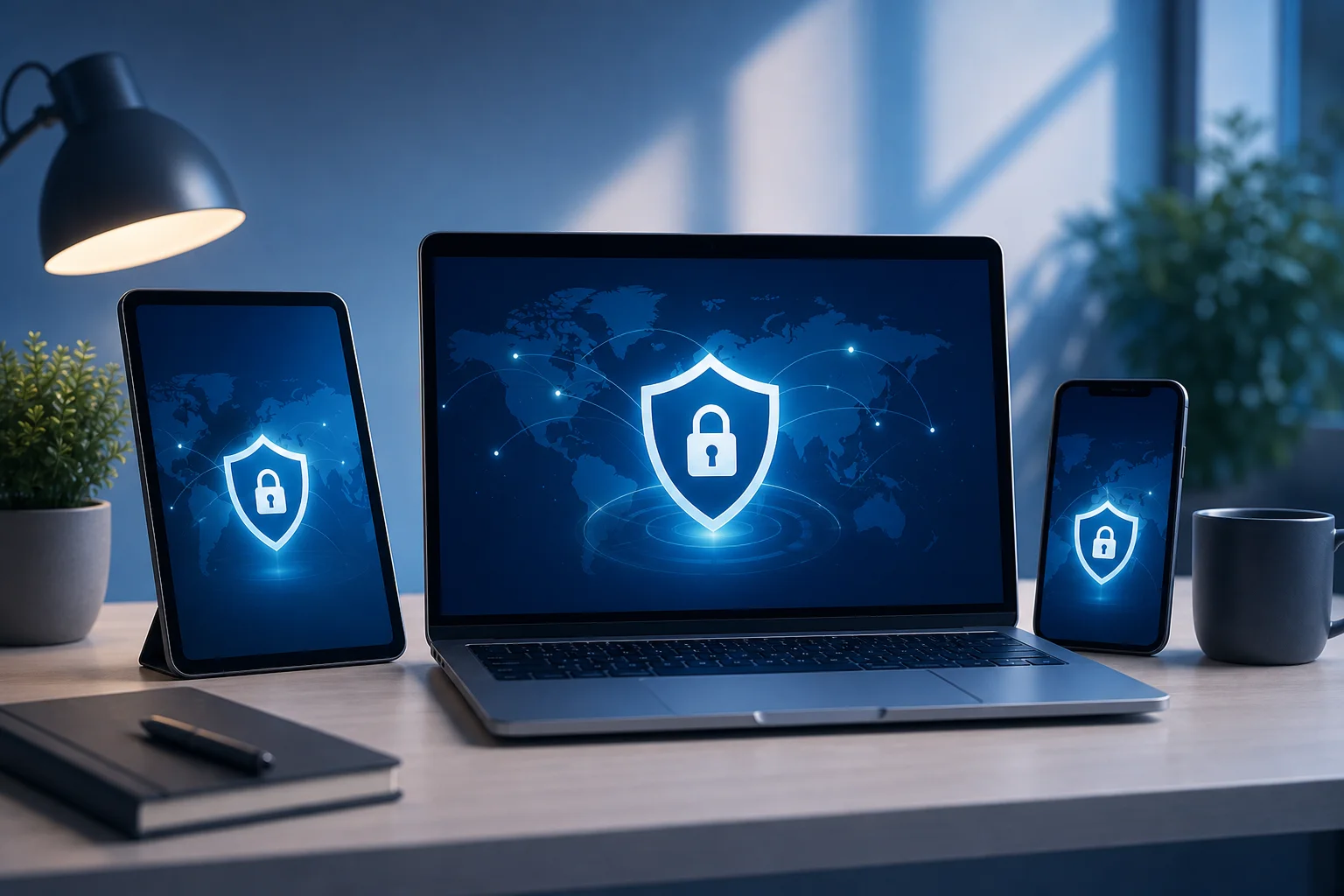
Curious about how a free VPN can safeguard your laptop and family? Discover the essentials right here. If you are searching for a vpn for laptop free, you likely want simple privacy protection without adding another paid subscription. This FAQ explains how free VPNs can support safer family browsing, protect children’s online activity, work across multiple devices, and affect internet speed. It also shows what to check before trusting any free VPN service.

A free VPN is not a complete security solution. However, when used with good passwords, safe browsing habits, device updates, and parental controls, it can add a useful privacy layer for everyday laptop use.

Is it safe to use a free VPN on my laptop for family browsing?

Yes, a free VPN can be safe for family browsing if you choose one with clear privacy practices and basic security features. Free VPNs like BeFreeVPN can offer encryption that helps protect browsing data on public Wi-Fi, shared networks, and everyday home connections.

A VPN creates an encrypted tunnel between your laptop and the VPN server. As a result, your internet provider, local network users, or people on unsecured Wi-Fi have a harder time seeing the details of your browsing activity. This is especially useful when family members use laptops in airports, cafés, hotels, schools, or libraries.

Still, not every free VPN is equal. Before installing a free VPN for your laptop, review these points:

What to checkWhy it matters for families
Encryption standardsHelps protect browsing data from basic network snooping
Data logging policyShows whether the provider stores browsing-related information
Device supportMakes it easier to protect more than one laptop or phone
Bandwidth limitsAffects how long family members can browse or stream
Ease of useReduces setup mistakes for children or less technical users

Free options may not include every advanced feature found in premium VPNs, such as dedicated IP addresses, specialty streaming servers, or advanced threat blocking. Even so, they can be useful for general family browsing, especially when your goal is basic privacy and safer connections.

free VPN for laptop family browsing

How can a free VPN contribute to my child’s online safety on a laptop?

A free VPN can support your child’s online safety by hiding the laptop’s IP address and making tracking more difficult. This adds a privacy layer when children browse websites, use learning platforms, play games, or connect to public Wi-Fi.

However, a VPN is not a parental control tool by itself. It does not replace supervision, content filters, screen-time rules, or safe-search settings. Instead, it works best as one part of a broader family safety setup.

A practical setup for safer browsing

Follow these steps to create a stronger online safety routine for a child’s laptop:

  1. Install a trusted free VPN. Choose a service with clear data policies and simple controls. BeFreeVPN is designed to make secure access easier without a complicated setup.
  2. Turn on parental controls. Use built-in tools from your operating system, browser, or security provider to filter content and manage screen time.
  3. Use child-safe accounts. Give children standard user accounts rather than administrator access, so they cannot easily change security settings.
  4. Keep software updated. Browser, system, and app updates often fix security flaws.
  5. Talk about online risks. Teach children not to share personal information, click unknown links, or download suspicious files.
  6. Review activity together. Keep online safety open and calm. Monitoring works better when children understand the reason behind it.

A VPN can reduce exposure to some tracking and network-level risks, but it is not foolproof. For example, it cannot stop a child from entering personal details on an unsafe site, downloading malware, or talking to strangers online. That is why pairing a VPN with parental controls and regular conversations is essential.

What devices can I connect to a free VPN simultaneously?

Most free VPNs allow only a limited number of simultaneous connections. Some may support one device at a time, while others allow several laptops, phones, or tablets. Limits vary by provider, so you should always check the terms before choosing a free VPN for family use.

For households, multi-device support matters. One parent may work on a laptop, another family member may browse on a tablet, and a child may use a school laptop. If your VPN only protects one device, the rest of the household may remain exposed on public or shared networks.

BeFreeVPN works on multiple devices seamlessly, making it a practical option for families that need straightforward protection across several screens. This can be helpful when different people in the home use laptops at the same time for homework, remote work, entertainment, and online shopping.

When comparing free VPN services, look for:

  • The number of allowed simultaneous connections
  • Compatibility with Windows, macOS, Android, iOS, and browsers
  • Whether registration is required
  • Whether speed or data limits apply per device
  • How easy it is to install and disconnect

A free VPN is ideal for basic household use when everyone needs simple privacy protection. However, if your family streams heavily, transfers large files, or needs advanced security tools, you may want to compare free and paid plans carefully.

free VPN on multiple devices

Will using a free VPN slow down my laptop’s internet speed?

Yes, a VPN can slow down your laptop’s internet speed in some situations. This happens because your data is encrypted and routed through a VPN server before reaching the website or app you are using. That extra step can add delay.

Free VPNs may also have bandwidth limits, fewer server choices, or more users on the same servers. These factors can contribute to slower speeds, especially during busy hours. You may notice this when streaming video, joining video calls, downloading large files, or gaming online.

That said, speed loss is not always severe. A well-optimised free VPN can maintain reasonable performance for normal browsing, email, school research, and online shopping. BeFreeVPN is positioned as a simple option for users who want basic protection while keeping everyday speeds usable.

To improve VPN performance on a laptop:

  • Connect to the nearest available VPN server when possible.
  • Close unused tabs and background apps.
  • Avoid running large downloads during video calls.
  • Test your connection with and without the VPN.
  • Use a reliable Wi-Fi network or wired connection when available.

If a free VPN makes your internet unusably slow, try another server or review whether the free plan has data restrictions. For most families, the goal is balance: enough privacy to browse more safely, with enough speed to keep school, work, and entertainment running smoothly.

Is it true that free VPNs are ineffective at covering digital footprints?

No, it is not always true. A common myth is that all free VPNs are unreliable or useless. In reality, some free VPNs, including BeFreeVPN, can offer useful privacy features for everyday browsing. They may hide your IP address, encrypt traffic, and reduce some forms of network-level tracking.

However, it is important to understand what a VPN can and cannot do. A VPN can help mask your location from websites and protect data from local network snooping. It can also make it harder for advertisers or platforms to connect activity to your real IP address.

But a VPN does not erase your full digital footprint. Websites may still identify users through account logins, cookies, browser fingerprinting, device IDs, and information you enter manually. For example, if you sign in to a social media account, that platform still knows it is you, even if your VPN is active.

To evaluate whether a free VPN is worth using, check:

  • Whether it has a clear no-logs or minimal-logs policy
  • What data it collects to operate the service
  • Whether it requires an account or personal details
  • Whether it uses encryption for connections
  • Whether it displays intrusive ads or sells user data

Free VPNs are usually not as strong as premium privacy suites. They may lack advanced leak protection, specialty servers, or larger server networks. Even so, they can still provide basic privacy enhancements for families who want a safer browsing experience without paying upfront.

Quick answers about free VPNs for laptops

Can I use a free VPN on a school or work laptop?

Sometimes, but you should check the school or employer’s device policy first. Some managed laptops restrict VPN installation or require approved security tools only.

Do I need a VPN at home?

A VPN can still be useful at home because it hides your IP address from websites and adds privacy from network-level tracking. It is especially helpful if several family members share the same connection.

Is a free VPN enough for online banking?

A free VPN can add encryption on public Wi-Fi, but banking safety also depends on the bank’s secure website, strong passwords, two-factor authentication, and malware-free devices. Avoid banking on unknown public networks when possible.

Should children always browse with a VPN turned on?

For most families, keeping the VPN on during everyday browsing is a sensible habit. Still, parents should also use content filters, safe-search settings, and age-appropriate supervision.

Conclusion: choose a free VPN for laptops with care

A free VPN for your laptop can help protect family browsing, improve privacy, and support children’s online safety when used alongside parental controls and smart habits. It may not replace a full security suite, but it can be a practical first step. Discover how BeFreeVPN can secure your family's laptops without cost or registration, offering peace of mind online.