6 posts tagged with "lg-tv"

View All Tags

How to Ensure a High-Speed VPN Connection on Your LG TV

· 9 min read

Struggling with buffering while trying to stream your favorite movie on your LG TV? Discover how a properly configured VPN can eliminate slowdowns without sacrificing speed. If you are looking for a vpn for lg tv with fast connection, the key is not just “turning on a VPN.” It is choosing the right setup method, server location, and speed-friendly settings so your LG TV can stream smoothly while your traffic stays protected.

Many people assume a VPN always makes streaming worse. In reality, poor VPN setup is often the real problem. This guide explains why slowdowns happen, how to fix them, and how BeFreeVPN can help you enjoy faster, simpler streaming without registration hassle.

The frustration of slow streaming on LG TVs

Few things ruin a relaxing evening faster than a spinning loading icon. LG TVs are popular for streaming because their displays are sharp, apps are easy to use, and webOS feels simple. Still, even a good TV can suffer from buffering, low resolution, or sudden pauses during peak hours.

This is especially common when:

  • Several devices are using your home Wi-Fi at once.
  • Your streaming app lowers quality to avoid interruptions.
  • Your internet service provider routes traffic inefficiently.
  • Your VPN connects to a crowded or distant server.
  • Your router is too weak to handle encrypted VPN traffic well.

It is easy to blame the TV, the streaming app, or your internet provider. Sometimes they are part of the issue. However, VPN settings are often overlooked. A VPN can improve privacy and help create a more stable route, but only when it is configured with speed in mind.

The goal is simple: seamless streaming without giving up picture quality, privacy, or convenience. To get there, you need to understand what slows a VPN connection down and how LG TVs connect to VPN services in the first place.
vpn for lg tv streaming

Why a VPN slows down your LG TV

A VPN routes your internet traffic through an encrypted tunnel. This protects your data from local network snooping and helps keep your online activity more private. However, encryption and routing add extra work. If the VPN server, device, or settings are not optimized, that extra work can reduce speed.

Encryption adds processing time

VPN encryption turns readable traffic into protected data. This is good for privacy, but it requires processing power. On phones and computers, a VPN app usually handles this directly. On most LG TVs, native VPN apps are not supported in the same way, so the VPN often runs on your router, a shared computer connection, or another network device.

If that device has a weak processor, it may struggle to encrypt and decrypt traffic quickly. The result can be lower speeds on your LG TV, even if your base internet connection is fast.

Server distance affects latency and speed

A nearby VPN server usually provides lower latency and better performance. A server on the other side of the world may be useful for certain needs, but it also makes your data travel farther. That can increase delay and reduce the stable speed available for streaming.

For high-definition or 4K video, consistency matters as much as raw speed. A connection that jumps up and down can cause buffering even when a speed test looks fine for a moment.

Setup mistakes can create speed dips

Because LG TVs do not typically allow standard VPN app installation from the LG Content Store, users often set up a VPN through another method. Common mistakes include:

  • Connecting the router to a server that is too far away.
  • Using an older VPN protocol that is not ideal for streaming.
  • Running the VPN on an underpowered router.
  • Using Wi-Fi when Ethernet would be more stable.
  • Forgetting to restart streaming apps after changing VPN servers.
  • Connecting every home device through the VPN, causing congestion.

The good news is that these problems are fixable. With a better setup, a fast VPN connection on LG TV is realistic for everyday streaming.

Setting up a fast VPN connection on LG TV: Step-by-step

Since most LG TVs do not support direct VPN app installation, the best method is usually to connect the TV through a VPN-enabled router or a shared VPN connection from another device. A router setup is cleaner for daily use, while a shared connection can be useful for testing.

Before you begin, choose a VPN with high-speed servers near your location. Look for simple setup, reliable server options, and modern protocol support. Then follow the steps below.

Step-by-step setup for optimal performance

  1. Check your base internet speed.
    Turn off the VPN and run a speed test from another device on the same network. This gives you a baseline. If your normal connection is already slow, fix Wi-Fi or ISP issues first.

  2. Choose the best setup method.
    Use a VPN-compatible router if you want your LG TV to connect automatically. If your router does not support VPN settings, you can share a VPN connection from a Windows or Mac computer, or use a travel router that supports VPN configuration.

  3. Connect to a nearby high-speed VPN server.
    Start with the closest server that meets your needs. Nearby servers often deliver the best balance of speed and stability.

  4. Select a speed-friendly VPN protocol.
    If your VPN offers protocol options, choose a modern, efficient protocol when available. Avoid changing advanced settings unless you understand them. The aim is to keep encryption strong while reducing unnecessary overhead.

  5. Connect your LG TV to the VPN network.
    On your LG TV, go to Settings > Network, then choose your Wi-Fi or wired connection. If using a VPN router, connect to that router’s network. If using a shared connection, connect to the shared hotspot or Ethernet network.

  6. Use Ethernet if possible.
    A wired connection is often more stable than Wi-Fi, especially for 4K streaming. If Ethernet is not practical, place the router close to the TV and use a strong 5 GHz Wi-Fi signal when available.

  7. Restart the streaming app.
    Close and reopen the app after connecting to the VPN. If needed, restart the TV. This helps the app refresh its network route.

  8. Test several nearby servers.
    If one server buffers, try another nearby server. Server load can change during the day, so the fastest option may vary.

Speed-focused VPN settings for LG TV

Setting or choiceBest option for speedWhy it helps
Server locationNearby high-speed serverReduces delay and improves stability
Connection typeEthernet where possibleAvoids Wi-Fi interference
VPN deviceCapable router or shared computerHandles encryption more efficiently
Server testingTry two or three nearby serversAvoids crowded routes
Network loadLimit background downloadsKeeps bandwidth available for streaming

These steps help remove the misconception that every VPN must slow your LG TV. In many cases, a slow VPN is simply a poorly matched server, weak router, or unstable Wi-Fi connection.
fast VPN connection on LG TV

Enjoying seamless streaming with BeFreeVPN

Once your VPN is set up correctly, the difference can be easy to notice. Menus load faster, video quality stays steadier, and buffering becomes less frequent. The best results come from combining a fast VPN service with practical home-network habits.

BeFreeVPN is designed to make secure browsing and streaming access simple, with speed benefits that matter for everyday viewing. Its no-registration approach removes a common point of friction, so you can get connected without creating an account before you even test your setup.

For LG TV users, the main advantage is simplicity. Since VPN setup on LG TVs often happens through a router or shared connection, you want a VPN experience that does not add more complexity. With the right server choice and a stable network, BeFreeVPN can support faster streaming, reduced buffering, and a more comfortable viewing experience.

Practical ways to keep BeFreeVPN fast on your LG TV

  • Connect to the nearest suitable server first.
  • Avoid running large downloads while streaming.
  • Restart your router if speeds suddenly drop.
  • Keep your TV firmware and streaming apps updated.
  • Use a wired connection for high-bitrate 4K content.
  • Test your connection at the same time of day you usually stream.

These small habits help maintain a fast VPN connection over time. They also make troubleshooting easier because you can quickly tell whether the issue is the VPN server, Wi-Fi signal, app performance, or your base internet speed.

FAQ about a fast VPN for LG TV

Can I install a VPN app directly on my LG TV?

In most cases, no. LG TVs that run webOS usually do not support standard VPN app installation like phones or computers do. The common solutions are a VPN-enabled router, a shared VPN connection from a computer, or a compatible network device.

Will a VPN always slow down my LG TV?

No. A VPN can reduce speed if the server is far away, crowded, or poorly configured. However, with a nearby server, strong Wi-Fi or Ethernet, and a capable router, you can maintain a fast and stable streaming connection.

What is the fastest way to use a VPN on an LG TV?

For most homes, the fastest and most convenient method is a VPN-compatible router connected to a nearby VPN server. If your router is underpowered, a shared connection from a computer or a dedicated travel router may perform better.

Why does my stream buffer only when the VPN is on?

The VPN may be using a distant server, an overloaded route, or a protocol that is not ideal for your network. Try a closer server, restart the streaming app, switch to Ethernet, and reduce other network activity.

Is BeFreeVPN suitable for LG TV streaming?

BeFreeVPN can be a good option if you want a simple VPN experience without registration. For LG TV use, configure it through a supported router or shared connection, then choose a nearby server for the best speed.

Conclusion

A slow VPN connection on an LG TV is not something you have to accept. In many cases, the fix is straightforward: use a suitable setup method, choose nearby high-speed servers, avoid weak Wi-Fi, and keep your network from getting overloaded. A VPN can protect your connection and still support smooth streaming when it is configured for performance.

Achieve the streaming speed you desire on your LG TV with BeFreeVPN — fast, free, and hassle-free with no registration required.
VPN for LG TV Streaming: Debunking Myths and Exploring Options

· 11 min read

Is your LG TV streaming experience hindered by misconceptions about VPNs? Let's bust common myths and explore the best solutions for seamless streaming. If you are looking for a vpn for LG TV for streaming, the key point is this: LG smart TVs usually do not run standard VPN apps directly, so the best choice depends on how you plan to connect your TV, protect your privacy, and keep playback smooth.

This comparison uses a myths-versus-facts approach. Instead of assuming every VPN setup works the same, we will compare practical options for LG webOS TVs, including router-based VPNs, Smart DNS-style setups, and registration-free services such as BeFreeVPN.

vpn for LG TV streaming setup

Understanding VPN myths for LG TV streaming

LG TVs are excellent streaming devices, but VPN setup can be confusing because webOS is not the same as Android TV, Fire TV, or Google TV. Before comparing options, it helps to separate common assumptions from what actually happens in daily use.

Myth: all VPNs work the same on smart TVs

Fact: VPNs work differently depending on the TV operating system and installation method.

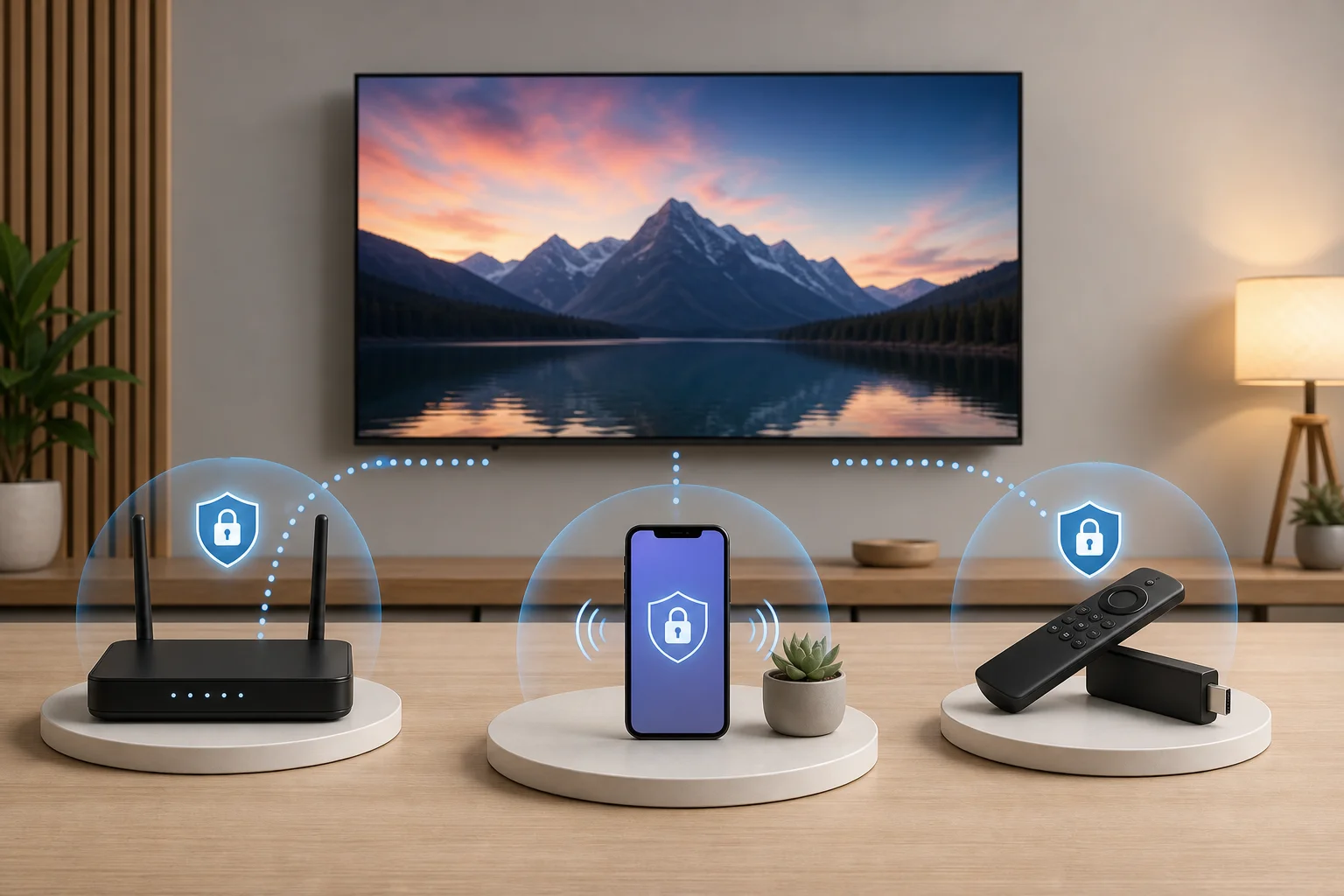
Many streaming VPN apps are built for phones, laptops, tablets, or Android-based TV devices. LG TVs use webOS, and most models do not allow you to install a traditional VPN app from the LG Content Store. That means a VPN for LG TV streaming normally works in one of these ways:

  • Through a VPN-enabled router.
  • Through a shared connection from a laptop or mobile hotspot.
  • Through a DNS or Smart DNS configuration.
  • Through a streaming device connected to the LG TV, such as an Android TV box, Fire TV Stick, or Apple TV.

So, the question is not only “Which VPN is best?” It is also “Which VPN setup is easiest for my LG TV?”

Myth: a VPN always ruins streaming speed and quality

Fact: A VPN can reduce speed, but the effect depends on the service, server distance, protocol, network congestion, and your original internet connection.

A VPN encrypts traffic and routes it through another server. This can add latency and reduce speed. However, for streaming, stability often matters more than peak speed. A well-configured VPN can still support HD or 4K playback if your base connection is strong and the VPN server is nearby.

For LG TV streaming, pay attention to:

  • Server location and load.
  • Router performance if the VPN runs on your router.
  • Whether the VPN limits bandwidth.
  • Whether the service is designed for streaming traffic.
  • How easily you can switch servers if one path is slow.

In short, a VPN does not automatically mean buffering. Poor setup, weak hardware, and crowded servers are usually the bigger problems.

Myth: registration-free VPNs are too limited to be useful

Fact: Registration-free VPNs can be ideal for users who want privacy with minimal friction, but expectations matter.

Services like BeFreeVPN are often misunderstood because people assume “free” means complicated, unsafe, or too restricted for real use. In reality, a no-registration VPN can be a strong fit when you want quick access, less personal data sharing, and simple protection across devices.

That said, a free VPN should still be judged carefully. Look for practical device support, stable streaming performance, clear privacy terms, and setup flexibility. For an LG TV, the most useful service is not just the one with the longest feature list. It is the one that fits your actual viewing setup without creating extra accounts, fees, or installation problems.

VPN options for streaming on LG TV

Below are three realistic options for using a VPN with an LG TV. To keep the comparison clear, we will call them Option A, Option B, and Option C.

Option A: BeFreeVPN no-registration setup

Option A is BeFreeVPN, a free VPN option built around quick access and no registration. Since LG TVs usually do not support direct VPN app installation, BeFreeVPN is best used through a supported device or network-level method, depending on your home setup.

Pros:

  • Free to use.
  • No registration required.
  • Reduces the amount of personal information you need to share.
  • Useful across multiple devices, not just the TV.
  • Good fit for users who want a simple privacy layer for streaming sessions.

Cons:

  • Like most VPNs, it may not install directly on LG webOS.
  • Performance can depend on your connection method and server availability.
  • Advanced router configuration may require some technical comfort.

Suitability for LG TV:

BeFreeVPN is especially suitable if you value privacy, dislike account creation, and want a low-cost way to improve your streaming setup. For many LG TV owners, the best approach is to run the VPN on another device, share the connection, or use it at the network level when supported.

Option B: Premium router VPN service

Option B is a paid VPN service configured on a compatible router. This is a common solution for smart TVs because it protects every device connected to that router, including an LG TV.

Benefits:

  • Works with LG TVs because the VPN runs on the router, not the TV.
  • Can protect multiple devices at once.
  • Often includes many server locations and advanced settings.
  • Convenient once configured.

Limitations:

  • Usually requires a monthly or yearly subscription.
  • Router setup can be technical.
  • Not all routers support VPN client mode.
  • A low-powered router can reduce streaming performance.

User experience:

A router VPN is powerful but not always beginner-friendly. It works well for households that want always-on protection. However, if you only stream occasionally, the setup process and cost may feel excessive.

Option C: Smart DNS or streaming device VPN

Option C covers two related approaches: Smart DNS configuration and using a dedicated streaming device that supports VPN apps.

Smart DNS changes DNS routing without full VPN encryption. A streaming device VPN, on the other hand, runs the VPN app on an external device connected to your LG TV by HDMI.

Features:

  • Smart DNS may be easier to configure in TV network settings.
  • External streaming devices can run VPN apps more directly.
  • Good option if you already own a compatible device.
  • Often avoids router-level complexity.

Compatibility:

Smart DNS can work on many LG TV models because DNS settings are usually available in the network menu. However, it does not provide the same encrypted privacy protection as a VPN. A streaming device VPN may offer stronger privacy, but you need extra hardware.

Best fit:

Option C is best for users who care more about convenience than full network protection. It can also be useful if your router does not support VPN setup.

Quick comparison table for LG TV VPNs

The table below compares the three options for pricing, features, performance, registration needs, and LG TV compatibility.

OptionTypical pricingRegistration requiredMain featuresStreaming performanceLG TV model availabilityBest for
Option A: BeFreeVPNFreeNoVPN privacy, no account setup, multi-device useDepends on connection method and server path; can be smooth with a stable networkWorks with LG TVs through supported device, shared connection, or network-level setup; useful across many webOS modelsPrivacy-focused users who want a free, simple start
Option B: Premium router VPNPaid subscriptionYesWhole-home VPN, many servers, advanced controlsStrong if router hardware is capable; weaker on old routersBroad LG TV support because protection happens at router levelHouseholds wanting always-on protection
Option C: Smart DNS or streaming device VPNFree to paid, plus possible hardware costUsually yes for paid toolsDNS routing or app-based VPN on external deviceOften fast; Smart DNS has no encryption overheadSmart DNS can work on many LG TVs; streaming device support depends on deviceUsers who want easier setup or already own extra hardware

LG TV VPN comparison

Step-by-step setup paths for common LG TV users

  1. If you want the simplest free privacy option: try BeFreeVPN on a supported phone, laptop, or device, then use a shared connection if your device supports it.
  2. If you want whole-home coverage: check whether your router supports VPN client settings, then configure a trusted VPN at router level.
  3. If your router is not compatible: use a VPN-capable streaming device connected to your LG TV.
  4. If speed matters more than encryption: consider Smart DNS, but remember it is not a full VPN.
  5. If buffering appears: switch to a closer server, restart the connection, or test your base internet speed without the VPN.

Which VPN should you choose for LG TVs?

The right VPN for LG TV streaming depends on your priorities. There is no single setup that is perfect for every viewer, because LG TV compatibility depends heavily on how the VPN is deployed.

If ease of setup matters most

Choose the method with the fewest moving parts. For many people, that means using a streaming device or sharing a VPN connection from another device. BeFreeVPN is attractive here because it removes the account creation step and lowers the barrier to testing a VPN workflow.

If cost matters most

BeFreeVPN has the clearest advantage because it is free and does not require registration. A paid router VPN may offer extra controls, but it adds recurring cost. Smart DNS can be affordable, yet some providers bundle it into paid plans.

If feature set matters most

A premium router VPN may offer more advanced features, such as custom protocols, split tunneling on supported platforms, and larger server networks. However, more features can also mean more setup time. Intermediate users should decide whether those controls are truly needed for TV streaming.

How myths distort expectations

Myths often lead LG TV owners to make the wrong choice. For example, someone may buy a VPN subscription assuming an app will appear in the LG Content Store. Another user may avoid free no-registration tools because they assume they are not useful for streaming privacy.

A better approach is to start with your real constraints:

  • Does your LG TV support the setting you want to change?
  • Can your router run a VPN client?
  • Do you need encryption, or only DNS-based routing?
  • Are you comfortable creating accounts and paying subscriptions?
  • Do you stream mostly in HD, 4K, or while traveling?

Once those questions are clear, the best VPN option becomes much easier to identify.

Common questions about VPNs for LG TV streaming

Can I install a VPN app directly on my LG TV?

Usually, no. Most LG smart TVs use webOS, and traditional VPN apps are not commonly available in the LG Content Store. Use a router setup, shared connection, Smart DNS, or VPN-capable streaming device instead.

Will a VPN improve streaming quality on an LG TV?

A VPN is mainly for privacy and routing. It does not automatically improve picture quality. However, a stable VPN connection can support smooth streaming when configured well and paired with a strong internet connection.

Is Smart DNS the same as a VPN?

No. Smart DNS changes how certain requests are routed, but it does not encrypt your traffic like a VPN. It may be fast and simple, but it is not the same privacy tool.

Do I need registration to use every LG TV VPN option?

No. BeFreeVPN is designed as a no-registration option, which makes it appealing if you want fewer sign-up steps and less personal information shared. Many paid VPNs and Smart DNS services do require an account.

Verdict: why BeFreeVPN is your best bet for LG TV streaming

BeFreeVPN stands out because it addresses three common LG TV streaming concerns at once: cost, privacy, and simplicity. It is free, requires no registration, and can be used across your devices as part of a practical LG TV streaming setup. While LG webOS limitations mean you may need a shared connection, router-level configuration, or a supporting device, that is true for most VPN solutions on LG TVs.

For intermediate users, BeFreeVPN is a smart first choice because it lets you test VPN streaming without committing to a paid plan or creating another account. It is also a practical fit for many LG TV models when used through compatible network or device-based methods. Most importantly, it can add a privacy layer to your streaming routine without making the process unnecessarily complex.

Enhance your LG TV streaming experience with BeFreeVPN. It's free, requires no registration, and offers seamless streaming across all your devices.

5 best free VPNs for your LG TV in 2023: vpn for lg tv free guide

· 7 min read

Are you tired of geo-restrictions on your LG TV? Free VPNs can unlock a world of entertainment without costing you a penny. If you are searching for vpn for lg tv free options, the key thing to know is that LG Smart TVs do not usually support native VPN apps on webOS. Instead, you will normally connect through a VPN-enabled router, a shared computer hotspot, or another network-level setup.

This guide compares five free VPN choices for LG TV users, with a focus on data limits, ease of setup, streaming practicality, and privacy.

free VPN for LG TV streaming

1. Windscribe: generous data and easy setup

Windscribe is one of the strongest free VPN options for occasional LG TV streaming because its free plan offers up to 10GB of data per month when you confirm an email address. That is not enough for daily HD streaming, but it can work well for short sessions, travel use, or checking region-specific apps.

For LG TV, the most practical method is router setup. Once Windscribe is configured on a compatible router, your LG TV connects to that Wi-Fi network like normal. This avoids the need for a native LG VPN app, which webOS does not provide.

Key benefits include:

  • Up to 10GB of free monthly data, depending on account setup.
  • Access to multiple free server locations.
  • Router configuration options for compatible hardware.
  • A simple app experience if you also use it on a laptop or phone.

However, remember that streaming services often block VPN traffic. Windscribe can help with geo-restrictions, but access is never guaranteed on every platform.

2. ProtonVPN: unlimited free data

ProtonVPN stands out because its free plan includes unlimited data. For LG TV owners who stream more often, that is a major advantage over free VPNs with small monthly caps. You will not have to count every megabyte while browsing apps or watching shorter videos.

The trade-off is server choice. ProtonVPN’s free plan offers fewer locations than paid plans, and speeds may vary at busy times. Also, using ProtonVPN with LG TV requires setup on a compatible router or by sharing a VPN connection from a computer.

ProtonVPN is a good fit if you care about privacy. It is known for strong encryption, a clear no-logs policy, and security-focused apps. For a free LG Smart TV VPN setup, it is best for users who want steady protection more than the widest streaming library.

3. TunnelBear: user-friendly interface

TunnelBear is simple, friendly, and easy for beginners to understand. Its free plan includes 500MB of data per month, so it is not designed for serious streaming on an LG TV. Still, it can be useful for lightweight browsing, testing a VPN connection, or emergency access when you only need a short session.

Because LG TVs cannot install TunnelBear directly, you would use a shared network method. For example, you can connect a laptop to TunnelBear, create a mobile hotspot or shared connection, and then connect your LG TV to that network. This setup takes more effort than installing an app, but it can be flexible.

TunnelBear’s biggest strength is usability. If you are new to VPNs and want a low-pressure way to learn how they work, it is one of the easiest places to start.

4. Hotspot Shield: high-speed connection

Hotspot Shield is known for fast VPN performance, which matters when you want to reduce buffering on a TV. Its free plan has traditionally offered a daily data allowance, often around 500MB per day, though limits and available features can change by region and platform.

For LG TV use, router or shared-network compatibility is the main question. If your router supports the required VPN configuration, you may be able to route your LG TV traffic through Hotspot Shield. Otherwise, you can share a protected connection from a desktop device.

This option is best for short viewing sessions, quick app checks, or privacy on a home network. The daily allowance is useful, but it will run out quickly if you watch long HD videos.

5. BeFreeVPN: designed for device flexibility

BeFreeVPN is worth considering if your priority is a quick, free VPN setup without registration. For LG TV users, that can simplify the process, especially when you are trying to connect through a router or another device rather than installing a TV app.

Its appeal is device flexibility. Since LG webOS does not make VPN installation straightforward, a service that works across network setups can be useful. When configured through compatible equipment, BeFreeVPN can help your LG TV access content from different regions while adding a privacy layer to your connection.

Before streaming, test your chosen server with the specific app you want to use. Free VPN performance can vary, and some services may restrict VPN traffic. Even so, BeFreeVPN is a convenient option for users who want a no-registration free VPN path for LG TV entertainment.

LG TV VPN router setup

How to set up a free VPN on LG TV

Since most LG TVs do not support VPN apps directly, use one of these methods:

  1. Check your router. Confirm whether it supports VPN client settings such as OpenVPN or WireGuard.
  2. Choose a free VPN. Pick based on your needs: data limit, speed, privacy, and server locations.
  3. Configure the router or shared hotspot. Follow the VPN provider’s setup guide for your router, Windows PC, or Mac.
  4. Connect your LG TV to that network. Use the protected Wi-Fi connection instead of your regular one.
  5. Test your streaming apps. Open the app, check location access, and switch servers if needed.
Free VPNBest for LG TV users who wantMain limitation
WindscribeA balanced free plan with 10GB monthly dataData cap for long streaming
ProtonVPNUnlimited free dataFewer free locations
TunnelBearBeginner-friendly testingVery small monthly allowance
Hotspot ShieldShort, fast sessionsDaily data limits
BeFreeVPNNo-registration device flexibilityPerformance may vary by setup

Frequently asked questions about free VPNs for LG TV

Can I install a VPN directly on an LG Smart TV?

Usually, no. LG Smart TVs run webOS, which does not normally support standard VPN apps. The common solution is to install the VPN on your router or share a VPN connection from a computer.

Is a free VPN good enough for streaming on LG TV?

Sometimes. A free VPN can work for short sessions, testing, or occasional viewing. For daily HD or 4K streaming, free data caps and server limits may become frustrating.

Will a free VPN unblock every streaming service?

No. Streaming platforms may block VPN servers, and access can change without warning. Try a different server or setup method if an app does not work.

What is the easiest free VPN setup for LG TV?

For many users, the easiest method is a VPN-enabled router because every device on that Wi-Fi network, including your LG TV, can use the VPN connection automatically.

Final thoughts

A free VPN for LG TV can be useful if you understand the limits. Windscribe is strong for monthly data, ProtonVPN is best for unlimited usage, TunnelBear is beginner-friendly, Hotspot Shield suits short high-speed sessions, and BeFreeVPN is appealing for flexible, no-registration access. Unlock a world of content on your LG TV effortlessly with BeFreeVPN. Enjoy a truly free VPN with no registration required, enhancing your LG TV streaming experience today!

VPN for LG TV install: how to install a free VPN on your LG TV

· 10 min read

Want to unlock more content on your LG TV without the hassle? Discover how a free, no-registration VPN can help you watch anything, globally, with ease! This vpn for lg tv install guide shows the practical way to use a VPN with an LG Smart TV, even though most LG webOS TVs do not support native VPN apps. Instead, you will connect your TV through a VPN-protected hotspot from a laptop or smartphone.

A VPN can help improve privacy on your home network and may let you access streaming libraries while travelling or using services you already subscribe to. However, results can vary by app, region, VPN server, and device. Always follow the terms of the streaming services you use.

vpn for LG TV setup

Before you start: gather your tools

Before you set up a VPN for LG TV, take a few minutes to prepare. This makes the installation smoother and reduces connection problems later.

You will need:

  • An LG TV connected to the internet. Most modern LG Smart TVs run webOS. The steps below apply to webOS network settings, though menu names can vary slightly by model.
  • A laptop or smartphone for the VPN connection. Because LG TVs usually cannot install VPN apps directly, this device acts as the bridge between the VPN and your TV.
  • A free VPN that does not require registration. For example, BeFreeVPN is designed for quick access without creating an account, which helps reduce setup friction.
  • A stable Wi-Fi network. Streaming over a VPN can use more bandwidth, so a strong signal helps avoid buffering.
  • Your LG TV remote. You will need it to select the hotspot network and test the connection.

It is also useful to know which device you will use as the hotspot. A Windows laptop is often the easiest option because it can share a VPN connection through its mobile hotspot feature. Some smartphones can also share a VPN connection, but this depends on the operating system and device settings. If your phone hotspot does not route traffic through the VPN, try a laptop instead.

Step 1: connect to a suitable VPN

Start by setting up the VPN on the device that will share its internet connection with your LG TV.

1. Download BeFreeVPN on a compatible device

Install the BeFreeVPN app on your laptop or smartphone if it is available for your platform. Choose the official download source for your device. Avoid third-party downloads, as they may be unsafe or outdated.

If you use another free VPN, check that it supports your device, offers a server location that suits your needs, and does not require registration if you want the fastest setup.

2. Open the app and connect to a free server

Launch the VPN app and choose a free server. For streaming, a nearby server often gives better speed. If you need a specific region for travel access, select a server in that country.

Wait until the app shows that the VPN is connected. Do not move to the next step until the connection is active.

3. Make sure the device is on the same network as your LG TV

Your laptop or smartphone should initially be connected to the same home Wi-Fi network that your LG TV can reach. Later, the TV will connect to the hotspot created by this device.

A simple pre-check helps:

  1. Open a browser on the laptop or phone.
  2. Search “what is my IP”.
  3. Confirm the displayed location matches the VPN server, not your actual location.
  4. Keep the VPN app open in the background.

If the IP location does not change, disconnect and reconnect the VPN before continuing.

Step 2: set up a hotspot for your LG TV

Now you need to turn your VPN-connected laptop or smartphone into a hotspot. This creates a new Wi-Fi network for the LG TV.

Device used for hotspotDifficultyNotes
Windows laptopEasy to moderateOften the most reliable way to share a VPN connection
Android phoneModerateSome models share VPN traffic, others do not
iPhoneModerate to limitedPersonal Hotspot may not route TV traffic through the VPN in all cases
Mac laptopModerateMay require internet sharing and extra network configuration

Turn your laptop or smartphone into a mobile hotspot

On Windows:

  1. Connect to BeFreeVPN.
  2. Open Settings.
  3. Go to Network & internet.
  4. Select Mobile hotspot.
  5. Choose to share your internet connection over Wi-Fi.
  6. Turn Mobile hotspot on.
  7. Note the hotspot network name and password.

If your VPN app creates a separate network adapter, you may need to allow sharing from that VPN adapter. This setting can appear under advanced adapter options in Windows.

On Android:

  1. Connect to the VPN.
  2. Open Settings.
  3. Go to Network & internet or Connections.
  4. Choose Hotspot and tethering.
  5. Turn on Wi-Fi hotspot.
  6. Check the hotspot name and password.

On iPhone:

  1. Connect to the VPN.
  2. Open Settings.
  3. Tap Personal Hotspot.
  4. Enable Allow others to join.
  5. Use the displayed Wi-Fi password on your LG TV.

Important: phones do not always share VPN-protected traffic over hotspot. After connecting your LG TV, test the connection as described below.

Ensure the hotspot is active and network sharing is enabled

Keep the VPN app connected while the hotspot is on. If your laptop goes to sleep, the VPN and hotspot may disconnect. For a long streaming session, plug the device into power and disable sleep temporarily.

Also, keep the hotspot close to your TV. A weak signal can cause buffering, app errors, or failed login attempts.

Connect your LG TV to this new hotspot

On the LG TV, you will connect to the hotspot just like any other Wi-Fi network. Use the hotspot password from your laptop or smartphone. If the network does not appear, turn the TV Wi-Fi off and on again, then refresh the list.

LG TV hotspot VPN connection

Step 3: configure VPN on your LG TV

There is no full native VPN install on most LG TVs, so the “configuration” happens by choosing the VPN-protected hotspot as the TV’s network.

Using your remote:

  1. Press the Settings button.
  2. Open All settings.
  3. Go to General.
  4. Select Network.
  5. Choose Wi-Fi connection.

Menu names may differ by webOS version, but the network area is usually under General or Connection settings.

Select your new hotspot as the network

Find the hotspot name created on your laptop or phone. Select it, enter the password, and wait for the TV to connect.

Once connected, open a streaming app or the LG web browser if available. Load a website or start a video to confirm the internet connection works.

Validate the connection to ensure it leads through the VPN

To check whether your LG TV traffic is going through the VPN, use one of these methods:

  • Open the LG TV browser and search “what is my IP”. The visible location should match the VPN server.
  • Open a streaming app and check whether the available content matches your selected region.
  • Test the same app on the hotspot device and compare results.

If your LG TV still shows your real location, the hotspot may not be sharing the VPN tunnel. In that case, try a Windows laptop, change VPN protocol in the app if available, or consider installing the VPN on your router if your router supports it.

Step 4: troubleshooting VPN connection issues

If your VPN for LG TV install does not work the first time, do not worry. Most problems come from the hotspot, VPN routing, or Wi-Fi signal.

Ensure the VPN is connected if streaming issues arise

Streaming apps may fail if the VPN disconnects in the background. Check the VPN app and reconnect if needed. Then restart the streaming app on your LG TV.

If video quality is poor, try:

  • A VPN server closer to your actual location.
  • A different free server.
  • Restarting the VPN app.
  • Lowering video quality in the streaming app.
  • Moving the hotspot device nearer to the TV.

Free VPN servers can be busy at peak times, so changing servers may help.

Reset your hotspot if connectivity problems occur

If the TV connects to the hotspot but has no internet, reset the connection chain:

  1. Turn off the LG TV Wi-Fi.
  2. Turn off the hotspot.
  3. Disconnect the VPN.
  4. Reconnect the VPN.
  5. Turn the hotspot back on.
  6. Reconnect the LG TV to the hotspot.

This refreshes the VPN tunnel and network sharing. Also check that your laptop or smartphone still has internet access while the VPN is on.

Contact VPN support or check online guides for complex issues

Some issues depend on the VPN app, router, operating system, or LG TV model. If the hotspot does not share VPN traffic, check the VPN provider’s help guides. You can also search for instructions for your specific device, such as “share VPN over hotspot Windows 11” or “Android hotspot share VPN”.

For more advanced users, a router-level VPN setup can protect the LG TV without using a hotspot. However, this requires a compatible router and more configuration.

Frequently asked questions about VPN for LG TV install

Can I install a VPN app directly on an LG Smart TV?

Usually, no. Most LG webOS TVs do not support direct installation of standard VPN apps. The simplest workaround is to connect the TV to a VPN-protected hotspot or configure the VPN on a compatible router.

Is a free VPN enough for streaming on LG TV?

It can be enough for basic use, especially if you want quick privacy or occasional access without registration. However, free servers may have speed limits, fewer locations, or higher demand. For long 4K streaming sessions, performance can vary.

Does a phone hotspot always share the VPN connection?

No. Some phones share normal internet through the hotspot but do not route connected devices through the VPN tunnel. Test the IP location on your LG TV after connecting. If it fails, use a Windows laptop or router setup instead.

Will a VPN fix every region error in streaming apps?

Not always. Streaming platforms use several methods to detect location, including account region, payment method, GPS on mobile devices, DNS, and IP address. A VPN may help, but it is not a guaranteed fix for every app.

VPN use is legal in many countries, but rules vary by location. You should also follow the terms of service for each streaming platform and avoid using a VPN for unlawful activity.

Final thoughts

Installing a VPN on an LG TV is less about adding an app to the TV and more about routing the TV through a VPN-connected device. Once you connect BeFreeVPN on a laptop or smartphone, create a hotspot, and join that hotspot from your LG TV, you can stream with an added layer of privacy and more location flexibility.

Boost your streaming experience by using BeFreeVPN on your LG TV for free, with no registration required. Start enjoying global content seamlessly today!
Beginner's guide: VPN setup for LG TV and data privacy

· 9 min read

Curious how to keep your streaming activity on your LG TV private and secure? This beginner-friendly vpn for lg tv setup guide explains the simplest ways to protect your data while watching shows, films, and live content. LG smart TVs usually do not support standard VPN apps directly, but you still have practical options. The most reliable method is often setting up the VPN on your router, so your TV connection is protected automatically.

VPN privacy on LG TV

Why use a VPN on your LG TV?

Your LG TV connects to the internet every time you open a streaming app, browse content, update software, or use smart features. That connection can reveal information such as your IP address, general location, device activity, and viewing patterns to networks, apps, or other parties involved in the connection.

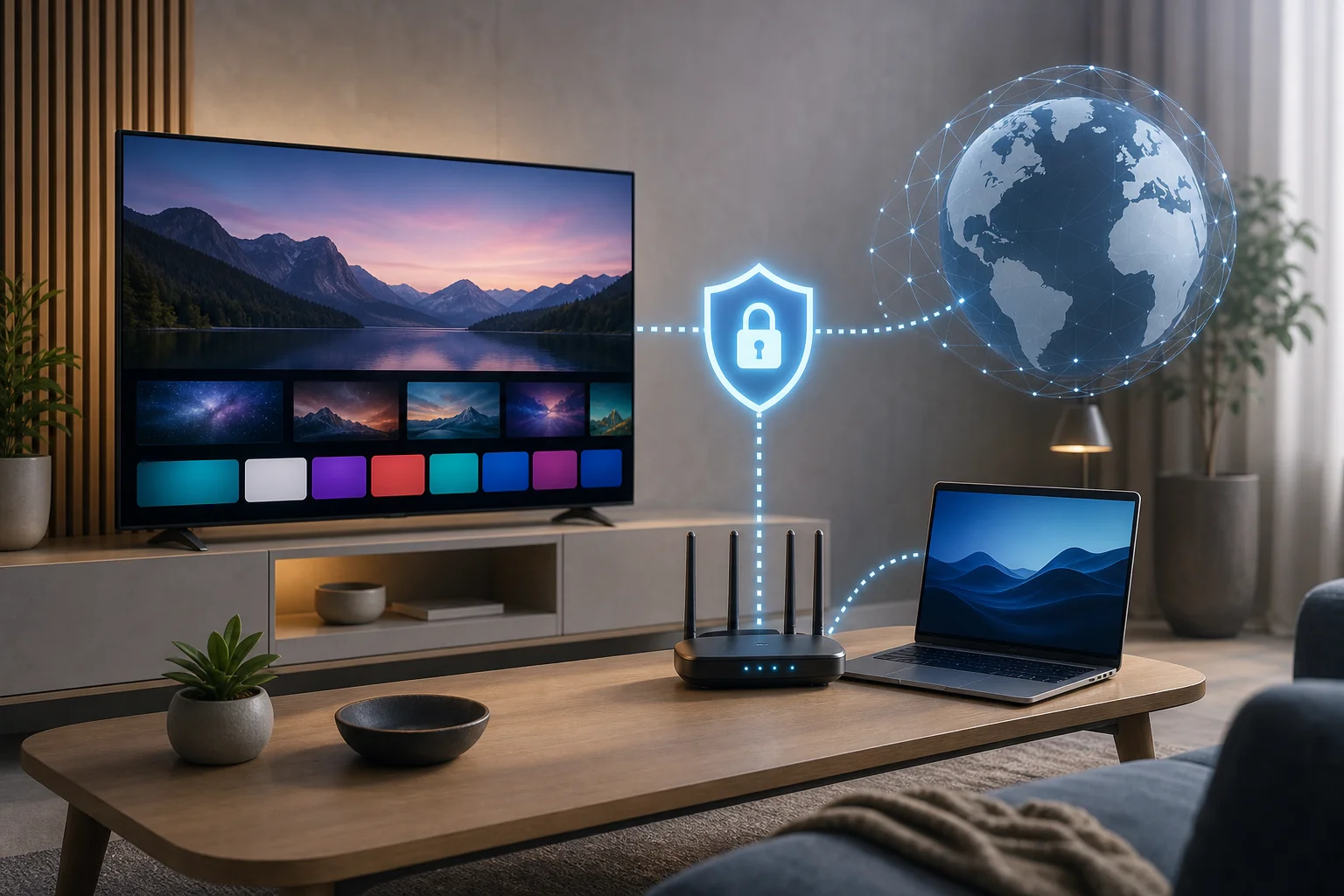
A VPN, or virtual private network, helps reduce that exposure. It creates an encrypted tunnel between your device or router and the VPN server. As a result, your internet traffic becomes harder to inspect on the local network.

How a VPN improves privacy on an LG TV

Using a VPN with an LG TV can help you:

  • Hide your real IP address from websites and online services.
  • Reduce tracking linked to your home internet connection.
  • Protect streaming activity on shared or less trusted networks.
  • Add a privacy layer for apps that connect through the internet.
  • Keep your entertainment activity more separate from your identity.

This matters because TVs are no longer just screens. They are connected devices with apps, accounts, recommendations, search histories, and network activity. A VPN cannot make you completely anonymous, and it will not replace good account security. However, it can make your streaming data less exposed.

Why privacy matters for entertainment

Streaming feels personal. Your watch history can reveal interests, routines, language preferences, family habits, and even when you are likely to be at home. While this data may seem harmless, it is still personal information.

Therefore, protecting your LG TV connection is a smart step. It is especially useful if you care about data privacy but want a setup that works quietly in the background.

What is the best way to install a VPN on LG TV?

The best VPN setup for LG TV is usually a router-based VPN setup. This is because most LG TVs run webOS, and webOS does not typically allow you to install a normal VPN app the way you would on a phone, tablet, or laptop.

When the VPN is installed on your router, every compatible device connected through that router can use the protected connection. That includes your LG TV, game console, streaming box, and other smart home devices.

Router VPN setup for LG TV

Common setup methods compared

MethodBest forDifficultyNotes
VPN on routerFull-home privacy, LG TV includedMediumMost complete option if your router supports VPN settings
VPN-enabled travel routerSimple TV-only or room-only setupEasy to mediumUseful if you do not want to change your main router
Virtual router from laptopTemporary setupMediumShares a VPN connection from a computer to the TV
Smart DNSStreaming location settingsEasyNot a VPN and does not encrypt traffic

For privacy and personal data protection, choose a real VPN setup rather than Smart DNS. Smart DNS may help with DNS routing, but it does not encrypt your traffic like a VPN.

Step-by-step router VPN setup for LG TV

Use these general steps. The exact names of settings vary by router and VPN provider.

  1. Check whether your router supports VPN connections.
    Log in to your router admin panel and look for VPN client settings. Common supported protocols include OpenVPN and WireGuard.

  2. Choose a privacy-focused VPN service.
    Look for clear setup guides, strong encryption, a no-logs policy, and router support.

  3. Download the VPN configuration files.
    Your VPN provider should supply server details or configuration files for your chosen protocol.

  4. Add the VPN details to your router.
    Upload the configuration file or enter the server address, credentials, and protocol settings manually.

  5. Connect the router to the VPN server.
    Save the settings and start the VPN connection from the router interface.

  6. Connect your LG TV to that router.
    On your LG TV, go to network settings and connect to the Wi-Fi network or wired connection from the VPN-protected router.

  7. Test the connection.
    Open a browser or use a trusted IP-checking tool from another device on the same network. Confirm that the visible IP address matches the VPN server, not your home connection.

This method is popular because your LG TV does not need to run VPN software itself. Once the router is configured, the TV simply uses the protected network like normal.

How does a VPN protect your streaming data?

A VPN protects your streaming data in two main ways: encryption and IP masking. These features work together to make your LG TV traffic more private.

Encryption makes data harder to read

Encryption scrambles your internet traffic while it travels between your network and the VPN server. Without encryption, certain network activity may be easier to inspect, especially on shared or poorly secured networks.

With a VPN, your internet service provider can usually see that you are connected to a VPN server, but the contents of your traffic are harder to view. This helps protect information related to the apps and services your LG TV connects to.

IP masking reduces direct tracking

Your IP address is a unique identifier for your internet connection. Streaming platforms and websites can use it to estimate your location and link activity to your network.

A VPN replaces your visible home IP address with the IP address of the VPN server. This does not erase every form of tracking, because apps may still use account logins, cookies, device IDs, or viewing history. Even so, IP masking is an important privacy layer.

A VPN helps protect viewing habits

Your viewing habits can be sensitive. A VPN helps prevent unauthorized users on the same network from easily monitoring what your LG TV is doing online. It also limits how much your network-level activity can be associated with your home IP address.

For better privacy, combine a VPN with sensible habits. Use strong passwords, review app permissions, keep your LG TV software updated, and sign out of apps you no longer use.

What are the key features to look for in a VPN for LG TV?

Not every VPN is a good fit for smart TVs. Since LG TV VPN installation often depends on a router or shared network, you should choose a service that is easy to configure and strong on privacy.

Strong privacy and security features

Look for these essentials:

  • Modern encryption: Choose a VPN that supports secure protocols such as WireGuard or OpenVPN.
  • No-logs policy: A no-logs VPN should not store records of your browsing or streaming activity.
  • Router support: The provider should offer setup files and clear router instructions.
  • Stable servers: A reliable connection helps reduce buffering and dropouts.
  • Kill switch support: This is useful on devices that support it, though router behavior varies.
  • Transparent privacy policy: The provider should explain what data it collects and why.

Why a no-logs policy matters

A VPN moves trust from your local network and internet provider to the VPN service. That is why the provider’s privacy policy matters. A no-logs policy means the VPN should not keep activity logs that show what you watched, which apps you used, or which websites you visited.

Read the policy in plain language. Avoid services that are vague about data collection. Also, be cautious with free VPNs that rely heavily on advertising or unclear data practices.

Compatibility and ease of use

For beginners, the best VPN for LG TV is one you can actually set up without frustration. Before choosing, check whether the VPN supports your router model or offers an alternative, such as a travel router setup or laptop sharing.

If your current router does not support VPN client mode, you may still have options. You can use a VPN-compatible router, install supported router firmware if you are comfortable doing so, or create a virtual hotspot from a VPN-connected laptop.

Common questions about VPN for LG TV setup

Can I install a VPN app directly on my LG TV?

Usually, no. Most LG TVs use webOS, which does not normally support traditional VPN apps. A router VPN setup is the most common workaround.

Will a VPN slow down streaming on my LG TV?

It can, because encryption and server distance add extra processing. However, a good VPN, a nearby server, and a fast router can keep streaming smooth.

Is Smart DNS the same as a VPN?

No. Smart DNS does not encrypt your traffic or hide your IP address in the same way a VPN does. For privacy, use a real VPN.

Do I need technical skills to set up a VPN on LG TV?

Basic comfort with router settings helps, but many providers offer guides. If you want a simpler path, a preconfigured or VPN-compatible travel router can be easier.

Final thoughts

A VPN for LG TV setup does not have to be complicated. Since LG TVs usually cannot run VPN apps directly, the router method is often the most practical choice for beginners who want better privacy. It protects your TV connection, masks your IP address, and encrypts streaming data without changing how you use your favorite apps.

Ready to enhance your LG TV experience with privacy protection? Try BeFreeVPN for a seamless, no-registration VPN solution to keep your streaming data safe.

Free VPN options for LG TV explained

· 10 min read

If you searched for vpn для lg tv бесплатный, you are likely looking for a free VPN for an LG Smart TV. The short answer is: LG TVs usually cannot install a VPN app directly, but you can still route TV traffic through a VPN using a router, a shared computer connection, a mobile hotspot, or Smart DNS. This guide explains the safest free and low-cost options, what works on webOS, and how to set everything up without wasting time.

free VPN for LG TV setup