12 posts tagged with "smart-tv"

View All Tags

The ultimate guide to VPN for television with fast connection

· 18 min read

Why pay for a VPN when you can access fast, unrestricted television content for free? Discover how to optimize your TV viewing experience with BeFreeVPN. If you are looking for a VPN for television with fast connection, this guide explains how VPNs work, how to set one up on a smart TV or streaming device, and how to tune your connection for smoother, more private streaming.

A VPN can help protect your viewing activity, reduce exposure on shared networks, and make television apps work more consistently when you travel. However, speed matters. A slow VPN can cause buffering, lower video quality, and frustrating pauses. The goal is not just to connect your TV to a VPN. The goal is to connect it in a way that keeps streaming stable.
VPN for television streaming setup

Understanding VPNs and their importance for television

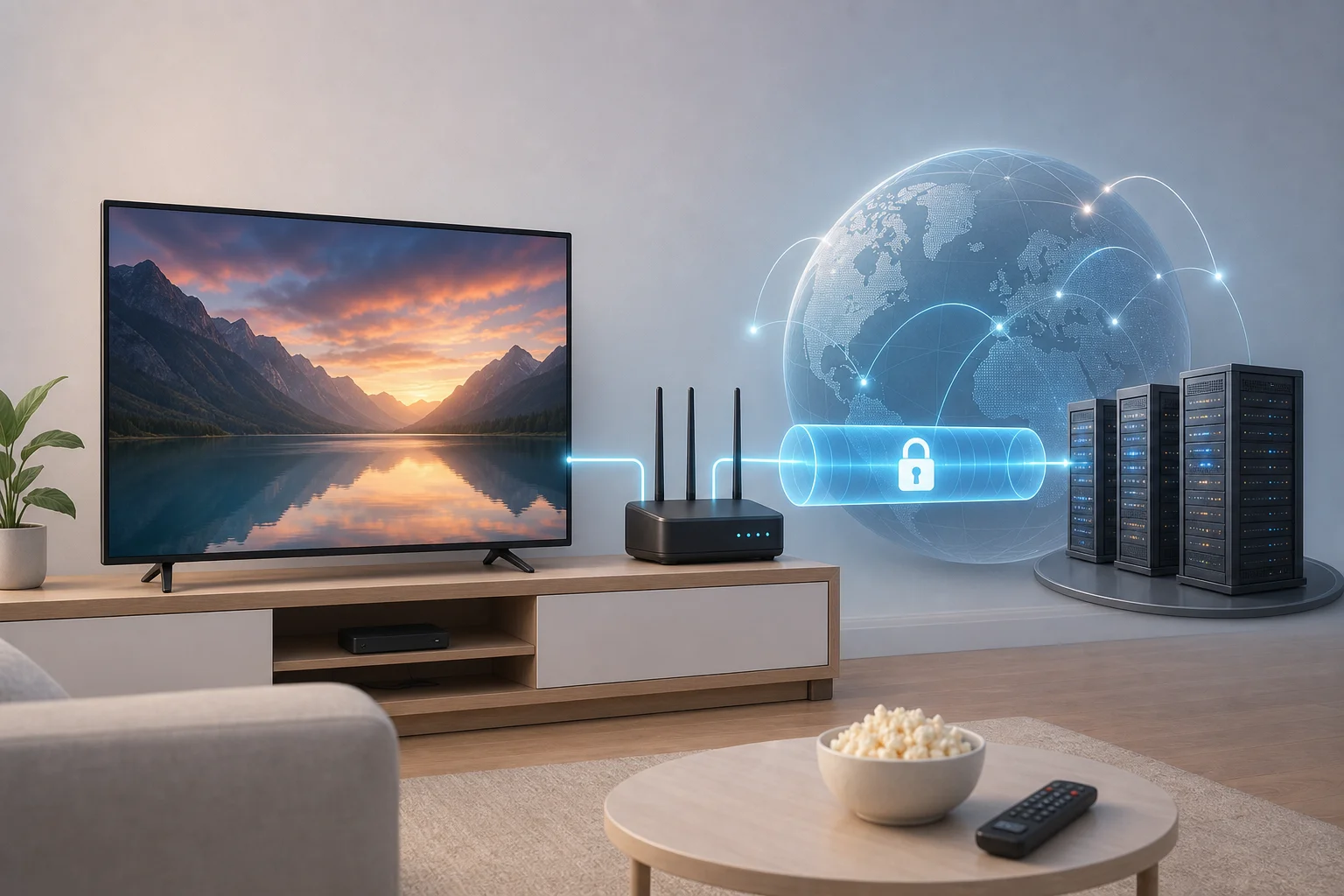
A VPN, or virtual private network, creates an encrypted connection between your device and a VPN server. Instead of sending traffic directly from your television, phone, router, or streaming stick to the internet, the VPN routes that traffic through a secure tunnel. Websites and apps then see the VPN server’s network address rather than your regular one.

For television, this can be useful because smart TVs and streaming devices are internet-connected computers. They send app activity, location signals, device identifiers, and network requests. A VPN helps reduce how much of that activity is visible to your internet provider, public Wi-Fi operator, or other parties on the same network.

What a VPN is and how it works

When you open a streaming app, your device contacts the service’s servers. Without a VPN, that traffic travels through your internet service provider in a more direct path. With a VPN, the traffic first goes to the VPN provider’s server. The VPN encrypts the connection between your device and that server, then forwards the request to the destination.

In simple terms, a VPN changes two important things:

  • Privacy: Your internet provider can see that you are connected to a VPN, but it generally cannot see the exact streaming traffic inside the encrypted tunnel.
  • Network location: Streaming apps may see the VPN server’s IP address instead of your home IP address.

This is why many people use a VPN for smart TV streaming, live television apps, and travel viewing. It can make your connection more private and flexible, especially if you often switch between home networks, hotel Wi-Fi, mobile hotspots, or shared apartments.

Benefits of using a VPN for streaming TV

A VPN can improve the television experience in several practical ways:

  • More private viewing: Encryption helps shield your streaming activity from local network snooping.
  • Safer use on shared networks: If you stream in hotels, dorms, or short-term rentals, a VPN adds a useful privacy layer.
  • Consistent access when traveling: Some services may behave differently when you are away from home. A VPN can help you connect through a preferred region, where permitted by the service.
  • Reduced exposure to network tracking: Smart TVs often run many background connections. A VPN helps route those connections through a protected tunnel.
  • Better control across devices: If installed on a router, a VPN can protect devices that do not support native VPN apps.

It is important to use VPNs responsibly. Streaming services have their own terms, and content rights vary by region. A VPN is a privacy and security tool, not a guarantee that every app, channel, or library will be available.

The importance of fast connection speeds

Television streaming is bandwidth-sensitive. Standard-definition video needs less speed, while HD and 4K need more. A VPN adds encryption and routing, so some speed loss is normal. The best setup keeps that loss small enough that you do not notice it.

For a fast VPN connection for TV, focus on three things: server distance, protocol efficiency, and network quality. A nearby VPN server usually provides lower latency. Modern VPN protocols often perform better than older ones. A stable home connection also matters, because a VPN cannot fix a weak Wi-Fi signal or an overloaded broadband line.

Quick answer: Is a free VPN effective for TV streaming?

Yes, a free VPN can be effective for TV streaming if it offers stable servers, efficient connection options, and enough speed for the video quality you want. BeFreeVPN is designed for people who want a simple, no-cost way to add privacy to television streaming without paying for a monthly VPN subscription.

The key is to set expectations correctly. A free VPN for TV is most effective when you use it with nearby servers, keep your device updated, and choose streaming settings that match your internet connection. If you expect constant 4K streaming on a congested network, any VPN may struggle. If you optimize the setup, free VPN streaming can be smooth and useful.

How BeFreeVPN provides fast connections for free

BeFreeVPN focuses on making VPN access simple and cost-saving. Instead of asking users to pay before they can protect their streaming connection, it offers a free path to secure browsing and viewing. For television users, that can be especially helpful because many households already pay for broadband, streaming subscriptions, and device upgrades.

To get the best speed with BeFreeVPN, use it as part of a complete streaming setup:

  1. Choose a server close to your physical location when possible.
  2. Use a modern VPN protocol if the app offers protocol options.
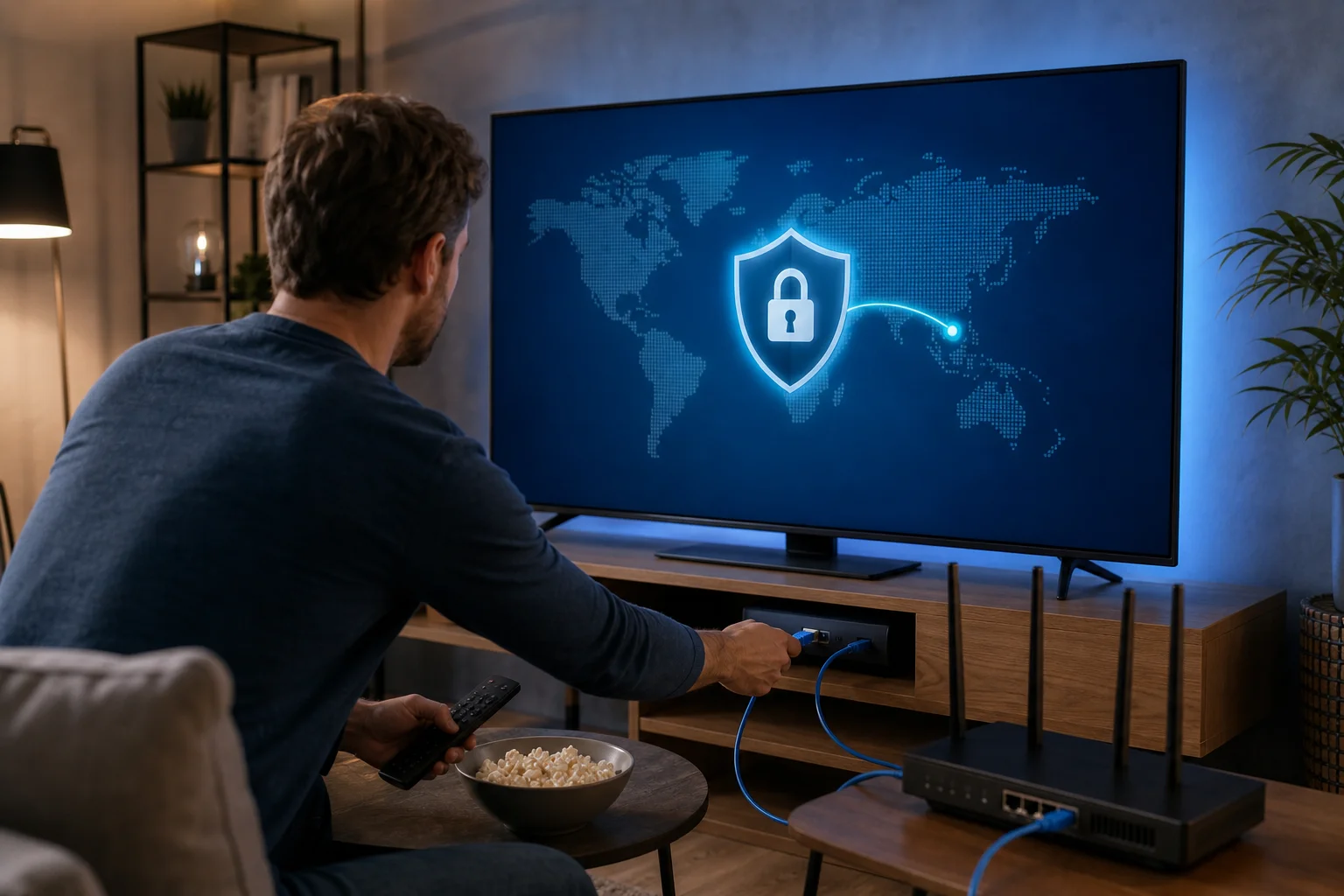
  3. Connect your TV or streaming device to a strong Wi-Fi signal, or use Ethernet.
  4. Close unused apps running in the background.
  5. Test different servers if one route feels slow.

This approach helps reduce unnecessary delays and keeps your VPN for television with fast connection focused on performance.

Comparing free versus paid VPNs in TV streaming

A paid VPN can be useful for users who need many server regions, advanced business features, or priority support. However, not everyone needs those extras for everyday television viewing. A free option such as BeFreeVPN can be a practical choice when the main goal is private, stable streaming without another subscription.

FeatureFree VPN with BeFreeVPNTypical paid VPN
Upfront costFree to startMonthly or annual fee
Best forCost-conscious TV viewersHeavy users needing premium extras
Setup complexityDesigned to be simpleVaries by provider
Streaming performanceCan be fast with good server choiceOften strong, but not guaranteed
Privacy benefitEncrypted VPN connectionEncrypted VPN connection
ValueHigh if it meets your speed needsDepends on price and features

The right choice depends on your habits. If you stream casually or want to avoid adding another bill, BeFreeVPN is a strong place to begin. If you later need highly specific server locations or enterprise-style options, you can reassess.

Effectiveness of free VPNs in maintaining streaming quality

Streaming quality depends on your base internet speed, Wi-Fi strength, server load, and app requirements. A free VPN can maintain good quality when those factors line up. If your home internet is already slow, the VPN may make buffering more noticeable. If your connection is fast and stable, the impact may be small.

For best results, test your TV app with and without the VPN. Look at startup time, picture resolution, and buffering. Then try a nearby server. This simple testing process often reveals the best configuration in minutes.

Setting up a VPN on your television

Setting up a VPN on a television depends on the platform. Some smart TVs support VPN apps directly. Others need a router setup, hotspot sharing, or a streaming device that can run the VPN. BeFreeVPN is easiest to use on platforms where the app is directly supported. If your TV does not allow VPN apps, you can still protect the TV by connecting it through a VPN-enabled router or shared connection.
Smart TV VPN setup steps

Use the steps below as a general setup path. Menus can vary by brand and software version, but the process is usually similar.

  1. Check your TV platform. Look in your TV settings for the operating system. Common platforms include Android TV, Google TV, Fire TV, Samsung Tizen, LG webOS, Roku, and Apple TV.
  2. Look for VPN app support. Open the TV app store and search for BeFreeVPN or VPN support options. Android TV, Google TV, and Fire TV are usually more flexible for VPN apps.
  3. Install BeFreeVPN where supported. Download the app from the official store when available. Avoid unknown files from untrusted websites.
  4. Open the app and sign in if required. Follow the on-screen setup prompts.
  5. Choose a nearby server. For speed, start with the closest available server location.
  6. Connect the VPN. Wait until the app confirms that the VPN is active.
  7. Open your streaming app. Test playback with a familiar show or live channel.
  8. Adjust if needed. If video buffers, try another server, restart the TV, or lower the streaming quality briefly.

If your TV does not support VPN apps, use one of these alternatives:

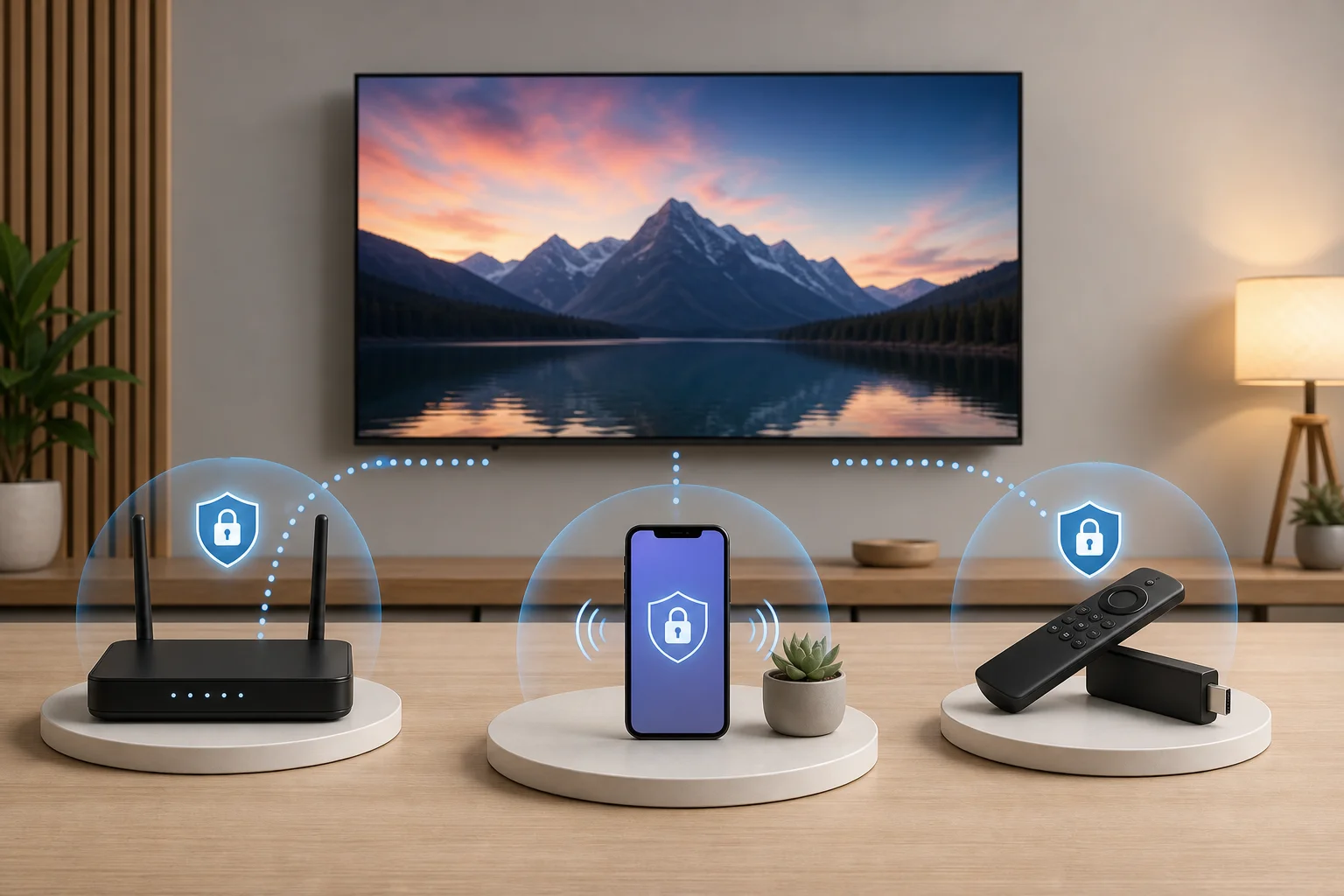
  • VPN on router: Configure the VPN on your home router so all connected devices use it.
  • VPN on a streaming stick: Use a device such as Fire TV or Android TV box that supports VPN apps.
  • Shared VPN connection: Run BeFreeVPN on a computer and share that connection with the TV through Wi-Fi or Ethernet if your operating system supports it.

How to configure BeFreeVPN for optimal performance

After installation, small settings changes can make a big difference. Start simple. Connect to the closest server and test playback. If the app provides protocol choices, select the recommended or automatic option first. Automatic mode often balances speed and stability without extra work.

Next, check your television network settings. If possible, use a wired Ethernet connection. Ethernet is usually more stable than Wi-Fi and can reduce buffering. If you must use Wi-Fi, place your router in an open area and connect to the 5 GHz band when your TV is close enough to the router. Use 2.4 GHz only if the TV is far away or behind walls.

Finally, restart your streaming apps after connecting the VPN. Some apps keep old network sessions active until they are fully closed. Restarting the app gives it a clean VPN-protected connection.

Tips for troubleshooting common setup issues

If your VPN connection works on a phone but not on your TV, the issue is usually platform support, network settings, or app compatibility. Try these fixes:

  • No VPN app in the TV store: Use a VPN-compatible streaming device or router setup.
  • VPN connects but streaming app will not load: Switch servers and restart the streaming app.
  • Video buffers often: Move closer to the router, use Ethernet, or choose a nearer VPN server.
  • Smart TV disconnects from Wi-Fi: Restart the router and forget/rejoin the Wi-Fi network.
  • Live TV app shows an error: Check the app’s terms and location settings. Some services restrict VPN connections.
  • Slow connection after setup: Reboot the TV, clear app cache where available, and test your base internet speed.

Troubleshooting works best when you change one thing at a time. This helps you identify the real cause instead of guessing.

Advanced tips for optimizing VPN speed on TV

Once your VPN is working, you can tune it for speed. The fastest setup is usually the one with the shortest reliable route between your TV, the VPN server, and the streaming service. A distant server may work, but it often adds latency and reduces throughput.

Choosing the right server location for streaming

Start with a server close to your real location. This often gives the best speed because your traffic travels a shorter distance. If a specific streaming app performs poorly, try another nearby server. Sometimes a server in the same country but a different city is faster because it is less busy or has better routing.

For travel, choose a server that matches the viewing experience you need while respecting the streaming service’s rules. If the app blocks VPN traffic, do not assume the VPN is broken. Some platforms limit VPN use as part of their licensing agreements.

A simple server testing method can help:

  1. Connect to the closest server.
  2. Open your streaming app and play a video for five minutes.
  3. Note buffering, resolution, and startup time.
  4. Switch to another nearby server.
  5. Repeat the same test.
  6. Keep the server that gives the most stable playback.

Advanced settings to improve VPN speed

Some VPN apps provide extra controls. If BeFreeVPN offers these options on your device, consider the following:

  • Protocol selection: Use the recommended, automatic, or modern high-speed protocol when available.
  • Auto-connect: Enable it if you want the TV protected every time it starts.
  • Split tunneling: If supported, route only streaming or TV traffic through the VPN while leaving other traffic outside the tunnel.
  • DNS protection: Keep secure DNS features on when available to reduce privacy leaks.
  • Startup behavior: Let the VPN connect before opening streaming apps.

Do not change advanced settings randomly. Test after each change. If performance gets worse, return to automatic settings.

How BeFreeVPN maintains connection stability

Connection stability comes from reliable server routing, efficient encryption, and good device setup. BeFreeVPN helps by giving users a direct way to connect without the cost barrier of a paid plan. You can support that stability by keeping the app updated, choosing sensible server locations, and using a strong local network.

Also, avoid overloading your home connection. If several people are gaming, downloading files, and streaming 4K video at the same time, the VPN may appear slow even when the real issue is network congestion. Pause heavy downloads during movie nights for smoother playback.

Using VPNs with different television platforms

Not all televisions handle VPNs the same way. Before choosing a setup method, identify your platform. This saves time and helps you pick the most reliable route.
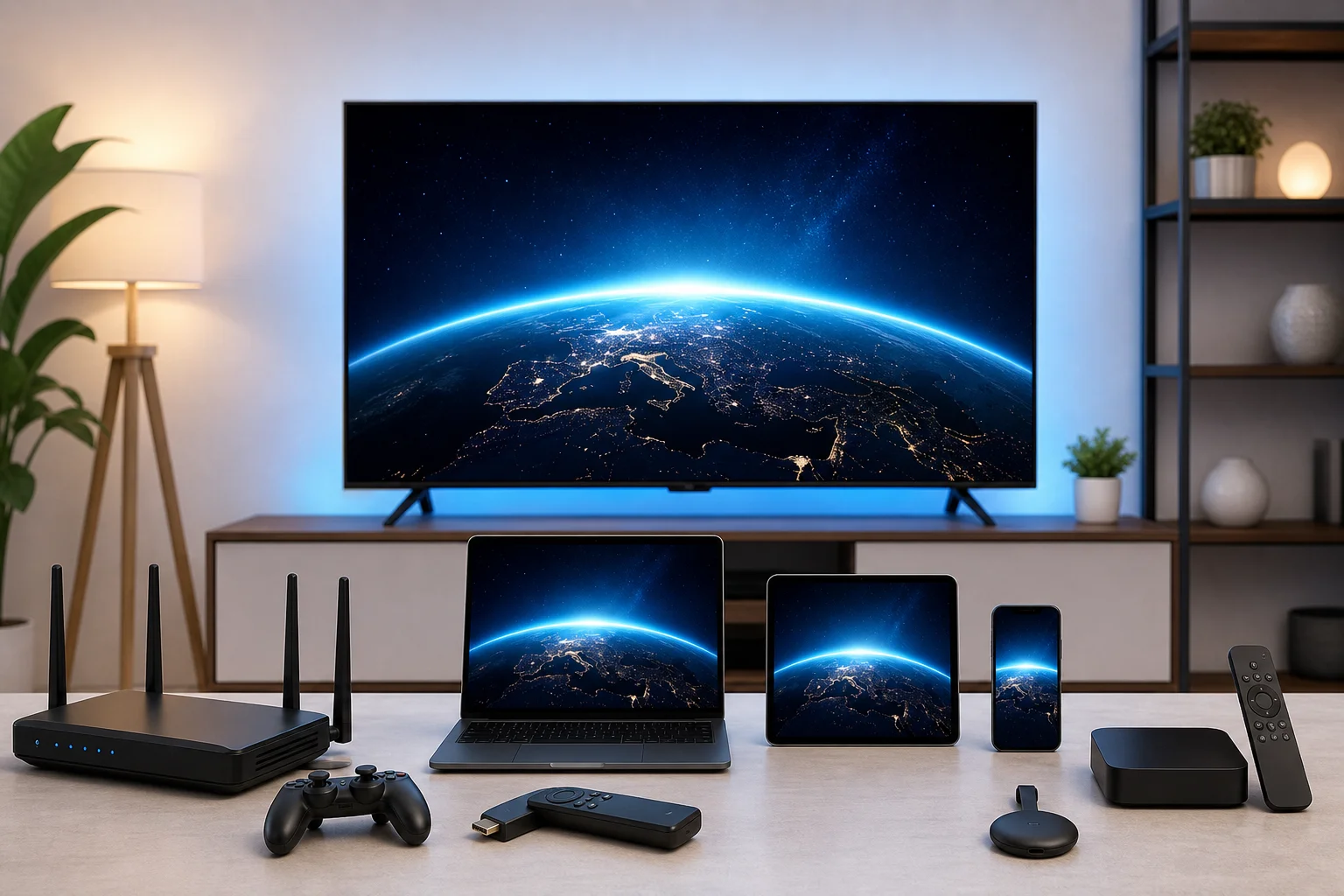
VPN compatibility for streaming devices

Compatibility with different TV brands and platforms

Here is a practical overview:

Platform or deviceVPN setup optionNotes
Android TVNative app or routerOften the easiest smart TV platform for VPN apps
Google TVNative app or routerSimilar to Android TV, with broad app support
Amazon Fire TVNative app or sideloading where allowedUse official app sources when possible
Samsung smart TVRouter or shared connectionTizen usually does not support native VPN apps
LG smart TVRouter or shared connectionwebOS usually needs network-level VPN setup
RokuRouter or shared connectionRoku devices generally do not run VPN apps directly
Apple TVNative VPN support on newer tvOS versions or routerAvailability depends on tvOS version and provider support

If your platform supports BeFreeVPN directly, install it there. If not, a router setup is usually the cleanest solution because the TV does not need to know a VPN is running.

Specific considerations for streaming devices like Roku or Apple TV

Roku is popular but limited for VPN installation. Most Roku users need a VPN-enabled router or a shared VPN connection from a computer. This setup protects Roku traffic at the network level. It also avoids complicated workarounds on the device itself.

Apple TV support depends on the tvOS version and available VPN apps. Newer versions of tvOS have improved VPN possibilities, but not every provider supports every feature. If direct setup is unavailable, use a router-based connection.

Fire TV, Android TV boxes, and Google TV devices are usually more flexible. They often allow VPN apps from the official app store. That makes them a good choice if you want simple control from the couch.

Ensuring security and speed across various devices

Security and speed should work together. A fast connection is not helpful if it leaks data, and strong privacy is frustrating if video never loads. Use these habits across platforms:

  • Keep TV firmware and streaming apps updated.
  • Download VPN apps only from trusted sources.
  • Use strong Wi-Fi security on your router.
  • Prefer Ethernet for fixed living room devices.
  • Restart devices after major app or firmware updates.
  • Test VPN speed during the time of day you usually watch TV.

If you use a router VPN, remember that every connected device may share the same VPN tunnel. That can be convenient, but it can also add load. If performance drops, disconnect devices that do not need VPN protection during streaming.

Key takeaways: Fast connections with BeFreeVPN

BeFreeVPN offers a cost-saving way to add VPN protection to your television setup. For viewers who want more private streaming without another paid subscription, it can be an economical choice. The best results come from matching the VPN setup to your TV platform and optimizing the basics.

Summarizing the benefits of using BeFreeVPN for television

The main benefits are simple:

  • You can use a free VPN option instead of paying immediately.
  • You get an encrypted connection for TV streaming traffic.
  • You can improve privacy on shared or unfamiliar networks.
  • You can set up protection on compatible TVs, streaming devices, routers, or shared connections.
  • You can tune server choice and network settings for better speed.

A VPN is not magic. It cannot create bandwidth you do not have. However, when your internet connection is stable, BeFreeVPN can help deliver a fast, private, and budget-friendly television experience.

Recap of setup and optimization tips

For a smooth setup, follow this checklist:

  1. Identify your TV platform.
  2. Install BeFreeVPN directly if your device supports it.
  3. Use a router or streaming stick if the TV does not support VPN apps.
  4. Start with the nearest VPN server.
  5. Use Ethernet or strong 5 GHz Wi-Fi when possible.
  6. Restart streaming apps after connecting.
  7. Test two or three servers before deciding which is best.
  8. Keep the VPN app, TV firmware, and streaming apps updated.

These steps address the most common causes of buffering and connection drops.

Why BeFreeVPN is the economical choice for streaming TV

Streaming costs add up quickly. Many households pay for broadband, several streaming services, sports packages, and device subscriptions. Adding a paid VPN may not be appealing. BeFreeVPN gives viewers a way to improve privacy and connection control without increasing monthly bills.

That makes it especially useful for casual streamers, families watching on shared networks, travelers, and anyone testing whether a VPN fits their viewing habits. If your goal is a VPN for television with fast connection and no added price tag, BeFreeVPN is a practical option to try first.

Common questions about using VPNs for television

How does a VPN affect internet speed for TV?

A VPN can reduce speed slightly because it encrypts traffic and routes it through a VPN server. The impact depends on server distance, server load, your device, and your base internet speed. To keep TV streaming fast, choose a nearby server, use a strong Wi-Fi or Ethernet connection, and close unused apps.

In many countries, using a VPN is legal. However, laws vary, and streaming services may have their own terms of use. A VPN should be used for privacy and security. Always follow local laws and the rules of the services you use.

How can I ensure my viewing remains private with a VPN?

Use a trusted VPN app, connect before opening your streaming service, and keep the VPN active while watching. Also update your device, avoid unknown app sources, and use secure Wi-Fi. If available, enable DNS protection and auto-connect features for extra consistency.

Can I use a VPN on a TV that does not support VPN apps?

Yes. The most common solution is to set up the VPN on your router. You can also use a VPN-compatible streaming device or share a VPN connection from a computer. These methods allow the TV to benefit from the VPN even without a native app.

Why does my streaming app block VPN traffic?

Some streaming platforms restrict VPN connections because of licensing, regional rights, or fraud prevention rules. If this happens, try another server or check whether the service allows VPN use. If the app’s terms prohibit certain VPN behavior, follow those terms.

Conclusion

A fast television VPN setup is about more than pressing connect. You need the right device method, a sensible server location, a stable home network, and a VPN that fits your budget. BeFreeVPN helps make private streaming more accessible by removing the price barrier while still giving you tools to connect securely. Experience seamless TV streaming without the price tag. Download BeFreeVPN today for a fast, free, and secure connection.
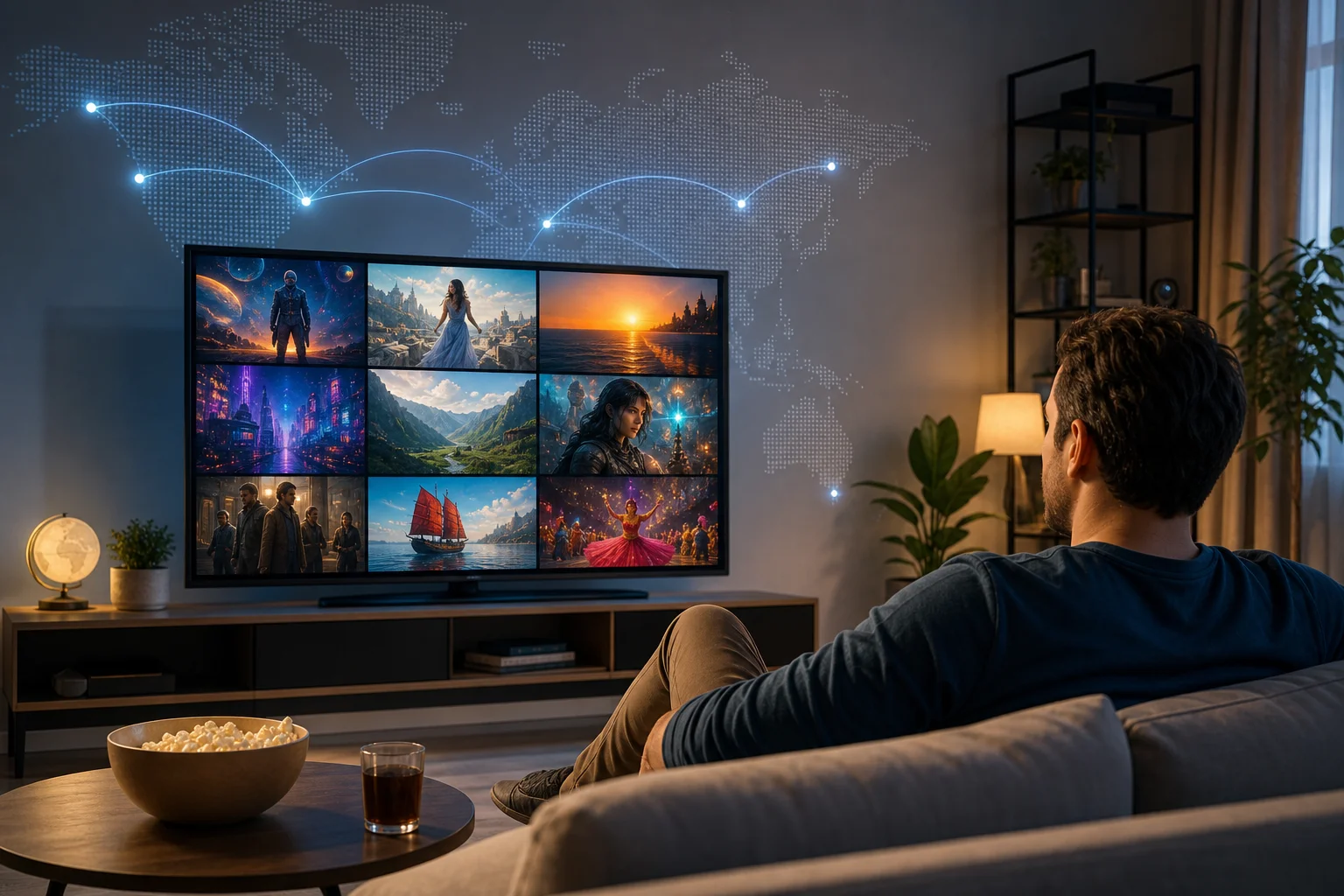
Unlock streaming potential: How BeFreeVPN transformed Harold's TV experience

· 11 min read

Imagine wanting to stream your favorite international TV shows, only to be blocked by geo-restrictions. This was Harold's reality until he found a seamless solution. In this case study, we look at how Harold chose a VPN for television for streaming, why BeFreeVPN fit his needs, and what changed in his weekly viewing routine after he set it up on his smart TV and streaming devices.

Harold was not trying to build a complicated home network. He simply wanted dependable access to more shows, smoother regional browsing, and fewer dead ends when opening streaming apps. His story is useful for anyone who understands the basics of VPNs but wants a practical, TV-first example.

VPN for television streaming setup

Meet Harold: The avid streamer

Harold is the kind of viewer who treats television as a way to explore the world. During the week, he watches British crime dramas, Japanese variety shows, European documentaries, and the occasional international film recommended by friends. He subscribes to several streaming platforms and uses a smart TV in the living room, plus a streaming stick in the bedroom.

He is semi-tech-savvy. He can install apps, update device settings, and troubleshoot Wi-Fi, but he does not want to spend an evening adjusting router firmware or reading advanced networking guides. For Harold, a good technology tool should be simple enough to use after work and reliable enough to forget about once it is running.

That expectation shaped his search for a VPN for TV streaming. He wanted three things:

  • A simple setup that worked with his television environment.
  • Access to more regional content libraries when available through his streaming subscriptions.
  • A low-friction experience without complex registration steps.

Harold had read about VPNs before. He understood that a virtual private network can route traffic through a server in another location, helping with privacy and sometimes making regional streaming catalogs accessible. However, he also knew that not every VPN works well for television. Some are built mainly for laptops. Others need manual configuration. Many require accounts, passwords, or multi-step sign-ins that feel awkward on a TV remote.

So, while Harold was interested, he was cautious. He did not want another app that promised a lot but added more problems to his routine.

The challenge: Facing geo-restrictions

Harold's main frustration was regional availability. A show would appear in an online recommendation thread, but when he searched for it on his streaming app, it was missing. Sometimes a trailer was visible, yet the full episodes were unavailable in his country. At other times, a platform promoted a series that friends abroad could watch, while Harold saw a different catalog.

This did not happen once. It became part of his weekly entertainment routine. Every Friday, he would build a short watchlist. By Saturday night, several titles were blocked, unavailable, or hidden behind regional licensing limits.

Geo-restrictions are common in streaming because licensing rights differ by country. A service may have permission to show a series in Japan, the UK, or Canada, but not in Harold's location. For viewers, the result feels inconsistent. The same app can offer different libraries depending on where the connection appears to come from.

Harold had already tried other VPN options. Yet each attempt had a drawback:

Option Harold triedWhat went wrongWhy it mattered for TV streaming
Browser-based VPN extensionsWorked only on his laptop browserHis main screen was the living room TV
Router-level VPN setupToo technical and time-consumingHe did not want to risk disrupting the whole home network
VPN apps with long sign-up flowsAnnoying to use with a remoteLogging in on a TV felt slow and clumsy
Inconsistent VPN serversStreaming apps often detected or blocked themHe still could not reach the shows he wanted

The problem was not that Harold disliked technology. The problem was that most solutions were not designed around the way he actually watched television. He wanted to sit down, open a streaming app, choose a region when needed, and enjoy the show.

Instead, he spent too much time troubleshooting. That frustration slowly reduced his interest in discovering international content. The experience had become less about entertainment and more about barriers.

The solution: Discovering BeFreeVPN

Harold first heard about BeFreeVPN in a trusted online community focused on streaming setups, smart TV apps, and practical cord-cutting advice. The discussion was not full of hype. Users were comparing what worked on real devices, what was easy to install, and what did not require advanced network changes.

Two points caught Harold's attention right away: BeFreeVPN was described as easy to use, and it offered a no-registration experience. For someone who wanted less friction, that mattered. He did not want to create yet another account before testing whether a VPN could improve his TV streaming setup.

He also checked device compatibility. BeFreeVPN fit his situation because it could work with his smart TV and other streaming devices. That meant he did not have to force a laptop-based workaround or cast every show from another screen.

How Harold set up BeFreeVPN for TV streaming

Harold's process was simple enough to repeat. For readers looking for a featured-snippet-style summary, here is the basic flow he followed:

  1. He confirmed his device path. Harold checked whether BeFreeVPN could be used directly on his smart TV or through his streaming device.
  2. He installed or opened the VPN option. He followed the device instructions instead of changing router settings.
  3. He selected a relevant location. For UK shows, he chose a UK connection. For Japanese content, he selected Japan when available.
  4. He opened his streaming app. After connecting through BeFreeVPN, he launched the platform tied to the region he wanted to browse.
  5. He tested playback. He watched a few minutes of video to check loading time, picture quality, and stability.
  6. He saved a simple routine. Once he knew what worked, he repeated the same steps for future viewing sessions.

This approach gave Harold what he wanted: control without complexity. He did not need to learn networking jargon. He did not need to register before trying the service. Most importantly, the process matched how he watched TV.

Why BeFreeVPN matched Harold's needs

BeFreeVPN worked for Harold because it solved the practical parts of the problem. It was not only about changing a virtual location. It was about making that change easy from the couch.

The main benefits were clear:

  • No registration barrier: Harold could start without creating an account.
  • TV-friendly use: The setup worked with his smart TV and streaming devices.
  • Regional flexibility: He could choose locations based on the content he wanted to explore.
  • Low hassle: He avoided router changes and complex manual configurations.
  • Better entertainment flow: He spent more time watching and less time fixing access issues.

Harold also stayed realistic. A VPN does not change subscription requirements, remove paywalls, or override a streaming service's terms. He still needed valid access to the platforms he used. BeFreeVPN simply helped him reduce location-based barriers where regional access was the issue.

The results: Unmatched streaming experience

After using BeFreeVPN, Harold's TV routine changed quickly. The biggest difference was not just the number of shows he could find. It was the reduction in friction. Instead of ending the night annoyed by unavailable titles, he could explore different regional libraries with a more predictable process.

In his usual viewing sessions, Harold found that playback felt smooth and he did not notice extra buffering when using suitable servers and a stable home connection. That detail mattered because many viewers worry that a VPN will slow down video. While speeds can vary by network, server distance, and device, Harold's experience was strong enough that he kept using BeFreeVPN as part of his regular setup.

His streaming options expanded. He began exploring:

  • Japanese dramas and variety programs recommended by online communities.
  • UK documentaries and mystery series that were not visible in his default catalog.
  • International films that appeared in regional collections.
  • New releases discussed by friends abroad.

international TV streaming with VPN

More importantly, Harold regained the feeling of discovery. Before BeFreeVPN, his watchlist felt limited by blocks and missing titles. Afterward, it felt open again. He could follow recommendations more easily and compare what different catalogs offered.

Before and after BeFreeVPN

AreaBefore BeFreeVPNAfter BeFreeVPN
Finding international showsFrequent dead ends and missing titlesMore regional libraries to explore
Setup experienceComplicated apps or router-level confusionSimple, TV-friendly routine
Account frictionSign-ups and login steps slowed testingNo-registration access made starting easier
Weekly viewing moodFrustration and abandoned watchlistsMore relaxed exploration
Device fitLaptop workarounds did not suit TV viewingSmart TV and streaming device compatibility helped

The change was practical, not magical. Harold still checked platform availability, kept his subscriptions active, and understood that streaming rules can change. However, his VPN for television streaming problem was finally manageable.

Takeaways: A new world of entertainment

Harold's case shows that the best VPN choice is often the one that fits real habits. He did not need the most complicated setup. He needed a free VPN with no registration that worked well enough on television and did not interrupt his evening.

His main takeaways were simple:

  • Ease matters. A VPN can have strong features, but if it is awkward on a TV, it may not become part of daily use.
  • No registration lowers the barrier. Harold appreciated being able to try BeFreeVPN without a long onboarding process.
  • Device compatibility is essential. A VPN for television for streaming should work where people actually watch: smart TVs, streaming sticks, and living room setups.
  • Streaming access is about consistency. The value came from repeating a simple process whenever Harold wanted to explore a different region.
  • Recommendations become more useful. When friends suggested shows from Japan, the UK, and other regions, Harold could investigate them with less frustration.

Because the experience worked for him, Harold started recommending BeFreeVPN to friends and family who had similar problems. His advice was practical: check your device, connect to the right region, keep your streaming subscriptions valid, and test the shows you want to watch.

He also reminded people to respect local laws and streaming service terms. A VPN is a privacy and connectivity tool, not a guarantee that every title will be available everywhere. Still, for Harold, it made international TV discovery far more enjoyable.

Common questions about using a VPN for television streaming

Can I use a VPN on a smart TV for streaming?

Yes, in many cases you can use a VPN with a smart TV or a connected streaming device. The exact setup depends on the TV platform and the VPN app or connection method. Harold chose BeFreeVPN because it fit his TV-focused routine without requiring complex router changes.

Will a VPN always unblock every streaming service?

No. Streaming access depends on licensing, platform rules, VPN server availability, and detection systems. A VPN can help with regional access, but it does not guarantee that every service or title will work every time.

Does a VPN slow down TV streaming?

A VPN can affect speed because traffic is routed through another server. However, the impact varies. Harold's experience was smooth when he used a stable home connection and selected an appropriate region. For best results, choose a nearby relevant server when possible and test playback before starting a long movie.

Is a no-registration VPN useful for streaming?

A no-registration VPN can be useful if you want to test access quickly and avoid extra account steps on a TV remote. Harold valued this feature because it made BeFreeVPN easy to try and simple to keep using.

What should I check before choosing a VPN for TV streaming?

Check device compatibility, ease of setup, server locations, privacy features, and whether the VPN works with your normal streaming workflow. Also confirm that you have valid subscriptions for the services you want to watch.

Conclusion: Harold's streaming setup became simpler and broader

Harold's story is a practical example of how the right VPN can improve television streaming without turning entertainment into a technical project. By choosing BeFreeVPN, he reduced geo-restriction frustration, expanded his international watchlist, and kept his setup simple enough for everyday use.

Join Harold and enhance your streaming experience with BeFreeVPN — the free, no-registration VPN that opens up a world of content on your television.

Explaining VPN for television free options: what beginners need to know

· 11 min read

Ever wondered how a VPN can transform your TV into a secure entertainment hub, especially useful while working remotely? If you have searched for “vpn for television free,” you are probably looking for a simple way to protect your home connection, access more global content, or make your smart TV safer without paying upfront. This beginner-friendly guide explains what a TV VPN does, how free VPN options work, where they help, and where their limits begin.

A VPN is not magic, and it will not make every streaming app work in every country. However, when used correctly, it can add privacy to your home network and make your television setup more flexible.

What is a VPN and how does it work?

Think of a VPN as a privacy tunnel for your internet connection. Normally, when your TV, laptop, or phone goes online, your internet service provider can see that your device is connecting to certain services. Websites and apps can also see your IP address, which often reveals your general location.

A VPN changes that route. Instead of connecting directly to a streaming service or website, your device connects to a VPN server first. The VPN server then sends your request onward. As a result, the app or website sees the VPN server’s IP address rather than your home IP address.

In simple terms, a VPN can:

  • Hide your real IP address from the services you access.
  • Encrypt traffic between your device and the VPN server.
  • Make your online activity harder to connect to your home network.
  • Let your TV appear as if it is browsing from another country, depending on the server you choose.

That last point matters for televisions. For smart TVs and streaming devices, a VPN can help you securely access content while connected through a different region. For example, a person living abroad may want to watch news or public media from their home country. A VPN may help, although each streaming platform has its own rules and restrictions.

It is also important to be realistic. A VPN does not make you completely anonymous. Apps may still track account activity, cookies, device IDs, or viewing history. Still, for beginners, a VPN is one of the simplest tools for improving privacy on a home entertainment setup.

VPN for television privacy tunnel

Why use a VPN for your television?

At first, using a VPN on a TV might sound unnecessary. After all, you may think of VPNs as tools for laptops, office work, or travel. But modern televisions are internet-connected devices. Smart TVs run apps, collect usage data, and connect to the same home network as work laptops, phones, tablets, and security cameras.

This matters even more if you work remotely.

When your home becomes your office, every connected device becomes part of the same digital environment. Your TV may not store work files, but it still uses your router, Wi-Fi, and internet connection. If your network is poorly secured, weak devices can create privacy risks.

A VPN for television can help in several ways.

It adds privacy to streaming traffic

A VPN can reduce how much your internet provider or local network observers can see about your streaming activity. They may still see that you are connected to a VPN, but not the specific content you are requesting through the encrypted tunnel.

It can help with geo-blocks

Many streaming services show different libraries in different countries because of licensing agreements. A TV VPN can sometimes help you access content while traveling or living abroad. However, always check the terms of service for each platform. Some services restrict VPN use.

It supports a safer home office setup

Remote work often requires secure connections. While your employer may provide a separate work VPN for your laptop, protecting other devices on your home network is still smart. A VPN on your TV can reduce unnecessary exposure and help keep entertainment traffic separate from direct browsing.

It protects sensitive data on shared networks

If your TV is used in a shared apartment, guest house, student housing, or temporary rental, a VPN can add a layer of protection. This is useful when you do not fully control the router or network settings.

In short, a free VPN for TV is not only about entertainment. It can also be part of a wider privacy plan for a home where work and personal life share the same internet connection.

How to set up a free VPN for your TV

Setting up a free VPN for your TV is a little like setting up a security camera. You choose the right tool, place it where it protects the area you care about, connect it properly, and check that it works. The exact steps depend on your television and streaming device.

Some smart TVs allow VPN apps directly. Others need a workaround, such as installing the VPN on a router, using a streaming stick, or sharing a VPN connection from a computer.

Step-by-step setup guide

  1. Check your TV platform
    Look at whether you use Android TV, Google TV, Fire TV, Apple TV, Roku, Samsung TV, LG TV, or another system. Android TV, Google TV, and Fire TV are usually easier because they support more apps.

  2. Choose a free VPN carefully
    Pick a service that is clear about privacy, does not require unnecessary personal details, and works on the device you plan to use. Free VPNs can be useful, but avoid unknown apps with vague privacy policies.

  3. Install the VPN app if supported
    If your TV or streaming stick has an app store, search for the VPN app and install it. Open the app, choose a server, and connect.

  4. Use router setup if your TV does not support apps
    Some TVs cannot run VPN apps. In that case, you may be able to configure a VPN on your router. This protects traffic from devices connected through that router. However, router setup can be more technical.

  5. Share a VPN connection from another device
    As another option, you can connect your laptop to a VPN and share that internet connection with your TV. This can work for temporary use, but it may be slower.

  6. Test your connection
    After connecting, open a streaming app or browser on your TV. Check that your internet still works and that the location matches the VPN server you selected.

  7. Monitor speed and stability
    Free VPN services may have slower speeds, fewer server choices, or data limits. If video buffers often, try another server or reduce streaming quality.

Devices that may support TV VPN use

  • Smart TVs with Android TV or Google TV.
  • Amazon Fire TV Stick or Fire TV Cube.
  • Some routers with VPN client support.
  • Laptops sharing a VPN-protected hotspot.
  • TV boxes that allow app installation.

If you are a beginner, the easiest path is usually a streaming device that supports VPN apps. It avoids complex router settings and gives you more control.

Free VPN setup for smart TV

Comparison: free VPNs vs. paid VPNs for television

Free VPNs are like free samples. They are great for trying out the idea before committing. You can test whether a VPN works with your TV, see how it affects streaming speed, and learn the basics without paying.

Paid VPNs are more like owning a premium TV subscription. You usually get more locations, faster servers, better support, and fewer limits. For heavy streaming or daily remote work support, paid services may be more reliable.

FeatureFree VPN for televisionPaid VPN for television
CostNo upfront costMonthly or annual fee
SpeedMay be slower during busy timesUsually faster and more stable
Server locationsOften limitedMore countries and regions
Data limitsMay have caps or fair-use limitsOften unlimited or much higher
PrivacyDepends heavily on providerOften stronger, but still varies
Setup supportBasic or self-serviceMore guides and customer support
Best forLight use, testing, occasional secure viewingFrequent streaming, travel, larger households

When a free VPN makes sense

A free VPN may be a good fit if you:

  • Only stream occasionally.
  • Want to test VPN use on your TV.
  • Need quick privacy on a shared network.
  • Do not want to create an account immediately.
  • Can accept limited server choices or slower speeds.

When to consider a paid VPN

A paid VPN may be better if you:

  • Stream in high definition every day.
  • Need consistent access while traveling.
  • Want more country options.
  • Need support for several devices at once.
  • Prefer advanced features such as router support or split tunneling.

The right choice depends on your security needs and how often you use the VPN. Beginners can start free, learn the basics, and upgrade only if they hit clear limits.

Real-world example: enhancing remote work with a TV VPN

Imagine this: you work from a home office and keep a television on nearby for global news, market updates, language learning, or background entertainment during breaks. Your work laptop uses your company’s secure tools, but your TV is still connected to the same home internet.

In this setup, a VPN for television free option can help you stream global content more privately without adding another paid service. You can connect the TV through a VPN server, reduce exposure of your home IP address, and keep casual streaming traffic more protected.

For example, you might want to watch international news from a different region while preparing for calls with clients abroad. A TV VPN can make that access more flexible. It can also be useful when you are in temporary housing, using shared Wi-Fi, or working from a place where you do not fully control the network.

Free VPNs can protect streaming without additional costs, especially for light use. BeFreeVPN offers a no-registration model, which can be helpful when you want quick, secure access without a long setup process. That makes it approachable for beginners who want to improve their home office environment without dealing with complex accounts or advanced settings.

Common questions about free VPNs for TV

Can I use a free VPN on any smart TV?

Not always. Some smart TVs support VPN apps, while others do not. Android TV, Google TV, and Fire TV devices are usually easier. If your TV does not support VPN apps, you may need router setup or connection sharing from a laptop.

Is a free VPN for television safe?

It depends on the provider. Choose a VPN with clear privacy practices and avoid apps that ask for unnecessary permissions. A free VPN can be useful, but not every free service is trustworthy.

Will a VPN make streaming faster?

Usually, no. A VPN can sometimes improve routing in specific cases, but it often adds a small speed cost because traffic is encrypted and routed through another server. For best results, choose a nearby server when privacy is your main goal.

Can a VPN unlock every streaming service?

No. Some platforms block VPN traffic, and content access depends on licensing, account region, and service rules. A VPN can help in some cases, but it is not a guaranteed unlock tool.

Do I need a VPN on my TV if I already use one for work?

Your work VPN usually protects only your work device and company traffic. It does not automatically protect your smart TV. If you want privacy for TV streaming, you may need a separate TV VPN setup.

Conclusion

A free VPN for television can be a practical starting point for beginners who want more privacy, safer streaming, and broader access to global content. It is especially useful in a remote work home where many devices share the same network. Start with a simple setup, understand the limits of free services, and choose a provider that respects your privacy. Try BeFreeVPN for your television to access global content securely and enhance your home office setup with a no-registration, free solution.

VPN for television install: common questions answered

· 8 min read

Ever wondered how a VPN can transform your family's television viewing experience while keeping your children safe online? This VPN for television install FAQ explains the practical setup options, why families use a VPN on smart TVs and streaming devices, and what to expect from speed, privacy, and day-to-day use. Whether your household watches cartoons, sports, films, or educational content, the right setup can make secure streaming easier across the home.

A television VPN is not just for tech experts. In many homes, it is a simple privacy layer for smart TVs, Fire TV devices, Android TV boxes, Google TV, and even the whole Wi-Fi network when configured through a router.

vpn for television install setup

How can I install a VPN on my television?

The best VPN for television install method depends on what type of TV or streaming setup you use. Some smart TVs support VPN apps directly. Others need a workaround, such as a VPN-ready router or a streaming stick.

Step-by-step installation options

  1. Check your smart TV app store
    Open the app store on your smart TV and search for your VPN provider. Android TV and Google TV models often support VPN apps directly. Some Fire TV devices also allow easy VPN app installation. If the app is available, install it, sign in if required, choose a server, and connect before opening your streaming apps.

  2. Install the VPN on a compatible router
    If your TV does not support VPN apps, a router-based VPN can protect the TV through your home Wi-Fi. This method routes connected devices through the VPN automatically. It is useful for households with several TVs, tablets, phones, and laptops. However, not every router supports VPN configuration, so check the router model and firmware first.

  3. Use a streaming device with a VPN app
    A streaming device, such as a Fire Stick, Android TV box, or Google TV device, can be the easiest indirect method. You install the VPN app on the streaming device, connect to the VPN, and then watch content on your television through that device.

  4. Share a VPN connection from a computer
    In some cases, you can share a VPN-protected connection from a Windows or macOS computer to your TV. This can work, but it is usually less convenient than using a router or streaming device.

Setup methodBest forMain benefitPossible drawback
Smart TV VPN appTVs with app supportFastest setupNot available on all TVs
VPN routerWhole householdCovers many devicesMore setup steps
Streaming deviceMost familiesSimple and flexibleRequires extra hardware
Computer sharingTemporary useNo router changesLess reliable for daily use

For most families, the easiest route is either a supported VPN app on the TV or a VPN-enabled streaming device. If you want coverage for every device in the home, router installation is usually the better long-term option.

Why should I use a VPN for television in a family setting?

A VPN for television can help improve privacy, flexibility, and household convenience. Smart TVs and streaming apps often connect to many online services. A VPN encrypts internet traffic between your device and the VPN server, which helps reduce exposure on shared or unsecured networks.

For families, that extra privacy can matter. Children may use smart TVs to watch videos, play games, or access apps. A VPN can help protect viewing activity from certain forms of network-level tracking. It can also make it harder for outsiders on the same network to inspect traffic.

Another benefit is access to global content. Families with relatives abroad, multilingual households, or children learning another language may want a wider range of educational shows, documentaries, and entertainment. A VPN can help you connect through different regions, although streaming availability depends on each service's terms, licensing, and policies.

A VPN is also useful because modern homes rarely rely on one screen. Parents may use laptops, children may use tablets, and the living room TV may stream daily. A multi-device VPN setup supports different household needs without requiring every family member to manage privacy settings separately. When installed on a router, the VPN can protect many connected devices with one central configuration.

Does using a VPN on my television slow down its performance?

Yes, a VPN can slightly reduce speed because your data is encrypted and routed through a VPN server. However, the effect is often manageable when you choose the right server and use a reliable connection.

The most common signs of reduced performance are longer loading times, lower video quality, or buffering during busy hours. These issues are not always caused by the VPN. They can also come from weak Wi-Fi, an overloaded home network, or a streaming service problem.

To reduce speed loss, try these tips:

  • Choose a nearby server. A server closer to your location usually gives better speed and lower latency.
  • Use premium or optimized servers for streaming. Some VPN services offer servers designed for stable video playback.
  • Connect your TV by Ethernet if possible. A wired connection is often more stable than Wi-Fi.
  • Avoid overloaded servers. If one server feels slow, switch to another in the same region.
  • Check your base internet speed. A VPN cannot fix a slow internet plan or weak router signal.

For HD and 4K streaming, stability matters as much as raw speed. A well-configured VPN on a smart TV, streaming device, or router should run quietly in the background with only a small speed difference in normal use.

Is it a myth that VPNs for televisions are difficult to set up?

Yes, it is mostly a myth. Many people assume a VPN for TV is complex because televisions do not work exactly like phones or laptops. In reality, setup is usually simple when you choose the method that matches your device.

If your smart TV supports VPN apps, the process is similar to installing any other app. You search, install, open, and connect. If you use a Fire Stick or Android TV device, the steps are also straightforward.

Router-based VPNs take more initial effort. You may need to log in to your router settings, upload a configuration file, or enter VPN server details. Still, once it is configured, the experience becomes easy. Your television connects to Wi-Fi as usual, and the router handles the VPN connection in the background.

The key is to avoid forcing the wrong method. If your TV app store does not support VPN apps, do not waste time searching endlessly. Use a streaming device or router instead. After setup, operating a VPN on TV is mostly seamless and automatic. You can usually turn it on, select a server, and start streaming.

family television VPN safety

How can a television VPN enhance children's safety online?

A television VPN can support children's online safety, but it should be part of a broader family safety plan. It is not a complete parental control tool by itself. Instead, it adds privacy and security to the way a TV or home network connects to the internet.

First, a VPN encrypts data traffic. This helps protect children's viewing activity and app usage from certain network-level snooping. It is especially useful if the television connects through shared Wi-Fi, rental accommodation, or a network you do not fully control.

Second, a VPN can reduce tracking based on IP address. Many services use location and network data to build profiles or target ads. By masking the household IP address, a VPN can make this type of tracking less direct. This is helpful for families that want fewer ads and less profiling aimed at children.

Third, some VPN services include extra safety features, such as malicious site blocking, DNS filtering, or ad blocking. These tools may help block inappropriate websites, suspicious domains, or unsafe links. However, encrypted data channels alone do not automatically block adult content. For stronger protection, combine a VPN with parental controls, child profiles, safe search settings, and age-appropriate streaming app restrictions.

A router-based VPN can also add a security layer to the whole home network. This is useful when children move between the TV, tablet, game console, and family computer. Parents can manage protection from one place rather than adjusting every device separately.

The safest approach is layered. Use the VPN for privacy and secure connections. Use parental controls for content rules. Talk with children about safe viewing habits. Together, these steps create a more reliable family streaming environment.

Conclusion

A VPN for television install can be simple, practical, and useful for the whole household. Start by checking whether your smart TV supports VPN apps. If not, consider a VPN-compatible router or a streaming device such as a Fire Stick or Google TV device. Then choose nearby or optimized servers to keep streaming smooth.

For families, the value goes beyond entertainment. A TV VPN can help protect viewing privacy, support multiple devices, reduce some tracking, and strengthen home network security when used with parental controls. Enhance your family's TV experience with BeFreeVPN — it's free, requires no registration, and works seamlessly across all devices.

VPN for LG TV Streaming: Debunking Myths and Exploring Options

· 11 min read

Is your LG TV streaming experience hindered by misconceptions about VPNs? Let's bust common myths and explore the best solutions for seamless streaming. If you are looking for a vpn for LG TV for streaming, the key point is this: LG smart TVs usually do not run standard VPN apps directly, so the best choice depends on how you plan to connect your TV, protect your privacy, and keep playback smooth.

This comparison uses a myths-versus-facts approach. Instead of assuming every VPN setup works the same, we will compare practical options for LG webOS TVs, including router-based VPNs, Smart DNS-style setups, and registration-free services such as BeFreeVPN.

vpn for LG TV streaming setup

Understanding VPN myths for LG TV streaming

LG TVs are excellent streaming devices, but VPN setup can be confusing because webOS is not the same as Android TV, Fire TV, or Google TV. Before comparing options, it helps to separate common assumptions from what actually happens in daily use.

Myth: all VPNs work the same on smart TVs

Fact: VPNs work differently depending on the TV operating system and installation method.

Many streaming VPN apps are built for phones, laptops, tablets, or Android-based TV devices. LG TVs use webOS, and most models do not allow you to install a traditional VPN app from the LG Content Store. That means a VPN for LG TV streaming normally works in one of these ways:

  • Through a VPN-enabled router.
  • Through a shared connection from a laptop or mobile hotspot.
  • Through a DNS or Smart DNS configuration.
  • Through a streaming device connected to the LG TV, such as an Android TV box, Fire TV Stick, or Apple TV.

So, the question is not only “Which VPN is best?” It is also “Which VPN setup is easiest for my LG TV?”

Myth: a VPN always ruins streaming speed and quality

Fact: A VPN can reduce speed, but the effect depends on the service, server distance, protocol, network congestion, and your original internet connection.

A VPN encrypts traffic and routes it through another server. This can add latency and reduce speed. However, for streaming, stability often matters more than peak speed. A well-configured VPN can still support HD or 4K playback if your base connection is strong and the VPN server is nearby.

For LG TV streaming, pay attention to:

  • Server location and load.
  • Router performance if the VPN runs on your router.
  • Whether the VPN limits bandwidth.
  • Whether the service is designed for streaming traffic.
  • How easily you can switch servers if one path is slow.

In short, a VPN does not automatically mean buffering. Poor setup, weak hardware, and crowded servers are usually the bigger problems.

Myth: registration-free VPNs are too limited to be useful

Fact: Registration-free VPNs can be ideal for users who want privacy with minimal friction, but expectations matter.

Services like BeFreeVPN are often misunderstood because people assume “free” means complicated, unsafe, or too restricted for real use. In reality, a no-registration VPN can be a strong fit when you want quick access, less personal data sharing, and simple protection across devices.

That said, a free VPN should still be judged carefully. Look for practical device support, stable streaming performance, clear privacy terms, and setup flexibility. For an LG TV, the most useful service is not just the one with the longest feature list. It is the one that fits your actual viewing setup without creating extra accounts, fees, or installation problems.

VPN options for streaming on LG TV

Below are three realistic options for using a VPN with an LG TV. To keep the comparison clear, we will call them Option A, Option B, and Option C.

Option A: BeFreeVPN no-registration setup

Option A is BeFreeVPN, a free VPN option built around quick access and no registration. Since LG TVs usually do not support direct VPN app installation, BeFreeVPN is best used through a supported device or network-level method, depending on your home setup.

Pros:

  • Free to use.
  • No registration required.
  • Reduces the amount of personal information you need to share.
  • Useful across multiple devices, not just the TV.
  • Good fit for users who want a simple privacy layer for streaming sessions.

Cons:

  • Like most VPNs, it may not install directly on LG webOS.
  • Performance can depend on your connection method and server availability.
  • Advanced router configuration may require some technical comfort.

Suitability for LG TV:

BeFreeVPN is especially suitable if you value privacy, dislike account creation, and want a low-cost way to improve your streaming setup. For many LG TV owners, the best approach is to run the VPN on another device, share the connection, or use it at the network level when supported.

Option B: Premium router VPN service

Option B is a paid VPN service configured on a compatible router. This is a common solution for smart TVs because it protects every device connected to that router, including an LG TV.

Benefits:

  • Works with LG TVs because the VPN runs on the router, not the TV.
  • Can protect multiple devices at once.
  • Often includes many server locations and advanced settings.
  • Convenient once configured.

Limitations:

  • Usually requires a monthly or yearly subscription.
  • Router setup can be technical.
  • Not all routers support VPN client mode.
  • A low-powered router can reduce streaming performance.

User experience:

A router VPN is powerful but not always beginner-friendly. It works well for households that want always-on protection. However, if you only stream occasionally, the setup process and cost may feel excessive.

Option C: Smart DNS or streaming device VPN

Option C covers two related approaches: Smart DNS configuration and using a dedicated streaming device that supports VPN apps.

Smart DNS changes DNS routing without full VPN encryption. A streaming device VPN, on the other hand, runs the VPN app on an external device connected to your LG TV by HDMI.

Features:

  • Smart DNS may be easier to configure in TV network settings.
  • External streaming devices can run VPN apps more directly.
  • Good option if you already own a compatible device.
  • Often avoids router-level complexity.

Compatibility:

Smart DNS can work on many LG TV models because DNS settings are usually available in the network menu. However, it does not provide the same encrypted privacy protection as a VPN. A streaming device VPN may offer stronger privacy, but you need extra hardware.

Best fit:

Option C is best for users who care more about convenience than full network protection. It can also be useful if your router does not support VPN setup.

Quick comparison table for LG TV VPNs

The table below compares the three options for pricing, features, performance, registration needs, and LG TV compatibility.

OptionTypical pricingRegistration requiredMain featuresStreaming performanceLG TV model availabilityBest for
Option A: BeFreeVPNFreeNoVPN privacy, no account setup, multi-device useDepends on connection method and server path; can be smooth with a stable networkWorks with LG TVs through supported device, shared connection, or network-level setup; useful across many webOS modelsPrivacy-focused users who want a free, simple start
Option B: Premium router VPNPaid subscriptionYesWhole-home VPN, many servers, advanced controlsStrong if router hardware is capable; weaker on old routersBroad LG TV support because protection happens at router levelHouseholds wanting always-on protection
Option C: Smart DNS or streaming device VPNFree to paid, plus possible hardware costUsually yes for paid toolsDNS routing or app-based VPN on external deviceOften fast; Smart DNS has no encryption overheadSmart DNS can work on many LG TVs; streaming device support depends on deviceUsers who want easier setup or already own extra hardware

LG TV VPN comparison

Step-by-step setup paths for common LG TV users

  1. If you want the simplest free privacy option: try BeFreeVPN on a supported phone, laptop, or device, then use a shared connection if your device supports it.
  2. If you want whole-home coverage: check whether your router supports VPN client settings, then configure a trusted VPN at router level.
  3. If your router is not compatible: use a VPN-capable streaming device connected to your LG TV.
  4. If speed matters more than encryption: consider Smart DNS, but remember it is not a full VPN.
  5. If buffering appears: switch to a closer server, restart the connection, or test your base internet speed without the VPN.

Which VPN should you choose for LG TVs?

The right VPN for LG TV streaming depends on your priorities. There is no single setup that is perfect for every viewer, because LG TV compatibility depends heavily on how the VPN is deployed.

If ease of setup matters most

Choose the method with the fewest moving parts. For many people, that means using a streaming device or sharing a VPN connection from another device. BeFreeVPN is attractive here because it removes the account creation step and lowers the barrier to testing a VPN workflow.

If cost matters most

BeFreeVPN has the clearest advantage because it is free and does not require registration. A paid router VPN may offer extra controls, but it adds recurring cost. Smart DNS can be affordable, yet some providers bundle it into paid plans.

If feature set matters most

A premium router VPN may offer more advanced features, such as custom protocols, split tunneling on supported platforms, and larger server networks. However, more features can also mean more setup time. Intermediate users should decide whether those controls are truly needed for TV streaming.

How myths distort expectations

Myths often lead LG TV owners to make the wrong choice. For example, someone may buy a VPN subscription assuming an app will appear in the LG Content Store. Another user may avoid free no-registration tools because they assume they are not useful for streaming privacy.

A better approach is to start with your real constraints:

  • Does your LG TV support the setting you want to change?
  • Can your router run a VPN client?
  • Do you need encryption, or only DNS-based routing?
  • Are you comfortable creating accounts and paying subscriptions?
  • Do you stream mostly in HD, 4K, or while traveling?

Once those questions are clear, the best VPN option becomes much easier to identify.

Common questions about VPNs for LG TV streaming

Can I install a VPN app directly on my LG TV?

Usually, no. Most LG smart TVs use webOS, and traditional VPN apps are not commonly available in the LG Content Store. Use a router setup, shared connection, Smart DNS, or VPN-capable streaming device instead.

Will a VPN improve streaming quality on an LG TV?

A VPN is mainly for privacy and routing. It does not automatically improve picture quality. However, a stable VPN connection can support smooth streaming when configured well and paired with a strong internet connection.

Is Smart DNS the same as a VPN?

No. Smart DNS changes how certain requests are routed, but it does not encrypt your traffic like a VPN. It may be fast and simple, but it is not the same privacy tool.

Do I need registration to use every LG TV VPN option?

No. BeFreeVPN is designed as a no-registration option, which makes it appealing if you want fewer sign-up steps and less personal information shared. Many paid VPNs and Smart DNS services do require an account.

Verdict: why BeFreeVPN is your best bet for LG TV streaming

BeFreeVPN stands out because it addresses three common LG TV streaming concerns at once: cost, privacy, and simplicity. It is free, requires no registration, and can be used across your devices as part of a practical LG TV streaming setup. While LG webOS limitations mean you may need a shared connection, router-level configuration, or a supporting device, that is true for most VPN solutions on LG TVs.

For intermediate users, BeFreeVPN is a smart first choice because it lets you test VPN streaming without committing to a paid plan or creating another account. It is also a practical fit for many LG TV models when used through compatible network or device-based methods. Most importantly, it can add a privacy layer to your streaming routine without making the process unnecessarily complex.

Enhance your LG TV streaming experience with BeFreeVPN. It's free, requires no registration, and offers seamless streaming across all your devices.

VPN for television setup: how to set up a VPN for your television

· 18 min read

Are you trying to watch uncensored content on your TV but facing regional restrictions? Discover the technical steps to effectively set up a VPN for your television and access any content globally. This deep dive explains vpn for television setup options for advanced users: native smart TV apps, VPN-enabled routers, protocol choices, DNS behavior, performance tuning, and the legal limits you should understand before bypassing censorship.

A television is no longer a passive display. It is a networked endpoint that runs apps, resolves domains, negotiates TLS sessions, stores account tokens, and streams high-bitrate video from CDNs. That makes VPN design more complex than simply pressing “connect” on a laptop.

Why use a VPN for your television?

A VPN routes traffic from your TV, or from the network segment your TV uses, through an encrypted tunnel to a remote VPN server. To streaming services, websites, and some network observers, requests appear to originate from the VPN server rather than your local ISP connection.

Regional restrictions and censorship on TVs

Regional restrictions can happen at several layers:

  • Content licensing: Streaming catalogs vary by country because distribution rights differ.
  • App availability: A TV app store may hide apps based on the device region, account country, or IP address.
  • ISP or state-level filtering: DNS tampering, IP blocking, SNI filtering, and deep packet inspection can prevent access to news, video, or social platforms.
  • Local network controls: Hotels, campuses, offices, and managed apartment networks may block streaming protocols or specific services.

On a TV, these restrictions are harder to work around because many smart TV platforms expose fewer network controls than desktop operating systems. For example, Samsung Tizen and LG webOS usually do not let you install a generic OpenVPN or WireGuard client directly. Android TV, Google TV, Fire TV, and some Apple TV devices are more flexible, but app availability still varies by region and model.

Privacy and content access benefits

A VPN for television setup can provide several practical benefits:

  • Reduced ISP visibility: Your ISP can usually see that you are connected to a VPN server, but not the exact streaming domains inside the encrypted tunnel.
  • Protection on shared networks: If your TV uses hotel Wi-Fi or a shared building network, a VPN reduces exposure to local interception.
  • Consistent household routing: A router-level VPN can protect multiple devices, including TVs, consoles, and set-top boxes.
  • Access to uncensored information: In restrictive regions, VPN routing may help reach blocked video platforms, independent media, or educational content.
  • IP-based location flexibility: Some services use IP geolocation to decide what catalog or homepage to display.

However, a VPN is not a magic anonymity layer. Streaming accounts, device IDs, payment country, GPS data from paired phones, and app telemetry can still identify your region or account history.

How is TV VPN usage different from laptop or phone usage?

TVs behave differently from traditional devices in three important ways.

First, TVs are often bandwidth-heavy. A 4K HDR stream needs stable throughput, low packet loss, and good CDN reachability. A VPN endpoint that works for browsing may still buffer during high-bitrate streaming.

Second, TVs have limited VPN client support. A laptop can run OpenVPN, WireGuard, IKEv2, split tunneling rules, custom DNS, and packet captures. Many TVs only support apps from a curated store.

Third, TVs are usually always-on devices. If your VPN fails open, a background app may immediately reconnect outside the tunnel. For privacy-sensitive setups, router-level kill switches, DNS leak prevention, and policy routing become more important.

VPN for television setup network diagram

Choosing the right VPN for television setup

The best VPN for a television is not always the one with the most mobile features. You need a provider and architecture that match your TV platform, router hardware, and threat model.

Important factors to evaluate

Use the following comparison table when selecting a VPN service for TV streaming and censorship resistance.

FactorWhy it matters for TVWhat to look for
Speed and stabilityTV streams are sensitive to sustained throughput, not just peak speedNearby servers, low packet loss, WireGuard or optimized OpenVPN profiles
Server locationsLocation affects catalog access, latency, and censorship avoidanceMultiple countries, city-level options, fallback regions
Encryption strengthStrong encryption protects traffic on hostile networksModern ciphers such as AES-256-GCM or ChaCha20-Poly1305
Protocol supportSome networks block or throttle known VPN protocolsWireGuard, OpenVPN TCP/UDP, IKEv2, and stealth or obfuscation modes where legal
Router compatibilityMany TVs need router-level VPN coverageOpenVPN or WireGuard configuration files, documented router guides
DNS handlingDNS leaks can reveal destinations or trigger geo-blockingPrivate DNS through the tunnel and IPv6 leak protection
App availabilityDirect setup depends on the TV operating systemAndroid TV, Google TV, Fire TV, Apple TV, or router support
No-registration optionUseful where privacy and friction matterMinimal account requirements and simple connection flow

Compatibility with TV brands and platforms

Before subscribing or configuring anything, identify your platform:

  • Android TV and Google TV: Usually the easiest. Many VPN apps are available through Google Play.
  • Amazon Fire TV: Often supports native VPN apps through the Amazon Appstore or sideloading, depending on region.
  • Apple TV: Newer tvOS versions support VPN apps, but provider availability and features vary.
  • Samsung Tizen: Typically does not support standard VPN apps. Use a VPN router, shared VPN connection, or Smart DNS.
  • LG webOS: Similar to Samsung. Router-level VPN is usually the cleanest option.
  • Roku: No native VPN client. Use a router, travel router, or connection sharing.
  • Game consoles used for streaming: PlayStation, Xbox, and Nintendo Switch usually need router-level VPN or shared connection.

VPN provider support for television systems

For advanced users, provider support should include more than a one-click app. Look for:

  • Downloadable OpenVPN and WireGuard profiles.
  • Clear DNS server behavior.
  • Router setup guides for OpenWrt, DD-WRT, AsusWRT-Merlin, GL.iNet, pfSense, or OPNsense.
  • Multiple ports and transport modes for networks that throttle UDP.
  • A kill switch or firewall guidance for router deployments.
  • Responsive server rotation when IP ranges are blocked.

If your main goal is censorship resistance, also verify whether the provider offers obfuscation, bridge-like modes, or alternative endpoints. Availability varies by region and by law, so treat this as part of your risk assessment.

Setting up a VPN on smart TVs

Direct installation is the simplest path when your TV platform supports it. It also lets you enable or disable the VPN per TV without affecting the rest of your household network.

Step-by-step smart TV setup

Follow this workflow for Android TV, Google TV, Fire TV, and compatible Apple TV devices.

  1. Update the TV operating system. Install firmware and security updates before adding a VPN. Older firmware can cause TLS, DNS, or app compatibility issues.
  2. Confirm app support. Search the TV app store for your VPN provider. If it is not available, use router setup instead of installing untrusted APK files.
  3. Install the VPN app. Download only from the official store or the provider’s verified website.
  4. Sign in or initialize the app. Some VPNs require credentials. Others use device pairing codes or registration-free access.
  5. Choose a nearby or relevant server. For privacy and speed, choose the nearest reliable server. For regional access, choose a server in the needed jurisdiction.
  6. Select the protocol. Use WireGuard or IKEv2 for speed when available. Use OpenVPN TCP or obfuscated modes if UDP is blocked.
  7. Enable auto-connect. Configure the VPN to reconnect after TV reboot or network change.
  8. Check DNS behavior. Use the VPN provider’s test page or a browser app, if available, to verify that DNS resolves through the tunnel.
  9. Test streaming quality. Start with HD, then test 4K HDR. Watch for buffering, audio sync issues, or app errors.
  10. Document the baseline. Record server, protocol, average bitrate, and errors. This makes troubleshooting faster.

Configuring network settings for optimal performance

TV VPN performance depends on the weakest part of the path: Wi-Fi, router CPU, VPN protocol, remote server, CDN peering, or the streaming service itself.

For stable results:

  • Prefer Ethernet over Wi-Fi for 4K streams.
  • If Wi-Fi is required, use 5 GHz or 6 GHz with strong signal.
  • Disable unused TV background apps that consume bandwidth.
  • Avoid double VPN unless your threat model requires it.
  • Set DNS to the VPN-provided DNS when the app allows it.
  • Disable IPv6 on the TV or router if your VPN does not support IPv6 tunneling.
  • Use a server geographically close to the target content delivery network.

Advanced users can inspect performance with router telemetry. Check CPU load, NAT table size, interface throughput, packet loss, and DNS query routing. If router CPU reaches saturation, your stream may buffer even when your ISP line is fast.

Troubleshooting common smart TV VPN issues

If the VPN connects but streaming fails, isolate the layer causing the problem.

  • App cannot connect: Try a different protocol, port, or server. Some networks block UDP-based VPN traffic.
  • Streaming app detects VPN: Rotate servers, clear app cache, restart the TV, and ensure DNS is not leaking.
  • Slow speeds: Switch from OpenVPN to WireGuard, move closer to the router, or choose a less congested server.
  • No internet after connection: Check whether the VPN app’s kill switch is blocking traffic after a failed tunnel.
  • Wrong location shown: Confirm that both IP and DNS are routed through the same country.
  • Captive portal problems: On hotel Wi-Fi, authenticate the TV first or use a travel router that can handle the portal.

Smart TV VPN setup screen

Using a VPN-enabled router for your TV

A VPN-enabled router protects devices that cannot run VPN apps. It is also the most controllable architecture for advanced television setups.

How a VPN-enabled router works

In a router VPN setup, the router creates the encrypted tunnel. The TV sends normal traffic to its gateway. The router then forwards selected traffic through the VPN interface instead of the ISP WAN interface.

This design has several advantages:

  • Works with Samsung, LG, Roku, consoles, and older smart TVs.
  • Centralizes DNS leak protection.
  • Supports policy-based routing by device, subnet, port, or destination.
  • Can enforce a kill switch at the firewall level.
  • Avoids installing unknown apps on the TV.

The trade-off is complexity. Encryption runs on the router, so hardware matters. Consumer routers with weak CPUs may handle only modest VPN throughput, especially with OpenVPN.

Step-by-step router VPN setup

Use this general process for OpenWrt, AsusWRT-Merlin, DD-WRT, pfSense, OPNsense, or capable travel routers.

  1. Verify router support. Confirm that your router supports OpenVPN or WireGuard client mode. If not, consider custom firmware or a dedicated VPN travel router.
  2. Back up the configuration. Export your current router settings before changing firmware or firewall rules.
  3. Install or enable the VPN client. Use the router’s package manager, VPN client page, or firmware module.
  4. Import VPN profiles. Add the provider’s configuration files, certificates, keys, endpoint hostname, and authentication method.
  5. Configure DNS. Force TV clients to use VPN DNS servers. Block outbound DNS to public resolvers unless explicitly allowed.
  6. Create a TV device group. Assign static DHCP leases to each TV or streaming box. Place them in a policy-routing group.
  7. Route the TV through the tunnel. Apply policy-based routing so only selected devices use the VPN, or route the entire LAN if desired.
  8. Add a kill switch. Deny TV traffic over WAN when the VPN interface is down. This prevents silent fallback.
  9. Handle IPv6. Either tunnel IPv6 properly or disable it for VPN-routed clients.
  10. Test failover. Disconnect the VPN intentionally and verify that the TV loses internet rather than leaking traffic.

Integrating the router setup with different TV models

For Samsung Tizen and LG webOS, router VPN is usually the preferred method. Set the TV to DHCP, reserve its IP address on the router, and apply the VPN policy to that IP.

For Roku, router setup is almost mandatory. Roku accounts and channel availability may also depend on account region, so IP routing alone may not change every app behavior.

For Android TV, Google TV, and Fire TV, you can choose either app-based VPN or router VPN. Avoid running both at the same time unless you intentionally want nested tunnels.

For Apple TV, use the native VPN app if your provider supports it. Otherwise, use the same router design as Samsung or LG.

Understanding VPN protocols and mechanisms

Protocol choice directly affects reliability, censorship resistance, and streaming quality. Advanced users should treat protocol selection as an engineering decision, not a branding feature.

Common VPN protocols for television setups

  • WireGuard: Fast, modern, and efficient. It commonly performs well on routers and TV devices. It uses a lean codebase and modern cryptography, but static keys and UDP-only behavior may need careful provider-side design.
  • OpenVPN UDP: Mature and widely supported. It is often stable for streaming but can be slower on low-power routers.
  • OpenVPN TCP: Useful on networks that block UDP. However, TCP-over-TCP can cause performance collapse under packet loss.
  • IKEv2/IPsec: Good for mobile-like reconnection and often efficient. TV support depends on platform and provider.
  • L2TP/IPsec and PPTP: Avoid for modern privacy needs. PPTP is obsolete, and L2TP/IPsec is usually not the best choice for censorship resistance or performance.
  • Stealth or obfuscated modes: These try to make VPN traffic harder to identify. They can help on restrictive networks but may reduce speed and may be regulated in some jurisdictions.

Encryption standards and streaming quality

Encryption does not usually reduce quality by itself. The real cost comes from CPU overhead, packet encapsulation, route distance, and server congestion.

For example, AES-256-GCM can be very fast on hardware with AES acceleration. ChaCha20-Poly1305 often performs well on devices without AES acceleration, including some low-power routers. WireGuard typically has less overhead than OpenVPN, but the final result depends on implementation and network conditions.

If your TV buffers only when the VPN is enabled, check:

  • Router CPU load during playback.
  • VPN server distance and congestion.
  • Wi-Fi signal quality.
  • MTU and fragmentation.
  • DNS-to-CDN mismatch.
  • Whether the streaming service is routing you to a poor CDN edge.

Tunneling methods and why they matter

A VPN tunnel encapsulates packets inside another transport. Your TV sends packets to a streaming service. The VPN client wraps those packets, encrypts them, and sends them to the VPN server. The server decrypts them and forwards them to the destination.

Key mechanisms include:

  • Encapsulation: Adds headers, which can reduce effective MTU.
  • Encryption and authentication: Protects confidentiality and detects tampering.
  • NAT traversal: Helps the tunnel pass through home routers and carrier-grade NAT.
  • DNS forwarding: Resolves domains through the VPN path to reduce leaks.
  • Policy routing: Decides which devices or destinations use the tunnel.

For TV streaming, MTU deserves special attention. If packets fragment, you may see random stalls. Many VPN clients set MTU automatically, but router users may need to tune it manually. Common safe values vary by protocol and network, so test rather than copying generic numbers.

Common misconceptions about VPNs on TVs

VPNs are useful, but the technology is often oversold. Misunderstandings lead to poor performance and unrealistic expectations.

Do VPNs always make TV streaming slow?

No. A VPN can reduce speed, but it does not always cause visible slowdowns. If the VPN server is close, uncongested, and uses an efficient protocol, HD and 4K streaming can work smoothly. In some cases, a VPN may avoid poor ISP routing, though you should not rely on that as a guarantee.

The best way to evaluate speed is sustained throughput during real playback, not a single speed test. Measure before and after enabling the VPN, then compare buffering events and resolution stability.

In many countries, using a VPN is legal. In some restrictive regions, VPN use may be limited, licensed, or prohibited. Also, accessing content outside a licensed region may violate a streaming platform’s terms of service even if it is not a criminal matter.

You are responsible for understanding local law and service agreements. If you are using a VPN to access independent news, education, or safety information in a restrictive environment, assess personal risk carefully.

Are free VPN services good enough for smart TVs?

Some free VPNs are useful for basic privacy, but many are not suitable for TV streaming. Common limitations include data caps, slow servers, limited locations, weak router support, intrusive ads, or unclear logging policies.

A no-cost service is not automatically unsafe, but you should verify its model. Look for transparent technical documentation, strong encryption, no forced registration when possible, and clear device support.

Does a VPN make my TV anonymous?

No. A VPN changes network routing and encrypts traffic between your device or router and the VPN server. It does not remove account identifiers, app telemetry, cookies, device fingerprints, payment details, or viewing history stored by a platform.

For stronger privacy, combine VPN routing with separate accounts, privacy-conscious DNS, limited app permissions, and careful device settings.

Bypassing censorship in restrictive regions

In restrictive regions, a television may be one of the safest ways for a household to access educational, cultural, or independent media. Still, censorship circumvention can carry legal and personal risk. Treat the setup as both a network project and an operational security decision.

Strategies for using VPNs against censorship on TVs

A resilient VPN for television setup should include fallback paths. Consider these strategies:

  • Use router-level policy routing. Keep the TV on a dedicated VPN path while leaving other devices on normal WAN if needed.
  • Maintain multiple VPN protocols. If WireGuard is blocked, try OpenVPN TCP, IKEv2, or an obfuscated mode where permitted.
  • Prepare alternate server regions. Nearby countries often provide better latency than distant endpoints.
  • Prevent DNS leaks. Force DNS through the tunnel and block plaintext DNS to the ISP.
  • Disable IPv6 if unsupported. IPv6 leaks can bypass IPv4-only VPN tunnels.
  • Use a travel router. It creates a portable protected network for hotels, dorms, and temporary housing.
  • Keep firmware updated. Router and TV updates fix network and certificate issues.
  • Avoid public troubleshooting posts with identifying details. Do not expose your region, ISP, account, or exact server when asking for help.

Case studies of practical circumvention patterns

Consider these realistic patterns rather than one-size-fits-all recipes.

Home router in a filtered network: A user places a Google TV and a news-streaming device on a separate VLAN. The router sends that VLAN through WireGuard. Firewall rules block WAN fallback. If WireGuard fails, the TV simply loses connectivity instead of exposing traffic to the ISP.

Hotel TV with captive portal: A traveler uses a small travel router. The router authenticates to the hotel portal, then creates a private Wi-Fi network for the streaming stick. The VPN runs on the travel router, so the stick does not need to handle the portal or VPN app.

Smart TV with blocked app store: A user with an LG or Samsung TV cannot install a VPN app. Instead, they configure OpenVPN or WireGuard on the main router and assign the TV a static DHCP lease. DNS is forced through the tunnel, and IPv6 is disabled for that client group.

These examples show the main principle: move VPN control to the layer you can manage reliably.

Bypassing censorship may support access to knowledge, news, and cultural expression. It can also violate local rules or platform terms. The ethical context depends on purpose, jurisdiction, and risk to users.

Before deploying a VPN on a household TV, ask:

  • Is VPN use lawful where I am?
  • Could other household members face risk if the network is inspected?
  • Does the setup expose account or payment information?
  • Do I have a safe fallback if the VPN stops working?
  • Am I respecting copyright and platform terms?

A technically correct setup is not enough. You also need informed consent from users of the network and a realistic understanding of local enforcement.

VPN router for restrictive regions

Conclusion

A reliable VPN for television setup starts with the right architecture. Use a native VPN app when your smart TV supports it. Use a VPN-enabled router when your TV platform is locked down or when you need stronger DNS control, policy routing, and kill-switch behavior. Then tune protocols, server choice, MTU, and Wi-Fi or Ethernet performance until streaming is stable.

Set up your television to stream uncensored content safely with BeFreeVPN—completely free and without registration, ensuring secure access on all your devices.

The ultimate guide to using a VPN for Samsung TV with fast connection

· 16 min read

Why pay for a VPN when you can enjoy fast and secure streaming on your Samsung TV at no cost with BeFreeVPN? If you are searching for a vpn for samsung tv with fast connection, this guide explains what a VPN can and cannot do on a Samsung Smart TV, how to set up BeFreeVPN using practical methods, and how to keep streaming smooth without paying for features you may not need.

A Samsung TV is great for Netflix, YouTube, Prime Video, Disney+, live TV apps, browser-based viewing, and screen mirroring. However, like many smart TVs, it does not always give you the same privacy controls as a laptop or phone. A VPN can help protect your connection, reduce exposure on shared networks, and make your TV traffic less visible to your internet provider. The key is choosing a setup that is fast enough for HD or 4K streaming.

Introduction to VPN for Samsung TV

Samsung Smart TVs run on Tizen OS, a TV-focused operating system designed for streaming apps, media playback, voice controls, and connected home features. It is easy to use, but it has one major limitation for VPN users: most Samsung TVs do not let you install a standard VPN app directly from the TV app store.

That does not mean you cannot use a VPN with a Samsung TV. It means you usually need one of these routes:

  • Connect the TV through a VPN-enabled router.
  • Share a VPN-protected connection from a computer.
  • Use a mobile hotspot or virtual router where supported.
  • Use DNS or Smart DNS features when a full VPN tunnel is not required.

For streaming, speed matters as much as privacy. A slow VPN connection can cause buffering, reduced video quality, app errors, or long loading times. A fast VPN setup should keep your connection stable, avoid overloaded servers, and add as little delay as possible.

Use the table of contents below as a quick navigation hint:

  • Quick answer: do you need a paid VPN?
  • Setup steps for BeFreeVPN on Samsung TV
  • Speed optimization tips
  • Key features to look for
  • Alternatives and comparison
  • Key takeaways and FAQ answers

VPN for Samsung TV streaming setup

A good setup does not need to be complicated. In most homes, the simplest option is to protect the connection at the router or share a protected Wi-Fi connection from a laptop. Once the Samsung TV connects to that network, apps on the TV use the VPN route automatically.

Quick answer: do you need a paid VPN for Samsung TV?

No, not always. A paid VPN is not required for every Samsung TV user. If your main goal is to add privacy to TV streaming, avoid exposing your viewing traffic on shared Wi-Fi, or test a VPN connection without a subscription, BeFreeVPN can be a practical free alternative.

The important point is setup method. Because Samsung TVs usually do not support direct VPN apps, BeFreeVPN works best when it protects the network your TV uses. For example, you can connect BeFreeVPN on a compatible phone, computer, or router setup, then connect the Samsung TV through that protected connection.

Is BeFreeVPN fast enough for streaming?

A VPN can only be as fast as your base internet connection, Wi-Fi quality, and selected server route allow. BeFreeVPN is designed as a no-cost option, so it is most useful when you choose a nearby server, use a strong Wi-Fi signal, and avoid running too many devices on the same network at once.

For smooth streaming, aim for these rough download speeds after the VPN is connected:

Streaming qualityRecommended download speed after VPN
SD video3 Mbps or higher
HD video5 to 10 Mbps or higher
4K video25 Mbps or higher

These are general streaming guidelines. Individual apps may need more or less speed depending on compression, live playback, and device performance.

Why choose a free VPN instead of a paid one?

A paid VPN can make sense if you need advanced server choices, multi-device management, dedicated router support, or business-grade features. However, many Samsung TV users simply want a fast, secure connection for everyday streaming. In that case, paying every month may be unnecessary.

BeFreeVPN stands out because it focuses on easy access. With no registration required, you can start without creating another account, sharing extra personal details, or committing to a subscription. That is especially helpful if you only need a VPN for occasional streaming sessions or travel.

How does it work with Samsung TV if there is no native TV app?

Think of the VPN as protecting the road your TV uses to reach the internet. If the VPN runs on the router or on a shared connection, the Samsung TV does not need its own VPN app. It simply connects to Wi-Fi as usual. The device providing that Wi-Fi handles the VPN part in the background.

This approach is often smoother than trying to sideload apps or change unsupported TV settings. It also protects other devices on the same network path, depending on how you configure it.

Setting up BeFreeVPN on Samsung TV: step by step

Before you begin, check three things:

  1. Your Samsung TV is connected to your home Wi-Fi.
  2. BeFreeVPN is available on the device you plan to use as the VPN gateway.
  3. You have permission to change router or network settings if you are not the network owner.

The setup below avoids technical jargon and focuses on the most practical methods.

Method 1: use a VPN-protected Wi-Fi hotspot from a computer

This is often the easiest route if you do not want to change router settings.

  1. Install or open BeFreeVPN on your computer.
  2. Connect BeFreeVPN and choose a nearby server for better speed.
  3. Turn on mobile hotspot or internet sharing on the computer.
  4. Share the computer’s internet connection over Wi-Fi.
  5. On your Samsung TV, open Settings.
  6. Go to General or Connection, then choose Network.
  7. Select Open network settings.
  8. Choose the Wi-Fi network created by your computer.
  9. Enter the Wi-Fi password.
  10. Open a streaming app and test playback.

This method works best when the computer stays close to the TV and has a strong internet connection. If the computer sleeps, disconnects, or switches Wi-Fi networks, the TV may lose access.

BeFreeVPN Samsung TV setup steps

Method 2: connect through a VPN-enabled router

A router setup is convenient because the Samsung TV connects normally, while the router handles VPN protection. This can be the best long-term option for living rooms, shared households, and multiple devices.

  1. Check whether your router supports VPN client settings.
  2. Open your router admin page in a browser.
  3. Look for VPN, client VPN, or advanced internet settings.
  4. Add the BeFreeVPN configuration details if supported.
  5. Save the settings and restart the router if needed.
  6. Connect your Samsung TV to that router’s Wi-Fi.
  7. Run a speed test from a TV browser or another device on the same network.
  8. Open your streaming app and confirm that video plays normally.

Not every router supports VPN client mode. Some routers support VPN servers, which are different. If your router does not support VPN client settings, use the computer hotspot method instead.

Method 3: use phone hotspot sharing where supported

Some users prefer using a smartphone as a hotspot. This can help during travel, in dorms, or in temporary rentals. However, not all phones route hotspot traffic through the VPN. Some only protect traffic on the phone itself.

To test it:

  1. Connect BeFreeVPN on your phone.
  2. Turn on the phone’s hotspot.
  3. Connect your Samsung TV to the hotspot.
  4. Test streaming.
  5. Use an IP-checking website on a second device connected to the same hotspot to confirm whether the VPN route is active.

If the hotspot does not use the VPN route, switch to a computer hotspot or router setup.

Common setup issues and quick fixes

ProblemLikely causeQuick fix
TV cannot find the shared Wi-FiHotspot is off or too far awayMove the computer closer and restart hotspot sharing
Streaming app buffersServer is far away or Wi-Fi is weakChoose a nearby VPN server and reduce network congestion
TV says connected but no internetSharing settings are incompleteTurn sharing off and on, then reconnect the TV
Router VPN option is missingRouter does not support VPN client modeUse a computer hotspot instead
App location looks unchangedVPN is not applied to TV trafficConfirm the TV is connected to the VPN-protected network

FAQ: can I install BeFreeVPN directly on a Samsung TV?

In most cases, no. Samsung TVs usually do not support direct installation of standard VPN apps. The practical solution is to run BeFreeVPN on a router, computer, or supported device that shares the protected connection with your TV.

Optimizing your VPN connection speed

A fast VPN for Samsung TV is not only about the VPN service. Your Wi-Fi setup, internet plan, device placement, and server choice all affect performance. Start with simple fixes first.

Choose the closest suitable server

Distance matters. A nearby VPN server usually gives lower latency and higher speed. If your goal is general privacy while streaming, select the closest available location. If a specific app requires a particular region, choose the nearest server in that region.

Use 5 GHz Wi-Fi when possible

Many Samsung TVs support both 2.4 GHz and 5 GHz Wi-Fi. The 5 GHz band is usually faster at short range, while 2.4 GHz reaches farther through walls. If your TV is close to the router, 5 GHz is often the better choice for HD or 4K streaming.

Reduce network congestion

Streaming over a VPN can slow down if several devices are downloading, gaming, backing up photos, or running updates. Before a movie night, pause large downloads and close unused apps on the device running BeFreeVPN.

If speed suddenly drops, restart in this order:

  1. The Samsung TV.
  2. The device running BeFreeVPN.
  3. The router.
  4. The streaming app.

This clears temporary network errors and refreshes connections.

Understand internet speed test results

When you test speed, focus on three numbers:

  • Download speed: This affects video quality and buffering.
  • Upload speed: This matters less for watching video, but helps video calls and screen sharing.
  • Ping or latency: Lower is better for live streams, sports apps, and responsive browsing.

Always test speed after the VPN is connected. A speed test without the VPN only shows your normal connection, not your streaming performance through the VPN.

Advanced settings for tech-savvy users

If you are comfortable with network settings, try these improvements:

  • Use Ethernet from the router to the TV if possible.
  • Keep router firmware updated.
  • Place the router in an open central location.
  • Avoid double VPN routing unless you need it.
  • Use split tunneling on the gateway device if supported, so only the TV or streaming traffic uses the VPN.
  • Test different VPN protocols if BeFreeVPN offers protocol choices on your device.

Make one change at a time. Then test again. This helps you know what actually improved performance.

Key features of BeFreeVPN for Samsung TV

BeFreeVPN is a strong fit for users who want a no-cost VPN option without making Samsung TV setup harder than necessary. The most useful features are the ones that reduce friction.

No registration required for easy access

Many VPN services ask for email addresses, passwords, payment cards, or trial subscriptions. BeFreeVPN’s no-registration approach makes it easier to start quickly. For Samsung TV users, that matters because the setup already involves a router, computer, or shared connection. Removing account steps makes the process simpler.

Compatibility with various Samsung TV models

Because BeFreeVPN is used through the network connection rather than a native TV app, it can work with many Samsung Smart TV models that support Wi-Fi or Ethernet. This includes newer Tizen-based TVs and older models that can connect to a protected router or hotspot.

Compatibility depends more on your gateway device than the TV itself. If your TV can connect to the Wi-Fi network that carries the VPN, it can use that connection.

Security features to safeguard user data

A VPN creates an encrypted tunnel between your device or network gateway and the VPN server. This can help reduce exposure on public or shared networks and make it harder for local network observers to inspect your traffic.

For a Samsung TV, this is useful when:

  • You stream on apartment, hotel, or dorm Wi-Fi.
  • You want to reduce visibility of TV app traffic on local networks.
  • You share a connection with many devices.
  • You prefer not to expose unprotected DNS or browsing activity from the TV.

A VPN is not a complete security solution. You should still update your TV firmware, use strong Wi-Fi passwords, and avoid entering sensitive information into unknown TV browser pages.

Fast VPN connection for Samsung TV

Simple access for occasional users

Not everyone needs a VPN running all day. Some users only need it during travel, when using shared Wi-Fi, or when they want extra privacy for a specific streaming session. BeFreeVPN is useful in those cases because you can start without a paid plan.

VPN alternatives: why BeFreeVPN stands out

There are several ways to change or protect a Samsung TV connection. The right choice depends on what you need: privacy, speed, simplicity, or cost savings.

OptionBest forMain limitationCost profile
BeFreeVPN through router or shared hotspotFree VPN protection for Samsung TV streamingRequires gateway setup because Samsung TV usually lacks native VPN appsFree
Paid VPN serviceAdvanced server options and extra featuresMonthly or annual subscriptionPaid
Smart DNSFaster location-based DNS routing for some appsDoes not encrypt traffic like a VPNOften paid or bundled
Standard ISP DNSBasic internet accessNo VPN privacy benefitsIncluded with internet plan
Browser proxyLimited browsing on supported devicesUsually does not protect TV appsFree or paid

Cost benefits of using BeFreeVPN

The clearest benefit is cost. If your goal is to test a VPN for Samsung TV with fast connection performance, BeFreeVPN lets you start without paying first. This is valuable because every home network is different. You can confirm that your router, computer hotspot, or mobile setup works before considering any paid alternative.

A free solution also makes sense for:

  • Students using shared accommodation.
  • Travelers using temporary Wi-Fi.
  • Families who only stream occasionally.
  • Users who want privacy without another subscription.

User scenarios and practical case studies

Instead of relying on broad claims, consider these realistic scenarios.

Scenario 1: Apartment streaming on shared Wi-Fi
A user in an apartment building wants extra privacy while streaming on a Samsung TV. They run BeFreeVPN on a laptop, share a Wi-Fi hotspot, and connect the TV to that hotspot. The result is a protected connection without changing the building router.

Scenario 2: Family movie night with a router setup
A household wants the TV, tablet, and media box to use the same protected connection. They configure a VPN-compatible router with BeFreeVPN details where supported. The TV connects as usual, and no one needs to change settings before every stream.

Scenario 3: Travel rental with temporary internet
A traveler brings a compact laptop and uses it as the gateway. BeFreeVPN runs on the laptop, and the Samsung TV in the rental connects to the shared hotspot. This avoids entering VPN details on a TV that does not support VPN apps.

FAQ: is BeFreeVPN better than a paid VPN for Samsung TV?

It depends on your needs. BeFreeVPN is better if you want a no-cost, low-friction option for everyday streaming privacy. A paid VPN may be better if you need dedicated router support, many region choices, specialized streaming servers, or priority support.

FAQ: will a VPN always make Samsung TV streaming faster?

No. A VPN can improve privacy, but it does not guarantee faster streaming. In some cases, it may slow traffic because encryption and routing add extra steps. For the best speed, choose a nearby server, use strong Wi-Fi, and test your connection after setup.

In many places, using a VPN is legal for privacy and security. However, rules vary by country and service. Always follow local laws and the terms of the streaming apps you use.

Key takeaways: maximizing your Samsung TV experience

A VPN can be useful on Samsung TV, but the best setup is usually indirect. Since most Samsung TVs do not install VPN apps natively, you get the best results by connecting the TV through a VPN-enabled router, a computer hotspot, or another supported shared connection.

Here are the main points to remember:

  • A fast VPN connection matters for HD and 4K streaming.
  • BeFreeVPN can help you avoid paid subscriptions when you only need simple VPN protection.
  • Samsung TV compatibility depends on the network gateway, not a native TV VPN app.
  • The easiest setup for many users is a VPN-protected computer hotspot.
  • A router setup is more convenient for long-term use if your router supports VPN client mode.
  • Speed improves when you choose nearby servers, use strong Wi-Fi, and reduce network congestion.
  • A VPN adds privacy, but it does not replace safe browsing, firmware updates, or strong home Wi-Fi security.

If you want a vpn for samsung tv with fast connection, start with the simplest setup first. Test your normal speed, connect BeFreeVPN, test again, and then stream for at least 10 minutes. This gives you a real view of performance on your own network.

Explore BeFreeVPN, the perfect free solution for streaming on Samsung TV without compromising speed or security.

Unlock fast streaming on your smart TV with the right VPN

· 9 min read

Ever tried watching your favorite show on your smart TV only to be interrupted by buffering? If you are looking for a VPN for smart TV with fast connection, you probably want two things at once: smoother streaming and better privacy. The good news is that a VPN does not have to ruin your speed. When you choose a service built for quick, simple connections, such as BeFreeVPN, you can reduce common streaming frustrations while keeping your viewing more private.

This guide explains why smart TV streaming slows down, how a fast VPN can help, and how to set it up in a practical way.

The problem: buffering and slow streaming on smart TVs

Smart TVs make streaming feel effortless until the picture freezes, the loading wheel appears, or the video drops from HD to a blurry low resolution. It is frustrating because the issue often appears at the worst time: during a live event, a family movie night, or the final episode of a series.

Buffering usually means your smart TV is not receiving video data quickly or consistently enough. Even if your home internet plan looks fast on paper, streaming performance can still vary. Smart TVs depend on stable bandwidth, low latency, and a clean route between your device and the streaming service. When any part of that chain struggles, your viewing experience suffers.

Common signs include:

  • Video pausing every few minutes to load.
  • Long startup times before a show begins.
  • Quality dropping from 4K to HD or SD.
  • Apps freezing or failing to load content.
  • Smooth playback on a phone, but poor playback on the TV.

That last point is especially confusing. Your smart TV may be farther from the router, connected through weaker Wi-Fi, or using an app that handles network issues less gracefully than your phone or laptop.

smart TV buffering during streaming

The result is the same: instead of relaxing, you start troubleshooting. A fast VPN for smart TV is one possible part of the solution, especially when slowdowns are linked to traffic shaping, congested routes, or privacy concerns.

Why it happens: the common causes of slow connections

Slow smart TV streaming can have more than one cause. Before blaming one app or one device, it helps to understand what may be happening behind the scenes.

ISP throttling during heavy streaming periods

Some internet service providers manage network traffic during peak hours. In some cases, high-bandwidth activities such as streaming can be deprioritized. This is often called ISP throttling or traffic shaping.

A VPN encrypts your traffic, which can make it harder for your provider to identify specific streaming activity. That does not mean a VPN magically increases your internet plan speed. However, if throttling is the reason your stream slows down, using a VPN may help your connection stay more consistent.

Standard internet routes are not always ideal for streaming

Your streaming data travels through several network points before it reaches your TV. Sometimes the route is congested or inefficient. This can lead to delays, unstable speeds, or sudden buffering.

A well-designed VPN can route your traffic through optimized servers. In some situations, that route may be more stable than your default path. The key is choosing a VPN that focuses on performance, not one overloaded with slow servers.

Smart TVs have limited connection tools

Phones and computers usually offer more network controls, better background updates, and more flexible VPN options. Smart TVs can be more limited. Some models support VPN apps directly, while others require setup through a router, mobile hotspot, or supported streaming device.

Also, smart TVs are often connected over Wi-Fi in living rooms, bedrooms, or basements. Walls, distance, and interference can weaken the signal. Even the best VPN cannot fix a poor Wi-Fi connection by itself, so basic network health still matters.

The solution: choosing a fast VPN for smart TV

The right VPN should help you stream with less friction, not add another complicated tool to manage. For most people, the best choice is a fast, lightweight VPN that is easy to start and does not require unnecessary steps.

Step-by-step setup for faster smart TV streaming

  1. Select a VPN that prioritizes speed and streaming performance.
    Look for fast connection times, stable servers, and simple controls. Avoid services that feel overloaded, confusing, or slow to connect. BeFreeVPN is designed around quick access and no-registration use, which helps if you want less setup and more watching.

  2. Check how your smart TV supports VPN use.
    Some Android TV or Google TV models may support VPN apps directly. Other smart TVs, including many models from popular TV brands, may not allow direct VPN installation. If direct installation is unavailable, you can configure the VPN on your router if supported, or use a VPN-enabled device connected to the TV.

  3. Install the VPN directly or configure it through your router.
    Direct installation is usually the easiest option when available. Router setup can protect all devices on your home network, including the TV, but it may require more technical steps. Always follow the VPN provider’s setup guidance and your router’s instructions.

  4. Choose a nearby VPN server for speed.
    A closer server often means lower latency and better performance. If your goal is smooth playback, start with the nearest reliable location rather than choosing a faraway server.

  5. Test your stream and adjust if needed.
    Open your streaming app and play a high-quality video. If buffering continues, try another VPN server, restart the TV app, or switch your TV from Wi-Fi to Ethernet if possible.

Direct app versus router setup

Setup optionBest forMain advantageWhat to consider
VPN app on smart TVAndroid TV, Google TV, compatible devicesSimple control on the TVNot available on every smart TV
VPN on routerWhole-home coverageProtects the TV and other devicesSetup depends on router support
VPN on streaming deviceTVs without VPN app supportEasy workaround with supported hardwareRequires an extra device

A VPN for smart TV with fast connection should be simple enough that you actually use it. If setup becomes too complex, it may sit unused. That is why a no-registration option like BeFreeVPN can be appealing for viewers who want speed without a long sign-up process.

VPN for smart TV fast connection setup

Results and benefits: enjoy buffer-free streaming with BeFreeVPN

Once your VPN is set up correctly, streaming should feel less fragile. The goal is not to promise impossible speeds. Instead, it is to help your smart TV make a stable, private, and efficient connection.

With BeFreeVPN, the main benefits are practical:

  • Smoother streaming sessions. A fast VPN connection can help reduce interruptions when slowdowns are related to throttling or poor routing.
  • Privacy while watching. Your internet traffic is encrypted, which helps keep your online activity more private from network observers.
  • No-registration access. BeFreeVPN removes one of the common barriers to using a VPN: creating an account before you can connect.
  • Performance-focused use. A lightweight VPN experience is useful on smart TVs, where convenience matters.
  • More consistent speeds. When the VPN route is stable and your base internet connection is strong, you can stay closer to the performance your plan already provides.

For the best results, combine the VPN with good home network habits. Place your router in an open location, reduce interference, update your smart TV apps, and use Ethernet when possible. These small changes can make a big difference, especially for 4K streaming.

FAQ: using a VPN for smart TV streaming

Will a VPN slow down my smart TV?

A VPN can add some overhead because it encrypts your traffic. However, a fast VPN may still deliver smooth streaming, especially if your usual connection is affected by throttling or inefficient routing. The result depends on your internet plan, server choice, Wi-Fi quality, and VPN performance.

Can I install a VPN on any smart TV?

Not always. Some smart TVs support VPN apps directly, especially Android TV and Google TV models. Others may require router setup or a VPN-enabled streaming device. Check your TV’s app store and settings first.

What is the fastest VPN setup for a smart TV?

The fastest setup is often a direct VPN app on a compatible TV or streaming device, connected to a nearby server. If your TV does not support VPN apps, a properly configured router can be a strong alternative.

Does BeFreeVPN require registration?

BeFreeVPN offers a no-registration approach, which means you can start faster without a lengthy sign-up process. This is helpful when you want a quick VPN connection for smart TV streaming.

Can a VPN fix all buffering problems?

No. A VPN can help in specific cases, such as throttling or unstable routing. It cannot fix a weak Wi-Fi signal, an outdated TV app, a slow internet plan, or a streaming service outage. For best results, address both VPN setup and home network quality.

Final thoughts: make your smart TV streaming faster and more private

Buffering can make even the best smart TV feel disappointing. Fortunately, you do not have to accept constant interruptions as normal. By understanding the cause, improving your home connection, and choosing a fast VPN built for simple streaming, you can create a better viewing experience.

Ready to eliminate buffering on your smart TV? Try BeFreeVPN for a fast, no-registration solution that enhances your streaming experience today.