5 posts tagged with "router-vpn"

View All Tags

Case study: How a VPN for Wi-Fi router for streaming transformed Alex's home entertainment

· 10 min read

Imagine streaming your favorite shows without boundaries, right from your Wi-Fi router—Alex's story reveals how this dream turned into reality. In this case study, we look at how Alex used a VPN for Wi-Fi router for streaming to simplify access across smart TVs, tablets, and streaming sticks. Instead of installing separate apps on every screen in the house, he moved the VPN connection to the network level with BeFreeVPN and reduced the day-to-day friction of watching international content.

Alex’s journey is useful because it reflects a common problem. Many households have several streaming devices, but not all of them support VPN apps. A router-based setup can make the whole home connection more consistent, provided the router supports VPN configuration and the service is set up correctly.

VPN for Wi-Fi router streaming setup

Meet Alex: The streaming enthusiast

Alex is the kind of viewer who always has a watchlist ready. He follows international dramas, documentaries, live events, and niche film collections. He is comfortable with basic networking, but he does not want to spend every evening troubleshooting device settings.

His home setup had grown over time. In the living room, he used a smart TV and a streaming stick. In the bedroom, another smart TV handled late-night shows. Family members also watched on tablets, laptops, and phones. All of these devices connected through one central Wi-Fi router.

At first, this setup worked well. Local streaming apps loaded quickly, and everyone in the household could watch what they wanted. The problem appeared when Alex tried to access content available in other regions. Some shows appeared in online recommendations but were not available in his location. Other services displayed limited catalogs when he traveled or changed accounts.

That gap pushed Alex to search for a better solution. He did not need a complicated enterprise-grade system. He wanted a practical way to route streaming traffic through a VPN, keep the process simple, and avoid setting up every device one by one.

The challenge: Geo-restricted content

Geo-restricted content was the main frustration. Alex could see that many streaming platforms offered different libraries by country. In some cases, a show was available internationally but not in his region. In others, the app itself worked, but the content selection changed based on network location.

At first, Alex tried traditional VPN apps on individual devices. This worked on his laptop and phone, where installing an app was straightforward. However, it became less convenient on the rest of the household setup.

The smart TVs were the hardest part. Some had limited app stores. Others did not support VPN applications directly. The streaming stick supported more apps, but switching settings manually was still annoying. Family members wanted streaming to feel normal: turn on the TV, open the app, and watch.

Alex also had three practical concerns:

  • Device coverage: Every screen in the house needed the same streaming access.
  • Ease of use: The solution had to work without repeated logins or complex steps.
  • Network stability: A VPN should not make everyday streaming feel slow or unreliable.

Installing a VPN on each device did not solve the whole problem. It added maintenance, created inconsistent access, and left some devices uncovered. Alex needed one setup that protected the connection at the router level and applied to all devices on the Wi-Fi network.

The solution: Implementing BeFreeVPN on a Wi-Fi router

Alex chose to test BeFreeVPN because it matched several of his priorities. It offered a free VPN option, required no registration, and could be used without creating another account for the household to manage. For someone focused on streaming convenience, the no-registration model also reduced setup friction.

The key idea was simple: instead of installing a VPN client on every device, Alex would configure the Wi-Fi router to send supported network traffic through BeFreeVPN. Once connected, compatible devices on the home network could benefit from the VPN connection automatically.

There was one important first step. Alex checked whether his router supported VPN configuration. Router VPN support varies by model and firmware. Some routers include built-in VPN client settings. Others may need compatible firmware or may not support router-level VPN use at all. This check helped Alex avoid wasting time on the wrong setup path.

The router VPN setup Alex followed

The exact steps can vary depending on router model, but Alex’s process followed a clear pattern:

  1. Checked router compatibility
    Alex logged in to his router admin panel and looked for VPN client options. He confirmed that his router could connect to an external VPN service.

  2. Reviewed the BeFreeVPN setup details
    He collected the configuration information needed for the router. This included the connection type and the VPN server details available for his setup.

  3. Backed up router settings
    Before changing anything, Alex saved a copy of the current router configuration. This made it easier to restore the previous setup if needed.

  4. Entered the VPN configuration
    In the router’s VPN client section, Alex added the BeFreeVPN connection details and saved the profile.

  5. Connected and tested the network
    After enabling the VPN profile, he restarted the router and tested streaming apps on a smart TV, laptop, and tablet.

  6. Adjusted device groups when needed
    For a few devices that did not need VPN routing, Alex kept them on a separate Wi-Fi band or adjusted router settings where supported.

This step-by-step approach helped Alex keep the project manageable. Instead of changing every screen in the house, he focused on one central point: the Wi-Fi router.

Why BeFreeVPN fit Alex’s streaming needs

BeFreeVPN worked for Alex because it removed common barriers. The service was free, so he could test the router-based VPN approach without a paid commitment. It also required no registration, which meant he did not need to share extra personal details just to begin.

For streaming households, that simplicity matters. A router VPN should reduce effort, not add more tasks. Once configured, Alex’s household did not need to remember which TV had a VPN app, which tablet was signed in, or whether a streaming stick supported manual VPN setup.

Here is how Alex compared his options before choosing the router approach:

OptionHousehold coverageSetup effortBest for
VPN app on one laptopLowLowOccasional solo streaming
VPN apps on every deviceMediumHighHomes with VPN-compatible devices
VPN on Wi-Fi routerHighMediumMultiple smart TVs and shared streaming devices

The router option offered the best balance for his situation. It required more care at the start, but it reduced repeated work later.
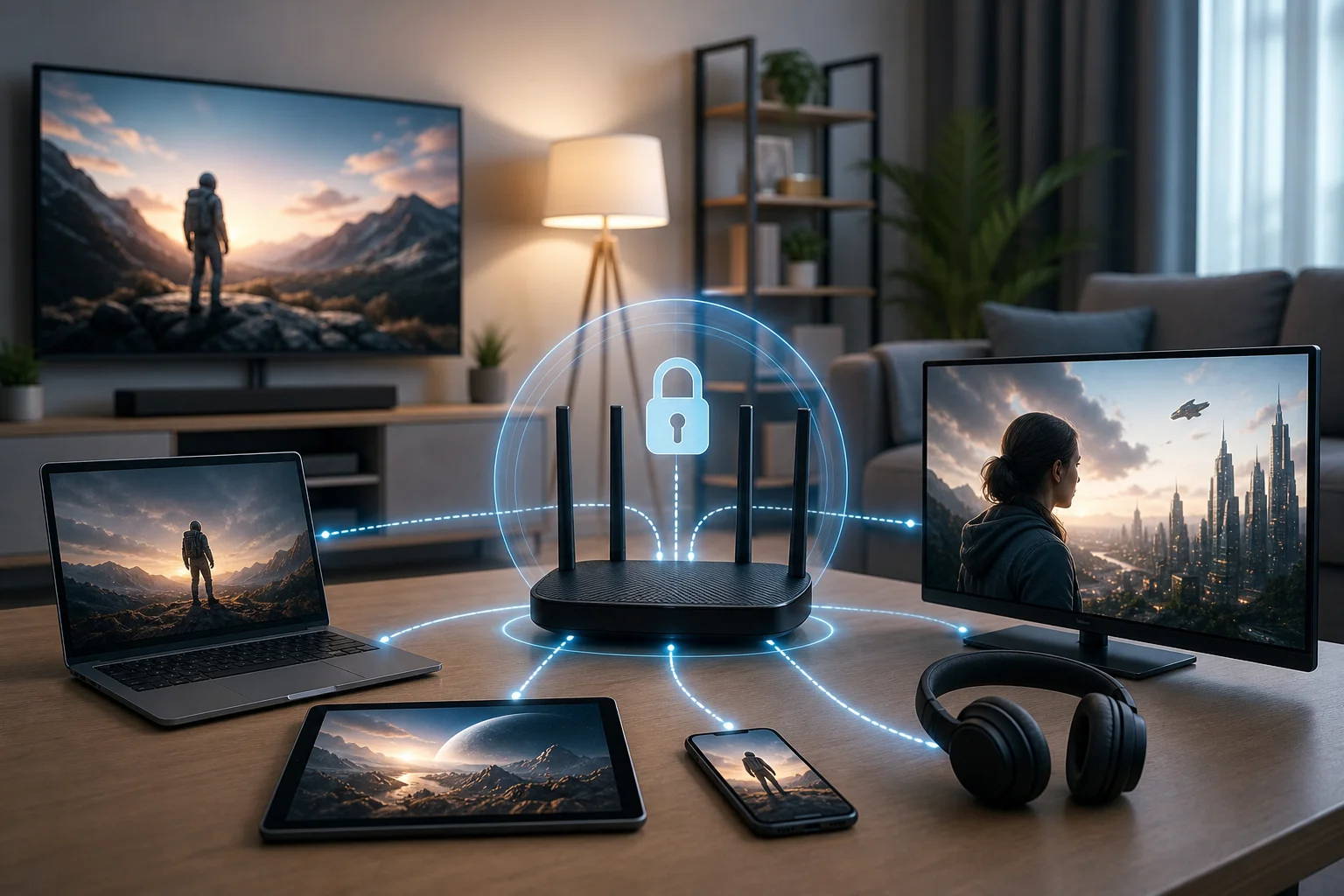
BeFreeVPN router streaming workflow

Results: Unlocking a world of streaming possibilities

After the router setup was complete, Alex saw the biggest benefit immediately: the streaming experience felt unified. The living room TV, bedroom TV, tablets, and laptops all used the same network-level VPN connection when connected to the configured Wi-Fi network.

Alex could access a wider range of international streaming content from supported services. Instead of constantly switching devices or testing different workarounds, he could sit down and browse from the screen he preferred. For a household with several viewers, that convenience made the VPN setup feel worthwhile.

Stability was also important. Alex monitored the connection during normal viewing sessions. He wanted smooth playback, fast enough loading, and no constant buffering. In his case, BeFreeVPN provided a stable and secure connection for everyday streaming without creating noticeable slowdowns on his home network. As with any VPN, performance can depend on router hardware, Wi-Fi signal strength, server load, and the streaming platform used.

Security and privacy were secondary goals, but they still mattered. With the VPN running at the router level, Alex reduced the need to manage separate VPN settings across devices. BeFreeVPN’s no-registration approach also supported his preference for a lower-hassle privacy setup.

The biggest change was not just access. It was consistency. Family members did not need instructions for each device. They connected to the usual Wi-Fi network, opened their preferred streaming app, and watched as normal.

Takeaways: Key lessons from Alex's experience

Alex’s case shows that a VPN installed directly on a router can simplify streaming access across a whole home. It is especially useful when a household relies on smart TVs, streaming sticks, game consoles, and tablets that do not all support VPN apps equally.

The most important lesson is to start with the router, not the streaming app. If the router cannot support VPN client settings, the plan may require a different router, supported firmware, or a device-level VPN instead. Checking compatibility early saves time.

A second lesson is that user experience matters. A powerful VPN is not helpful if the setup is too confusing for daily use. BeFreeVPN’s free access and no-registration policy made Alex more comfortable testing the solution. He could focus on whether the router VPN setup worked for streaming rather than managing accounts and sign-ups.

Finally, Alex learned that privacy and convenience can work together. A no-registration VPN service reduces the number of steps needed to get started. When that VPN is configured on the router, it can also reduce the number of devices that need separate setup.

FAQs about using a VPN on a Wi-Fi router for streaming

Can I use a VPN on any Wi-Fi router for streaming?

Not always. Your router must support VPN client configuration. Some routers include this feature, while others do not. Check your router admin panel or manufacturer documentation before you begin.

Will a router VPN work with smart TVs?

Yes, if the smart TV connects through the Wi-Fi router that is running the VPN connection. This is one reason router VPN setups are useful for streaming devices that do not support VPN apps directly.

Can a VPN improve access to international streaming libraries?

A VPN can help route your connection through another location, which may affect what content appears on some platforms. Availability still depends on each streaming service’s policies, licensing rules, and terms of use.

Is BeFreeVPN suitable for beginners?

BeFreeVPN is designed to reduce setup friction because it is free and requires no registration. Router setup still depends on your hardware, but the service model makes testing easier for users who want a simple starting point.

Conclusion: A simpler way to stream across the whole home

Alex’s experience shows why a router-based VPN can be a practical solution for streaming households. It centralizes the connection, reduces device-by-device setup, and helps smart TVs and other Wi-Fi devices share the same VPN-enabled network. For Alex, BeFreeVPN turned a scattered streaming setup into a simpler, more consistent system.

Ready to transform your streaming experience like Alex? Try BeFreeVPN for your Wi-Fi router and enjoy seamless access to global content for free, without any registration.
The ultimate guide to setting up a VPN for Wi-Fi router with fast connection

· 16 min read

Are you tired of slow connections and expensive VPN subscriptions? Discover how you can have both speed and savings with a free VPN on your router. This guide explains how to choose, install, optimize, and secure a VPN for Wi-Fi router with fast connection, with a practical focus on using BeFreeVPN for a free, no-registration setup that protects every device on your home network.

Introduction to VPNs for Wi-Fi routers

A VPN, or virtual private network, creates an encrypted tunnel between your device and the internet. When you install a VPN on a Wi-Fi router, that protection can apply to many connected devices at once, including phones, laptops, tablets, smart TVs, and game consoles.

Instead of installing a VPN app on each device, the router handles the VPN connection. This is useful when a device does not support VPN apps directly, or when you want simpler network-wide privacy.

A router VPN can help you:

  • Add privacy to everyday browsing.
  • Protect traffic on devices that do not support VPN apps.
  • Reduce the need to configure each device separately.
  • Keep a consistent VPN connection across your Wi-Fi network.
  • Manage privacy for family members, guests, or home office devices.

However, speed matters. A slow VPN on a router can affect every connected device. Video calls may freeze. Streaming may buffer. Downloads may take longer. Gaming can feel laggy. That is why this guide focuses on fast router VPN setup, not just basic installation.

You can use the sections below as a table of contents. Start with the cost comparison if you are deciding whether to pay. Jump to the quick answer if you want the fastest route. Then follow the beginner, intermediate, and advanced sections to get the best balance of speed and security.

VPN for Wi-Fi router setup

Why you don't need to pay for a VPN

Many people assume that a router VPN must be expensive. Paid VPNs often promote long-term plans, premium tiers, and device limits. For some users, paid services can be useful. But if your goal is to get basic network-wide privacy, a fast connection, and simple access without creating yet another account, a free option can make more sense.

BeFreeVPN is positioned as a smart choice because it removes two common barriers: subscription cost and registration. That means you can start using a VPN without entering payment details or creating an account.

Cost comparison of paid vs. free VPNs

The real cost of a VPN is not only the monthly fee. It also includes setup time, renewal management, and whether you need to pay more for extra devices or router support.

VPN optionTypical costRouter useRegistrationBest for
Monthly paid VPNUsually a recurring monthly feeOften supported, but setup variesUsually requiredUsers who want paid support and advanced features
Long-term paid VPN planLower monthly price, paid upfrontOften supportedUsually requiredUsers comfortable with annual commitments
Free VPN with limitsFree, but may include limitsRouter support may be limitedOften requiredLight use on one or two devices
BeFreeVPNFreeSuitable for users seeking simple VPN accessNo registration requiredUsers who want fast, free, simple privacy

The best choice depends on your needs. Still, if you want to avoid subscriptions, BeFreeVPN gives you a practical way to start. You do not need to commit to a long plan before knowing whether router VPN use fits your home network.

How BeFreeVPN offers a fast connection for free

A fast VPN depends on several factors. These include server distance, network congestion, encryption overhead, router hardware, and your internet provider's speed. No VPN can make a slow base connection magically fast. However, a well-configured VPN can reduce unnecessary slowdowns.

BeFreeVPN is useful for router users because it focuses on simple access. Less friction means you can spend more time choosing the right server, testing speeds, and tuning router settings. For many homes, those practical choices have a larger impact than paying for a subscription.

To get the best speed, connect to a nearby VPN location when possible. Use a router with enough processing power. Also, avoid routing every high-bandwidth device through the VPN if it does not need it.

Advantages of no registration required with BeFreeVPN

No-registration access is more than a convenience. It can also reduce friction and limit the amount of personal information you provide during setup.

With no registration required, you can:

  • Start faster without waiting for account verification.
  • Avoid storing another password.
  • Skip payment forms and renewal reminders.
  • Test VPN performance before changing your full home setup.
  • Help guests or family members connect with less complexity.

For anyone setting up a VPN on a Wi-Fi router for the first time, this simplicity matters. Router settings can already feel technical. Removing account setup makes the whole process easier.

Quick answer: Setting up a VPN for fast Wi-Fi connection

The fastest method is to use BeFreeVPN with a compatible router or with router firmware that supports VPN client settings. The exact menu names vary by router brand, but the core process is usually the same: get the VPN configuration, add it to your router, connect, then test speed and leaks.

Fastest setup method using BeFreeVPN

Follow this short version if you already know your router supports VPN client configuration:

  1. Open your router admin panel in a browser.
  2. Find the VPN client section, often under advanced, security, or network settings.
  3. Get the BeFreeVPN configuration details from the official BeFreeVPN app, service page, or setup instructions.
  4. Add the VPN profile to your router.
  5. Choose the nearest suitable VPN server for better speed.
  6. Save the settings and connect.
  7. Restart Wi-Fi devices or reconnect them to the network.
  8. Run a speed test and DNS leak test.
  9. Adjust server location or protocol if performance is poor.

For a deeper walkthrough, use the beginner installation section below as your detailed setup guide.

Essential tools and prerequisites

Before you begin, gather the basics. This prevents most setup delays.

You will need:

  • A Wi-Fi router that supports VPN client mode.
  • Admin access to your router.
  • Your router login address, often printed on the router label.
  • Current router firmware.
  • BeFreeVPN configuration details.
  • A computer or phone connected to the router.
  • A speed test tool.
  • A DNS or IP leak test website.

Check one important detail: your router must act as a VPN client, not only a VPN server. A VPN server lets you connect back into your home network when you are away. A VPN client connects your home network out through a VPN provider. For this guide, you need VPN client support.

Fast router VPN configuration

Beginner's guide: Installing a VPN on your router

Installing a router VPN is easier when you move slowly and test each step. The instructions below are general because router interfaces differ. Still, the workflow applies to most VPN-ready routers.

Step-by-step installation process for beginners

  1. Confirm your router supports VPN client mode
    Look in the manual or admin panel for terms like VPN client, OpenVPN client, WireGuard client, or VPN profile. If your router only has VPN server settings, it may not work for this purpose without different firmware.

  2. Update your router firmware
    Firmware updates can improve stability and security. Open the router admin panel and look for an update option. Do not turn off the router during the update.

  3. Back up your current router settings
    Many routers let you export a configuration file. This gives you a recovery point if you change the wrong setting.

  4. Get BeFreeVPN setup details
    Use the official BeFreeVPN source for current configuration details. Depending on router support, this may include a server address, protocol, port, certificates, or a configuration file.

  5. Add a new VPN profile
    In the router's VPN client area, create a new profile. Paste or upload the required BeFreeVPN details. Give the profile a clear name, such as BeFreeVPN home.

  6. Choose a nearby server
    Distance affects latency. For faster browsing and streaming, start with the closest available location that meets your needs.

  7. Save and connect
    Apply the settings. Some routers need a reboot. After connecting, check the VPN status page to confirm that the tunnel is active.

  8. Test your public IP address
    Visit an IP checker from a connected device. It should show the VPN location rather than your usual internet provider location.

  9. Test speed and stability
    Run two or three speed tests. Compare them with your normal non-VPN speed. A small drop is normal because encryption adds overhead.

  10. Reconnect important devices
    Restart or reconnect your phone, laptop, smart TV, and other Wi-Fi devices so they use the new route.

Common challenges and solutions

The router has no VPN client menu.
Your router may not support VPN client mode. Check whether the manufacturer offers updated firmware. If not, consider a VPN-ready router or compatible third-party firmware, but only if you are comfortable with the risks.

The VPN connects but the internet stops working.
This is often a DNS or routing issue. Try changing DNS settings, reconnecting the VPN profile, or selecting another server.

Speed is much slower than expected.
Use a closer server. Reduce the number of active devices. If your router CPU is weak, it may not handle VPN encryption at high speeds.

Streaming devices do not connect.
Restart the devices and check whether your router applies the VPN to all clients. Some routers have policy-based routing, which may exclude certain devices.

You cannot access local devices.
Some VPN configurations isolate traffic. Look for settings related to local network access, LAN access, or split tunneling if your router supports them.

Choosing the right router for VPN use

A good VPN router does not need to be the most expensive model. However, it should have enough processing power and the right software features.

Look for:

  • VPN client support.
  • Modern Wi-Fi standards such as Wi-Fi 5 or Wi-Fi 6.
  • Regular firmware updates.
  • A clear admin interface.
  • Enough CPU power for encrypted traffic.
  • Support for modern VPN protocols where available.
  • Policy-based routing if you want some devices outside the VPN.

If you have a very old router, upgrading may improve speed more than changing VPN settings. Router hardware is often the bottleneck in a network-wide VPN setup.

Intermediate techniques: Optimizing VPN speed

Once the VPN works, the next goal is speed. Optimization is about reducing bottlenecks. Start with the easy changes, then move to more advanced settings if needed.

Tips to boost your VPN speed on Wi-Fi routers

Use these practical steps:

  • Pick the nearest server. Shorter distance usually means lower latency.
  • Test more than one server. The closest server is not always the least crowded.
  • Use Ethernet for testing. This separates VPN speed from Wi-Fi signal problems.
  • Place your router in a central location. Weak Wi-Fi can look like slow VPN performance.
  • Reduce background traffic. Cloud backups, game downloads, and updates can consume bandwidth.
  • Restart the router after major changes. This can clear stuck sessions.
  • Use 5 GHz or 6 GHz Wi-Fi when close to the router. These bands often deliver higher speeds than 2.4 GHz.
  • Keep firmware current. Updates can improve VPN stability and Wi-Fi performance.

Understanding bandwidth and its impact

Bandwidth is the maximum amount of data your connection can carry. VPN encryption uses some of that capacity. Your router also needs processing power to encrypt and decrypt traffic.

For example, if your internet plan is fast but your router has a weak processor, VPN speed may be limited by the router. On the other hand, if your Wi-Fi signal is poor, changing VPN servers will not fix the issue.

To find the bottleneck, test in this order:

  1. Test internet speed without VPN over Ethernet.
  2. Test internet speed with VPN over Ethernet.
  3. Test internet speed with VPN over Wi-Fi near the router.
  4. Test again from your normal room or workspace.

This shows whether the issue is your internet connection, VPN tunnel, Wi-Fi signal, or device location.

Adjusting settings for optimal performance

If your router allows protocol selection, test available options. Some protocols are faster on certain routers, while others are more stable. Choose the best balance for your needs.

You can also use device rules if your router supports them. For example, you may route laptops and phones through BeFreeVPN, while leaving a gaming console or work video call outside the VPN when maximum latency matters. This is called split tunneling or policy-based routing.

Another useful setting is custom DNS. Reliable DNS can make websites feel faster to load, even when download speed is unchanged. If BeFreeVPN provides DNS guidance, follow that first. Otherwise, use a trusted DNS provider and test for leaks after changing it.

Secure VPN connection on router

Advanced practices: Securing your VPN connection

Speed is important, but privacy is the reason most people use a VPN. After your router VPN is fast and stable, tighten the security settings.

Advanced security settings to enhance safety

Start with your router itself. A VPN cannot protect a poorly secured admin panel.

Use these practices:

  • Change the default router admin password.
  • Disable remote administration unless you truly need it.
  • Use WPA2 or WPA3 for Wi-Fi security.
  • Create a guest network for visitors and smart home devices.
  • Turn off WPS if you do not use it.
  • Keep router firmware updated.
  • Use strong Wi-Fi passwords.
  • Review connected devices regularly.

For the VPN profile, use secure protocols and recommended settings from BeFreeVPN. Avoid outdated options if better choices are available on your router.

Preventing leaks and maintaining privacy

A VPN leak happens when some traffic bypasses the encrypted tunnel. Common leak types include DNS leaks, IPv6 leaks, and WebRTC leaks in browsers.

To reduce leaks:

  1. Run a DNS leak test after connecting.
  2. Check your public IP address from multiple devices.
  3. Disable IPv6 on the router if your VPN does not support IPv6 routing.
  4. Use secure DNS settings recommended by your VPN.
  5. Enable a kill switch or block traffic when VPN disconnects, if your router supports it.
  6. Retest after firmware updates or major setting changes.

Not every router has a kill switch. If yours does not, look for firewall rules that block internet traffic unless the VPN tunnel is active. This is more advanced, so make changes carefully and keep a backup of your router settings.

Regular maintenance and updates for security

Router VPN security is not a one-time task. Set a simple maintenance schedule.

Every month, check for firmware updates and review unknown devices on your network. Every few months, run fresh speed and leak tests. If you notice sudden slowdowns, test a different BeFreeVPN server and restart the router.

Also review your needs. A home network changes over time. You may add smart speakers, cameras, work devices, or gaming systems. Decide which devices need VPN protection and which need the lowest possible latency.

Key takeaways and FAQs

A fast router VPN is possible when you combine the right service, router, and settings. BeFreeVPN is a strong option for users who want a free VPN experience without registration. It can help you avoid subscription costs while still giving you a practical path to network-wide privacy.

Key takeaways

  • A router VPN protects many Wi-Fi devices through one connection.
  • Fast performance depends on router hardware, server choice, Wi-Fi signal, and protocol settings.
  • BeFreeVPN is useful for a free, no-registration VPN setup.
  • Start with a nearby VPN server for better speed.
  • Test with Ethernet first to separate VPN issues from Wi-Fi issues.
  • Keep your router updated and protected with a strong admin password.
  • Use leak tests to confirm that your VPN is working as expected.
  • Consider policy-based routing if only some devices need VPN protection.

Is a VPN on a Wi-Fi router better than a VPN app?

It depends on your goal. A router VPN is better for protecting many devices at once, especially devices that do not support VPN apps. A VPN app is better when you want easy location switching or protection only on one device.

Will a router VPN slow down my internet?

Some speed loss is normal because VPN encryption adds work and sends traffic through an extra server. You can reduce the impact by using a nearby server, choosing a capable router, keeping firmware updated, and improving your Wi-Fi signal.

Can I use BeFreeVPN without registration?

Yes. BeFreeVPN is designed to be used without registration, which makes it simpler for users who want fast setup without creating an account or entering payment information.

What router do I need for BeFreeVPN?

You need a router that supports VPN client mode and can accept the required BeFreeVPN configuration. Check your router manual or admin panel for VPN client settings. If the router is old or limited, a VPN-ready router may be easier.

How do I know if my VPN is working on the router?

Connect a device to Wi-Fi and check its public IP address online. If the location or IP address reflects the VPN connection instead of your internet provider, the VPN is active. Then run a DNS leak test to confirm that DNS requests are also protected.

Should every device use the VPN?

Not always. Phones, laptops, and browsing devices are good candidates. Gaming consoles, work video calls, or devices that need local services may perform better outside the VPN. If your router supports policy-based routing, you can choose which devices use BeFreeVPN.

Is a free VPN safe for router use?

Safety depends on the provider, configuration, and your router settings. Use official setup details, keep your router updated, and test for leaks. BeFreeVPN is appealing because it offers free access without registration, reducing setup friction and avoiding payment commitments.

What is the fastest way to improve VPN speed on Wi-Fi?

First, test a nearby BeFreeVPN server. Then move closer to the router or use a 5 GHz or 6 GHz Wi-Fi band. If speed is still poor, test with Ethernet. This helps you find out whether the issue is the VPN, the router, or the Wi-Fi signal.

Setting up a VPN for Wi-Fi router with fast connection does not have to be costly or complicated. With a compatible router, careful server selection, and a few speed and security checks, you can protect your whole network while keeping performance practical. Take control of your internet privacy today by setting up BeFreeVPN on your router for a fast, free, and no-registration experience.

VPN for router for streaming: Myths vs facts

· 11 min read

Are you missing out on seamless streaming because of misconceptions about VPNs on routers? Let’s separate myths from facts with a clear comparison of options. A vpn for router for streaming can protect every device on your home network, reduce setup work on smart TVs and consoles, and help keep viewing private. However, router VPN performance depends on your hardware, VPN protocol, server choice, and streaming platform rules. This guide compares the main setup options, explains common myths, and shows where BeFreeVPN can fit into a practical streaming setup.

vpn router for streaming setup

Common myths about VPNs for routers in streaming

Router-level VPNs are often discussed in extremes. Some people expect them to fix every streaming issue. Others assume they are slow, expensive, or too technical. The reality is more balanced.

Myth 1: VPNs slow down streaming speeds

Fact: A VPN can affect speed, but it does not automatically ruin streaming.

When you use a VPN on a router, all encrypted traffic passes through the router’s processor. Older routers may struggle with heavy encryption, especially when several people stream at once. In contrast, newer routers with stronger CPUs can handle VPN traffic better.

Speed also depends on:

  • The VPN protocol, such as WireGuard, OpenVPN, or IKEv2 where supported.
  • The distance between you and the VPN server.
  • Server load at peak viewing times.
  • Your base internet speed before the VPN is enabled.
  • The streaming quality, such as HD, Full HD, or 4K.

For HD streaming, stability often matters more than raw speed. A fast but unstable connection can buffer more than a slightly slower connection with low packet loss. Therefore, the best VPN router setup for streaming is the one that balances speed, stability, and privacy.

Myth 2: Installing a VPN on a router is complex

Fact: Setup ranges from very simple to advanced, depending on the router and VPN method.

Some routers include a built-in VPN client. In that case, setup may only require importing a configuration file, choosing a server, and entering credentials if needed. Other routers require custom firmware, which is more technical and can void a warranty if done incorrectly.

A simple router VPN setup usually follows these steps:

  1. Check whether your router supports VPN client mode.
  2. Confirm which protocols it supports.
  3. Download the VPN configuration from your provider.
  4. Add the configuration in the router admin panel.
  5. Connect to a nearby VPN server.
  6. Test streaming on a TV, tablet, or media box.
  7. Adjust server location if buffering occurs.

The key is to choose a setup that matches your comfort level. You do not need an enterprise networking background to use a VPN for streaming routers, but you should understand the basics before changing firmware.

Myth 3: VPNs for routers are costly

Fact: Affordable options are available, and the total cost depends on your route.

There are three main cost models. First, you can buy a dedicated VPN router, which costs more upfront but saves time. Second, you can install custom firmware on compatible hardware, which may be cheaper but requires care. Third, you can use a free or low-cost VPN service if it supports the router configuration you need.

BeFreeVPN is useful for cost-conscious users because it offers a free option and does not require registration. That reduces friction when testing a VPN on a router for streaming. Still, you should check your router’s supported protocols and confirm that your chosen streaming platforms work well with your selected server.

Quick comparison table of VPNs for streaming routers

The table below compares typical router VPN approaches rather than making unrealistic one-size-fits-all promises. Actual results vary by router model, ISP, VPN server, and streaming service.

Router VPN optionUser interface ease for setupHD streaming performanceDevice and platform compatibilityBest for
Dedicated VPN router packageHighUsually stable if hardware is modernWorks network-wide with smart TVs, Apple TV, Google TV, Fire TV, consoles, phones, and laptopsUsers who want plug-and-play setup
Standard router with built-in VPN clientMediumGood when CPU and protocol support are strongBroad home coverage, but features depend on firmwareIntermediate users who can use admin settings
Custom firmware such as DD-WRT or TomatoMedium to lowCan be good, but setup quality mattersWide device coverage, limited by router compatibilityUsers comfortable flashing firmware
BeFreeVPN on a compatible router setupMedium to high when config is supportedSuitable for quality streaming when paired with a nearby stable serverCan cover many household devices through the routerUsers who want free, no-registration VPN access
Device-only VPN appsHighOften strong because the app is optimizedLimited to devices that support the appUsers with only a few streaming devices

For many homes, the practical choice is not only about top speed. It is about ease of setup, reliable HD playback, privacy, and support for the devices that do not easily run VPN apps. These include smart TVs, streaming sticks, game consoles, and set-top boxes.

streaming router VPN comparison

In-depth comparison: VPN options for routers

A good comparison needs more than a feature list. Below are the three most common paths for using a router VPN for streaming, with pros, cons, and setup notes.

Option 1: Dedicated VPN router packages

Dedicated VPN router packages are sold preconfigured or designed with VPN use in mind. They often include a friendly interface, guided setup, and better hardware than basic ISP routers.

Pros:

  • Easiest path for whole-home VPN coverage.
  • Good choice for smart TVs and consoles that do not support native VPN apps.
  • Less risk than flashing firmware yourself.
  • Often includes profiles for different VPN servers.

Cons:

  • Higher upfront cost.
  • You may still need a VPN subscription unless a service is bundled.
  • Some advanced settings may be locked behind vendor tools.

Setup overview:

  1. Connect the VPN router to your modem or existing gateway.
  2. Open the router dashboard.
  3. Choose the VPN provider or import a configuration file.
  4. Select a server near your location for better streaming stability.
  5. Connect your streaming devices to the VPN router’s Wi-Fi.

This option is ideal if you want a cleaner experience and do not want to troubleshoot firmware. It is also a strong choice for households where several people stream at the same time.

Option 2: Custom VPN firmware such as DD-WRT or Tomato

Custom firmware can unlock VPN client features on routers that do not support them out of the box. DD-WRT, Tomato, and similar firmware projects are popular among technical users.

Benefits:

  • More control over routing, DNS, and VPN settings.
  • Potentially lower cost if you already own a compatible router.
  • Useful for split tunneling rules on some builds.
  • Can extend the life of older hardware.

Challenges:

  • Not every router is supported.
  • Flashing the wrong firmware can damage or “brick” the router.
  • Setup requires more patience than using a prebuilt system.
  • Performance can be limited by older processors.

Custom firmware is best for users who enjoy networking and want granular control. It can work well for streaming, but it is not the safest beginner path. Before flashing, always read the firmware compatibility list and keep a backup of your original settings.

Option 3: Using BeFreeVPN

BeFreeVPN is a strong option for users who want a simpler and more cost-effective starting point. Its key advantage is immediate access: no registration is required. That makes it easier to test VPN streaming performance without a long signup process.

Ease: BeFreeVPN reduces account friction. If your router or firmware supports the needed VPN configuration, you can focus on server selection and performance testing rather than account setup.

Cost-effectiveness: Because BeFreeVPN offers a free option, it helps users avoid large upfront commitments. This is useful if you are still deciding whether a VPN router setup fits your household.

Performance: For streaming, choose the closest reliable server and test during your normal viewing hours. If one server buffers, switch to another. Also, remember that the router’s CPU and protocol support can be just as important as the VPN service itself.

Compatibility: BeFreeVPN can be used across a variety of router-based setups when the router supports compatible VPN configuration. Once configured at router level, devices connected to that router can benefit without installing separate VPN apps.

Which VPN setup should you choose?

The best setup depends on your technical skill, budget, router model, and streaming goals. Use the following guide to narrow the choice.

  • Choose a dedicated VPN router package if you want plug-and-play simplicity and do not mind paying more upfront.
  • Choose custom firmware if you are comfortable with router flashing, configuration files, DNS settings, and troubleshooting.
  • Choose BeFreeVPN if you want a free, no-registration way to test router VPN streaming with minimal commitment.
  • Choose device-only VPN apps if you stream on just one or two devices and do not need network-wide coverage.

For uninterrupted HD streaming, focus on three things. First, use a router powerful enough for encryption. Second, select a nearby VPN server with stable performance. Third, avoid overloading your network with too many simultaneous streams. Privacy is also important. A router VPN protects traffic from devices that may not support VPN apps, but it does not replace good account security or streaming service best practices.

Cost is another factor. A dedicated router may have a one-time hardware fee. A custom firmware setup may cost less, but your time and risk are part of the real price. A free VPN option like BeFreeVPN can help you evaluate the benefits before spending money on new hardware.

What is the easiest VPN setup for streaming on a router?

The easiest setup is usually a dedicated VPN router or a router with built-in VPN client support. BeFreeVPN can be a convenient choice when your router supports the required configuration, because it does not require registration before use.

Can a VPN router help with smart TVs and game consoles?

Yes. A router VPN can protect devices that do not support VPN apps directly, including many smart TVs, consoles, and streaming boxes. Once the router is connected to the VPN, those devices use the VPN through Wi-Fi or Ethernet.

Will a router VPN always unblock every streaming service?

No. Streaming services use different access rules and may block some VPN servers. A VPN can improve privacy and routing flexibility, but access is never guaranteed. If a stream fails, try a different server, check DNS settings, or use a device-specific app when available.

Verdict: Why BeFreeVPN is ideal for routers

BeFreeVPN is ideal for many router streaming setups because it removes two common barriers: registration and cost. You can begin testing quickly, which is valuable when you want to know whether a VPN on your router improves your streaming workflow.

Its no-registration feature supports immediate use, especially for users who do not want to create yet another account before trying a service. For router setups, this can make the initial configuration process feel lighter and faster.

The cost benefit is also clear. BeFreeVPN is a free option, so you can evaluate quality streaming on your own network before investing in a dedicated VPN router or paid subscription. This is especially helpful for intermediate users who want practical results without overspending.

Finally, BeFreeVPN can fit a range of router environments when compatible VPN configuration is available. That means one setup can support smart TVs, streaming sticks, phones, laptops, consoles, and tablets connected to the router. As a result, you get simpler network-wide coverage rather than managing each device separately.

Start streaming seamlessly without any hassle by setting up BeFreeVPN on your router today — it’s free and requires no registration!

5 best free VPNs for your router

· 8 min read

Looking to secure your entire home network without breaking the bank? Explore the top free VPNs that are perfect for your router. If you are searching for a vpn for router free setup, the goal is simple: protect phones, laptops, smart TVs, and other connected devices through one router-level VPN connection. However, free VPN plans can come with limits, so the best choice depends on your data needs, router firmware, and privacy expectations.

Before you start, check whether your router supports VPN client mode. Common compatible firmware includes DD-WRT, OpenWrt, Tomato, AsusWRT, and some GL.iNet systems. Also confirm that the free plan provides usable OpenVPN or WireGuard configuration files, as this can change by provider and region.

free VPN router home network

Quick comparison of free VPNs for routers

VPNBest forFree dataRouter-friendly notes
ProtonVPNUnlimited bandwidthUnlimitedStrong privacy, but verify free-plan router config availability
WindscribeMonthly allowanceUp to 10GBGood guides for DD-WRT and Tomato-style setups
Hide.mePrivacy controlsLimited free allowanceSupports manual configuration on popular firmware
Hotspot ShieldSpeed on supported devicesLimited free planRouter use may depend on plan and protocol access
TunnelBearCasual use500MBVery easy apps, but router support is more limited

1. ProtonVPN – unlimited bandwidth

ProtonVPN is one of the most attractive free VPN options because its free plan has no data limits. That makes it useful if you want a router VPN for regular browsing, messaging, and light streaming without watching a data meter every day.

Its main strength is security. ProtonVPN is based in Switzerland, follows a no-logs policy, and uses strong encryption. When installed at router level, a VPN can help cover every device connected to your Wi-Fi, including devices that do not support VPN apps.

That said, router setup depends on your account features and current ProtonVPN configuration access. Proton publishes setup instructions for many router brands and firmware types, but you should confirm that your free account can access the required OpenVPN or WireGuard files before committing.

Choose ProtonVPN if:

  • You want no monthly data cap.
  • Privacy matters more than server choice.
  • You are comfortable following detailed router setup instructions.

2. Windscribe – generous monthly data

Windscribe is a strong pick for anyone who wants a practical free VPN for a router without starting with a paid plan. Its free tier can offer up to 10GB of data per month when you create and confirm an account, which is generous compared with many competitors.

Windscribe also provides strong encryption and useful privacy features. For router users, its biggest advantage is documentation. The provider offers setup guides for router firmware such as DD-WRT and Tomato, making the process less confusing for beginners.

The 10GB limit is still a limit, though. If your household streams video, downloads large files, or runs several smart devices all day, the free data can disappear quickly. For lighter browsing and occasional secure sessions, it works well.

Choose Windscribe if:

  • You want a clear monthly data allowance.
  • You use DD-WRT, Tomato, or another supported router setup.
  • You want a balance of privacy, usability, and free access.

3. Hide.me – robust privacy protection

Hide.me focuses heavily on privacy and transparent security features. Its free plan includes access to a limited selection of server locations, which can be helpful if you need basic global access while reducing the risk of DNS or IP leaks.

The service has a no-logs policy and supports secure VPN protocols. It is also compatible with popular router firmware such as DD-WRT in manual setups. This makes Hide.me a sensible option for users who want control over their router VPN settings.

Like most free VPN services, Hide.me has restrictions. Server selection, data allowance, and speed may be limited compared with the paid version. Still, it is a reliable choice for privacy-focused users who want to experiment with a free router VPN before upgrading.

Choose Hide.me if:

  • You care about no-logs privacy.
  • You want manual configuration options.
  • You have a router that supports DD-WRT or similar firmware.

4. Hotspot Shield – fast and reliable

Hotspot Shield is known for fast connections and simple apps. Its free plan can be useful for basic browsing, especially if speed is your main concern. For households that need consistent browsing rather than heavy streaming, it can be worth considering.

However, router installation is the key point to verify. Hotspot Shield’s free plan may not include the same manual router configuration options as its paid plans. If you want to run it directly on a router, check whether your account includes the needed protocol credentials and router instructions.

When supported, Hotspot Shield can be easy to install and configure on common router types. Its paid upgrades also offer broader options if the free plan feels too limited.

Choose Hotspot Shield if:

  • You value speed and simple setup.
  • You only need light free VPN use.
  • You may upgrade later for more router features.

5. TunnelBear – user-friendly interface

TunnelBear is famous for being beginner-friendly. Its apps are simple, visual, and easy to understand, which makes it less intimidating for new VPN users. The free plan includes 500MB of data per month, so it is best for casual browsing, testing, or occasional privacy protection.

For router use, TunnelBear is less flexible than some alternatives. It is not the first choice for advanced router installations, and you should confirm current support before planning a full home-network setup. Still, its user-friendly approach makes it useful for people who want to learn how VPN protection works before moving to a router-first solution.

Because the data allowance is small, TunnelBear is not ideal for streaming or protecting a busy household full time. Think of it as a simple entry point rather than a complete free VPN router solution.

Choose TunnelBear if:

  • You want the easiest VPN experience.
  • You only need a small amount of free data.
  • You are testing VPN basics before configuring a router.

router VPN setup guide

How to set up a free VPN on your router

Follow these general steps. The exact menus differ by router model.

  1. Check router compatibility. Look for VPN client support, not just VPN passthrough.
  2. Choose a free VPN plan. Confirm that it provides OpenVPN or WireGuard configuration files.
  3. Download the VPN configuration. Get the server file, username, password, and certificates if required.
  4. Log in to your router dashboard. This is often at an address such as 192.168.1.1.
  5. Open the VPN client section. Upload the configuration file and enter credentials.
  6. Connect and test. Visit an IP-checking site to confirm your router is using the VPN server.
  7. Check for leaks. Run DNS and WebRTC leak tests on connected devices.

Frequently asked questions

Can I really get a vpn for router free?

Yes, but with limits. Some free VPNs work with routers if they provide manual configuration files. Others only support router setup on paid plans, so always check before installing.

Is a free router VPN safe?

A free router VPN can be safe if it has strong encryption, a clear privacy policy, and no shady data practices. Avoid unknown services that do not explain how they make money.

Will a VPN on my router slow down my internet?

Usually, yes, at least a little. Speed depends on your router’s processor, VPN protocol, server distance, and network load. WireGuard is often faster than OpenVPN when supported.

What is the best free VPN for streaming on a router?

ProtonVPN is attractive because it has unlimited data, but server choice and streaming access may be restricted on free plans. Windscribe can also work for light streaming, though its free data cap limits usage.

Final thoughts

The best free VPN for router use depends on what you value most. ProtonVPN is best for unlimited data, Windscribe offers a strong free allowance, Hide.me is privacy-focused, Hotspot Shield is speed-oriented, and TunnelBear is the easiest for beginners. For full-time protection, always confirm router support before setup. Secure your entire home network with BeFreeVPN, offering a free, registration-free option that ensures privacy across all your devices.

How to set up a VPN on Samsung TV: a technical deep dive

· 16 min read

Are you living in a restrictive region and need a foolproof method to bypass censorship on your Samsung TV? This technical deep dive explains the practical options for a vpn for samsung tv setup, including router-level tunneling, Smart DNS, protocol selection, security testing, and performance tuning. Because Samsung TVs do not normally support native VPN apps, the most reliable path is to move the VPN function to your network edge: the router.

For advanced users, the key question is not only “How do I change my TV location?” It is also “How do I do it without leaking DNS requests, degrading streaming too much, or exposing my household network?” The sections below walk through those trade-offs in a technical but actionable way.

Understanding VPN compatibility with Samsung TV

Samsung smart TVs run Samsung’s Tizen operating system. Unlike Android TV or Google TV devices, Tizen generally does not allow you to install standard VPN client apps from commercial VPN providers. That limitation shapes every serious Samsung TV VPN setup.

In practice, you have three main options:

MethodEncryptionCovers Samsung TV trafficBest use caseMain limitation
Native VPN app on TVUsually noUsually noRare edge cases onlySamsung TVs normally do not support it
Smart DNSNoYes, for DNS-routed servicesLocation switching for streamingDoes not hide traffic from ISP or firewall
Router-based VPNYesYes, all routed trafficCensorship resistance and whole-home coverageRequires compatible router and tuning

Built-in limitations of Samsung TVs

Samsung TVs are optimized as media appliances, not general-purpose computers. That means:

  • You usually cannot install OpenVPN, WireGuard, or IKEv2 clients directly on the TV.
  • You cannot configure system-wide VPN tunnels in Tizen settings.
  • App traffic may use hard-coded DNS or content delivery network routing in some cases.
  • Regional app availability depends on Samsung account region, TV region settings, DNS resolution, IP address, and app-level checks.

As a result, a VPN client installed on your phone or laptop does not protect the Samsung TV unless you share that VPN connection through a hotspot, Ethernet bridge, or router. For long-term use, router-based VPN is cleaner.

Alternative methods: Smart DNS and router-based setup

Smart DNS changes how selected domain lookups resolve. It can help route streaming requests through region-specific proxy infrastructure. However, it does not encrypt the connection and does not create a privacy tunnel.

A router-based VPN works differently. The router authenticates with a VPN provider and sends selected traffic through an encrypted tunnel. Your Samsung TV simply connects to Wi-Fi or Ethernet as usual. The TV does not need to know that a VPN exists.

VPN for Samsung TV router setup

Why router-based VPN is often the strongest option

A VPN on the router can protect every device behind it, including Samsung TVs, game consoles, set-top boxes, and older smart devices. It also centralizes configuration. Instead of managing separate VPN clients, you manage one tunnel and one routing policy.

For restrictive environments, router-level VPN has clear advantages:

  • It can tunnel all Samsung TV traffic, not only DNS queries.
  • It can reduce exposure to local network filtering.
  • It can cover apps that do not provide proxy settings.
  • It can enforce DNS servers controlled by the VPN provider.
  • It can prevent accidental direct connections if firewall rules are configured correctly.

However, this approach also creates a single point of failure. If the VPN tunnel drops and the router allows fallback to the normal WAN route, your real IP address and DNS resolver may be exposed. Therefore, kill-switch rules and DNS leak prevention matter.

Choosing the right VPN protocols for Samsung TV

Protocol choice affects speed, reliability, block resistance, and security. Since the VPN runs on the router, you must pick a protocol that your firmware and provider both support.

OpenVPN

OpenVPN is widely supported by consumer VPN providers and third-party router firmware such as DD-WRT, Tomato, FreshTomato, OpenWrt, and Asuswrt-Merlin. It can run over UDP or TCP.

  • OpenVPN UDP is usually faster and better for streaming.
  • OpenVPN TCP may work better on networks that block or throttle UDP, but it can suffer from TCP-over-TCP performance issues.
  • OpenVPN over TCP 443 can blend with HTTPS-like traffic patterns, although sophisticated firewalls can still fingerprint it.

For censorship resistance, OpenVPN remains a practical baseline because it is mature and configurable. Still, on low-powered routers, it can be CPU-bound and may reduce throughput.

L2TP/IPsec

L2TP/IPsec is older and broadly supported, but it is not the best first choice for restrictive regions. It uses recognizable ports and can be easier to block. It may also be less flexible than OpenVPN for obfuscation.

Use L2TP/IPsec only when your router does not support better options and your threat model is moderate. It can work for basic IP location changes, but it is not ideal where active censorship is present.

IKEv2/IPsec

IKEv2 is fast, stable, and good at reconnecting when the network changes. It is common on mobile platforms and some routers. Its performance can be strong, but availability on consumer router firmware varies.

For a Samsung TV behind a router, IKEv2 can be attractive if your router supports it well. However, because many censorship systems can identify and block standard IPsec traffic, it may require fallback options.

Speed versus security for streaming

Streaming needs sustained throughput, low packet loss, and stable DNS resolution. Security needs strong encryption, no leaks, and resistance to traffic filtering. These goals can conflict.

A practical hierarchy is:

  1. Use OpenVPN UDP for the best balance of compatibility and streaming speed.
  2. Try IKEv2 if your router supports it and your network does not block IPsec.
  3. Use OpenVPN TCP 443 when UDP is blocked or unstable.
  4. Avoid L2TP/IPsec unless no better router option exists.

For overcoming censorship, the optimal choice is often OpenVPN with UDP first, then TCP 443 as a fallback. If your provider supports obfuscated servers or stealth modes on routers, those may improve reachability in heavily filtered environments.

Step-by-step router-based VPN setup for Samsung TV

A router-based VPN setup is the most technically complete approach for Samsung TV. The exact interface differs by firmware, but the workflow is consistent.

Before you start

You need:

  • A VPN provider that supports router configuration files.
  • A router that supports VPN client mode.
  • DD-WRT, Tomato, FreshTomato, OpenWrt, Asuswrt-Merlin, or vendor firmware with VPN client support.
  • OpenVPN configuration files from your provider.
  • VPN credentials, certificates, and DNS server details.
  • Admin access to the router.

If your ISP router does not support VPN client mode, add a second router behind it. In that model, the ISP router remains the modem/gateway, while the VPN router creates a protected subnet for the Samsung TV.

Step-by-step setup on a compatible router

  1. Back up the router configuration
    Export your current router settings before making changes. If anything fails, you can restore a known-good state.

  2. Update or install VPN-capable firmware
    Install DD-WRT, Tomato, FreshTomato, OpenWrt, or Asuswrt-Merlin only if your router model is explicitly supported. Flashing the wrong image can brick the device.

  3. Download VPN configuration files
    From your VPN provider dashboard, download the OpenVPN .ovpn file for the server region you want. For censorship bypass, choose a nearby country with open internet access and good peering.

  4. Open the VPN client settings
    In DD-WRT, go to Services > VPN and enable the OpenVPN client. In Tomato or FreshTomato, go to VPN tunneling > OpenVPN client.

  5. Enter server and tunnel parameters
    Add the server hostname, port, protocol, cipher, authentication digest, TLS mode, and compression setting exactly as your provider specifies. Avoid enabling compression unless required, because it can introduce security concerns.

  6. Paste certificates and keys
    Add the CA certificate, client certificate, private key, and TLS auth or TLS crypt key if provided. Keep private keys secure.

  7. Configure DNS
    Use VPN-provided DNS resolvers or privacy-respecting resolvers available through the tunnel. Disable ISP DNS fallback. On DD-WRT, options such as “Use DNSMasq for DNS” and firewall rules can help force DNS through the tunnel.

  8. Add kill-switch firewall rules
    Block Samsung TV traffic from using the WAN interface if the VPN drops. On Linux-based router firmware, this is usually done with iptables rules that reject forwarding from the TV’s IP address to the WAN interface unless it goes through the VPN tunnel interface.

  9. Assign the Samsung TV a static IP
    Create a DHCP reservation for the TV. This makes policy routing and troubleshooting much easier.

  10. Connect the Samsung TV to the VPN router
    Use Ethernet if possible. If using Wi-Fi, connect to the SSID broadcast by the VPN router.

  11. Verify the external IP and DNS path
    Open the TV browser if available, or test from another device on the same VPN subnet. Confirm that the public IP matches the VPN server region and that DNS is not resolving through your ISP.

Router VPN setup for Samsung TV

Configuring DD-WRT or Tomato firmware

On DD-WRT, the most important fields are server IP/name, port, tunnel device, tunnel protocol, encryption cipher, hash algorithm, user/pass authentication, advanced options, CA certificate, and TLS authentication key. Many providers also require custom options such as remote-cert-tls server, auth-nocache, or persist-tun.

On Tomato or FreshTomato, configuration is often split across Basic, Advanced, and Keys tabs. Match each field to the .ovpn file. If the file contains inline certificates, copy each block into the correct certificate field.

For policy-based routing, route only the Samsung TV through the VPN by adding its static IP address to the routing policy field, if supported. This reduces load on the router and keeps other devices on the normal WAN path.

Common troubleshooting steps if the VPN does not connect

If the VPN fails, work from the lower layers upward:

  • Check time synchronization. TLS certificate validation can fail if the router clock is wrong.
  • Confirm credentials. Some providers use separate router credentials, not your website password.
  • Try another port or protocol. UDP may be blocked. TCP 443 may connect where UDP fails.
  • Inspect logs. DD-WRT and Tomato logs usually show certificate, authentication, or route errors.
  • Disable conflicting settings. Compression, NAT acceleration, or hardware offload can break some VPN paths.
  • Test without policy routing. First confirm the full-tunnel VPN works, then add selective routing.
  • Lower MTU. If streams load but stall, try an MTU around 1400 or use provider guidance.

Using Smart DNS as an alternative for Samsung TV

Smart DNS is not a VPN, but it can be useful when speed is more important than privacy. It changes DNS responses for selected services so your streaming app reaches region-specific proxy endpoints.

How Smart DNS works compared to VPN services

A VPN encrypts traffic between your router and the VPN server. It changes your apparent IP address and can protect data from local network observers.

Smart DNS usually does not encrypt traffic. It changes how certain domain names resolve, while most traffic still travels through your normal ISP route. This means Smart DNS is often faster, but it does not provide the same censorship resistance or privacy protection.

Steps to configure Smart DNS on Samsung TV

  1. Open Settings on the Samsung TV.
  2. Go to General > Network > Network status.
  3. Choose IP settings.
  4. Set DNS setting to manual.
  5. Enter the Smart DNS server address from your provider.
  6. Save the configuration and restart the TV.
  7. In your Smart DNS provider dashboard, register your current public IP address if required.
  8. Reopen the streaming app and test the target region.

Menu names vary by model and Tizen version, but the DNS setting is usually inside network status or advanced network settings.

Limitations of Smart DNS

Smart DNS is worth considering when:

  • Your main goal is streaming region selection.
  • Your local network does not aggressively block content.
  • You need maximum speed and minimal router CPU load.

It is not ideal when:

  • You face surveillance or legal risk.
  • Your ISP blocks target services by IP or SNI filtering.
  • You need to hide traffic from a local firewall.
  • You need a kill switch or encrypted tunnel.

In restrictive regions, Smart DNS may be a useful fallback, but it should not be treated as a privacy tool.

Common misconceptions about VPNs on Samsung TVs

Misunderstandings are common because “VPN on Samsung TV” can mean several different architectures. The answers below clarify the most frequent search queries.

Can I install a VPN directly on a Samsung TV?

Usually, no. Samsung TVs running Tizen do not normally support native VPN client apps. The common workaround is to install the VPN on a router, share a VPN connection from a computer, or use Smart DNS.

Does a VPN always improve streaming quality?

No. A VPN can improve access when routing or censorship is the problem, but it can also reduce speed due to encryption overhead and longer network paths. The best outcome comes from choosing a nearby server, a fast protocol, and a router with enough CPU capacity.

Is Smart DNS the same as a VPN?

No. Smart DNS can change location behavior for some services, but it does not encrypt traffic and does not hide all activity from your ISP or network operator. A VPN is the better fit for privacy and censorship resistance.

It depends on local law and enforcement. In some countries, VPN use is legal. In others, only approved VPNs are allowed, or VPN use may be restricted. You should understand the laws and risks in your jurisdiction before using any circumvention tool.

Will a VPN unlock every streaming app on Samsung TV?

No. Streaming platforms use many signals, including IP reputation, DNS behavior, account region, payment region, GPS on companion devices, and app store region. A VPN can help, but it is not a universal guarantee.

Security considerations when using VPNs in restrictive regions

When censorship is active, the threat model is different from ordinary streaming. You must assume the network may inspect DNS requests, block known VPN endpoints, throttle suspicious flows, and log connection metadata.

Governmental firewalls and surveillance risks

Governmental or ISP-level firewalls may use:

  • DNS poisoning or DNS blocking.
  • IP blocking of VPN servers.
  • SNI-based filtering.
  • Deep packet inspection.
  • Traffic fingerprinting.
  • Active probing of suspected proxy endpoints.

A standard VPN may still work, but it may also be blocked or flagged. Router-based VPN helps centralize protection, yet it does not make you invisible. The ISP can often see that you are connecting to a VPN server, even if it cannot read the encrypted content.

Best practices for anonymity and privacy

For a stronger Samsung TV VPN setup in restrictive environments:

  • Use a VPN provider with router support and modern encryption.
  • Prefer servers in nearby open jurisdictions to reduce latency.
  • Enable kill-switch firewall rules on the router.
  • Force DNS through the VPN tunnel.
  • Disable IPv6 on the router unless the VPN supports IPv6 safely.
  • Keep router firmware updated.
  • Avoid logging into accounts that reveal your real identity if anonymity is required.
  • Separate high-risk traffic from normal household traffic using VLANs or a dedicated VPN router.

A Samsung TV itself is not an anonymity device. It may use accounts, telemetry, app identifiers, and device identifiers. Treat the VPN as one layer, not the entire security model.

How to test VPN security on your Samsung TV setup

Testing from the TV can be limited, so test from another device connected to the same router policy as the TV.

Check the following:

  1. Public IP address: It should match the VPN server, not your ISP.
  2. DNS leak status: DNS resolvers should belong to the VPN provider or chosen secure resolver.
  3. IPv6 exposure: If your VPN does not support IPv6, verify IPv6 is disabled or blocked.
  4. Kill-switch behavior: Stop the VPN client and confirm the Samsung TV cannot reach the internet directly.
  5. Streaming app behavior: Test multiple apps because each may enforce region checks differently.
  6. Router logs: Confirm packets from the TV route through the tunnel interface.

Samsung TV VPN security testing

Optimizing VPN performance for better streaming

Even the most secure configuration is frustrating if streams buffer. Performance tuning is therefore part of the setup, not an afterthought.

Select the fastest server locations

Choose the nearest server that meets your access goal. For example, if you are in a restrictive region and need open internet access, a nearby country with strong international connectivity is often better than a distant server. Lower distance usually means lower latency and fewer routing problems.

Test several servers at the same time of day you normally stream. Congestion patterns matter. A server that is fast in the morning may be overloaded in the evening.

Use split tunneling or policy-based routing

On routers, split tunneling is often implemented as policy-based routing. Instead of sending every device through the VPN, route only the Samsung TV or selected streaming devices through the tunnel.

This improves performance because:

  • The router encrypts less traffic.
  • Other household devices do not consume VPN bandwidth.
  • Latency-sensitive services can stay on the normal WAN route.
  • Troubleshooting is simpler because the TV has a known static route.

For advanced setups, place the Samsung TV on a dedicated VLAN or SSID that always uses the VPN. Then keep trusted local devices on a separate non-VPN network.

Monitor and improve VPN speed and reliability

Use practical measurements rather than assumptions:

  • Run speed tests from a laptop on the same VPN route as the TV.
  • Monitor router CPU usage during streaming.
  • Check packet loss with continuous ping tests.
  • Compare UDP and TCP performance.
  • Review VPN logs for reconnects or authentication failures.
  • Adjust MTU if streams start but freeze.
  • Prefer Ethernet for the Samsung TV when possible.

Router hardware is often the bottleneck. OpenVPN is CPU-intensive on many consumer routers. If your internet line is fast but VPN throughput is poor, upgrade to a router with stronger VPN performance or use a small dedicated firewall appliance.

Conclusion

A reliable VPN for Samsung TV setup is usually not installed on the TV itself. It is built around the network: a VPN-capable router, careful protocol selection, DNS leak control, kill-switch rules, and performance tuning. Smart DNS can help with simple location switching, but it does not replace encrypted tunneling in restrictive environments. For the best balance, start with a router-based OpenVPN configuration, test for leaks, then optimize server choice and policy routing.

Experience seamless video streaming and bypass censorship on your Samsung TV by setting up BeFreeVPN — a free, no-registration VPN solution that supports router configurations.