98 posts tagged with "vpn"

View All Tags

VPN for LG TV install: how to install a free VPN on your LG TV

· 10 min read

Want to unlock more content on your LG TV without the hassle? Discover how a free, no-registration VPN can help you watch anything, globally, with ease! This vpn for lg tv install guide shows the practical way to use a VPN with an LG Smart TV, even though most LG webOS TVs do not support native VPN apps. Instead, you will connect your TV through a VPN-protected hotspot from a laptop or smartphone.

A VPN can help improve privacy on your home network and may let you access streaming libraries while travelling or using services you already subscribe to. However, results can vary by app, region, VPN server, and device. Always follow the terms of the streaming services you use.

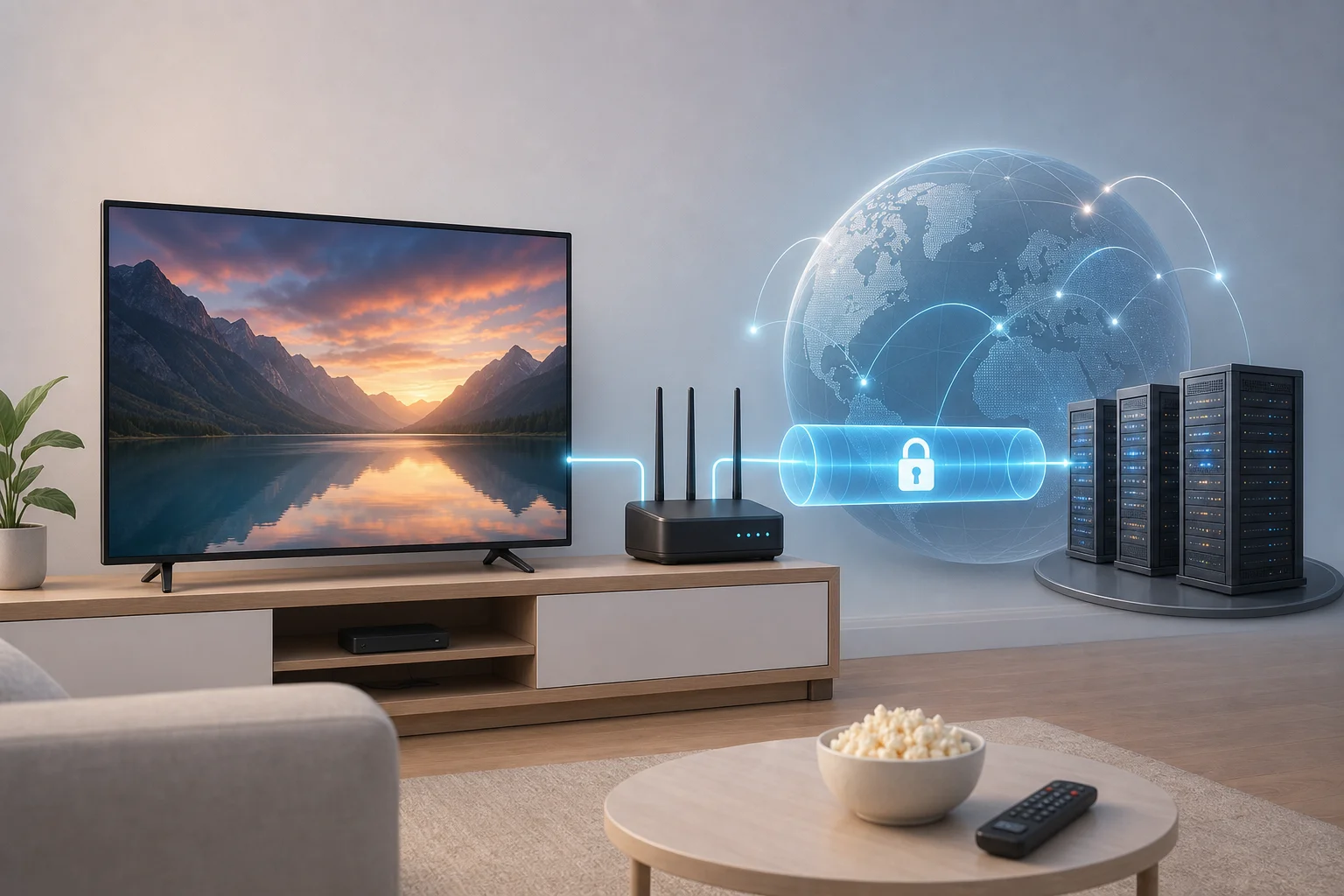
vpn for LG TV setup

Before you start: gather your tools

Before you set up a VPN for LG TV, take a few minutes to prepare. This makes the installation smoother and reduces connection problems later.

You will need:

  • An LG TV connected to the internet. Most modern LG Smart TVs run webOS. The steps below apply to webOS network settings, though menu names can vary slightly by model.
  • A laptop or smartphone for the VPN connection. Because LG TVs usually cannot install VPN apps directly, this device acts as the bridge between the VPN and your TV.
  • A free VPN that does not require registration. For example, BeFreeVPN is designed for quick access without creating an account, which helps reduce setup friction.
  • A stable Wi-Fi network. Streaming over a VPN can use more bandwidth, so a strong signal helps avoid buffering.
  • Your LG TV remote. You will need it to select the hotspot network and test the connection.

It is also useful to know which device you will use as the hotspot. A Windows laptop is often the easiest option because it can share a VPN connection through its mobile hotspot feature. Some smartphones can also share a VPN connection, but this depends on the operating system and device settings. If your phone hotspot does not route traffic through the VPN, try a laptop instead.

Step 1: connect to a suitable VPN

Start by setting up the VPN on the device that will share its internet connection with your LG TV.

1. Download BeFreeVPN on a compatible device

Install the BeFreeVPN app on your laptop or smartphone if it is available for your platform. Choose the official download source for your device. Avoid third-party downloads, as they may be unsafe or outdated.

If you use another free VPN, check that it supports your device, offers a server location that suits your needs, and does not require registration if you want the fastest setup.

2. Open the app and connect to a free server

Launch the VPN app and choose a free server. For streaming, a nearby server often gives better speed. If you need a specific region for travel access, select a server in that country.

Wait until the app shows that the VPN is connected. Do not move to the next step until the connection is active.

3. Make sure the device is on the same network as your LG TV

Your laptop or smartphone should initially be connected to the same home Wi-Fi network that your LG TV can reach. Later, the TV will connect to the hotspot created by this device.

A simple pre-check helps:

  1. Open a browser on the laptop or phone.
  2. Search “what is my IP”.
  3. Confirm the displayed location matches the VPN server, not your actual location.
  4. Keep the VPN app open in the background.

If the IP location does not change, disconnect and reconnect the VPN before continuing.

Step 2: set up a hotspot for your LG TV

Now you need to turn your VPN-connected laptop or smartphone into a hotspot. This creates a new Wi-Fi network for the LG TV.

Device used for hotspotDifficultyNotes
Windows laptopEasy to moderateOften the most reliable way to share a VPN connection
Android phoneModerateSome models share VPN traffic, others do not
iPhoneModerate to limitedPersonal Hotspot may not route TV traffic through the VPN in all cases
Mac laptopModerateMay require internet sharing and extra network configuration

Turn your laptop or smartphone into a mobile hotspot

On Windows:

  1. Connect to BeFreeVPN.
  2. Open Settings.
  3. Go to Network & internet.
  4. Select Mobile hotspot.
  5. Choose to share your internet connection over Wi-Fi.
  6. Turn Mobile hotspot on.
  7. Note the hotspot network name and password.

If your VPN app creates a separate network adapter, you may need to allow sharing from that VPN adapter. This setting can appear under advanced adapter options in Windows.

On Android:

  1. Connect to the VPN.
  2. Open Settings.
  3. Go to Network & internet or Connections.
  4. Choose Hotspot and tethering.
  5. Turn on Wi-Fi hotspot.
  6. Check the hotspot name and password.

On iPhone:

  1. Connect to the VPN.
  2. Open Settings.
  3. Tap Personal Hotspot.
  4. Enable Allow others to join.
  5. Use the displayed Wi-Fi password on your LG TV.

Important: phones do not always share VPN-protected traffic over hotspot. After connecting your LG TV, test the connection as described below.

Ensure the hotspot is active and network sharing is enabled

Keep the VPN app connected while the hotspot is on. If your laptop goes to sleep, the VPN and hotspot may disconnect. For a long streaming session, plug the device into power and disable sleep temporarily.

Also, keep the hotspot close to your TV. A weak signal can cause buffering, app errors, or failed login attempts.

Connect your LG TV to this new hotspot

On the LG TV, you will connect to the hotspot just like any other Wi-Fi network. Use the hotspot password from your laptop or smartphone. If the network does not appear, turn the TV Wi-Fi off and on again, then refresh the list.

LG TV hotspot VPN connection

Step 3: configure VPN on your LG TV

There is no full native VPN install on most LG TVs, so the “configuration” happens by choosing the VPN-protected hotspot as the TV’s network.

Using your remote:

  1. Press the Settings button.
  2. Open All settings.
  3. Go to General.
  4. Select Network.
  5. Choose Wi-Fi connection.

Menu names may differ by webOS version, but the network area is usually under General or Connection settings.

Select your new hotspot as the network

Find the hotspot name created on your laptop or phone. Select it, enter the password, and wait for the TV to connect.

Once connected, open a streaming app or the LG web browser if available. Load a website or start a video to confirm the internet connection works.

Validate the connection to ensure it leads through the VPN

To check whether your LG TV traffic is going through the VPN, use one of these methods:

  • Open the LG TV browser and search “what is my IP”. The visible location should match the VPN server.
  • Open a streaming app and check whether the available content matches your selected region.
  • Test the same app on the hotspot device and compare results.

If your LG TV still shows your real location, the hotspot may not be sharing the VPN tunnel. In that case, try a Windows laptop, change VPN protocol in the app if available, or consider installing the VPN on your router if your router supports it.

Step 4: troubleshooting VPN connection issues

If your VPN for LG TV install does not work the first time, do not worry. Most problems come from the hotspot, VPN routing, or Wi-Fi signal.

Ensure the VPN is connected if streaming issues arise

Streaming apps may fail if the VPN disconnects in the background. Check the VPN app and reconnect if needed. Then restart the streaming app on your LG TV.

If video quality is poor, try:

  • A VPN server closer to your actual location.
  • A different free server.
  • Restarting the VPN app.
  • Lowering video quality in the streaming app.
  • Moving the hotspot device nearer to the TV.

Free VPN servers can be busy at peak times, so changing servers may help.

Reset your hotspot if connectivity problems occur

If the TV connects to the hotspot but has no internet, reset the connection chain:

  1. Turn off the LG TV Wi-Fi.
  2. Turn off the hotspot.
  3. Disconnect the VPN.
  4. Reconnect the VPN.
  5. Turn the hotspot back on.
  6. Reconnect the LG TV to the hotspot.

This refreshes the VPN tunnel and network sharing. Also check that your laptop or smartphone still has internet access while the VPN is on.

Contact VPN support or check online guides for complex issues

Some issues depend on the VPN app, router, operating system, or LG TV model. If the hotspot does not share VPN traffic, check the VPN provider’s help guides. You can also search for instructions for your specific device, such as “share VPN over hotspot Windows 11” or “Android hotspot share VPN”.

For more advanced users, a router-level VPN setup can protect the LG TV without using a hotspot. However, this requires a compatible router and more configuration.

Frequently asked questions about VPN for LG TV install

Can I install a VPN app directly on an LG Smart TV?

Usually, no. Most LG webOS TVs do not support direct installation of standard VPN apps. The simplest workaround is to connect the TV to a VPN-protected hotspot or configure the VPN on a compatible router.

Is a free VPN enough for streaming on LG TV?

It can be enough for basic use, especially if you want quick privacy or occasional access without registration. However, free servers may have speed limits, fewer locations, or higher demand. For long 4K streaming sessions, performance can vary.

Does a phone hotspot always share the VPN connection?

No. Some phones share normal internet through the hotspot but do not route connected devices through the VPN tunnel. Test the IP location on your LG TV after connecting. If it fails, use a Windows laptop or router setup instead.

Will a VPN fix every region error in streaming apps?

Not always. Streaming platforms use several methods to detect location, including account region, payment method, GPS on mobile devices, DNS, and IP address. A VPN may help, but it is not a guaranteed fix for every app.

VPN use is legal in many countries, but rules vary by location. You should also follow the terms of service for each streaming platform and avoid using a VPN for unlawful activity.

Final thoughts

Installing a VPN on an LG TV is less about adding an app to the TV and more about routing the TV through a VPN-connected device. Once you connect BeFreeVPN on a laptop or smartphone, create a hotspot, and join that hotspot from your LG TV, you can stream with an added layer of privacy and more location flexibility.

Boost your streaming experience by using BeFreeVPN on your LG TV for free, with no registration required. Start enjoying global content seamlessly today!

Beginner's guide: VPN setup for LG TV and data privacy

· 9 min read

Curious how to keep your streaming activity on your LG TV private and secure? This beginner-friendly vpn for lg tv setup guide explains the simplest ways to protect your data while watching shows, films, and live content. LG smart TVs usually do not support standard VPN apps directly, but you still have practical options. The most reliable method is often setting up the VPN on your router, so your TV connection is protected automatically.

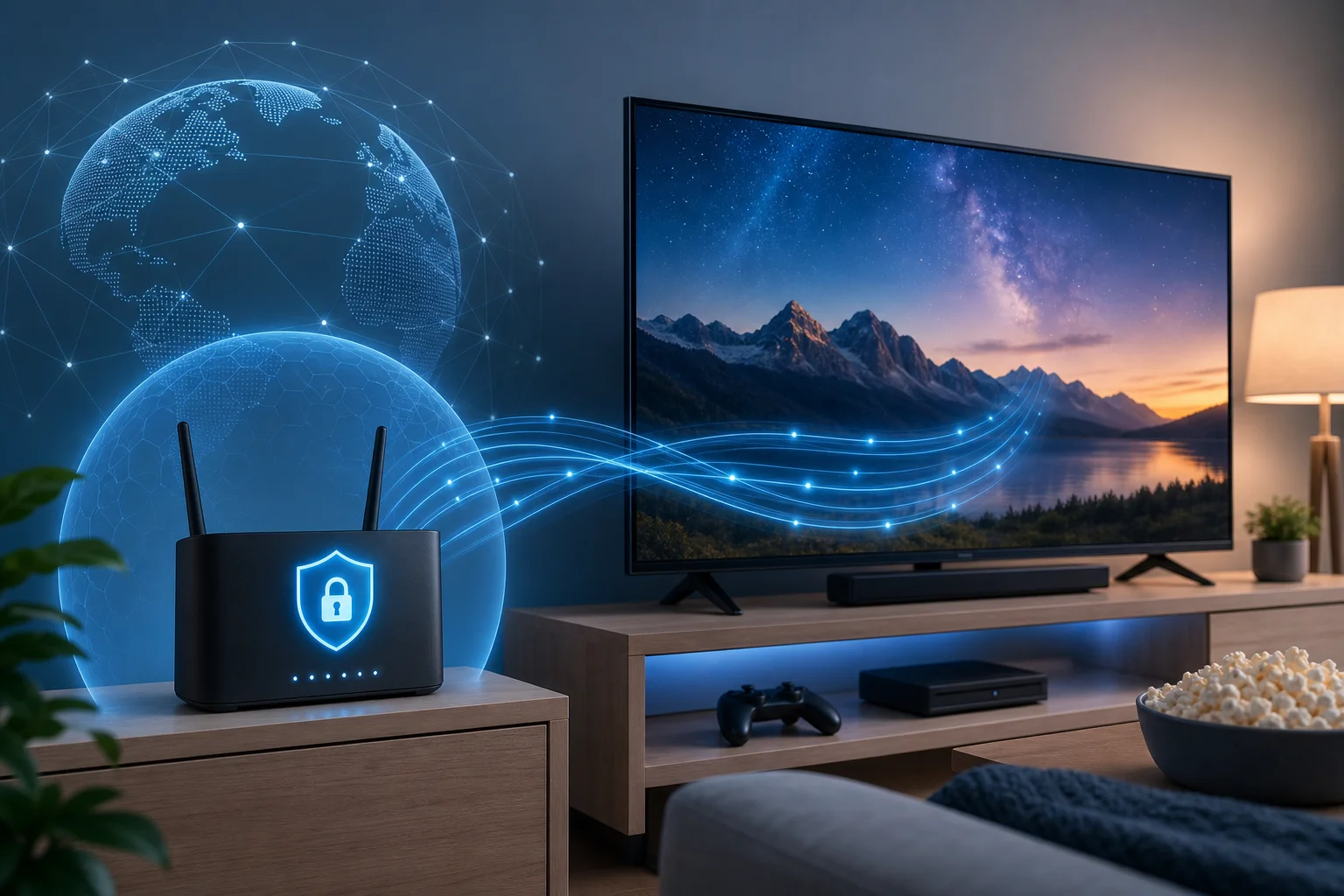
VPN privacy on LG TV

Why use a VPN on your LG TV?

Your LG TV connects to the internet every time you open a streaming app, browse content, update software, or use smart features. That connection can reveal information such as your IP address, general location, device activity, and viewing patterns to networks, apps, or other parties involved in the connection.

A VPN, or virtual private network, helps reduce that exposure. It creates an encrypted tunnel between your device or router and the VPN server. As a result, your internet traffic becomes harder to inspect on the local network.

How a VPN improves privacy on an LG TV

Using a VPN with an LG TV can help you:

  • Hide your real IP address from websites and online services.
  • Reduce tracking linked to your home internet connection.
  • Protect streaming activity on shared or less trusted networks.
  • Add a privacy layer for apps that connect through the internet.
  • Keep your entertainment activity more separate from your identity.

This matters because TVs are no longer just screens. They are connected devices with apps, accounts, recommendations, search histories, and network activity. A VPN cannot make you completely anonymous, and it will not replace good account security. However, it can make your streaming data less exposed.

Why privacy matters for entertainment

Streaming feels personal. Your watch history can reveal interests, routines, language preferences, family habits, and even when you are likely to be at home. While this data may seem harmless, it is still personal information.

Therefore, protecting your LG TV connection is a smart step. It is especially useful if you care about data privacy but want a setup that works quietly in the background.

What is the best way to install a VPN on LG TV?

The best VPN setup for LG TV is usually a router-based VPN setup. This is because most LG TVs run webOS, and webOS does not typically allow you to install a normal VPN app the way you would on a phone, tablet, or laptop.

When the VPN is installed on your router, every compatible device connected through that router can use the protected connection. That includes your LG TV, game console, streaming box, and other smart home devices.

Router VPN setup for LG TV

Common setup methods compared

MethodBest forDifficultyNotes
VPN on routerFull-home privacy, LG TV includedMediumMost complete option if your router supports VPN settings
VPN-enabled travel routerSimple TV-only or room-only setupEasy to mediumUseful if you do not want to change your main router
Virtual router from laptopTemporary setupMediumShares a VPN connection from a computer to the TV
Smart DNSStreaming location settingsEasyNot a VPN and does not encrypt traffic

For privacy and personal data protection, choose a real VPN setup rather than Smart DNS. Smart DNS may help with DNS routing, but it does not encrypt your traffic like a VPN.

Step-by-step router VPN setup for LG TV

Use these general steps. The exact names of settings vary by router and VPN provider.

  1. Check whether your router supports VPN connections.
    Log in to your router admin panel and look for VPN client settings. Common supported protocols include OpenVPN and WireGuard.

  2. Choose a privacy-focused VPN service.
    Look for clear setup guides, strong encryption, a no-logs policy, and router support.

  3. Download the VPN configuration files.
    Your VPN provider should supply server details or configuration files for your chosen protocol.

  4. Add the VPN details to your router.
    Upload the configuration file or enter the server address, credentials, and protocol settings manually.

  5. Connect the router to the VPN server.
    Save the settings and start the VPN connection from the router interface.

  6. Connect your LG TV to that router.
    On your LG TV, go to network settings and connect to the Wi-Fi network or wired connection from the VPN-protected router.

  7. Test the connection.
    Open a browser or use a trusted IP-checking tool from another device on the same network. Confirm that the visible IP address matches the VPN server, not your home connection.

This method is popular because your LG TV does not need to run VPN software itself. Once the router is configured, the TV simply uses the protected network like normal.

How does a VPN protect your streaming data?

A VPN protects your streaming data in two main ways: encryption and IP masking. These features work together to make your LG TV traffic more private.

Encryption makes data harder to read

Encryption scrambles your internet traffic while it travels between your network and the VPN server. Without encryption, certain network activity may be easier to inspect, especially on shared or poorly secured networks.

With a VPN, your internet service provider can usually see that you are connected to a VPN server, but the contents of your traffic are harder to view. This helps protect information related to the apps and services your LG TV connects to.

IP masking reduces direct tracking

Your IP address is a unique identifier for your internet connection. Streaming platforms and websites can use it to estimate your location and link activity to your network.

A VPN replaces your visible home IP address with the IP address of the VPN server. This does not erase every form of tracking, because apps may still use account logins, cookies, device IDs, or viewing history. Even so, IP masking is an important privacy layer.

A VPN helps protect viewing habits

Your viewing habits can be sensitive. A VPN helps prevent unauthorized users on the same network from easily monitoring what your LG TV is doing online. It also limits how much your network-level activity can be associated with your home IP address.

For better privacy, combine a VPN with sensible habits. Use strong passwords, review app permissions, keep your LG TV software updated, and sign out of apps you no longer use.

What are the key features to look for in a VPN for LG TV?

Not every VPN is a good fit for smart TVs. Since LG TV VPN installation often depends on a router or shared network, you should choose a service that is easy to configure and strong on privacy.

Strong privacy and security features

Look for these essentials:

  • Modern encryption: Choose a VPN that supports secure protocols such as WireGuard or OpenVPN.
  • No-logs policy: A no-logs VPN should not store records of your browsing or streaming activity.
  • Router support: The provider should offer setup files and clear router instructions.
  • Stable servers: A reliable connection helps reduce buffering and dropouts.
  • Kill switch support: This is useful on devices that support it, though router behavior varies.
  • Transparent privacy policy: The provider should explain what data it collects and why.

Why a no-logs policy matters

A VPN moves trust from your local network and internet provider to the VPN service. That is why the provider’s privacy policy matters. A no-logs policy means the VPN should not keep activity logs that show what you watched, which apps you used, or which websites you visited.

Read the policy in plain language. Avoid services that are vague about data collection. Also, be cautious with free VPNs that rely heavily on advertising or unclear data practices.

Compatibility and ease of use

For beginners, the best VPN for LG TV is one you can actually set up without frustration. Before choosing, check whether the VPN supports your router model or offers an alternative, such as a travel router setup or laptop sharing.

If your current router does not support VPN client mode, you may still have options. You can use a VPN-compatible router, install supported router firmware if you are comfortable doing so, or create a virtual hotspot from a VPN-connected laptop.

Common questions about VPN for LG TV setup

Can I install a VPN app directly on my LG TV?

Usually, no. Most LG TVs use webOS, which does not normally support traditional VPN apps. A router VPN setup is the most common workaround.

Will a VPN slow down streaming on my LG TV?

It can, because encryption and server distance add extra processing. However, a good VPN, a nearby server, and a fast router can keep streaming smooth.

Is Smart DNS the same as a VPN?

No. Smart DNS does not encrypt your traffic or hide your IP address in the same way a VPN does. For privacy, use a real VPN.

Do I need technical skills to set up a VPN on LG TV?

Basic comfort with router settings helps, but many providers offer guides. If you want a simpler path, a preconfigured or VPN-compatible travel router can be easier.

Final thoughts

A VPN for LG TV setup does not have to be complicated. Since LG TVs usually cannot run VPN apps directly, the router method is often the most practical choice for beginners who want better privacy. It protects your TV connection, masks your IP address, and encrypts streaming data without changing how you use your favorite apps.

Ready to enhance your LG TV experience with privacy protection? Try BeFreeVPN for a seamless, no-registration VPN solution to keep your streaming data safe.

How BeFreeVPN transformed streaming on Samsung TV: a case study

· 10 min read

Ever wondered how Alex finally accessed his favorite global shows on his Samsung TV? Discover the simple VPN trick that changed his streaming experience forever. This case study shows how a VPN for Samsung TV for streaming helped Alex reduce geo-blocking frustration, compare setup options, and use BeFreeVPN to make international streaming libraries easier to reach from his home in Germany.

Meet Alex: avid streamer and tech enthusiast

Alex lives in Germany, works in product support, and enjoys testing new gadgets after hours. His living room setup is simple but capable: a Samsung Smart TV, a fast fiber connection, a soundbar, and subscriptions to several major streaming services. On paper, he had everything he needed for relaxed movie nights.

In practice, his streaming choices often felt smaller than expected. Friends in the UK talked about shows he could not find. US-based podcasts recommended documentaries that did not appear in his local app catalog. Even when a title had the same name, the available seasons were sometimes different from region to region.

Alex understood why this happens. Streaming platforms license shows by country, and apps on a Samsung TV usually determine the available catalog based on location, account region, DNS information, IP address, and service rules. Still, knowing the reason did not make the experience less annoying.

What made the problem more frustrating was that Alex was not a beginner. He could configure a router, troubleshoot Wi-Fi, and compare network settings without feeling lost. Yet he wanted a clean solution, not a weekend project. His goal was clear: access UK and US streaming libraries more easily from Germany while keeping the Samsung TV experience as simple as using a normal app.

vpn for Samsung TV streaming setup

The streaming challenge: geo-restrictions on Samsung TV

Geo-restricted content is one of the most common barriers for international streamers. A show may be available in one country but hidden in another because the platform only has distribution rights in certain markets. As a result, two people using the same streaming app may see different catalogs.

Samsung TVs add an extra challenge. Unlike phones or laptops, many Samsung Smart TVs do not support installing a standard VPN app directly from the TV app store. Samsung’s Tizen-based system is built for media apps, not always for advanced VPN clients. That means users often need a network-level workaround.

Before choosing BeFreeVPN, Alex tried several approaches:

  • Searching the Samsung TV app store for a native VPN app, but finding no simple option.
  • Casting from a laptop, which worked sometimes but felt clunky for everyday viewing.
  • Changing app settings, which did not reliably change the streaming library.
  • Testing DNS tweaks, which helped with some services but lacked the privacy and routing benefits of a VPN.
  • Using a browser on another device, which defeated the point of watching comfortably on the big screen.

These workarounds were not useless, but they were inconsistent. Some required too many steps. Others broke when an app refreshed location data. Alex needed a smoother way to route his Samsung TV traffic through another region when he wanted to explore a different content library.

What Alex needed from a Samsung TV VPN setup

Alex made a short checklist before choosing a tool:

RequirementWhy it mattered for streaming
Easy setupHe did not want a complex manual configuration every time he watched TV.
UK and US access optionsThese were the main libraries he wanted to explore from Germany.
No registration frictionHe wanted to test quickly without a long sign-up process.
Multiple-device supportHis phone, laptop, and TV setup all needed flexibility.
Stable performanceStreaming needs reliable speed and low interruptions.
Simple switchingHe wanted to move between regions without rebuilding the setup.

This checklist pushed him toward BeFreeVPN because it focused on quick access, easy use, and a no-registration experience.

Finding the solution: BeFreeVPN to the rescue

Alex discovered BeFreeVPN while looking for a practical VPN for Samsung TV streaming. The important detail was that he did not need a native Samsung TV VPN app to benefit from it. Instead, he could run BeFreeVPN through a supported device or network method and then connect the Samsung TV through that route.

Because Samsung TV models and router settings vary, Alex considered two realistic setup paths.

Step-by-step: how Alex set up BeFreeVPN for Samsung TV streaming

  1. He checked his Samsung TV network settings. Alex confirmed whether the TV was connected by Wi-Fi or Ethernet and noted the current network name.
  2. He chose the VPN connection method. Since his TV did not support a direct VPN app, he used a shared connection approach from a device running BeFreeVPN. A router-based setup can also work when the router supports VPN configuration.
  3. He opened BeFreeVPN and selected a region. For UK shows, he chose a UK location. For US libraries, he switched to a US location.
  4. He connected the Samsung TV to the VPN-routed network. This made the TV’s streaming traffic use the selected route.
  5. He restarted the streaming app. Closing and reopening the app helped refresh location-related data.
  6. He tested playback with a familiar title. Alex checked whether the catalog changed and whether playback remained smooth.
  7. He saved the setup for repeat use. Once the connection worked, he kept the steps simple so he could repeat them on movie nights.

This process was faster than his earlier experiments because BeFreeVPN reduced the usual friction. The no-registration flow made it easy to start. The interface did not require him to dig through advanced settings. Also, because BeFreeVPN could be used across devices, Alex was not limited to the TV. He could test the same region on his laptop or phone before watching on the Samsung screen.

Why BeFreeVPN fit the use case

For Alex, BeFreeVPN was not just about changing an IP address. It solved a practical living-room problem. He wanted to sit down, open an app, and watch. The features that mattered most were:

  • No registration required: Alex could start quickly without creating another account.
  • Simple region selection: He could choose UK or US access depending on what he wanted to watch.
  • Device flexibility: He could use BeFreeVPN with more than one device in his home setup.
  • Beginner-friendly controls: The app avoided making a simple task feel like network administration.
  • A smoother TV workflow: Once configured, the Samsung TV felt closer to a normal streaming experience.

Alex also kept expectations realistic. VPN access can depend on the streaming service, the selected region, and the platform’s own detection systems. He used BeFreeVPN to improve access and reduce friction, while understanding that no VPN can guarantee every title on every service at all times.

Results: unlocking a world of content

After configuring BeFreeVPN, Alex noticed the biggest change immediately: his Samsung TV no longer felt locked to only one local catalog. When he selected a UK route, the content options in supported apps aligned more closely with what he expected from UK availability. When he switched to a US route, he could explore a wider range of American shows and documentaries.

The improvement was not only about more titles. It was about convenience. Instead of connecting a laptop to the TV or juggling casting sessions, Alex could use the Samsung TV interface he already liked. He could browse with the remote, use the streaming apps installed on the TV, and keep his living-room routine intact.

Samsung TV streaming with BeFreeVPN

What changed in Alex’s streaming routine

Before BeFreeVPN, Alex’s routine involved trial and error. He would hear about a show, search for it, fail to find it, then try another device. Sometimes he gave up and watched something else.

After BeFreeVPN, the process became more direct:

  • He chose the content region he wanted to explore.
  • He connected through BeFreeVPN using his chosen setup method.
  • He reopened the streaming app on the Samsung TV.
  • He browsed a larger set of available shows.
  • He watched on the big screen without switching devices mid-session.

Streaming quality also felt more consistent than his casting workaround. Casting depended on both the source device and the TV connection. With the TV using a VPN-routed network, playback was easier to manage. As with any VPN, speed could vary by server, distance, and home network conditions. However, Alex found the experience smoother than his previous patchwork of fixes.

Most importantly, Alex could access both UK and US streaming libraries with less hassle. That met his original goal. He did not need to become a network engineer, and he did not need to give up the comfort of watching directly on his Samsung TV.

Takeaways: the power of BeFreeVPN for streamers

Alex’s case shows why the right VPN setup matters for Samsung TV owners. A TV is not the same as a phone. You may not be able to install a VPN directly on it, but you can still use a VPN-routed connection to improve access to global content.

The main benefits Alex experienced were straightforward:

  • More content discovery: BeFreeVPN helped him explore UK and US streaming catalogs from Germany.
  • Less setup frustration: The no-registration approach made testing faster.
  • Better living-room usability: He could keep using the Samsung TV interface instead of relying on casting.
  • Flexible device support: He could test regions on other devices before watching on the TV.
  • A repeatable process: Once the setup worked, it was easy to use again.

For intermediate users, this is often the sweet spot. You understand the basics of VPNs and geo-restrictions, but you still want a solution that respects your time. BeFreeVPN gave Alex a way to unlock more viewing options without turning every streaming session into a troubleshooting task.

FAQ: using a VPN for Samsung TV streaming

Can I install a VPN directly on a Samsung TV?

Usually, no. Many Samsung Smart TVs do not support standard VPN apps directly. Most users connect the TV through a VPN-enabled router, a shared hotspot, or another supported network method.

Is BeFreeVPN useful if my Samsung TV has no VPN app?

Yes. You can still use BeFreeVPN by routing the Samsung TV connection through a supported device or network setup. This lets the TV use the VPN connection without installing a VPN app on the TV itself.

Does a VPN guarantee access to every streaming library?

No. Access depends on the streaming platform, licensing rules, account settings, and VPN detection systems. A VPN can help bypass location barriers, but results may vary by service and region.

Which locations should I choose for UK and US shows?

Choose a UK location when you want to browse UK-focused libraries and a US location for American catalogs. After switching regions, restart the streaming app so it can refresh location data.

Will a VPN slow down Samsung TV streaming?

Any VPN can affect speed because traffic takes an extra route. For the best result, use a stable home connection, choose a nearby suitable server when possible, and avoid overcrowded Wi-Fi networks.

Conclusion: a simpler path to global streaming

Alex’s experience proves that a VPN for Samsung TV for streaming can be practical when it is set up in the right way. BeFreeVPN helped him move beyond local catalog limits, explore UK and US content more easily, and keep the comfort of watching on his Samsung TV. Unlock the full potential of your Samsung TV streaming experience with BeFreeVPN—effortlessly accessing geo-restricted shows without registration.

The ultimate guide to using a VPN for Samsung TV with fast connection

· 16 min read

Why pay for a VPN when you can enjoy fast and secure streaming on your Samsung TV at no cost with BeFreeVPN? If you are searching for a vpn for samsung tv with fast connection, this guide explains what a VPN can and cannot do on a Samsung Smart TV, how to set up BeFreeVPN using practical methods, and how to keep streaming smooth without paying for features you may not need.

A Samsung TV is great for Netflix, YouTube, Prime Video, Disney+, live TV apps, browser-based viewing, and screen mirroring. However, like many smart TVs, it does not always give you the same privacy controls as a laptop or phone. A VPN can help protect your connection, reduce exposure on shared networks, and make your TV traffic less visible to your internet provider. The key is choosing a setup that is fast enough for HD or 4K streaming.

Introduction to VPN for Samsung TV

Samsung Smart TVs run on Tizen OS, a TV-focused operating system designed for streaming apps, media playback, voice controls, and connected home features. It is easy to use, but it has one major limitation for VPN users: most Samsung TVs do not let you install a standard VPN app directly from the TV app store.

That does not mean you cannot use a VPN with a Samsung TV. It means you usually need one of these routes:

  • Connect the TV through a VPN-enabled router.
  • Share a VPN-protected connection from a computer.
  • Use a mobile hotspot or virtual router where supported.
  • Use DNS or Smart DNS features when a full VPN tunnel is not required.

For streaming, speed matters as much as privacy. A slow VPN connection can cause buffering, reduced video quality, app errors, or long loading times. A fast VPN setup should keep your connection stable, avoid overloaded servers, and add as little delay as possible.

Use the table of contents below as a quick navigation hint:

  • Quick answer: do you need a paid VPN?
  • Setup steps for BeFreeVPN on Samsung TV
  • Speed optimization tips
  • Key features to look for
  • Alternatives and comparison
  • Key takeaways and FAQ answers

VPN for Samsung TV streaming setup

A good setup does not need to be complicated. In most homes, the simplest option is to protect the connection at the router or share a protected Wi-Fi connection from a laptop. Once the Samsung TV connects to that network, apps on the TV use the VPN route automatically.

Quick answer: do you need a paid VPN for Samsung TV?

No, not always. A paid VPN is not required for every Samsung TV user. If your main goal is to add privacy to TV streaming, avoid exposing your viewing traffic on shared Wi-Fi, or test a VPN connection without a subscription, BeFreeVPN can be a practical free alternative.

The important point is setup method. Because Samsung TVs usually do not support direct VPN apps, BeFreeVPN works best when it protects the network your TV uses. For example, you can connect BeFreeVPN on a compatible phone, computer, or router setup, then connect the Samsung TV through that protected connection.

Is BeFreeVPN fast enough for streaming?

A VPN can only be as fast as your base internet connection, Wi-Fi quality, and selected server route allow. BeFreeVPN is designed as a no-cost option, so it is most useful when you choose a nearby server, use a strong Wi-Fi signal, and avoid running too many devices on the same network at once.

For smooth streaming, aim for these rough download speeds after the VPN is connected:

Streaming qualityRecommended download speed after VPN
SD video3 Mbps or higher
HD video5 to 10 Mbps or higher
4K video25 Mbps or higher

These are general streaming guidelines. Individual apps may need more or less speed depending on compression, live playback, and device performance.

Why choose a free VPN instead of a paid one?

A paid VPN can make sense if you need advanced server choices, multi-device management, dedicated router support, or business-grade features. However, many Samsung TV users simply want a fast, secure connection for everyday streaming. In that case, paying every month may be unnecessary.

BeFreeVPN stands out because it focuses on easy access. With no registration required, you can start without creating another account, sharing extra personal details, or committing to a subscription. That is especially helpful if you only need a VPN for occasional streaming sessions or travel.

How does it work with Samsung TV if there is no native TV app?

Think of the VPN as protecting the road your TV uses to reach the internet. If the VPN runs on the router or on a shared connection, the Samsung TV does not need its own VPN app. It simply connects to Wi-Fi as usual. The device providing that Wi-Fi handles the VPN part in the background.

This approach is often smoother than trying to sideload apps or change unsupported TV settings. It also protects other devices on the same network path, depending on how you configure it.

Setting up BeFreeVPN on Samsung TV: step by step

Before you begin, check three things:

  1. Your Samsung TV is connected to your home Wi-Fi.
  2. BeFreeVPN is available on the device you plan to use as the VPN gateway.
  3. You have permission to change router or network settings if you are not the network owner.

The setup below avoids technical jargon and focuses on the most practical methods.

Method 1: use a VPN-protected Wi-Fi hotspot from a computer

This is often the easiest route if you do not want to change router settings.

  1. Install or open BeFreeVPN on your computer.
  2. Connect BeFreeVPN and choose a nearby server for better speed.
  3. Turn on mobile hotspot or internet sharing on the computer.
  4. Share the computer’s internet connection over Wi-Fi.
  5. On your Samsung TV, open Settings.
  6. Go to General or Connection, then choose Network.
  7. Select Open network settings.
  8. Choose the Wi-Fi network created by your computer.
  9. Enter the Wi-Fi password.
  10. Open a streaming app and test playback.

This method works best when the computer stays close to the TV and has a strong internet connection. If the computer sleeps, disconnects, or switches Wi-Fi networks, the TV may lose access.

BeFreeVPN Samsung TV setup steps

Method 2: connect through a VPN-enabled router

A router setup is convenient because the Samsung TV connects normally, while the router handles VPN protection. This can be the best long-term option for living rooms, shared households, and multiple devices.

  1. Check whether your router supports VPN client settings.
  2. Open your router admin page in a browser.
  3. Look for VPN, client VPN, or advanced internet settings.
  4. Add the BeFreeVPN configuration details if supported.
  5. Save the settings and restart the router if needed.
  6. Connect your Samsung TV to that router’s Wi-Fi.
  7. Run a speed test from a TV browser or another device on the same network.
  8. Open your streaming app and confirm that video plays normally.

Not every router supports VPN client mode. Some routers support VPN servers, which are different. If your router does not support VPN client settings, use the computer hotspot method instead.

Method 3: use phone hotspot sharing where supported

Some users prefer using a smartphone as a hotspot. This can help during travel, in dorms, or in temporary rentals. However, not all phones route hotspot traffic through the VPN. Some only protect traffic on the phone itself.

To test it:

  1. Connect BeFreeVPN on your phone.
  2. Turn on the phone’s hotspot.
  3. Connect your Samsung TV to the hotspot.
  4. Test streaming.
  5. Use an IP-checking website on a second device connected to the same hotspot to confirm whether the VPN route is active.

If the hotspot does not use the VPN route, switch to a computer hotspot or router setup.

Common setup issues and quick fixes

ProblemLikely causeQuick fix
TV cannot find the shared Wi-FiHotspot is off or too far awayMove the computer closer and restart hotspot sharing
Streaming app buffersServer is far away or Wi-Fi is weakChoose a nearby VPN server and reduce network congestion
TV says connected but no internetSharing settings are incompleteTurn sharing off and on, then reconnect the TV
Router VPN option is missingRouter does not support VPN client modeUse a computer hotspot instead
App location looks unchangedVPN is not applied to TV trafficConfirm the TV is connected to the VPN-protected network

FAQ: can I install BeFreeVPN directly on a Samsung TV?

In most cases, no. Samsung TVs usually do not support direct installation of standard VPN apps. The practical solution is to run BeFreeVPN on a router, computer, or supported device that shares the protected connection with your TV.

Optimizing your VPN connection speed

A fast VPN for Samsung TV is not only about the VPN service. Your Wi-Fi setup, internet plan, device placement, and server choice all affect performance. Start with simple fixes first.

Choose the closest suitable server

Distance matters. A nearby VPN server usually gives lower latency and higher speed. If your goal is general privacy while streaming, select the closest available location. If a specific app requires a particular region, choose the nearest server in that region.

Use 5 GHz Wi-Fi when possible

Many Samsung TVs support both 2.4 GHz and 5 GHz Wi-Fi. The 5 GHz band is usually faster at short range, while 2.4 GHz reaches farther through walls. If your TV is close to the router, 5 GHz is often the better choice for HD or 4K streaming.

Reduce network congestion

Streaming over a VPN can slow down if several devices are downloading, gaming, backing up photos, or running updates. Before a movie night, pause large downloads and close unused apps on the device running BeFreeVPN.

If speed suddenly drops, restart in this order:

  1. The Samsung TV.
  2. The device running BeFreeVPN.
  3. The router.
  4. The streaming app.

This clears temporary network errors and refreshes connections.

Understand internet speed test results

When you test speed, focus on three numbers:

  • Download speed: This affects video quality and buffering.
  • Upload speed: This matters less for watching video, but helps video calls and screen sharing.
  • Ping or latency: Lower is better for live streams, sports apps, and responsive browsing.

Always test speed after the VPN is connected. A speed test without the VPN only shows your normal connection, not your streaming performance through the VPN.

Advanced settings for tech-savvy users

If you are comfortable with network settings, try these improvements:

  • Use Ethernet from the router to the TV if possible.
  • Keep router firmware updated.
  • Place the router in an open central location.
  • Avoid double VPN routing unless you need it.
  • Use split tunneling on the gateway device if supported, so only the TV or streaming traffic uses the VPN.
  • Test different VPN protocols if BeFreeVPN offers protocol choices on your device.

Make one change at a time. Then test again. This helps you know what actually improved performance.

Key features of BeFreeVPN for Samsung TV

BeFreeVPN is a strong fit for users who want a no-cost VPN option without making Samsung TV setup harder than necessary. The most useful features are the ones that reduce friction.

No registration required for easy access

Many VPN services ask for email addresses, passwords, payment cards, or trial subscriptions. BeFreeVPN’s no-registration approach makes it easier to start quickly. For Samsung TV users, that matters because the setup already involves a router, computer, or shared connection. Removing account steps makes the process simpler.

Compatibility with various Samsung TV models

Because BeFreeVPN is used through the network connection rather than a native TV app, it can work with many Samsung Smart TV models that support Wi-Fi or Ethernet. This includes newer Tizen-based TVs and older models that can connect to a protected router or hotspot.

Compatibility depends more on your gateway device than the TV itself. If your TV can connect to the Wi-Fi network that carries the VPN, it can use that connection.

Security features to safeguard user data

A VPN creates an encrypted tunnel between your device or network gateway and the VPN server. This can help reduce exposure on public or shared networks and make it harder for local network observers to inspect your traffic.

For a Samsung TV, this is useful when:

  • You stream on apartment, hotel, or dorm Wi-Fi.
  • You want to reduce visibility of TV app traffic on local networks.
  • You share a connection with many devices.
  • You prefer not to expose unprotected DNS or browsing activity from the TV.

A VPN is not a complete security solution. You should still update your TV firmware, use strong Wi-Fi passwords, and avoid entering sensitive information into unknown TV browser pages.

Fast VPN connection for Samsung TV

Simple access for occasional users

Not everyone needs a VPN running all day. Some users only need it during travel, when using shared Wi-Fi, or when they want extra privacy for a specific streaming session. BeFreeVPN is useful in those cases because you can start without a paid plan.

VPN alternatives: why BeFreeVPN stands out

There are several ways to change or protect a Samsung TV connection. The right choice depends on what you need: privacy, speed, simplicity, or cost savings.

OptionBest forMain limitationCost profile
BeFreeVPN through router or shared hotspotFree VPN protection for Samsung TV streamingRequires gateway setup because Samsung TV usually lacks native VPN appsFree
Paid VPN serviceAdvanced server options and extra featuresMonthly or annual subscriptionPaid
Smart DNSFaster location-based DNS routing for some appsDoes not encrypt traffic like a VPNOften paid or bundled
Standard ISP DNSBasic internet accessNo VPN privacy benefitsIncluded with internet plan
Browser proxyLimited browsing on supported devicesUsually does not protect TV appsFree or paid

Cost benefits of using BeFreeVPN

The clearest benefit is cost. If your goal is to test a VPN for Samsung TV with fast connection performance, BeFreeVPN lets you start without paying first. This is valuable because every home network is different. You can confirm that your router, computer hotspot, or mobile setup works before considering any paid alternative.

A free solution also makes sense for:

  • Students using shared accommodation.
  • Travelers using temporary Wi-Fi.
  • Families who only stream occasionally.
  • Users who want privacy without another subscription.

User scenarios and practical case studies

Instead of relying on broad claims, consider these realistic scenarios.

Scenario 1: Apartment streaming on shared Wi-Fi
A user in an apartment building wants extra privacy while streaming on a Samsung TV. They run BeFreeVPN on a laptop, share a Wi-Fi hotspot, and connect the TV to that hotspot. The result is a protected connection without changing the building router.

Scenario 2: Family movie night with a router setup
A household wants the TV, tablet, and media box to use the same protected connection. They configure a VPN-compatible router with BeFreeVPN details where supported. The TV connects as usual, and no one needs to change settings before every stream.

Scenario 3: Travel rental with temporary internet
A traveler brings a compact laptop and uses it as the gateway. BeFreeVPN runs on the laptop, and the Samsung TV in the rental connects to the shared hotspot. This avoids entering VPN details on a TV that does not support VPN apps.

FAQ: is BeFreeVPN better than a paid VPN for Samsung TV?

It depends on your needs. BeFreeVPN is better if you want a no-cost, low-friction option for everyday streaming privacy. A paid VPN may be better if you need dedicated router support, many region choices, specialized streaming servers, or priority support.

FAQ: will a VPN always make Samsung TV streaming faster?

No. A VPN can improve privacy, but it does not guarantee faster streaming. In some cases, it may slow traffic because encryption and routing add extra steps. For the best speed, choose a nearby server, use strong Wi-Fi, and test your connection after setup.

In many places, using a VPN is legal for privacy and security. However, rules vary by country and service. Always follow local laws and the terms of the streaming apps you use.

Key takeaways: maximizing your Samsung TV experience

A VPN can be useful on Samsung TV, but the best setup is usually indirect. Since most Samsung TVs do not install VPN apps natively, you get the best results by connecting the TV through a VPN-enabled router, a computer hotspot, or another supported shared connection.

Here are the main points to remember:

  • A fast VPN connection matters for HD and 4K streaming.
  • BeFreeVPN can help you avoid paid subscriptions when you only need simple VPN protection.
  • Samsung TV compatibility depends on the network gateway, not a native TV VPN app.
  • The easiest setup for many users is a VPN-protected computer hotspot.
  • A router setup is more convenient for long-term use if your router supports VPN client mode.
  • Speed improves when you choose nearby servers, use strong Wi-Fi, and reduce network congestion.
  • A VPN adds privacy, but it does not replace safe browsing, firmware updates, or strong home Wi-Fi security.

If you want a vpn for samsung tv with fast connection, start with the simplest setup first. Test your normal speed, connect BeFreeVPN, test again, and then stream for at least 10 minutes. This gives you a real view of performance on your own network.

Explore BeFreeVPN, the perfect free solution for streaming on Samsung TV without compromising speed or security.

VPN for Samsung TV install: your questions answered

· 9 min read

Want to protect your family's streaming habits on your Samsung TV? Discover the easy way to install a VPN and keep your household safe. If you are looking for a vpn for samsung tv install, the key thing to know is that most Samsung Smart TVs do not let you install a VPN app directly. However, you can still secure streaming by setting up a VPN on your router, using Smart DNS, or connecting through a VPN-friendly streaming device.

This FAQ explains the safest options for families, including how to protect multiple devices at home without managing separate VPN settings on every phone, laptop, tablet, and TV.

VPN for Samsung TV setup

How do I install a VPN on my Samsung TV?

Samsung TVs usually run Tizen OS, which does not support standard VPN apps in the same way Android, Windows, macOS, iOS, or Fire TV devices do. So, in most cases, you cannot open the Samsung TV app store, download a VPN app, and connect directly.

Instead, you have three practical options.

Option 1: Set up the VPN on your router

A router VPN setup protects every device connected to your home Wi-Fi, including your Samsung TV. This is often the best method for families because it works in the background and does not require children or other household members to remember to turn the VPN on.

Here is the general process:

  1. Check whether your router supports VPN connections. Look in the router settings for OpenVPN, WireGuard, L2TP, or VPN client options.
  2. Choose a VPN service that supports router setup. Download the correct configuration files from your VPN provider.
  3. Log in to your router admin panel. This is usually done through a browser using an address such as 192.168.1.1 or a router app.
  4. Add the VPN configuration. Enter the server details, credentials, and configuration file if required.
  5. Connect the router to the VPN. Once active, all devices on that Wi-Fi network use the VPN connection.
  6. Restart your Samsung TV. Then open a streaming app and test that everything loads as expected.

If your current router does not support VPN settings, you may need compatible firmware, a VPN-ready router, or a second router configured only for streaming devices.

Option 2: Use Smart DNS with your Samsung TV

Some VPN services include Smart DNS. This is not a full VPN because it does not encrypt your traffic. However, it can help route location checks for certain streaming services through DNS servers.

Smart DNS can be useful when:

  • Your router does not support VPN setup.
  • You mainly want to access region-specific streaming libraries.
  • You want less speed loss than a full VPN connection may cause.

To use it, you usually enable Smart DNS in your VPN account, copy the DNS addresses, and enter them in your Samsung TV network settings. The exact menu names vary by TV model, but you can usually find DNS settings under Network or IP settings.

Option 3: Use a streaming device that works with VPNs

Another simple option is to plug in a streaming device. Amazon Fire TV Stick and Android TV-based devices commonly support VPN apps. Apple TV may support VPN apps depending on software version and provider availability. Roku does not typically support native VPN apps, but it can work through a VPN router or Smart DNS.

This approach is useful if you do not want to change router settings for the whole home.

MethodBest forEncryptionCovers Samsung TVFamily-friendly setup
Router VPNWhole-home protectionYesYesHigh
Smart DNSStreaming location accessNoYesMedium
Firestick or Android TV VPN appEasy app-based setupYesIndirectly, through deviceMedium
Mobile hotspot with VPNTemporary testingUsually yesYes, if TV connects to hotspotLow

Can I use a free VPN on Samsung TV?

Yes, but with limits. Since Samsung TVs do not usually support direct VPN app installation, a free VPN still needs to work through a router, Smart DNS, mobile hotspot, or streaming device. That is where many free services become difficult to use.

Free VPNs are often unreliable for streaming because they may have:

  • Lower speeds during busy periods.
  • Monthly or daily data caps.
  • Fewer server locations.
  • Limited router support.
  • Less consistent access to streaming platforms.

Security is also important, especially for families. A VPN handles sensitive browsing and connection data, so you should choose one with clear privacy practices. Some free VPNs may show ads, restrict features, or collect more usage data than paid services. Always read the privacy policy before routing household traffic through any provider.

BeFreeVPN offers a free option with no registration required, which can be useful for initial testing. For example, you can test whether a VPN works well with your home connection before setting up wider family protection. If you plan to protect every device at home, check whether the free option supports the setup method you need, such as router use or a compatible streaming device.

Family streaming with VPN

Does a VPN improve streaming quality on Samsung TV?

A VPN can improve streaming quality in some situations, but it is not a guaranteed speed booster.

It may help if your internet service provider is slowing down certain types of traffic. This is often called throttling. Because a VPN encrypts your connection, it can make it harder for an ISP to identify specific streaming activity. As a result, some households may notice smoother playback.

A VPN can also help with geolocation restrictions. By connecting to a server in another region, you may be able to access different versions of streaming libraries while traveling or when content availability varies by location. However, you should always follow the terms of the streaming services you use.

On the other hand, a VPN can slow your connection if you connect to a distant or overloaded server. Encryption also adds some processing overhead. For the best results on a Samsung TV:

  • Choose a nearby VPN server when you do not need a specific region.
  • Use a wired Ethernet connection if possible.
  • Restart your router after configuration changes.
  • Avoid overloaded free servers during peak viewing times.
  • Test several servers to find the most stable one for streaming.

In short, a VPN may reduce buffering in the right conditions, but server choice and internet speed still matter.

Are VPNs safe for children's viewing on Samsung TV?

VPNs can add a valuable layer of privacy for children’s viewing, but they are not a complete child-safety tool on their own.

A VPN protects data by encrypting the connection between your home and the VPN server. This helps reduce tracking by networks and can add privacy when children use streaming apps, educational sites, or connected devices. When installed on a router, the same protection can extend to tablets, phones, laptops, and smart devices connected to home Wi-Fi.

A VPN may also help families access educational and child-friendly content that is restricted by region, especially when traveling. For example, your household may need access to familiar learning resources while away from home.

However, a VPN does not replace parental controls. It will not automatically block unsuitable videos, limit screen time, or filter every inappropriate website. For safer viewing, use a VPN together with:

  • Samsung TV parental controls.
  • Streaming app child profiles.
  • Content ratings and PIN locks.
  • Router-level family safety settings.
  • Clear household rules for screen time and app use.

This combination gives families a stronger safety setup than using any single tool alone.

Do I need to install a VPN on each device at home for safety?

No. You do not need to install a VPN separately on every device if you configure it on your router. A router VPN covers connected devices automatically, including your Samsung TV, smartphones, tablets, laptops, game consoles, and other smart home devices.

This setup is especially useful for families because it reduces mistakes. Children do not need to open an app before streaming. Guests on your Wi-Fi can also use the protected connection, depending on how your network is configured. In addition, devices that do not support VPN apps, such as many Samsung TVs and game consoles, can still benefit.

That said, router VPN setup has a few trade-offs:

  • All devices may use the same VPN server unless you create separate networks.
  • Some banking, gaming, or local services may behave differently behind a VPN.
  • Changing server locations is usually less convenient than tapping a VPN app.
  • Older routers may have slower performance with encryption.

A good family setup is often a mix. Use a VPN on the router for constant household protection, then install VPN apps on individual devices that leave the home, such as phones and laptops. This keeps protection active on public Wi-Fi as well as at home.

BeFreeVPN’s router setup can simplify this process for families with multiple devices. It is a practical route if your goal is safe streaming on Samsung TV plus broader household privacy.

Final answer: what is the easiest Samsung TV VPN setup?

For most families, the easiest and most complete method is to set up the VPN on the router. It protects the Samsung TV and other home devices without needing a native Samsung TV VPN app. If router setup is not possible, Smart DNS or a VPN-compatible streaming device can still help with streaming access.

Protect your family's online activities with BeFreeVPN, a hassle-free VPN with no registration needed, perfect for Samsung TV and other household devices.

How to set up a VPN on Samsung TV: a technical deep dive

· 16 min read

Are you living in a restrictive region and need a foolproof method to bypass censorship on your Samsung TV? This technical deep dive explains the practical options for a vpn for samsung tv setup, including router-level tunneling, Smart DNS, protocol selection, security testing, and performance tuning. Because Samsung TVs do not normally support native VPN apps, the most reliable path is to move the VPN function to your network edge: the router.

For advanced users, the key question is not only “How do I change my TV location?” It is also “How do I do it without leaking DNS requests, degrading streaming too much, or exposing my household network?” The sections below walk through those trade-offs in a technical but actionable way.

Understanding VPN compatibility with Samsung TV

Samsung smart TVs run Samsung’s Tizen operating system. Unlike Android TV or Google TV devices, Tizen generally does not allow you to install standard VPN client apps from commercial VPN providers. That limitation shapes every serious Samsung TV VPN setup.

In practice, you have three main options:

MethodEncryptionCovers Samsung TV trafficBest use caseMain limitation
Native VPN app on TVUsually noUsually noRare edge cases onlySamsung TVs normally do not support it
Smart DNSNoYes, for DNS-routed servicesLocation switching for streamingDoes not hide traffic from ISP or firewall
Router-based VPNYesYes, all routed trafficCensorship resistance and whole-home coverageRequires compatible router and tuning

Built-in limitations of Samsung TVs

Samsung TVs are optimized as media appliances, not general-purpose computers. That means:

  • You usually cannot install OpenVPN, WireGuard, or IKEv2 clients directly on the TV.
  • You cannot configure system-wide VPN tunnels in Tizen settings.
  • App traffic may use hard-coded DNS or content delivery network routing in some cases.
  • Regional app availability depends on Samsung account region, TV region settings, DNS resolution, IP address, and app-level checks.

As a result, a VPN client installed on your phone or laptop does not protect the Samsung TV unless you share that VPN connection through a hotspot, Ethernet bridge, or router. For long-term use, router-based VPN is cleaner.

Alternative methods: Smart DNS and router-based setup

Smart DNS changes how selected domain lookups resolve. It can help route streaming requests through region-specific proxy infrastructure. However, it does not encrypt the connection and does not create a privacy tunnel.

A router-based VPN works differently. The router authenticates with a VPN provider and sends selected traffic through an encrypted tunnel. Your Samsung TV simply connects to Wi-Fi or Ethernet as usual. The TV does not need to know that a VPN exists.

VPN for Samsung TV router setup

Why router-based VPN is often the strongest option

A VPN on the router can protect every device behind it, including Samsung TVs, game consoles, set-top boxes, and older smart devices. It also centralizes configuration. Instead of managing separate VPN clients, you manage one tunnel and one routing policy.

For restrictive environments, router-level VPN has clear advantages:

  • It can tunnel all Samsung TV traffic, not only DNS queries.
  • It can reduce exposure to local network filtering.
  • It can cover apps that do not provide proxy settings.
  • It can enforce DNS servers controlled by the VPN provider.
  • It can prevent accidental direct connections if firewall rules are configured correctly.

However, this approach also creates a single point of failure. If the VPN tunnel drops and the router allows fallback to the normal WAN route, your real IP address and DNS resolver may be exposed. Therefore, kill-switch rules and DNS leak prevention matter.

Choosing the right VPN protocols for Samsung TV

Protocol choice affects speed, reliability, block resistance, and security. Since the VPN runs on the router, you must pick a protocol that your firmware and provider both support.

OpenVPN

OpenVPN is widely supported by consumer VPN providers and third-party router firmware such as DD-WRT, Tomato, FreshTomato, OpenWrt, and Asuswrt-Merlin. It can run over UDP or TCP.

  • OpenVPN UDP is usually faster and better for streaming.
  • OpenVPN TCP may work better on networks that block or throttle UDP, but it can suffer from TCP-over-TCP performance issues.
  • OpenVPN over TCP 443 can blend with HTTPS-like traffic patterns, although sophisticated firewalls can still fingerprint it.

For censorship resistance, OpenVPN remains a practical baseline because it is mature and configurable. Still, on low-powered routers, it can be CPU-bound and may reduce throughput.

L2TP/IPsec

L2TP/IPsec is older and broadly supported, but it is not the best first choice for restrictive regions. It uses recognizable ports and can be easier to block. It may also be less flexible than OpenVPN for obfuscation.

Use L2TP/IPsec only when your router does not support better options and your threat model is moderate. It can work for basic IP location changes, but it is not ideal where active censorship is present.

IKEv2/IPsec

IKEv2 is fast, stable, and good at reconnecting when the network changes. It is common on mobile platforms and some routers. Its performance can be strong, but availability on consumer router firmware varies.

For a Samsung TV behind a router, IKEv2 can be attractive if your router supports it well. However, because many censorship systems can identify and block standard IPsec traffic, it may require fallback options.

Speed versus security for streaming

Streaming needs sustained throughput, low packet loss, and stable DNS resolution. Security needs strong encryption, no leaks, and resistance to traffic filtering. These goals can conflict.

A practical hierarchy is:

  1. Use OpenVPN UDP for the best balance of compatibility and streaming speed.
  2. Try IKEv2 if your router supports it and your network does not block IPsec.
  3. Use OpenVPN TCP 443 when UDP is blocked or unstable.
  4. Avoid L2TP/IPsec unless no better router option exists.

For overcoming censorship, the optimal choice is often OpenVPN with UDP first, then TCP 443 as a fallback. If your provider supports obfuscated servers or stealth modes on routers, those may improve reachability in heavily filtered environments.

Step-by-step router-based VPN setup for Samsung TV

A router-based VPN setup is the most technically complete approach for Samsung TV. The exact interface differs by firmware, but the workflow is consistent.

Before you start

You need:

  • A VPN provider that supports router configuration files.
  • A router that supports VPN client mode.
  • DD-WRT, Tomato, FreshTomato, OpenWrt, Asuswrt-Merlin, or vendor firmware with VPN client support.
  • OpenVPN configuration files from your provider.
  • VPN credentials, certificates, and DNS server details.
  • Admin access to the router.

If your ISP router does not support VPN client mode, add a second router behind it. In that model, the ISP router remains the modem/gateway, while the VPN router creates a protected subnet for the Samsung TV.

Step-by-step setup on a compatible router

  1. Back up the router configuration
    Export your current router settings before making changes. If anything fails, you can restore a known-good state.

  2. Update or install VPN-capable firmware
    Install DD-WRT, Tomato, FreshTomato, OpenWrt, or Asuswrt-Merlin only if your router model is explicitly supported. Flashing the wrong image can brick the device.

  3. Download VPN configuration files
    From your VPN provider dashboard, download the OpenVPN .ovpn file for the server region you want. For censorship bypass, choose a nearby country with open internet access and good peering.

  4. Open the VPN client settings
    In DD-WRT, go to Services > VPN and enable the OpenVPN client. In Tomato or FreshTomato, go to VPN tunneling > OpenVPN client.

  5. Enter server and tunnel parameters
    Add the server hostname, port, protocol, cipher, authentication digest, TLS mode, and compression setting exactly as your provider specifies. Avoid enabling compression unless required, because it can introduce security concerns.

  6. Paste certificates and keys
    Add the CA certificate, client certificate, private key, and TLS auth or TLS crypt key if provided. Keep private keys secure.

  7. Configure DNS
    Use VPN-provided DNS resolvers or privacy-respecting resolvers available through the tunnel. Disable ISP DNS fallback. On DD-WRT, options such as “Use DNSMasq for DNS” and firewall rules can help force DNS through the tunnel.

  8. Add kill-switch firewall rules
    Block Samsung TV traffic from using the WAN interface if the VPN drops. On Linux-based router firmware, this is usually done with iptables rules that reject forwarding from the TV’s IP address to the WAN interface unless it goes through the VPN tunnel interface.

  9. Assign the Samsung TV a static IP
    Create a DHCP reservation for the TV. This makes policy routing and troubleshooting much easier.

  10. Connect the Samsung TV to the VPN router
    Use Ethernet if possible. If using Wi-Fi, connect to the SSID broadcast by the VPN router.

  11. Verify the external IP and DNS path
    Open the TV browser if available, or test from another device on the same VPN subnet. Confirm that the public IP matches the VPN server region and that DNS is not resolving through your ISP.

Router VPN setup for Samsung TV

Configuring DD-WRT or Tomato firmware

On DD-WRT, the most important fields are server IP/name, port, tunnel device, tunnel protocol, encryption cipher, hash algorithm, user/pass authentication, advanced options, CA certificate, and TLS authentication key. Many providers also require custom options such as remote-cert-tls server, auth-nocache, or persist-tun.

On Tomato or FreshTomato, configuration is often split across Basic, Advanced, and Keys tabs. Match each field to the .ovpn file. If the file contains inline certificates, copy each block into the correct certificate field.

For policy-based routing, route only the Samsung TV through the VPN by adding its static IP address to the routing policy field, if supported. This reduces load on the router and keeps other devices on the normal WAN path.

Common troubleshooting steps if the VPN does not connect

If the VPN fails, work from the lower layers upward:

  • Check time synchronization. TLS certificate validation can fail if the router clock is wrong.
  • Confirm credentials. Some providers use separate router credentials, not your website password.
  • Try another port or protocol. UDP may be blocked. TCP 443 may connect where UDP fails.
  • Inspect logs. DD-WRT and Tomato logs usually show certificate, authentication, or route errors.
  • Disable conflicting settings. Compression, NAT acceleration, or hardware offload can break some VPN paths.
  • Test without policy routing. First confirm the full-tunnel VPN works, then add selective routing.
  • Lower MTU. If streams load but stall, try an MTU around 1400 or use provider guidance.

Using Smart DNS as an alternative for Samsung TV

Smart DNS is not a VPN, but it can be useful when speed is more important than privacy. It changes DNS responses for selected services so your streaming app reaches region-specific proxy endpoints.

How Smart DNS works compared to VPN services

A VPN encrypts traffic between your router and the VPN server. It changes your apparent IP address and can protect data from local network observers.

Smart DNS usually does not encrypt traffic. It changes how certain domain names resolve, while most traffic still travels through your normal ISP route. This means Smart DNS is often faster, but it does not provide the same censorship resistance or privacy protection.

Steps to configure Smart DNS on Samsung TV

  1. Open Settings on the Samsung TV.
  2. Go to General > Network > Network status.
  3. Choose IP settings.
  4. Set DNS setting to manual.
  5. Enter the Smart DNS server address from your provider.
  6. Save the configuration and restart the TV.
  7. In your Smart DNS provider dashboard, register your current public IP address if required.
  8. Reopen the streaming app and test the target region.

Menu names vary by model and Tizen version, but the DNS setting is usually inside network status or advanced network settings.

Limitations of Smart DNS

Smart DNS is worth considering when:

  • Your main goal is streaming region selection.
  • Your local network does not aggressively block content.
  • You need maximum speed and minimal router CPU load.

It is not ideal when:

  • You face surveillance or legal risk.
  • Your ISP blocks target services by IP or SNI filtering.
  • You need to hide traffic from a local firewall.
  • You need a kill switch or encrypted tunnel.

In restrictive regions, Smart DNS may be a useful fallback, but it should not be treated as a privacy tool.

Common misconceptions about VPNs on Samsung TVs

Misunderstandings are common because “VPN on Samsung TV” can mean several different architectures. The answers below clarify the most frequent search queries.

Can I install a VPN directly on a Samsung TV?

Usually, no. Samsung TVs running Tizen do not normally support native VPN client apps. The common workaround is to install the VPN on a router, share a VPN connection from a computer, or use Smart DNS.

Does a VPN always improve streaming quality?

No. A VPN can improve access when routing or censorship is the problem, but it can also reduce speed due to encryption overhead and longer network paths. The best outcome comes from choosing a nearby server, a fast protocol, and a router with enough CPU capacity.

Is Smart DNS the same as a VPN?

No. Smart DNS can change location behavior for some services, but it does not encrypt traffic and does not hide all activity from your ISP or network operator. A VPN is the better fit for privacy and censorship resistance.

It depends on local law and enforcement. In some countries, VPN use is legal. In others, only approved VPNs are allowed, or VPN use may be restricted. You should understand the laws and risks in your jurisdiction before using any circumvention tool.

Will a VPN unlock every streaming app on Samsung TV?

No. Streaming platforms use many signals, including IP reputation, DNS behavior, account region, payment region, GPS on companion devices, and app store region. A VPN can help, but it is not a universal guarantee.

Security considerations when using VPNs in restrictive regions

When censorship is active, the threat model is different from ordinary streaming. You must assume the network may inspect DNS requests, block known VPN endpoints, throttle suspicious flows, and log connection metadata.

Governmental firewalls and surveillance risks

Governmental or ISP-level firewalls may use:

  • DNS poisoning or DNS blocking.
  • IP blocking of VPN servers.
  • SNI-based filtering.
  • Deep packet inspection.
  • Traffic fingerprinting.
  • Active probing of suspected proxy endpoints.

A standard VPN may still work, but it may also be blocked or flagged. Router-based VPN helps centralize protection, yet it does not make you invisible. The ISP can often see that you are connecting to a VPN server, even if it cannot read the encrypted content.

Best practices for anonymity and privacy

For a stronger Samsung TV VPN setup in restrictive environments:

  • Use a VPN provider with router support and modern encryption.
  • Prefer servers in nearby open jurisdictions to reduce latency.
  • Enable kill-switch firewall rules on the router.
  • Force DNS through the VPN tunnel.
  • Disable IPv6 on the router unless the VPN supports IPv6 safely.
  • Keep router firmware updated.
  • Avoid logging into accounts that reveal your real identity if anonymity is required.
  • Separate high-risk traffic from normal household traffic using VLANs or a dedicated VPN router.

A Samsung TV itself is not an anonymity device. It may use accounts, telemetry, app identifiers, and device identifiers. Treat the VPN as one layer, not the entire security model.

How to test VPN security on your Samsung TV setup

Testing from the TV can be limited, so test from another device connected to the same router policy as the TV.

Check the following:

  1. Public IP address: It should match the VPN server, not your ISP.
  2. DNS leak status: DNS resolvers should belong to the VPN provider or chosen secure resolver.
  3. IPv6 exposure: If your VPN does not support IPv6, verify IPv6 is disabled or blocked.
  4. Kill-switch behavior: Stop the VPN client and confirm the Samsung TV cannot reach the internet directly.
  5. Streaming app behavior: Test multiple apps because each may enforce region checks differently.
  6. Router logs: Confirm packets from the TV route through the tunnel interface.

Samsung TV VPN security testing

Optimizing VPN performance for better streaming

Even the most secure configuration is frustrating if streams buffer. Performance tuning is therefore part of the setup, not an afterthought.

Select the fastest server locations

Choose the nearest server that meets your access goal. For example, if you are in a restrictive region and need open internet access, a nearby country with strong international connectivity is often better than a distant server. Lower distance usually means lower latency and fewer routing problems.

Test several servers at the same time of day you normally stream. Congestion patterns matter. A server that is fast in the morning may be overloaded in the evening.

Use split tunneling or policy-based routing

On routers, split tunneling is often implemented as policy-based routing. Instead of sending every device through the VPN, route only the Samsung TV or selected streaming devices through the tunnel.

This improves performance because:

  • The router encrypts less traffic.
  • Other household devices do not consume VPN bandwidth.
  • Latency-sensitive services can stay on the normal WAN route.
  • Troubleshooting is simpler because the TV has a known static route.

For advanced setups, place the Samsung TV on a dedicated VLAN or SSID that always uses the VPN. Then keep trusted local devices on a separate non-VPN network.

Monitor and improve VPN speed and reliability

Use practical measurements rather than assumptions:

  • Run speed tests from a laptop on the same VPN route as the TV.
  • Monitor router CPU usage during streaming.
  • Check packet loss with continuous ping tests.
  • Compare UDP and TCP performance.
  • Review VPN logs for reconnects or authentication failures.
  • Adjust MTU if streams start but freeze.
  • Prefer Ethernet for the Samsung TV when possible.

Router hardware is often the bottleneck. OpenVPN is CPU-intensive on many consumer routers. If your internet line is fast but VPN throughput is poor, upgrade to a router with stronger VPN performance or use a small dedicated firewall appliance.

Conclusion

A reliable VPN for Samsung TV setup is usually not installed on the TV itself. It is built around the network: a VPN-capable router, careful protocol selection, DNS leak control, kill-switch rules, and performance tuning. Smart DNS can help with simple location switching, but it does not replace encrypted tunneling in restrictive environments. For the best balance, start with a router-based OpenVPN configuration, test for leaks, then optimize server choice and policy routing.

Experience seamless video streaming and bypass censorship on your Samsung TV by setting up BeFreeVPN — a free, no-registration VPN solution that supports router configurations.

Unlock fast streaming on your smart TV with the right VPN

· 9 min read

Ever tried watching your favorite show on your smart TV only to be interrupted by buffering? If you are looking for a VPN for smart TV with fast connection, you probably want two things at once: smoother streaming and better privacy. The good news is that a VPN does not have to ruin your speed. When you choose a service built for quick, simple connections, such as BeFreeVPN, you can reduce common streaming frustrations while keeping your viewing more private.

This guide explains why smart TV streaming slows down, how a fast VPN can help, and how to set it up in a practical way.

The problem: buffering and slow streaming on smart TVs

Smart TVs make streaming feel effortless until the picture freezes, the loading wheel appears, or the video drops from HD to a blurry low resolution. It is frustrating because the issue often appears at the worst time: during a live event, a family movie night, or the final episode of a series.

Buffering usually means your smart TV is not receiving video data quickly or consistently enough. Even if your home internet plan looks fast on paper, streaming performance can still vary. Smart TVs depend on stable bandwidth, low latency, and a clean route between your device and the streaming service. When any part of that chain struggles, your viewing experience suffers.

Common signs include:

  • Video pausing every few minutes to load.
  • Long startup times before a show begins.
  • Quality dropping from 4K to HD or SD.
  • Apps freezing or failing to load content.
  • Smooth playback on a phone, but poor playback on the TV.

That last point is especially confusing. Your smart TV may be farther from the router, connected through weaker Wi-Fi, or using an app that handles network issues less gracefully than your phone or laptop.

smart TV buffering during streaming

The result is the same: instead of relaxing, you start troubleshooting. A fast VPN for smart TV is one possible part of the solution, especially when slowdowns are linked to traffic shaping, congested routes, or privacy concerns.

Why it happens: the common causes of slow connections

Slow smart TV streaming can have more than one cause. Before blaming one app or one device, it helps to understand what may be happening behind the scenes.

ISP throttling during heavy streaming periods

Some internet service providers manage network traffic during peak hours. In some cases, high-bandwidth activities such as streaming can be deprioritized. This is often called ISP throttling or traffic shaping.

A VPN encrypts your traffic, which can make it harder for your provider to identify specific streaming activity. That does not mean a VPN magically increases your internet plan speed. However, if throttling is the reason your stream slows down, using a VPN may help your connection stay more consistent.

Standard internet routes are not always ideal for streaming

Your streaming data travels through several network points before it reaches your TV. Sometimes the route is congested or inefficient. This can lead to delays, unstable speeds, or sudden buffering.

A well-designed VPN can route your traffic through optimized servers. In some situations, that route may be more stable than your default path. The key is choosing a VPN that focuses on performance, not one overloaded with slow servers.

Smart TVs have limited connection tools

Phones and computers usually offer more network controls, better background updates, and more flexible VPN options. Smart TVs can be more limited. Some models support VPN apps directly, while others require setup through a router, mobile hotspot, or supported streaming device.

Also, smart TVs are often connected over Wi-Fi in living rooms, bedrooms, or basements. Walls, distance, and interference can weaken the signal. Even the best VPN cannot fix a poor Wi-Fi connection by itself, so basic network health still matters.

The solution: choosing a fast VPN for smart TV

The right VPN should help you stream with less friction, not add another complicated tool to manage. For most people, the best choice is a fast, lightweight VPN that is easy to start and does not require unnecessary steps.

Step-by-step setup for faster smart TV streaming

  1. Select a VPN that prioritizes speed and streaming performance.
    Look for fast connection times, stable servers, and simple controls. Avoid services that feel overloaded, confusing, or slow to connect. BeFreeVPN is designed around quick access and no-registration use, which helps if you want less setup and more watching.

  2. Check how your smart TV supports VPN use.
    Some Android TV or Google TV models may support VPN apps directly. Other smart TVs, including many models from popular TV brands, may not allow direct VPN installation. If direct installation is unavailable, you can configure the VPN on your router if supported, or use a VPN-enabled device connected to the TV.

  3. Install the VPN directly or configure it through your router.
    Direct installation is usually the easiest option when available. Router setup can protect all devices on your home network, including the TV, but it may require more technical steps. Always follow the VPN provider’s setup guidance and your router’s instructions.

  4. Choose a nearby VPN server for speed.
    A closer server often means lower latency and better performance. If your goal is smooth playback, start with the nearest reliable location rather than choosing a faraway server.

  5. Test your stream and adjust if needed.
    Open your streaming app and play a high-quality video. If buffering continues, try another VPN server, restart the TV app, or switch your TV from Wi-Fi to Ethernet if possible.

Direct app versus router setup

Setup optionBest forMain advantageWhat to consider
VPN app on smart TVAndroid TV, Google TV, compatible devicesSimple control on the TVNot available on every smart TV
VPN on routerWhole-home coverageProtects the TV and other devicesSetup depends on router support
VPN on streaming deviceTVs without VPN app supportEasy workaround with supported hardwareRequires an extra device

A VPN for smart TV with fast connection should be simple enough that you actually use it. If setup becomes too complex, it may sit unused. That is why a no-registration option like BeFreeVPN can be appealing for viewers who want speed without a long sign-up process.

VPN for smart TV fast connection setup

Results and benefits: enjoy buffer-free streaming with BeFreeVPN

Once your VPN is set up correctly, streaming should feel less fragile. The goal is not to promise impossible speeds. Instead, it is to help your smart TV make a stable, private, and efficient connection.

With BeFreeVPN, the main benefits are practical:

  • Smoother streaming sessions. A fast VPN connection can help reduce interruptions when slowdowns are related to throttling or poor routing.
  • Privacy while watching. Your internet traffic is encrypted, which helps keep your online activity more private from network observers.
  • No-registration access. BeFreeVPN removes one of the common barriers to using a VPN: creating an account before you can connect.
  • Performance-focused use. A lightweight VPN experience is useful on smart TVs, where convenience matters.
  • More consistent speeds. When the VPN route is stable and your base internet connection is strong, you can stay closer to the performance your plan already provides.

For the best results, combine the VPN with good home network habits. Place your router in an open location, reduce interference, update your smart TV apps, and use Ethernet when possible. These small changes can make a big difference, especially for 4K streaming.

FAQ: using a VPN for smart TV streaming

Will a VPN slow down my smart TV?

A VPN can add some overhead because it encrypts your traffic. However, a fast VPN may still deliver smooth streaming, especially if your usual connection is affected by throttling or inefficient routing. The result depends on your internet plan, server choice, Wi-Fi quality, and VPN performance.

Can I install a VPN on any smart TV?

Not always. Some smart TVs support VPN apps directly, especially Android TV and Google TV models. Others may require router setup or a VPN-enabled streaming device. Check your TV’s app store and settings first.

What is the fastest VPN setup for a smart TV?

The fastest setup is often a direct VPN app on a compatible TV or streaming device, connected to a nearby server. If your TV does not support VPN apps, a properly configured router can be a strong alternative.

Does BeFreeVPN require registration?

BeFreeVPN offers a no-registration approach, which means you can start faster without a lengthy sign-up process. This is helpful when you want a quick VPN connection for smart TV streaming.

Can a VPN fix all buffering problems?

No. A VPN can help in specific cases, such as throttling or unstable routing. It cannot fix a weak Wi-Fi signal, an outdated TV app, a slow internet plan, or a streaming service outage. For best results, address both VPN setup and home network quality.

Final thoughts: make your smart TV streaming faster and more private

Buffering can make even the best smart TV feel disappointing. Fortunately, you do not have to accept constant interruptions as normal. By understanding the cause, improving your home connection, and choosing a fast VPN built for simple streaming, you can create a better viewing experience.

Ready to eliminate buffering on your smart TV? Try BeFreeVPN for a fast, no-registration solution that enhances your streaming experience today.

VPN for Smart TV streaming: Myths vs. facts — which should you choose?

· 11 min read

Are you still grappling with myths that all VPNs are the same for Smart TVs? It’s time to debunk these misconceptions and find the perfect match for your streaming needs. Choosing a vpn for smart tv for streaming is not just about picking the fastest name you see. It depends on your TV platform, your setup method, your privacy needs, and how much time you want to spend configuring devices.

This guide compares common VPN options through a myths-vs.-facts lens, so you can decide what works for Netflix-style apps, live TV services, sports streaming, travel viewing, and everyday privacy on a big screen.

vpn for smart TV streaming setup

Understanding VPN myths for Smart TV streaming

VPNs can be useful for Smart TV streaming, but many expectations are either outdated or too broad. Let’s separate the most common myths from practical facts.

Myth 1: Any VPN works perfectly with Smart TVs

Not every VPN works smoothly on every Smart TV. Android TV, Google TV, and Fire TV devices often support native VPN apps, which makes setup easier. However, Samsung Tizen TVs, LG webOS TVs, Roku devices, and some Apple TV setups may need a router installation, Smart DNS, AirPlay/casting workaround, or a shared VPN connection from a laptop.

So, the best VPN for Smart TV streaming is one that supports your actual device. Compatibility matters more than brand hype.

Myth 2: VPNs slow down streaming significantly

A VPN can reduce speed because it encrypts traffic and routes it through another server. However, that does not mean streaming will always buffer. A well-optimized VPN with nearby servers, modern protocols, and stable bandwidth can handle HD and even 4K streams if your base internet connection is strong enough.

In some cases, the right VPN route may feel smoother than a congested default route. Still, no VPN can fix a weak Wi-Fi signal, overloaded home network, or slow ISP plan.

Myth 3: Setting up a VPN on a Smart TV is complicated

Setup can be simple or technical depending on the TV. If your Smart TV supports VPN apps, setup may take only a few minutes. If it does not, router setup can take longer, but it is usually a one-time process.

The real issue is not complexity. It is choosing the setup method before you choose the VPN. App-based setup suits casual users. Router-based setup suits people who want whole-home protection.

Fact: Specific VPNs are optimized for different Smart TVs

Some VPNs focus on app simplicity for Android TV and Fire TV. Others offer router configuration files, manual protocols, or Smart DNS tools. A privacy-heavy VPN may be excellent on a laptop but inconvenient on a Samsung Smart TV if it lacks router guidance.

Before subscribing, check whether the VPN supports:

  • Android TV or Google TV apps
  • Fire TV apps
  • Router installation
  • Smart DNS, if you need it
  • Multiple simultaneous devices
  • Clear help guides for your TV brand

Fact: Using the right VPN can enhance streaming speed

The right VPN can improve your streaming experience by giving you a more stable route, reducing exposure on public or shared networks, and helping you manage privacy across devices. For travel, shared accommodation, dorms, or temporary Wi-Fi, a VPN can add a useful layer of control.

For best results, choose nearby servers, use lightweight protocols when available, and connect your TV through Ethernet or strong 5 GHz Wi-Fi when possible.

Instead of assuming one product fits everyone, compare VPNs by use case. Below are three practical VPN types you will commonly see when shopping for a VPN for Smart TV streaming.

Option 1: VPN A — known for its speed and ease of use on Smart TVs

VPN A represents the app-first option. It is designed for people who want to install, connect, and stream with minimal friction. This type of VPN is strongest on Android TV, Google TV, and Fire TV because these platforms can usually download VPN apps directly.

It is a good fit if you:

  • Prefer a simple TV app
  • Want quick server switching
  • Stream often and dislike manual setup
  • Need support for several devices
  • Value convenience over advanced network controls

The trade-off is that app-first VPNs may be less flexible for router users. If your Smart TV does not support VPN apps, you must check whether this option also provides router support.

Option 2: VPN B — offers robust security but may require technical setup

VPN B is the security-focused option. It may offer strong protocol choices, detailed router configuration, advanced DNS controls, and more granular privacy settings. This is useful for intermediate or advanced users who want to protect multiple devices through the router.

It is a good fit if you:

  • Use Samsung, LG, Roku, or another TV without native VPN apps
  • Are comfortable changing router settings
  • Want whole-home VPN coverage
  • Need advanced protocol options
  • Care deeply about network-level privacy

The downside is setup time. Router configuration can be reliable, but it may require checking router compatibility, installing firmware, or following manual setup instructions carefully.

Option 3: VPN C — balanced option with decent speed and user-friendly setup

VPN C sits between speed-first and security-first options. It usually offers a clean interface, acceptable speeds, and setup guides for TV apps, routers, and sometimes Smart DNS.

It is a good fit if you:

  • Want a flexible VPN without a steep learning curve
  • Use more than one streaming device
  • Need solid speeds but not advanced controls
  • Prefer guided setup over manual configuration

This option is often the safest middle ground. However, “balanced” can also mean it is not the very fastest or the most configurable. Check real device support before deciding.

Quick comparison table of Smart TV VPN options

The best VPN for streaming on Smart TV depends on performance, compatibility, setup effort, and value. Use this table as a practical shortcut.

Smart TV VPN comparison

FeatureVPN A: app-first streaming optionVPN B: security-first optionVPN C: balanced option
SpeedUsually strong for HD and 4K when nearby servers are availableCan be fast, but depends heavily on protocol and router hardwareGenerally stable for HD and casual 4K streaming
CompatibilityBest for Android TV, Google TV, and Fire TVBest for routers, mixed households, and TVs without VPN appsGood across apps, routers, and some manual setups
Ease of setupEasiest if your TV supports VPN appsMost technical, especially on routersModerate; usually guided and beginner-friendly
SecurityGood for everyday encrypted streamingStrongest for advanced privacy controlsSolid for normal home use
Smart TV performanceFastest path for supported TVsBest for whole-home coverage, but router speed mattersReliable for mixed device households
Best value for streamingBest for casual streamers who want speed and simplicityBest for advanced users with many devicesBest for users who want flexibility without too much setup

For pure streaming convenience, VPN A usually gives the best value if your TV supports direct app installation. For Samsung, LG, Roku, or homes with many devices, VPN B may offer better long-term value through router coverage. VPN C is ideal if you want one service that can adapt as your devices change.

Debunking set-up myths on Smart TVs: Step-by-step

The biggest setup myth is that installing a VPN on a Smart TV is always tedious. In reality, setup depends on the platform. Here are practical paths for VPN A, VPN B, and VPN C.

How to set up VPN A on a Smart TV

Use this route when your TV or streaming device supports VPN apps.

  1. Open the app store on your Android TV, Google TV, or Fire TV.
  2. Search for the VPN provider’s app.
  3. Install the app and open it.
  4. Sign in if the provider requires an account, or continue directly if it supports no-registration access.
  5. Choose a nearby server for better speed.
  6. Connect the VPN.
  7. Open your streaming app and test playback.

This is usually the fastest setup. It can take only a few minutes if your TV platform supports the app.

How to set up VPN B on a Smart TV

Use this route when your TV does not support VPN apps or when you want every device in your home to use the VPN.

  1. Check whether your router supports VPN client mode.
  2. Download the correct configuration files from the VPN provider.
  3. Log in to your router admin panel.
  4. Add the VPN server details, username or key, and protocol settings.
  5. Save the configuration and connect.
  6. Restart your Smart TV or reconnect it to Wi-Fi.
  7. Run a streaming test and adjust servers if needed.

This method takes more time, but it protects devices that cannot install VPN apps directly. It is also efficient for households with multiple Smart TVs or streaming boxes.

How to set up VPN C on a Smart TV

Use this route when you want flexibility and are not sure which setup method is best.

  1. Check whether your TV supports a VPN app.
  2. If it does, install the app and connect directly.
  3. If it does not, review the provider’s router guide.
  4. If router setup is too much, consider sharing a VPN connection from a computer or mobile hotspot where supported.
  5. Connect your Smart TV to the protected network.
  6. Test streaming quality.
  7. Save your preferred server for future use.

This setup is useful for mixed homes. You can start simple and move to router configuration later.

Which VPN should you choose for your Smart TV?

Your best choice depends on how you stream, what TV you own, and how comfortable you are with setup.

Choose based on streaming needs

If you mainly watch on-demand shows and movies, prioritize speed, stability, and easy server switching. If you watch live sports or live TV, low latency and consistent performance matter more. If you travel often, look for simple device support and fast reconnects.

Also consider picture quality. For 4K streaming, your base connection should be strong before the VPN is added. A VPN cannot create bandwidth that your ISP does not provide.

Choose based on Smart TV compatibility

For Android TV, Google TV, and Fire TV, a native VPN app is the simplest option. For Samsung Tizen, LG webOS, Roku, and some older Smart TVs, router setup or connection sharing may be required.

Before choosing a VPN, confirm three things:

  • Your TV platform is supported.
  • Your preferred setup method is available.
  • The VPN allows enough devices for your household.

Choose based on user expertise

Casual users should choose a VPN that is fast, simple, and low-friction. Advanced users may prefer router control, custom DNS, and manual protocols.

For casual streaming, BeFreeVPN is a strong fit because it focuses on easy access, free use, and no-registration convenience across multiple devices. For advanced router-level networking, a more technical VPN may be better if you need deep configuration options.

Common questions about Smart TV VPNs

Can I install a VPN directly on any Smart TV?

No. Android TV, Google TV, and Fire TV often support VPN apps. Samsung, LG, Roku, and some other platforms usually need router setup, Smart DNS, or connection sharing.

Will a VPN always improve streaming quality?

No. A VPN can improve privacy and may help with route stability, but it can also reduce speed if the server is far away or overloaded. Choose nearby servers and use a strong Wi-Fi or Ethernet connection.

Is a free VPN for Smart TV streaming a good idea?

It can be, if the service is transparent, easy to use, and suitable for streaming. Avoid unknown VPNs with unclear privacy practices. BeFreeVPN is worth considering for casual users who want free, no-registration access without a complicated setup.

Final verdict

If you want the easiest streaming setup, choose an app-first VPN like VPN A. If you want whole-home protection and do not mind technical work, choose a security-first option like VPN B. If you want flexibility, VPN C is a practical middle ground.

For most casual Smart TV streamers, however, the best choice is the one that removes friction. BeFreeVPN is ideal for casual users seeking free, registration-free access on multiple devices without compromising on quality.

Ready to enhance your streaming experience with ease? Try BeFreeVPN for seamless, free, and no-registration streaming on your Smart TV today.