43 posts tagged with "free-vpn"

View All Tags

The ultimate guide to using a VPN for free for phone access in censored regions

· 19 min read

In regions where internet freedom is restricted, a free VPN for your phone can be a lifeline, allowing you to bypass censorship and access critical information safely. If you are searching for a vpn for free for phone use, the goal is not only to install an app. It is to understand routing, encryption, protocol behavior, logging risk, and mobile-specific threat models so you can make safer choices under pressure.

This deep dive explains how free mobile VPNs work, where they help, where they fail, and how advanced users can configure them for stronger privacy in censored environments.

free VPN for phone in censored region

1. Understanding the Need for Free VPNs in Restrictive Regions

Internet censorship is not a single technique. It is a layered control system that can include DNS poisoning, IP blocking, SNI filtering, deep packet inspection, app-store restrictions, keyword filtering, throttling, and legal pressure on local platforms. Different countries and networks apply different combinations of these controls.

For example, one region may block news sites by DNS manipulation, while another may block entire IP ranges used by messaging apps. Some networks allow a service to load but throttle media uploads. Others block VPN protocol signatures or disrupt encrypted connections that look unusual. As a result, a mobile VPN must do more than “change location.” It must survive unstable networks, hostile filtering, and device constraints.

Explaining Internet Censorship in Different Countries

Censorship varies by jurisdiction and by network operator. Common patterns include:

  • DNS interference: The resolver returns a false IP address, no answer, or a government-controlled block page.
  • IP address blocking: Traffic to known hosting providers, social platforms, or VPN servers is dropped.
  • SNI and TLS filtering: The network inspects the Server Name Indication in TLS handshakes to infer the destination domain.
  • Protocol fingerprinting: Firewalls detect OpenVPN, WireGuard, or other tunnel patterns and throttle or block them.
  • App-store restrictions: VPN apps may be removed from local app stores, forcing users to rely on direct APKs, alternate stores, or preinstalled tools.
  • Platform-level takedowns: Social networks, messaging platforms, or cloud services may be intermittently blocked during protests or elections.

Advanced users should treat censorship as an adaptive adversary. A VPN that works today may fail tomorrow if its endpoints become known or its protocol signature is classified.

Why Mobile Access Is Critical for Users in Censored Regions

Phones are often the primary device for people in restrictive regions. They are portable, battery-powered, and tied to messaging, maps, banking, authentication, and emergency communication. Mobile networks may also remain available when home broadband is disrupted.

However, phones introduce specific risks:

  • Cellular carriers can observe metadata and sometimes enforce stricter filtering than fixed ISPs.
  • Mobile operating systems aggressively suspend background apps, which can break VPN tunnels.
  • Captive portals and public Wi-Fi can interrupt secure routing.
  • Push notification services may leak connection patterns even when content remains encrypted.
  • Users may depend on app stores that are filtered or region-locked.

A free VPN for phone users must therefore be evaluated for both censorship resistance and mobile reliability.

The Role of Free VPNs in Promoting Digital Freedom

Free VPNs matter because payment can be a barrier. In some regions, international cards do not work. In others, paying for privacy tools can create a paper trail or expose users to risk. A no-cost VPN can help people reach blocked news, contact family, verify information, and use secure messaging tools.

Still, “free” is not automatically safe. Some free VPN providers monetize through advertising, analytics, weak privacy policies, or traffic brokerage. The best free VPN choices are usually limited versions of reputable services, public-interest tools, or no-registration services with clear technical boundaries.

2. How Free VPNs Function

A VPN creates an encrypted tunnel between your phone and a remote server. Your phone encapsulates network packets, sends them through the tunnel, and the VPN server forwards them to the public internet. To the local network, your traffic appears to go to the VPN endpoint. To destination websites, your traffic appears to come from the VPN server.

This model helps bypass simple filtering because the ISP no longer sees the final domain or service in the same way. It also helps protect traffic on public Wi-Fi. However, it does not make you anonymous by default. The VPN provider can potentially see metadata, and websites can still track you through cookies, browser fingerprints, account logins, and device identifiers.

Overview of VPN Technology and Its Importance

At a technical level, mobile VPNs typically provide:

  1. Tunnel establishment: The client authenticates and negotiates cryptographic parameters.
  2. Encapsulation: Original packets are wrapped inside VPN protocol packets.
  3. Encryption and integrity: Traffic is encrypted and authenticated to prevent passive reading and tampering.
  4. Routing policy: The operating system routes selected traffic through the VPN interface.
  5. NAT and egress: The VPN server forwards traffic to the destination and returns responses through the tunnel.

For censored regions, the key benefit is controlled egress. Instead of exiting through a local ISP path subject to blocking, traffic exits through infrastructure in another region.

Remote Access VPN vs. Site-to-Site VPN

Most phone VPN apps are remote access VPNs. A single device connects to a provider’s server. This is the model used by consumer mobile VPNs.

A site-to-site VPN connects entire networks, such as two offices or a private cloud and a data center. It is common in enterprise environments. Advanced users sometimes build personal site-to-site or remote-access tunnels using VPS servers, but that requires operational security, server hardening, and ongoing maintenance.

For mobile users in censored regions, remote access VPNs are usually more practical. They require no server administration and can be switched quickly when endpoints are blocked.

How Free VPNs Can Still Maintain User Privacy

A free VPN can protect privacy if its business model and technical design support it. Important signs include:

  • No registration or minimal registration.
  • Clear no-logs policy written in plain language.
  • Strong protocols such as WireGuard, OpenVPN, or IKEv2/IPsec.
  • DNS leak protection.
  • Kill switch or always-on VPN support.
  • Independent audits or open-source clients where available.
  • No traffic injection, tracking SDKs, or invasive app permissions.

The provider’s incentives matter. A free tier from a reputable paid VPN may be sustainable because paid users fund the service. A free-only provider with vague ownership and aggressive ads deserves more scrutiny.

3. Key Protocols Behind VPN Technology

VPN performance and censorship resistance depend heavily on protocol choice. Mobile users need protocols that reconnect quickly, tolerate network changes, and avoid obvious fingerprints when possible.
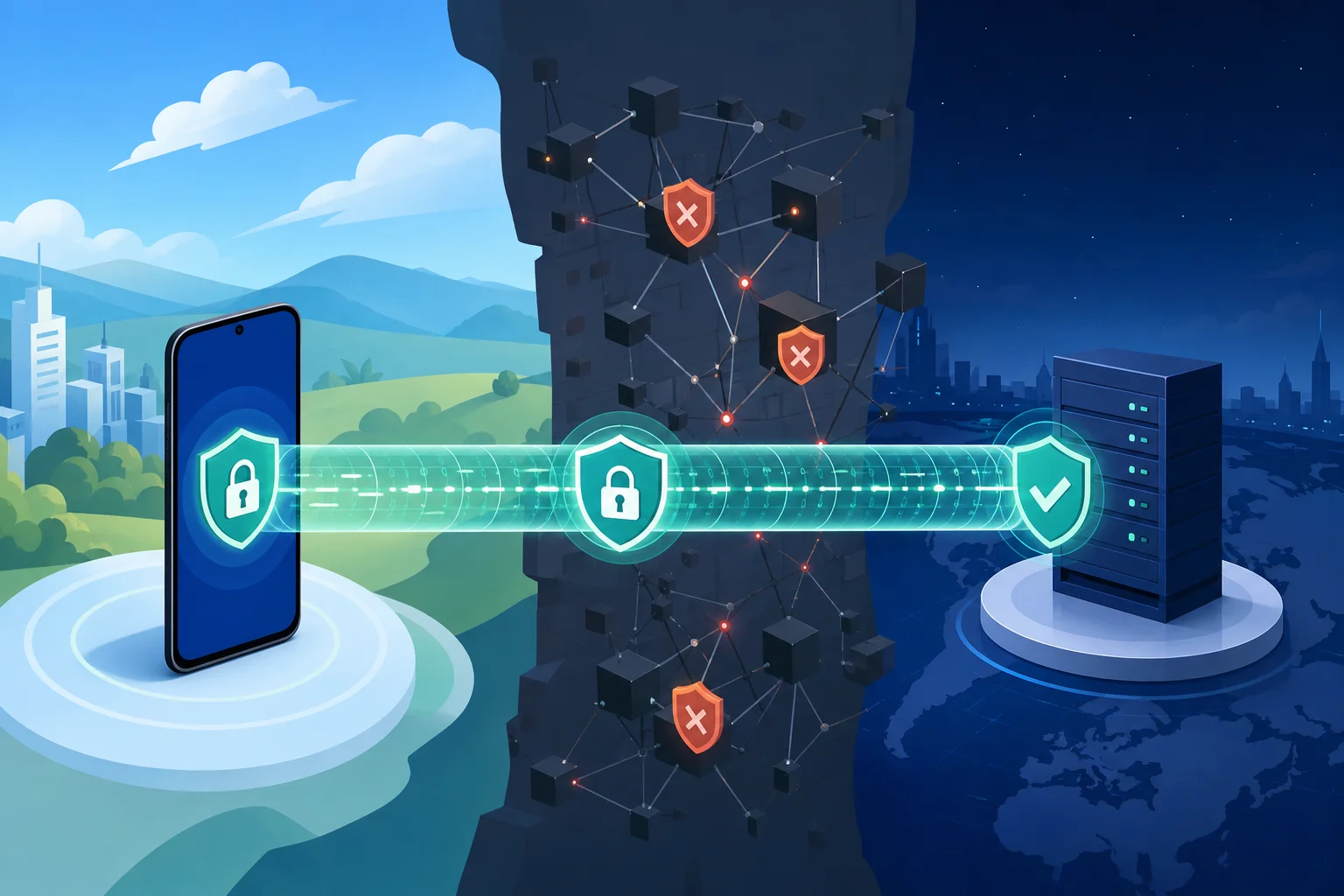
mobile VPN protocol encryption

OpenVPN, L2TP/IPsec, and PPTP

OpenVPN is mature and widely supported. It can run over UDP or TCP and uses TLS for key exchange. UDP is usually faster, while TCP over port 443 may blend with HTTPS in some networks. However, OpenVPN can still be fingerprinted by advanced firewalls.

L2TP/IPsec combines Layer 2 Tunneling Protocol with IPsec encryption. It is built into many operating systems but can be blocked easily because it uses recognizable ports and encapsulation patterns. It is less flexible for censorship-heavy environments.

PPTP is obsolete. It is fast but cryptographically broken and should not be used for sensitive activity. If a free VPN app still promotes PPTP as a primary option, treat that as a warning sign.

Modern mobile VPNs may also use WireGuard or IKEv2/IPsec. WireGuard is lean, fast, and battery-friendly, but its default traffic pattern may be identifiable. IKEv2 is strong on mobile because it handles network switching well, such as moving from Wi-Fi to cellular data.

Understanding Encryption Mechanisms Used in VPNs

Strong VPNs use a combination of cryptographic primitives:

  • Key exchange: Establishes shared secrets without sending them directly. Examples include ECDHE or WireGuard’s Noise-based handshake.
  • Symmetric encryption: Protects packet contents after the tunnel is established. Common algorithms include AES-GCM and ChaCha20-Poly1305.
  • Authentication: Confirms that packets were not modified. AEAD ciphers combine encryption and authentication.
  • Perfect forward secrecy: Limits damage if a long-term key is later compromised.

For phone users, ChaCha20-Poly1305 can perform well on devices without hardware AES acceleration. AES-GCM is also strong and efficient on modern chips.

How Protocols Affect Speed and Security for Mobile Users

Protocol choice changes the user experience:

ProtocolMobile performanceSecurity postureCensorship resistanceBest use case
WireGuardExcellentStrongMedium unless obfuscatedDaily browsing, streaming where allowed
OpenVPN UDPGoodStrongMediumGeneral use on stable networks
OpenVPN TCP 443ModerateStrongBetter against simple blocksRestrictive Wi-Fi or networks allowing HTTPS
IKEv2/IPsecExcellent roamingStrongMedium-lowSwitching between Wi-Fi and cellular
L2TP/IPsecModerateAcceptable if configured wellLowLegacy compatibility
PPTPFastWeakLowAvoid

If a censor blocks a protocol signature, switching servers may not help. You may need obfuscation, TCP mode, stealth protocols, or a provider with rotating infrastructure.

4. Evaluating the Best Free VPNs for Phones

A good free VPN for phones should be judged on technical and operational criteria, not only on app-store ratings. Reviews can be manipulated, and performance varies by country.

Criteria for Assessing Free VPN Options

Use this step-by-step checklist before relying on a free mobile VPN:

  1. Check the logging policy. Prefer providers that do not log source IP, browsing history, DNS queries, or connection timestamps tied to identity.
  2. Inspect app permissions. A VPN app should not need contacts, microphone, camera, or precise location.
  3. Confirm protocol support. Look for WireGuard, OpenVPN, or IKEv2. Avoid PPTP.
  4. Test DNS leaks. Use multiple DNS leak test sites over both Wi-Fi and mobile data.
  5. Enable kill switch features. On Android, use Always-on VPN and Block connections without VPN when possible.
  6. Measure latency and packet loss. Speed tests alone are insufficient. Test messaging, uploads, DNS resolution, and video calls.
  7. Read ownership details. Avoid unknown operators with no privacy documentation.
  8. Check censorship reports. A VPN that is excellent for privacy may not work in heavily filtered networks.
  9. Validate update frequency. Stale apps are a security risk.
  10. Plan a backup. Keep at least one alternate VPN or circumvention tool ready before a shutdown.

Availability, limits, and policies change. Always verify current terms before use.

Free VPN optionPhone supportRegistrationFree limitsTechnical strengthsMain trade-offs
Proton VPN FreeAndroid, iOSAccount requiredNo fixed data cap, limited locationsStrong reputation, modern protocols, no-logs stanceServer choice and speed may be limited on free tier
Windscribe FreeAndroid, iOSAccount required for full free allowanceMonthly data capGood protocol options, firewall features, configurable clientsData limit can be restrictive
hide.me FreeAndroid, iOSUsually account-based depending on planData/location limits varySupports modern protocols, clear settingsFree locations and throughput may be limited
TunnelBear FreeAndroid, iOSAccount requiredSmall monthly data capSimple interface, useful for occasional accessToo limited for heavy use
Cloudflare WARPAndroid, iOSNo traditional accountGenerally free basic modeFast encrypted tunnel to Cloudflare edgeNot a full privacy VPN; limited location control; not designed for all censorship cases

Proton VPN Free is often suitable for users who need more than a few minutes of access because it does not rely on a tiny data allowance. It is useful for reading news, messaging, and general browsing. The main drawback is congestion and limited free server selection.

Windscribe Free provides flexible apps and useful configuration options. Advanced users may appreciate its protocol choices and firewall controls. The data cap is the constraint, so it is better for targeted access than constant tunneling.

hide.me Free offers solid protocol support and clear client settings. It can be a practical fallback when other providers are blocked. Limits on server locations or monthly usage may affect reliability.

TunnelBear Free is easy to use and transparent for casual access. For advanced users in censored regions, the small data allowance makes it more of an emergency backup than a primary tool.

Cloudflare WARP encrypts traffic between the phone and Cloudflare, which can improve privacy on local networks and sometimes bypass simple blocks. However, it is not a classic VPN for choosing exit countries, and it should not be treated as an anonymity tool.

5. Common Misconceptions About Free VPNs

Free VPNs are often discussed in extremes. Some users assume every free VPN is malicious. Others assume any VPN app guarantees privacy. Both views are incomplete.

Is a Free VPN for Phone Use Always Unsafe?

No. A free mobile VPN is not automatically unsafe. The risk depends on the provider’s logging practices, funding model, jurisdiction, app behavior, and technical controls. A reputable free tier can be safer than a paid but obscure VPN with invasive tracking.

Does a VPN Make You Anonymous?

Not by itself. A VPN hides traffic content from local networks and changes your apparent IP address, but it does not erase browser fingerprints, account logins, payment trails, device IDs, or behavioral patterns. If you log into a personal account, the service can still identify you.

Do No-Logs Policies Mean No Data Exists Anywhere?

Not necessarily. “No logs” may mean no browsing logs, but the provider might still process operational metrics, crash reports, payment records, or anti-abuse signals. Read the policy carefully. Look for specifics: what is collected, how long it is retained, and whether it is linked to your account or IP address.

Are Free VPNs Too Slow to Be Useful?

Sometimes, but not always. Speed depends on server load, distance, protocol, throttling, packet loss, and local censorship interference. For advanced users, latency stability may matter more than maximum throughput. A slower tunnel that keeps Signal, email, and news sites reachable can still be valuable.

Does Incognito Mode Replace a VPN?

No. Incognito mode mainly limits local browser history and some cookies after the session ends. It does not encrypt traffic from your ISP, bypass IP blocks, or hide your network path.

6. Real-World Use Cases: Success Stories of Bypassing Censorship

Because users in restrictive regions can face real risk, responsible reporting often anonymizes details. The following scenarios are representative examples of how mobile VPNs are used during censorship events. They are not a guarantee that the same method will work everywhere.

Case Study 1: Accessing Blocked News During a DNS Block

A university student finds that several international news sites fail to resolve on campus Wi-Fi and mobile data. The block appears DNS-based because direct IP tests and alternate resolvers produce inconsistent results.

The student enables a free VPN on Android with DNS leak protection. Once connected, DNS queries travel through the encrypted tunnel instead of the local resolver. The blocked sites load again. The user also enables Always-on VPN to prevent apps from falling back to the censored network during reconnects.

Technical lesson: DNS-only censorship can often be bypassed by tunneling DNS inside the VPN. However, if the destination IP is also blocked, a VPN server outside the censored network becomes necessary.

Case Study 2: Activists Maintaining Communication During Platform Blocking

A small civil-society group depends on encrypted messaging to coordinate legal aid and medical support. During a period of unrest, the network begins blocking access to messaging service endpoints.

Members install a reputable free VPN before traveling to protest areas. Some use OpenVPN TCP 443 when UDP traffic becomes unreliable. Others switch to mobile data when public Wi-Fi starts dropping tunnel handshakes. The group also shares offline instructions for enabling kill switches and verifying DNS leaks.

Technical lesson: The VPN is only one part of the workflow. Preinstallation, backup protocols, secure messengers, and operational discipline matter just as much.

Case Study 3: Reaching Educational Resources on a Limited Connection

A teacher needs to access blocked educational videos and cloud documents from a phone. A free VPN with a monthly data cap is not enough for full video streaming, so the teacher uses it selectively: loading text pages, downloading compressed documents, and syncing only essential files.

When the cap is nearly exhausted, the teacher switches to a no-data-cap free option for low-bandwidth browsing and saves video downloads for trusted Wi-Fi.

Technical lesson: Free VPN limits can be managed with bandwidth discipline. Disable auto-play, lower media quality, and avoid background app updates through the tunnel.

User Testimonials and Mobile Access Patterns

In public digital-rights discussions, users repeatedly emphasize three practical benefits of phone VPNs: quick access to blocked information, safer communication on untrusted networks, and continuity when desktop access is unavailable. The common theme is mobility. A VPN already installed on a phone can be activated within seconds, which matters during fast-changing censorship events.
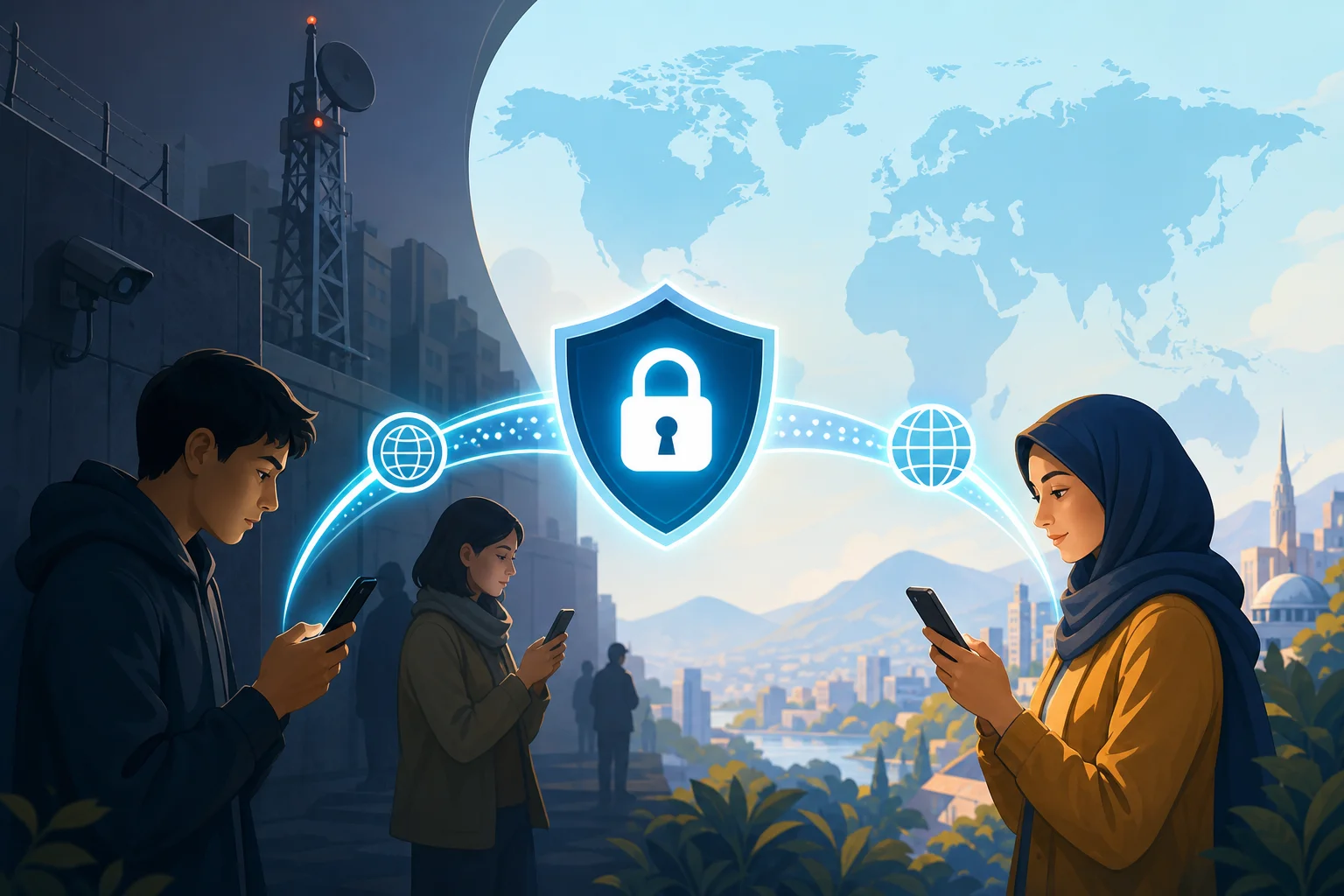
free mobile VPN bypassing censorship

7. Best Practices for Maximizing Your Free VPN Experience

A free VPN is most effective when paired with careful configuration. Mobile operating systems provide useful controls, but many users never enable them.

Configure Settings for Optimal Security on Mobile Devices

For Android:

  1. Open Settings and search for VPN.
  2. Select your VPN app.
  3. Enable Always-on VPN.
  4. Enable Block connections without VPN if available.
  5. Disable battery optimization for the VPN app if the tunnel drops in the background.
  6. Test DNS and IP leaks on Wi-Fi and cellular data.
  7. Keep a second VPN app installed as a fallback if local law and policy allow it.

For iPhone:

  1. Install the VPN app from a trusted source.
  2. Review the VPN profile before approving it.
  3. Enable the VPN from Settings or the app.
  4. Check whether the app supports automatic reconnect.
  5. Use Lockdown Mode only if your threat model justifies the usability trade-offs.
  6. Test connectivity after switching between Wi-Fi and cellular data.

For both platforms:

  • Use secure DNS only if it does not conflict with the VPN’s DNS leak protection.
  • Disable unnecessary background sync on untrusted networks.
  • Avoid logging into sensitive accounts while testing unknown VPN providers.
  • Use HTTPS-only mode in the browser.
  • Keep secure messaging apps updated.

Regularly Update VPN Apps to Ensure They’re Secure

VPN apps handle privileged network traffic. Outdated clients can contain exploitable bugs or broken certificate validation. Update the app, operating system, and browser regularly. If app stores are blocked in your region, learn the provider’s official update channel before a crisis. Avoid random APK mirrors unless you can verify signatures and hashes.

Understand When to Switch From Free to Paid VPN Services

A free VPN can be enough for emergency access, messaging, and light browsing. Consider a paid VPN or self-hosted solution when you need:

  • Consistent high-speed streaming or large downloads.
  • More server locations.
  • Better obfuscation or stealth modes.
  • Multi-hop routing.
  • Reliable support.
  • Router-level protection.
  • Lower congestion during peak censorship events.

However, paid does not automatically mean safer. Evaluate paid providers with the same scrutiny: logging, audits, ownership, protocols, leak protection, and censorship performance.

Quick FAQ: Free VPNs for Phones in Censored Regions

What is the safest free VPN for Android or iPhone?

The safest option depends on your country, threat model, and required features. Prefer reputable providers with clear no-logs policies, modern protocols, DNS leak protection, and minimal app permissions.

Can a free VPN bypass government censorship?

Sometimes. Free VPNs can bypass DNS blocks, IP blocks, and some app restrictions. They may fail against advanced deep packet inspection or active VPN blocking unless they support obfuscation or alternative transports.

Should I leave my phone VPN on all the time?

If your VPN is reliable and trustworthy, always-on mode can reduce accidental leaks. If the free VPN is slow or untrusted, use it selectively and avoid sensitive logins until you verify its behavior.

Is WireGuard better than OpenVPN on mobile?

WireGuard is usually faster and more battery-efficient. OpenVPN may offer more flexibility on restrictive networks, especially when using TCP 443. The best choice depends on what the local network blocks.

Can my mobile carrier see what I do when I use a VPN?

Your carrier can see that you are connecting to a VPN server, plus metadata such as timing and data volume. It should not see the contents of encrypted VPN traffic or the final websites you visit through the tunnel.

Conclusion: Use Free Mobile VPNs Strategically, Not Blindly

A free VPN for your phone can be an essential censorship-circumvention tool, but it works best when you understand its limits. Choose providers with transparent policies, strong protocols, leak protection, and reliable mobile behavior. Test before you need it. Keep backups ready. Most importantly, match the tool to your threat model instead of assuming one app solves every privacy problem.

By using BeFreeVPN, you gain access to a free, no-registration VPN service that works seamlessly on your phone, offering you the freedom to browse the internet safely and privately.

Unlocking the internet: why you need a free VPN with unlimited data

· 9 min read

Ever felt the frustration of being throttled while streaming your favorite series or gaming online due to data limits? You’re not alone, and there’s a solution. A free VPN with unlimited data can help you browse, stream, and play without hitting a monthly VPN allowance. Better yet, the right service can protect your privacy while keeping your connection smooth. This guide explains why data caps happen, why many free VPNs feel limited, and how to use a no-data-limit VPN such as BeFreeVPN in a practical, safe way.

1. The Problem: Data Caps and Slow Connections Ruining Your Experience

Modern internet use is data-heavy. Streaming in HD, joining video calls, downloading game updates, backing up photos, and browsing social media can all use more data than expected. When limits appear, the experience can fall apart quickly.

For many people, the most obvious issue is streaming. You start a movie, and at first everything looks fine. Then the video drops in quality, buffers repeatedly, or stops loading at the worst possible moment. Some platforms adjust quality automatically when the connection becomes unstable, but that does not make the experience less frustrating.

Daily internet users can also face unexpected slowdowns from their internet service provider. In some cases, an ISP may reduce speeds during busy periods or after heavy usage. This can affect ordinary tasks like opening websites, using cloud storage, or joining an online class.

At the same time, many people turn to free VPN apps for privacy or access reasons, only to meet another limit: a small daily or monthly data allowance. Traditional free VPNs often restrict usage because their servers cost money to run. That means users may get privacy for a short time, but not enough data for streaming, gaming, or regular browsing.

free vpn with unlimited data streaming

The result is a common problem: you want safer, more open internet access, but you do not want your VPN to become another bottleneck.

2. Why It Happens: Understanding Data Caps and Slowdowns

Data caps and slow connections usually come from a mix of network management, server costs, and misunderstanding about how VPNs work.

ISPs Use Limits to Manage Network Traffic

Internet service providers manage large networks shared by many customers. During peak times, they may use bandwidth management tools to keep the network stable. Some plans also include specific data limits, after which speeds may drop or extra charges may apply.

Not every slowdown is deliberate throttling. Wi-Fi interference, old routers, crowded local networks, and weak mobile signals can all reduce speed. However, data-heavy activities make these issues more visible.

Many Free VPNs Cap Data to Control Server Load

A VPN routes your traffic through secure servers. Those servers need bandwidth, maintenance, and infrastructure. To reduce costs, many free VPN providers set strict data limits, limit server locations, or slow free users during busy hours.

That is why a free VPN may work well for checking email but fail when you want to stream, download, or stay connected all day. If you need everyday protection, a free VPN with unlimited data is far more practical than one that stops after a few hundred megabytes.

The VPN Speed Myth Is Only Partly True

One of the biggest misconceptions is that VPNs always slow down your connection. A VPN can add a small amount of overhead because it encrypts traffic and routes it through another server. But that does not mean every VPN will feel slow.

In fact, speed depends on several factors:

  • The distance to the VPN server
  • Server load at the time you connect
  • Your base internet speed
  • VPN protocol and app quality
  • Whether your ISP is slowing certain types of traffic

A well-optimized VPN server can feel fast enough for daily browsing and streaming. In some situations, especially where traffic shaping is involved, a VPN may even make certain activities feel more stable. The key is choosing the right provider and server.

3. The Solution: How to Use a Free VPN with Unlimited Data—Step by Step

The best solution is simple: choose a VPN that does not force you to count every megabyte. A service such as BeFreeVPN is designed for users who want free VPN access with unlimited data and an easy setup process.

Here is a clear step-by-step approach.

Step 1: Choose a Trusted Free VPN Provider

Start with a provider that clearly states its data policy. Look for no data limits, a simple app, and transparent privacy information. BeFreeVPN is a practical option if you want unlimited data without a complicated sign-up process.

Before installing any VPN, check the basics:

  • Does it offer unlimited VPN data?
  • Does it support your device?
  • Is the app easy to use?
  • Does the provider explain its privacy practices?
  • Are there speed-optimized servers?

A free VPN should still respect your security. Avoid unknown apps with vague permissions, aggressive ads, or unclear ownership.

Step 2: Install the VPN App on Your Device

Next, install the VPN app on the device you use most. Many users start with a smartphone, but a good VPN should work across common platforms such as desktop and mobile devices.

After installation, open the app and review the available connection options. If the VPN does not require registration, you can usually connect faster and avoid sharing unnecessary personal details.

Step 3: Connect to a Speed-Optimized Server

For the best results, choose a server optimized for speed or a location close to you. A nearby server often gives lower latency, which matters for gaming, video calls, and fast browsing.

If you want to access content that is available in another region, connect to a server in that region. However, remember that distance can affect performance. If one server feels slow, switch to another and test again.

Step 4: Monitor Your Connection Speed

Finally, check how your connection performs. You do not need advanced tools. A simple speed test before and after connecting can show changes in download speed, upload speed, and latency.

Use the VPN while doing real tasks too. Try loading your usual websites, watching a video, or joining a call. This gives a more accurate picture than numbers alone.

StepWhat to DoWhy It Helps
1Choose a no-data-limit VPNPrevents usage caps from interrupting browsing or streaming
2Install the app on your deviceMakes protection available where you need it most
3Select a speed-optimized serverImproves stability and reduces unnecessary lag
4Test real-world performanceHelps you find the best server for your connection

unlimited VPN data setup

4. Results/Benefits: Experience Seamless Internet Freedom

Using a free VPN with unlimited data can change the way you experience the web. Instead of saving your VPN allowance for “important” moments, you can keep it on during everyday browsing.

Unlock Access Without Worrying About VPN Data Limits

Unlimited VPN data means you can stream, browse, research, and message without constantly checking how much data remains inside the VPN app. This is especially helpful for people who use public Wi-Fi, travel often, or rely on mobile devices throughout the day.

A VPN can also help you access your favorite content more flexibly when location-based restrictions are involved. Availability depends on the platform and region, but having server options gives you more control over your browsing experience.

Enjoy Smooth Speeds When the VPN Is Set Up Correctly

A VPN does not automatically make every connection faster. However, a well-chosen server can keep your experience smooth. If your ISP is shaping certain traffic, encrypted VPN traffic may help reduce that interference. If the issue is weak Wi-Fi or a slow base plan, the VPN cannot fix the root cause, but it can still protect your connection.

The main point is this: the idea that every VPN is slow is outdated. With unlimited data and speed-focused servers, a free VPN can be suitable for normal daily use.

Improve Privacy While You Browse

A VPN encrypts your internet traffic between your device and the VPN server. This is useful on public Wi-Fi in airports, hotels, cafés, and shared workspaces. It helps reduce exposure to local network snooping and adds a layer of privacy to your browsing.

It is not a complete privacy solution by itself. You should still use strong passwords, keep apps updated, enable two-factor authentication, and avoid suspicious links. But as part of a safer browsing routine, a VPN is a strong first step.

FAQ: Free VPN with Unlimited Data

Is a free VPN with unlimited data really free?

Some VPNs offer free access with no data limits. Always review the provider’s terms and privacy information so you understand how the service is supported and what features are included.

Will a free unlimited VPN slow down my internet?

Not always. A VPN can add some overhead, but performance depends on server quality, distance, network congestion, and your original internet speed. Choosing a nearby or speed-optimized server usually helps.

Can I use an unlimited free VPN for streaming?

Yes, you can use a no-data-limit VPN for streaming, provided the server is fast enough and the streaming service works with that connection. If playback buffers, try another server or lower the video quality slightly.

Is BeFreeVPN suitable for everyday browsing?

BeFreeVPN is designed for simple, free VPN access with unlimited data, making it a useful option for everyday browsing, streaming, and privacy on supported devices.

Conclusion: Browse More Freely Without Counting Data

Data caps, buffering, and throttled connections can make the internet feel smaller than it should. A free VPN with unlimited data helps solve that problem by giving you privacy and continuous access without forcing you to ration your usage. Choose a trusted provider, connect to a fast server, and test what works best for your device and location. Experience the internet without limits! Try BeFreeVPN today for free, no registration required, and enjoy unlimited data on any device.

The ultimate faq guide to VPN for free for computer: ensuring family safety online

· 8 min read

Wondering if you can protect your family's online activities for free? This guide explores the best options for a VPN for free for computer use, with practical tips for multiple devices and children's safety. You will learn what a VPN does, where free VPNs are useful, what limits to expect, and how to choose a safer service for home computers, laptops, tablets, and phones.

free VPN for computer family safety

What is a VPN and how does it benefit my computer?

A VPN, or Virtual Private Network, creates an encrypted connection between your computer and the internet. Instead of sending your browsing activity directly through your internet provider or a public Wi-Fi network, the VPN routes it through a secure server. This helps keep your family's online activity more private.

For a home computer, a VPN can offer three main benefits:

  • Privacy for everyday browsing: Encryption makes it harder for outsiders to see what websites your family visits, especially on shared or unsecured networks.
  • Safer public Wi-Fi use: If your child or another family member uses a laptop at school, a library, an airport, or a café, a VPN can reduce the risk of snooping by attackers on the same network.
  • Access to broader online content: A VPN may help bypass some geo-restrictions, allowing family members to reach legitimate educational, entertainment, or travel-related content that may vary by location.

However, a VPN is not a complete security solution by itself. It does not replace antivirus software, strong passwords, software updates, or careful online behavior. Think of it as one layer in your family's digital safety plan.

Are there truly free VPN options available for computers?

Yes. There are free VPN options for computers, including services such as BeFreeVPN, which offers free use with no registration. Many VPN providers also offer a free tier alongside paid plans.

That said, free VPNs often come with trade-offs. Common limits include slower speeds, fewer server locations, device limits, or data caps. These limits may be fine for light browsing, checking email, school research, or occasional public Wi-Fi use. They may be less ideal for streaming, gaming, or large downloads.

Quick comparison: free VPN vs paid VPN for family computers

FeatureFree VPN for computerPaid VPN plan
CostNo monthly paymentMonthly or yearly fee
RegistrationSome require an account; some, like BeFreeVPN, may notUsually required
SpeedMay be slower during busy timesOften faster and more consistent
Data limitsMay include capsUsually unlimited
Server choiceOften limitedLarger choice of countries and servers
Family useGood for basic protectionBetter for heavy use and many devices

When choosing any free VPN for your family's computers, focus on trust. Look for a clear privacy policy, transparent terms, modern encryption, and a statement about whether user activity is logged. Avoid unknown apps that promise unlimited everything but give no details about how they protect data.

How can a free VPN ensure my children's safety online?

A free VPN can support children's online safety by making their connection more private and reducing exposure on unsecured networks. For example, if your child uses a laptop on public Wi-Fi, the VPN can help protect logins, browsing sessions, and school-related activity from network snooping.

Some VPN services also include extra safety tools, such as malicious site warnings, DNS filtering, or content-blocking options. These features can help restrict access to harmful or inappropriate websites. Still, not every free VPN includes them, so check the feature list before installing.

A VPN can also mask your child's IP address from websites and services. This does not make a child anonymous in every situation, but it can reduce tracking based on location and network identity.

Steps to make a free VPN safer for children

  1. Choose a reputable free VPN. Read the privacy policy and avoid services with unclear ownership or aggressive advertising.
  2. Install it from the official website or trusted app store. This helps avoid fake installers and malware.
  3. Turn on the VPN before your child uses public Wi-Fi. Make this a simple family rule.
  4. Add parental controls. Use built-in Windows, macOS, browser, or router controls to manage websites, screen time, and downloads.
  5. Use safe search and child accounts. These tools work alongside a VPN and help filter inappropriate results.
  6. Talk about online safety. Explain scams, oversharing, suspicious links, and privacy in age-appropriate language.

In short, a VPN helps protect the connection. Parental controls help manage content. Good family habits help children make safer choices.

children online safety with VPN

What devices can I use a free VPN on with my family?

Most free VPNs are compatible with common computers, including Windows PCs and macOS laptops or desktops. This makes them practical for homework, remote work, browsing, and shared household devices.

Many VPNs also support smartphones and tablets. That matters because children often move between devices during the day. If a VPN is available for Windows, macOS, Android, and iOS, it is easier to create a consistent safety routine at home and on the go.

Some VPN services can also be installed on a router. Router setup can protect every connected device in the home, including computers, tablets, phones, and some smart TVs. However, router VPN setup may be more technical, and free VPNs do not always support it. Check the provider's setup guides before relying on this option.

For families, the best setup is usually simple:

  • Install the VPN app on each main computer.
  • Add the VPN to phones and tablets if supported.
  • Use router-level parental controls where available.
  • Keep antivirus and operating system updates turned on.

This balanced approach gives your household broader protection without making daily internet use too complicated.

Is it true that free VPNs compromise my online security?

Not always. It is a myth that every free VPN is unsafe. However, it is also true that some free VPNs have weak privacy practices, intrusive ads, limited encryption, or unclear data policies. That is why research matters.

A reputable free VPN should explain what data it collects, how it protects users, and whether it logs browsing activity. Services like BeFreeVPN are positioned as privacy-friendly options, with no registration required and a no-logs approach. For families, fewer required personal details can be a meaningful advantage.

Before installing a free VPN on a family computer, ask these questions:

  • Does the provider clearly state its privacy policy?
  • Does it require unnecessary personal information?
  • Does it use modern VPN protocols and encryption?
  • Does it show too many ads or redirect searches?
  • Is the app available from official, trusted sources?
  • Are the limitations clear, such as speed or server access?

If the answer to these questions is unclear, choose another provider. A trustworthy free VPN should make safety easy to understand, not hidden behind vague claims.

Common FAQ: choosing the best free VPN for family computers

What is the best free VPN for a computer at home?

The best free VPN is one that is reputable, easy to use, transparent about privacy, and compatible with your operating system. BeFreeVPN is one option for users who want a free VPN with no registration.

Can I use one free VPN on multiple family devices?

Sometimes. Many VPNs support several platforms, but free plans may limit simultaneous connections. If you need coverage for several computers, phones, and tablets, check the provider's device rules first.

Will a VPN make my computer completely safe?

No. A VPN protects your internet connection, but it does not stop every threat. Use it with antivirus software, parental controls, strong passwords, and regular updates.

Is a free VPN good enough for children?

A free VPN can be good enough for basic privacy and safer public Wi-Fi use. For stronger filtering, use parental controls and safe-search tools alongside the VPN.

Conclusion: should your family use a free VPN for computers?

A free VPN for computers can be a smart first step for family online safety. It can encrypt browsing, protect laptops on public Wi-Fi, and make everyday internet use more private. Still, choose carefully. Look for a service with clear privacy practices, simple setup, and support for the devices your household uses most.

Ready to protect your family's online safety? Try BeFreeVPN for free, with no registration, and secure multiple devices effortlessly.

A friendly guide to using a free VPN for your computer: no registration needed

· 12 min read

Are you looking for a way to browse securely without the hassle of registration? Unlock an easy solution with a free VPN for your computer! In this guide, you’ll learn how to choose, download, install, and use a no-registration VPN safely on Windows, macOS, or another desktop system. We’ll also cover common issues, simple fixes, and what to check before trusting any free VPN service with your internet traffic.

A virtual private network, or VPN, helps protect your connection by routing your traffic through an encrypted tunnel. This can hide your real IP address from websites, add protection on public Wi-Fi, and give you more control over your online privacy. However, not all free VPNs are equal. Some are easy to use, while others may have limits, ads, or unclear privacy practices.

This friendly how-to guide focuses on frictionless options: free VPN services that do not require registration, email sign-up, or account creation.

free VPN for computer privacy

Before You Start: Choose the Right VPN

Before installing anything, take a few minutes to compare your options. A free VPN for PC or Mac should be simple, safe, and transparent. The goal is to avoid tools that create more privacy risks than they solve.

Understand the Difference Between Free and Paid VPNs

Free VPNs can be useful for basic privacy, light browsing, and quick protection on public networks. They are often a good starting point if you want a VPN without commitment. Still, they may include limits such as:

  • Fewer server locations
  • Slower speeds during busy hours
  • Data caps or session limits
  • Fewer advanced privacy features
  • Ads or upgrade prompts

Paid VPNs usually offer stronger performance, more servers, streaming support, customer service, and extra tools such as dedicated IP options or advanced leak protection. That said, if your main need is simple private browsing without an account, a no-registration free VPN can be enough.

Here is a quick comparison:

FeatureFree VPN with no registrationPaid VPN
Account requiredOften noUsually yes
CostFreeMonthly or yearly fee
Server choiceLimitedWider selection
SpeedCan varyUsually more stable
Best forBasic privacy and quick useHeavy use, travel, streaming, work

Research VPNs That Explicitly State “No Registration Required”

Look for clear wording on the provider’s website, app store page, or download page. Phrases such as “no sign-up,” “no account needed,” or “no registration required” are important. If a VPN asks for an email, password, phone number, or payment card before you can connect, it is not a frictionless no-registration option.

Also, read the privacy policy. A trustworthy provider should explain what data it collects, how it uses that data, and whether it stores connection logs. If the policy is vague or hard to find, choose another option.

Check Customer Reviews and Ratings to Ensure Reliability

Reviews can reveal problems that a download page will not mention. Before you install a free VPN client, check recent feedback from users. Look for comments about:

  • Connection stability
  • Unexpected ads or pop-ups
  • Speed changes
  • Ease of installation
  • Support for your operating system
  • Privacy concerns or suspicious behavior

Be careful with perfect-looking reviews that all sound the same. Instead, focus on balanced comments that mention both strengths and limits.

Step 1: Download the VPN Software

Once you have chosen a no-registration VPN, download it safely. This step matters because fake VPN installers can contain malware or unwanted software.

1. Visit the Official Website or a Trusted Source

Always download the VPN from the official provider website or a trusted app store. Avoid random file-sharing sites, forum links, or “cracked” versions. These may include modified installers that can harm your computer or steal data.

If you use Windows, look for a Windows download button. If you use macOS, choose the Mac version. Some providers also offer browser extensions, but a full desktop VPN app usually protects more of your computer’s internet traffic than a browser-only tool.

2. Ensure You’re Downloading the Correct Version for Your OS

Before clicking download, check your operating system version. For example, a newer VPN app may require a recent version of Windows or macOS. Installing the wrong file can lead to errors, failed launches, or missing features.

If you are unsure which version you need:

  1. Open your computer’s system settings.
  2. Check your operating system name and version.
  3. Return to the VPN download page.
  4. Select the matching installer.

This simple check saves time and helps avoid compatibility problems.

3. Check for Malware Protection During the Download Process

Keep your browser and security software active while downloading. If your antivirus or operating system warns you about the file, pause and investigate. A warning does not always mean the file is harmful, but it should never be ignored.

You can also check whether the downloaded file name matches the provider’s app name. If the file has a strange name, comes as a compressed archive from an unknown source, or tries to install unrelated software, do not continue.

Step 2: Install the VPN on Your Computer

After downloading the installer, the next step is to set up the VPN app. Most no-registration VPNs are designed to be quick, so the process should only take a few minutes.

Follow the On-Screen Installation Prompts

Open the downloaded file and follow the installation steps. You may need to accept the terms of service and choose where to install the application. Read each screen before clicking “Next” or “Continue.”

On Windows, you may see a User Account Control prompt asking whether you want to allow the app to make changes. On macOS, you may need to drag the app into the Applications folder or approve it in system settings.

Select the Option for a Quick Installation

If the installer offers setup types, choose quick or standard installation unless you have a specific reason to customize it. This helps avoid unnecessary steps and keeps the process simple.

However, watch for optional add-ons. A reliable VPN should not force extra toolbars, unrelated apps, or browser changes. If you see optional offers, decline anything you do not need.

Allow Necessary Permissions for the Software to Operate

VPN apps often need permission to add a network configuration or install a VPN profile. This is normal because the app must route your internet traffic through its secure connection.

Only allow permissions that match the VPN’s purpose. For example, network access is expected. Access to your photos, contacts, or unrelated personal files is not usually needed for a desktop VPN.

install VPN on computer

Step 3: Connect to a Server

Now you are ready to connect. This is where your VPN begins protecting your browsing session.

Launch the VPN Application and Select “Connect”

Open the VPN app from your desktop, Start menu, Applications folder, or system tray. A no-registration VPN should let you start without creating an account. In most apps, you can click a large “Connect” button to begin.

If the app asks you to sign in, double-check whether you downloaded the right VPN or version. Some providers have both account-based and no-registration products.

Choose a Server Location That Meets Your Needs

Some VPNs automatically choose the fastest server. Others let you select a country or city. For speed, choose a server near your real location. For access to region-specific websites, choose a server in the location you need.

Keep in mind that a VPN should be used responsibly. It does not make illegal activity safe or acceptable. It is best used for privacy, secure browsing, and safer connections on public Wi-Fi.

Wait for the Status to Show “Connected”

Do not start sensitive browsing until the app confirms the connection. Look for words like “Connected,” “Protected,” or “VPN active.” Some apps also show a new IP address or server location.

If the connection takes longer than expected, wait a moment. Free VPN servers can be busy. If it still does not connect, try another server.

Step 4: Start Browsing Securely

Once your VPN shows that it is connected, you can open your browser and use the internet with added privacy.

Open Your Browser and Check Your IP Address

To confirm that the VPN is working, visit a reputable IP checking site. Your displayed IP address and location should be different from your usual one. If your real location still appears, disconnect and reconnect, or choose another server.

This quick test is useful whenever you install a new VPN or switch servers. It helps confirm that your computer’s traffic is being routed through the VPN.

Access Websites with Added Security

With the VPN active, your connection has an extra privacy layer. This is especially helpful on shared networks, such as cafés, airports, hotels, schools, and coworking spaces.

Still, a VPN is not a complete security solution. You should also:

  • Use HTTPS websites when possible
  • Keep your browser updated
  • Avoid suspicious downloads
  • Use strong passwords
  • Enable two-factor authentication on important accounts

A VPN protects your connection, but good browsing habits protect the rest of your digital life.

Use Built-In Privacy Features If Available

Some free VPN apps include extra features. These may include auto-connect, DNS leak protection, split tunneling, or a kill switch. If available, enable features that match your needs.

A kill switch is especially useful. It can block internet access if the VPN disconnects, helping prevent your real IP address from being exposed by accident. Not every free VPN includes this, but it is worth checking.

Troubleshooting: Common Issues and Solutions

Even a simple VPN for computer use can run into small problems. Fortunately, most are easy to fix.

If the VPN Fails to Connect, Switch Server Locations

A server may be full, under maintenance, or temporarily unavailable. Try a different location. If the app has an “auto” or “fastest” option, use it. You can also restart the VPN app and try again.

If that does not work, reboot your computer. This can clear network conflicts and refresh the VPN adapter.

If Speeds Are Slow, Check Your Internet Connection

A VPN can reduce speed because your traffic travels through an extra server. However, very slow speeds may point to another issue.

Try these steps:

  1. Disconnect the VPN and test your normal internet speed.
  2. Reconnect to a nearby VPN server.
  3. Close apps that use heavy bandwidth.
  4. Restart your router if your whole network feels slow.
  5. Try another protocol if the VPN app offers one.

If your base internet connection is already slow, the VPN cannot fully fix that.

If Websites Do Not Load, Clear Browser Data or Change Servers

Some websites block certain VPN IP addresses. If a site does not load, switch to a different server. You can also clear your browser cache or try a private browsing window.

If only one website is affected, the issue may be with that site rather than your VPN.

Consult the FAQ or Support Section

If problems continue, visit the VPN provider’s FAQ or support page. Look for setup guides for your operating system. Many providers publish quick fixes for installation errors, blocked connections, and performance issues.

FAQ: Free VPN for Computer Without Registration

Is a free VPN for computer safe to use?

It can be safe if you choose a reputable provider with clear privacy policies, trusted downloads, and positive user feedback. Avoid unknown VPNs that hide their ownership, request unnecessary permissions, or bundle unrelated software.

Can I use a VPN without creating an account?

Yes. Some VPN services are designed to work with no registration. Look for wording such as “no sign-up required” or “no account needed” before downloading.

Will a free VPN make my computer completely anonymous?

No. A VPN can hide your IP address from websites and add encryption to your connection, but it does not make you fully anonymous. Browser tracking, cookies, account logins, and unsafe downloads can still reveal information about you.

What is the best server location to choose?

For speed, choose the closest available server. For accessing location-specific content or services, choose a server in the relevant region. If one server is slow or blocked, try another.

Do I need a VPN on my home computer?

A VPN is useful at home if you want more privacy from websites, apps, or networks. It is even more useful on public Wi-Fi, where other people may share the same network.

Ready to enjoy free and safe browsing? Try BeFreeVPN! There’s no registration needed, and it works seamlessly on all devices, so you can connect quickly and browse with added privacy on your computer and beyond.

5 best free VPNs with no ads for your mobile device

· 8 min read

Tired of annoying ads interrupting your online experience? Here are five fantastic ad-free VPN options that won’t cost you a dime! If you’re searching for a free vpn with no ads, the goal is simple: protect your connection, keep browsing smooth, and avoid pop-ups or forced video ads inside the app. This guide focuses on mobile-friendly VPNs that are either fully ad-free today or important to understand before you download.

Free VPNs can be useful, but they are not all equal. Some limit data, some reduce server choice, and some show ads to cover costs. The options below are better suited for everyday mobile use because they avoid the most frustrating part of many free apps: advertising interruptions.

free VPN with no ads on mobile

Quick Comparison: Best Free Ad-Free VPNs for Mobile

VPNFree dataAds in appBest forKey note
Proton VPNUnlimitedNoHeavy mobile browsingStrong privacy, limited free server choice
WindscribeUp to 10 GB/monthNoCasual browsing with tracker blockingData allowance depends on account setup
hide.meUnlimited on free planNoPrivate browsing and flexible locationsFree server options can change
Atlas VPNDiscontinuedNo longer activeHistorical referenceAvoid unofficial lookalike apps
BeFreeVPNFreeNoQuick access without registrationWorks across devices and is easy to start

1. ProtonVPN: Your Privacy Partner

Proton VPN is one of the strongest choices if you want a free VPN with no ads and no monthly data cap. That makes it ideal for heavy mobile users who browse, message, stream short clips, or check accounts throughout the day.

Its biggest advantage is unlimited data on the free plan. Many free VPN apps give you only a small monthly allowance, which disappears fast on mobile. Proton VPN removes that worry, although free users get fewer server locations than paid users.

Security is also a major strength. Proton VPN uses robust encryption, including AES-256, and offers modern VPN protocols through its mobile apps. It also has a clear privacy focus and does not rely on ads in either the free or premium versions.

Why it works well on mobile

  • Unlimited free data for everyday use.
  • Strong AES-256 encryption for safer public Wi-Fi browsing.
  • Completely ad-free experience.
  • Clean apps for Android and iOS.

The trade-off is speed consistency. Since free servers are shared by many users, speeds may vary at busy times. Even so, Proton VPN is a top pick for anyone who values privacy and hates ads.

2. Windscribe: Make Your Browsing Smooth

Windscribe is another popular ad-free free VPN for mobile. It offers up to 10 GB of free data per month when you create and confirm an account, which is enough for light streaming, social media, messaging, and general browsing.

One reason Windscribe stands out is its built-in blocking tools. Its R.O.B.E.R.T. feature can help block some ads, trackers, and malicious domains, depending on your plan and settings. That can make mobile browsing feel cleaner, especially when you are using public Wi-Fi or visiting ad-heavy sites.

Setup is simple. Download the app, create an account, choose a free server, and connect. The interface is friendly enough for beginners but still gives advanced users useful settings.

Best reasons to choose Windscribe

  • Up to 10 GB of free monthly data.
  • No in-app ads on the free plan.
  • Ad and tracker blocking features.
  • Easy setup on Android and iOS.

Windscribe is best if you want a balance between privacy, browsing comfort, and a clear monthly data limit. However, if you need unlimited VPN use every day, Proton VPN or hide.me may fit better.

3. hide.me: Secure and Fast Connections

hide.me is a strong choice for users who want an ad-free VPN app with a privacy-first approach. The free plan does not show ads, and the company states that it follows a no-logs policy, which means it does not store records of your browsing activity.

The free plan includes access to a limited set of server locations. Older lists often mention five locations, but the exact number can vary as VPN providers update their networks. In practice, you should check the app before relying on one specific country.

hide.me also supports unlimited free data on its current free plan, which is helpful if you want browsing protection without counting every megabyte. Speeds can still depend on server load, your location, and your mobile network.

What makes hide.me useful

  • Ad-free free plan.
  • No-logs approach for better privacy.
  • Multiple free server locations for basic worldwide access.
  • No monthly data cap on the free plan.

For mobile users, hide.me is a practical option when you need quick protection on public Wi-Fi, while traveling, or when using apps that handle personal information.

ad-free VPN mobile security

4. Atlas VPN: Your Secure Online Shield

Atlas VPN was often recommended as a simple, mobile-friendly VPN with no ads on its free version. It used strong security measures, including IKEv2/IPsec, and had an interface that was easy for beginners to understand.

However, there is an important accuracy note: Atlas VPN shut down in 2024. Because of that, it is no longer a current download recommendation. If you find apps or websites claiming to offer a new Atlas VPN free plan, be careful. They may be outdated pages or unofficial lookalike apps.

What to remember about Atlas VPN

  • Its ad-free free plan is historical, not currently available.
  • The service used strong mobile VPN protocols while active.
  • You should avoid downloading unofficial versions.
  • Choose an active, trusted ad-free VPN instead.

Atlas VPN is included here because many people still search for it. But for real-world mobile use today, pick one of the active services in this list.

5. BeFreeVPN: Simple Ad-Free Access Without Registration

BeFreeVPN is a good fit if you want a free mobile VPN experience that starts quickly. It requires no registration, which removes a common friction point for people who do not want to create another account just to protect their connection.

It is designed to work across devices, so you can use it whether you are browsing from a phone, tablet, or another connected device. For many users, that simplicity matters as much as advanced settings.

Why BeFreeVPN is worth considering

  • Free to use.
  • No registration required.
  • No ads interrupting the experience.
  • Works on all devices.
  • Easy for beginners who just want to connect and browse.

If your priority is quick, ad-free access rather than complex configuration, BeFreeVPN is a practical option to keep on your mobile device.

How to Choose a Free VPN with No Ads

Use this quick step-by-step checklist before installing any free VPN app:

  1. Check for ads first. Read the app page and recent reviews to confirm it does not show pop-ups or forced ads.
  2. Look at the data limit. Unlimited data is best for daily use, while 10 GB may be enough for light browsing.
  3. Review privacy basics. Prefer VPNs with clear no-logs policies and strong encryption.
  4. Confirm the app is official. Download only from the provider’s website, Google Play, or the Apple App Store.
  5. Test speed on mobile data and Wi-Fi. A VPN that works well on one network may be slower on another.
  6. Avoid abandoned services. If a VPN has shut down, do not install unofficial copies.

FAQ: Free VPNs with No Ads

Are free VPNs with no ads safe?

Some are safe, but not all. Choose providers with transparent privacy policies, strong encryption, and official mobile apps. Avoid unknown VPNs that make unrealistic promises.

Which free VPN has unlimited data and no ads?

Proton VPN and hide.me are strong options for unlimited free data without in-app ads. Server choice and speeds may be more limited than paid plans.

Can I use an ad-free VPN on public Wi-Fi?

Yes. A VPN can help protect your connection on public Wi-Fi by encrypting your traffic. This is useful in cafes, airports, hotels, and shared networks.

Do free VPNs block ads in websites and apps?

Not always. “No ads” usually means the VPN app itself does not show ads. Some services, such as Windscribe, also include ad and tracker blocking tools.

Final Takeaway

A good free VPN with no ads should protect your browsing without making your phone harder to use. Proton VPN is best for unlimited privacy-focused browsing, Windscribe is great for smooth browsing with blocking tools, and hide.me offers a strong no-logs free plan. Atlas VPN is no longer active, so avoid unofficial copies. For a simple option that gets you connected fast, enjoy seamless, ad-free browsing on your mobile with BeFreeVPN — a free service that requires no registration and works on all devices!

Debunking myths: free VPN without registration compared

· 10 min read

Think you can't find a reliable free VPN without registration? Let’s debunk common myths and guide you to the best option for your needs! A no-sign-up VPN can be useful when you want quick privacy on public Wi-Fi, lighter tracking, or access to basic encrypted tunneling without creating another account. Still, “free” and “no registration” do not automatically mean private, fast, or safe. In this comparison, we separate realistic benefits from marketing claims and compare practical options for security, speed, usability, and everyday browsing.

free VPN without registration privacy overview

Before choosing any free VPN with no account, keep one point in mind: the best choice depends on your threat model. A casual user on hotel Wi-Fi has different needs from a journalist, gamer, streamer, or remote worker. The sections below address the most common myths so you can make a more informed decision.

Myth 1: Free VPNs Without Registration Are Always Unsafe

The first myth is simple: if a VPN is free and does not ask for an email address, it must be unsafe. That is too broad. Some free VPNs without registration use strong encryption and modern tunneling methods. Others are little more than browser proxies with limited protection. The difference matters.

A safer no-registration VPN should offer at least:

  • Encrypted traffic between your device and the VPN server
  • A clear privacy policy written in plain language
  • Minimal logging, especially no activity logs
  • Protection against DNS leaks where possible
  • Apps or configuration files from a trusted source
  • A history of responsible security practices

However, free VPNs often come with trade-offs. Some show ads. Some collect diagnostic data. Some only protect browser traffic, not the whole device. Others publish public server credentials, which can be convenient but less polished than a managed app.

In reality, the safest approach is not to assume. Check independent reviews, security discussions, and any available audits. If a provider has had third-party assessments, transparent ownership, or open-source clients, that is a positive signal. If the website is vague, makes extreme promises, or hides its logging policy, treat it with caution.

Also, remember what a VPN cannot do. It will not make you anonymous by itself. It cannot protect you from phishing pages. It will not secure accounts that use weak passwords. A VPN is one layer in a broader privacy setup.

Myth 2: All Free VPNs Have Data Caps and Speed Limits

Many free VPN services impose data caps, speed limits, or server restrictions. That is true. But it is not universal. Some no-sign-up VPN options offer generous bandwidth for casual use, while others limit features instead of data.

For example, a browser-based VPN may not cap data but only protect traffic inside that browser. A network tunnel may offer unlimited traffic but no choice of server location. A community-run service may be free and accountless but have variable speed because capacity depends on demand.

Data caps are not the only factor that affects browsing. Your real experience depends on:

  1. Server distance — Nearby servers usually feel faster.
  2. Network congestion — Free servers can slow down at peak times.
  3. Protocol efficiency — Modern protocols often perform better.
  4. Device performance — Older phones and laptops may encrypt traffic more slowly.
  5. Traffic type — Video calls, streaming, gaming, and downloads all behave differently.
  6. Scope of protection — Browser-only VPNs may feel fast because they do less.

So, compare more than the headline bandwidth. If you only read news, check email, and use messaging apps on public Wi-Fi, speed may be “good enough.” If you need 4K streaming, torrenting, remote work, or low-latency gaming, a free no-registration VPN may not be the best fit.

Quick Comparison Table: Top Free VPNs Without Registration

The table below compares popular free VPN or VPN-like services that can be used without creating a typical email-based account. Availability, policies, and features can change, so always verify details before installing.

free VPN comparison table concept

ServiceBest ForRegistration Needed?Data LimitSpeed ExperienceSecurity & Privacy NotesUser/Expert Context
Cloudflare WARPSimple whole-device encrypted connectionNo standard account requiredGenerally no fixed data cap for basic useUsually stable for browsing; location choice is limitedEncrypts device traffic to Cloudflare’s network; not designed for choosing countries or bypassing every geo-blockOften reviewed positively for ease of use, but experts note it is not a traditional location-switching VPN
Opera Browser VPNPrivate browsing inside one browserNo account for basic browser VPNNo typical browser VPN data capGood for light web browsing; does not protect other appsWorks more like a secure browser proxy than a full-device VPN; privacy depends on browser policyUsers like convenience; experts often recommend it only for low-risk browsing
VPNBookManual OpenVPN/PPTP setup and occasional useNo account, but public credentials may be usedNo clear consumer-style cap, but performance variesCan be inconsistent due to public serversSupports OpenVPN configuration; requires more setup and careful protocol choiceAdvanced users appreciate no signup; reviews are mixed on usability and transparency

How to Read the Comparison

A side-by-side table is useful, but it should not decide for you. Instead, match each option to your main goal.

  • Choose Cloudflare WARP if you want simple encryption for everyday apps and do not need to select a VPN country.
  • Choose Opera Browser VPN if you only need quick privacy inside a browser and prefer not to install a full VPN app.
  • Choose VPNBook if you are comfortable with manual configuration and understand the limits of public VPN servers.

For most intermediate users, the key distinction is full-device protection versus browser-only protection. Full-device VPNs route traffic from apps, system services, and browsers. Browser VPNs usually protect only pages opened in that browser.

Myth 3: You Get What You Pay For—Free Equals Low Quality

“Free equals low quality” is another common myth. It is partly understandable because many free VPNs are poor. Some are slow. Some have intrusive ads. Some log too much. A few may even create more privacy risk than they solve.

Still, not every free VPN without registration is useless. Some reputable services use a free tier to introduce users to paid products. Others are built for accessibility, censorship resistance, or simple network security. In these cases, the free model can still offer real value.

The quality question is not just about price. It is about incentives. Ask:

  • How does the service pay for servers and development?
  • Does it sell premium upgrades, show ads, rely on donations, or monetize data?
  • Is the privacy policy specific about what is collected?
  • Are server locations and limits clearly described?
  • Are the apps updated regularly?

Many users prefer free options for casual use. If you only need a VPN for a short trip, a café connection, or occasional browsing, a no-registration VPN can be practical. You avoid account creation, reduce friction, and get online quickly.

However, a free service is less suitable when the stakes are high. If you handle sensitive client files, need consistent streaming access, or depend on privacy for personal safety, consider a carefully vetted paid VPN with stronger guarantees, audited infrastructure, and support.

Which Should You Choose?

The best free VPN without registration depends on how you plan to use it. Start with your main need, then check the trade-offs.

If You Want Safer Public Wi-Fi Browsing

Choose a service that encrypts your whole device connection. This helps protect traffic from local network snooping, especially in airports, hotels, and cafés. Cloudflare WARP-style tools can be a good fit for this scenario because setup is simple and protection extends beyond one browser.

If You Want Lightweight Browser Privacy

A browser VPN can be enough for reading, searching, and accessing websites with less exposure to local network risks. Opera’s built-in VPN is convenient here. Still, remember that apps outside the browser are not covered.

If You Want Streaming

Free no-registration VPNs are usually not ideal for streaming. Many streaming platforms block shared VPN IP addresses. Also, no-sign-up options often provide limited region choice. If streaming is your main goal, check whether the service supports the region you need and expect mixed results.

If You Want Strong Privacy

Look beyond the “no registration” label. A VPN that does not ask for your email can still log IP addresses, device data, or connection times. Read the privacy policy and check for independent audits. Also consider using privacy-focused browsers, tracker blockers, secure DNS, and multi-factor authentication.

If You Want Ease of Use

Choose a service with a simple app, automatic connection, and clear controls. Manual OpenVPN setup is powerful but can be frustrating if you want quick protection. For daily use, ease of use matters because a VPN only helps when you actually turn it on.

Quick Decision Steps

Use this simple checklist to narrow your choice:

  1. Define your main purpose: browsing, public Wi-Fi, streaming, privacy, or testing.
  2. Check protection scope: full-device VPN or browser-only VPN.
  3. Read the privacy policy: look for activity logs, IP logs, and data sharing.
  4. Compare limits: data caps, server choice, speed restrictions, and device support.
  5. Test performance: try common tasks such as video calls, search, email, and downloads.
  6. Review safety signals: audits, reputation, app updates, and expert reviews.
  7. Keep expectations realistic: free no-sign-up VPNs are convenient, not magic.

FAQ: Free VPN Without Registration

Is a free VPN without registration really anonymous?

Not by default. No registration means you may not provide an email address, but the VPN can still see connection metadata. Your browser fingerprint, account logins, cookies, and payment details on websites can also identify you.

Can I use a no-sign-up VPN for Netflix or other streaming services?

Sometimes, but results vary. Many free VPNs without registration have limited server locations and shared IP addresses that streaming platforms may block. For reliable streaming, a paid VPN is usually more consistent.

Is a browser VPN the same as a full VPN?

No. A browser VPN usually protects traffic only inside that browser. A full VPN can protect traffic from most apps on your device, depending on the operating system and configuration.

What is the safest way to test a free VPN?

Install it from the official source, read the permissions, check for DNS or IP leaks, and avoid entering sensitive information until you trust the connection. Also, review recent expert feedback before relying on it.

Final Verdict

Free VPNs without registration are not all unsafe, slow, or low quality. But they are not equal either. Some are best for simple encryption. Others work only inside a browser. A few appeal to advanced users who do not mind manual setup. The right choice depends on your device, privacy needs, speed expectations, and comfort with configuration.

For a hassle-free experience, consider BeFreeVPN. Enjoy unrestricted browsing without registration and stay safe—all for free!

5 best free VPN for phone options in 2026

· 8 min read

Ever wondered which free VPNs can truly provide seamless and secure browsing on your phone? If you are searching for a free vpn for phone, the best option should be simple to install, private by design, light on ads, and generous with data. In this list, we focus on mobile-first picks for Android and iOS, including options that fit common needs like a free VPN without registration, a free VPN with no ads, and a free VPN with unlimited data.

Before you install any free VPN app for phone, check the app store listing, permissions, privacy policy, and data limits. Free plans can change, and the safest choice is the one that is clear about what it collects and how it makes money.

free vpn for phone comparison

Quick Comparison: Best Free VPNs for Your Phone

VPN optionBest forRegistrationAdsDataMobile focus
SecureConnectFast setupNoNoUnlimitedAndroid and iOS browsing
StreamSafeStreaming on mobileNoMinimal or noneUnlimitedVideo and media apps
AdBlockVPNAd-free browsingNoNoVaries by planSimple phone use
EasyFlowVPNData protectionNo personal detailsNo hidden chargesFree plan availablePrivacy-first setup
BeFreeVPNAll-in-one phone useNoNoUnlimitedStreaming, browsing, and security

This table is designed for quick scanning. However, your best free VPN 2026 choice depends on your phone, your country, and whether you need streaming, work access, or general privacy on public Wi-Fi.

1. SecureConnect: Free VPN Without Registration

SecureConnect is a strong starting point if you want a free VPN service without registration. It is designed for people who do not want to create an account, share an email address, or enter payment details just to protect their phone connection.

The biggest benefit is simplicity. You download the app, choose a server if needed, and connect. That makes it useful when you are on airport Wi-Fi, hotel networks, cafés, or any public hotspot where you want a secure tunnel between your phone and the internet.

Why it stands out

  • Offers a completely free service with no registration required.
  • No ads to interrupt your mobile browsing experience.
  • Unlimited data for continuous streaming and browsing.
  • Good fit for users who want a free secure VPN without registration.

SecureConnect is also worth considering if you sometimes compare mobile options with a free VPN for computer. The experience is phone-first, but the same privacy checklist applies on desktop: clear permissions, no unnecessary tracking, and transparent limits.

2. StreamSafe: Unlimited Data for Your Mobile

StreamSafe is built around one major need: data. If you watch videos, listen to music, or use social apps often, a tiny monthly data cap can make a free VPN app with unlimited data much more appealing than a feature-packed app that stops working after a few hours.

For users looking for the best free VPN for streaming, StreamSafe focuses on stable mobile use across Android and iOS. It is a practical option for people who want to browse and stream without constantly checking a data meter.

Best features

  • Provides free unlimited data, which is useful for streaming.
  • Works smoothly on both Android and iOS devices.
  • Keeps your information private without any sign-ups.
  • Suitable if you need a free unlimited VPN for phone.

That said, streaming support can vary by platform. Some video services block VPN traffic, even from paid providers. So, if streaming is your main goal, test your preferred apps before relying on any free VPN service with unlimited data.

3. AdBlockVPN: No Ads, Just Browsing

A free VPN with no ads is rare because many free tools rely on advertising to cover costs. AdBlockVPN focuses on removing that distraction. For phone users, that can make a big difference. No pop-ups. No forced video ads. No confusing buttons that look like system alerts.

AdBlockVPN is especially useful for casual browsing, reading, shopping, and checking email on mobile networks. It is also easy to recommend to beginners because setup is simple.

Why mobile users like it

  • Eliminates ads for a cleaner, uninterrupted experience.
  • Easy to install on most mobile devices.
  • No need for registration; just download and connect.
  • A good match for anyone searching for a free VPN app with no ads.

If you also need a free VPN app for computer, look for the same no-ad policy on desktop. Some providers offer a clean mobile app but show ads elsewhere, so compare the mobile and computer versions before installing both.

free vpn app with no ads

4. EasyFlowVPN: Best Free Option for Data Protection

EasyFlowVPN is a good fit for people who care most about protecting phone data. Instead of trying to do everything, it focuses on secure connections, easy setup, and a clear user experience.

This matters because a free private VPN for phone should not feel risky or confusing. If an app asks for too many permissions, hides its privacy policy, or pushes upgrades too aggressively, it may not be the right choice.

What makes it useful

  • Specializes in securing your phone data for free.
  • Does not require personal details for setup.
  • Offers a user-friendly app with no hidden charges.
  • Works well for people seeking a free secure VPN for phone.

EasyFlowVPN can also make sense for work-related browsing when you are away from trusted networks. However, if your employer has strict security rules, use the approved company VPN. A best free VPN for work should never replace official workplace security tools unless your IT team allows it.

5. BeFreeVPN: All-in-One Solution for Phone Users

BeFreeVPN is the most complete option on this list for users who want fewer trade-offs. It brings together the features people usually search for: no registration, no ads, unlimited data, and secure mobile connections.

That makes it a strong everyday choice for browsing, streaming, messaging, and using public Wi-Fi. It is also easy to understand. You do not need to compare complicated tiers before getting started.

Why it earns a top spot

  • Completely free with no need for registration.
  • No ads and unlimited data make it practical for streaming and browsing.
  • Works seamlessly on smartphones, helping protect your connection.
  • Fits searches for a free private VPN with unlimited data and a free unlimited VPN without registration.

BeFreeVPN is a smart pick if you want one free VPN service for phone use instead of switching between apps for different tasks.

How to Choose a Free VPN for Phone: Step-by-Step

  1. Check the privacy policy. Avoid apps that are vague about logs, tracking, or third-party data sharing.
  2. Look for no registration. A free VPN service without registration collects less personal information at signup.
  3. Confirm the data limit. If you stream often, choose a free VPN app with unlimited data.
  4. Avoid intrusive ads. A free VPN service with no ads is safer and less annoying.
  5. Test speed on Wi-Fi and mobile data. Performance can change by location and server load.
  6. Compare phone and desktop support. If you need a free secure VPN for computer too, check whether the provider has apps for all your devices.

FAQ: Free VPNs for Phones

What is the best free VPN for phone in 2026?

The best free VPN for phone depends on your needs. BeFreeVPN is the strongest all-in-one pick here, while StreamSafe is better for unlimited mobile streaming and AdBlockVPN is better for ad-free browsing.

Can I use a free VPN for computer as well?

Yes, some providers offer both a free VPN app for phone and a free VPN app for computer. Before installing, check whether the computer version has the same no-ads, no-registration, and unlimited-data features.

Is a free VPN without registration safer?

It can be more private because you share less personal information upfront. Still, safety also depends on encryption, permissions, logging policies, and the provider’s reputation.

Are free VPNs with unlimited data really unlimited?

Some are, but terms can change. Always review the provider’s current limits. A free VPN service with unlimited data may still have speed limits, server limits, or fair-use rules.

What should I avoid in a free VPN app?

Avoid unclear privacy policies, excessive permissions, forced ads, unknown ownership, and apps that ask for payment details before showing the free plan.

Final Thoughts

A good free VPN for phone should be simple, private, and reliable enough for daily use. SecureConnect is great for quick access, StreamSafe is useful for streaming, AdBlockVPN keeps browsing clean, EasyFlowVPN focuses on data protection, and BeFreeVPN combines the most requested features in one mobile-friendly package. Try BeFreeVPN today for a seamless browsing experience on your phone with no registration, no ads, and unlimited data.

The essential guide to using a free VPN for your phone: protect your privacy

· 9 min read

Are you concerned about how your phone might be exposing your personal data? A free VPN for phone privacy can help you protect your information—and it does not have to be complicated. In this beginner-friendly guide, you will learn what a mobile VPN does, why it matters on public Wi-Fi, how to choose a safe free option, and how to set it up in just a few minutes.

Your phone goes everywhere with you. It connects to home Wi-Fi, mobile data, coffee shop networks, airport hotspots, hotel Wi-Fi, and apps that run in the background. That convenience is great, but it also creates privacy risks. A VPN, short for virtual private network, adds a protected layer between your phone and the internet.

free VPN for phone privacy

1. What Is a Free VPN for Phone?

A free VPN for phone use is an app or built-in service that creates an encrypted connection between your mobile device and a VPN server. Instead of sending your internet traffic directly through your network provider or a public Wi-Fi router, your data travels through a secure tunnel.

In simple terms, encryption makes your data much harder for others to read. If someone is monitoring an unsafe Wi-Fi network, a VPN helps keep your browsing activity, app traffic, and personal information away from prying eyes.

How a Mobile VPN Works

When you turn on a VPN app on your phone, it usually does three main things:

  • Encrypts your data: This helps protect your activity from being intercepted on insecure networks.
  • Routes traffic through a VPN server: Websites and apps see the VPN server’s IP address instead of your direct phone connection.
  • Helps protect you while on the go: A mobile VPN is designed to work as you move between Wi-Fi and cellular networks.

Many free VPNs are made for quick mobile use. Some do not require registration, which makes them easy for beginners. You can often download the app, tap connect, and start browsing with more privacy.

However, “free” does not always mean “safe.” Some free VPN apps may show ads, limit data, reduce speed, or collect more information than you expect. That is why choosing the right provider matters.

2. Why Should You Use a Free VPN on Your Phone?

Using a free VPN on your phone can be a smart step if you want better privacy without paying upfront. It is especially useful when you connect to networks you do not control.

It Helps Protect Personal Information on Public Wi-Fi

Public Wi-Fi is convenient, but it can be risky. Networks in cafes, airports, libraries, hotels, and shopping centers are often shared by many people. If the network is poorly secured, attackers may try to spy on traffic or trick users with fake hotspots.

A VPN helps reduce that risk by encrypting your connection. This is useful when you check email, browse websites, use messaging apps, or sign in to accounts while away from home.

It Can Reduce Tracking by Websites and Advertisers

Websites, ad networks, and apps may use your IP address, location clues, cookies, and device data to build a profile of your online behavior. A VPN is not a complete anti-tracking tool, but it can help by masking your real IP address.

For better privacy, use a VPN alongside good habits. For example, limit app permissions, use private browsing when needed, block third-party trackers, and avoid signing in to every site if you do not need to.

It Enhances Online Anonymity by Masking Your IP Address

Your IP address can reveal general location information and identify the network you are using. When a VPN is active, websites usually see the VPN server’s IP address instead.

This does not make you invisible online. Your accounts, browser fingerprints, and cookies can still identify you. Still, masking your IP address is a useful privacy layer, especially for everyday mobile browsing.

3. How to Choose the Right Free VPN for Your Phone

Not every free VPN app is worth installing. Since a VPN handles your internet traffic, you need to trust it. Before you choose one, compare privacy features, app quality, and user feedback.

Quick Comparison: What to Look For in a Free Mobile VPN

FeatureWhy it mattersBeginner tip
Strong encryptionHelps keep your data safe on public Wi-FiLook for modern encryption and clear security details
No-registration optionMakes setup faster and reduces shared personal detailsChoose services that do not ask for unnecessary information
Clear privacy policyExplains what data the VPN collectsAvoid vague policies or apps that sell browsing data
User-friendly mobile appMakes it easy to connect and disconnectLook for a simple one-tap connection
Good reviewsShows how the app performs for real usersRead recent reviews, not just star ratings
Reasonable free limitsHelps you know what to expectCheck data caps, speed limits, and server options

Look for Strong Encryption Standards

A good VPN should clearly explain how it protects your data. You do not need to understand every technical detail, but the provider should be transparent about encryption, protocols, and security practices.

If a VPN makes big promises but gives no details, be careful. Privacy tools should be easy to use, but they should not be mysterious.

Choose a User-Friendly Mobile App

Beginners need a VPN that is simple. The best free VPN for phone use should have a clean app, a clear connect button, and easy settings. If you have to dig through confusing menus just to turn it on, you may stop using it.

Also check whether the VPN works on your device. Some services support Android, iPhone, tablets, laptops, and other devices. If you use more than one device, this can make protection easier.

Read Reviews and Check the Privacy Record

Before installing any free VPN app, read reviews from trusted sources and real users. Look for comments about connection stability, speed, ads, customer support, and privacy concerns.

Most importantly, check the privacy policy. A VPN should not collect more data than it needs to run the service. If the policy is hard to find or full of unclear language, consider another option.

mobile VPN app setup

4. How to Set Up a Free VPN on Your Phone

Setting up a free VPN on your phone is usually quick. The exact steps can vary by provider, but the basic process is similar on Android and iPhone.

Step-by-Step Setup Guide

  1. Choose a trusted VPN provider. Start with a service that has a clear privacy policy, strong mobile support, and good user feedback.
  2. Download the app from a trusted source. Use the official app store for your device or the provider’s official website. This helps reduce the risk of fake apps.
  3. Open the VPN app. Follow the setup instructions shown on the screen.
  4. Review permissions carefully. A VPN app may ask to add a VPN configuration to your phone. This is normal, but avoid apps that request unrelated permissions.
  5. Select a server if needed. Some apps choose one automatically. Others let you pick a location.
  6. Tap connect. Wait for the app to confirm that the VPN is active.
  7. Browse safely. Once connected, use your browser and apps as usual with the added protection of the VPN tunnel.

Simple Safety Tips After Setup

After your VPN is installed, keep these habits in mind:

  • Turn on the VPN before joining public Wi-Fi.
  • Keep the VPN app updated.
  • Avoid unknown Wi-Fi networks when possible.
  • Use strong passwords and multi-factor authentication.
  • Do not ignore browser warnings about unsafe websites.
  • Disconnect only when you no longer need the VPN.

A VPN is a privacy tool, not a magic shield. It works best when combined with safe browsing habits and careful app choices.

FAQ: Free VPN for Phone Questions Beginners Ask

Is a free VPN for phone safe?

A free VPN can be safe if it comes from a trustworthy provider with strong encryption and a clear privacy policy. Avoid unknown apps that make unrealistic promises, request unnecessary permissions, or do not explain how they handle your data.

Do I need a VPN on mobile data?

A VPN is most useful on public Wi-Fi, but it can also add privacy on mobile data by masking your IP address and encrypting traffic between your phone and the VPN server. Your mobile carrier may still know you are using data, but your direct browsing traffic is better protected.

Will a free VPN slow down my phone?

It can. A VPN adds an extra step to your connection, and free plans may have speed limits or fewer servers. Still, many mobile VPN apps are fast enough for browsing, messaging, and everyday use.

Can a VPN stop all tracking?

No. A VPN can help hide your IP address and protect your connection, but it does not block every tracking method. Websites can still use cookies, account logins, device fingerprints, and app permissions. For stronger privacy, combine your VPN with tracker blockers and careful privacy settings.

Do free VPNs require registration?

Some do, but many free VPNs do not require registration. A no-registration VPN can be convenient because you can start protecting your connection without sharing an email address or creating an account.

Final Thoughts: Make Mobile Privacy a Daily Habit

Using a free VPN for your phone is one of the simplest ways to improve your mobile privacy, especially when you are on public Wi-Fi. Choose a trustworthy app, check its privacy practices, and make connecting part of your routine before you browse, shop, or sign in on the go.

Ready to safeguard your mobile experience? Try BeFreeVPN for free—no registration required—and enjoy security across all your devices!