98 posts tagged with "vpn"

View All Tags

Why you need an online VPN for internet privacy

· 9 min read

Ever wondered how much of your personal data is exposed online? Discover how an online VPN for internet privacy can shield your digital footprint effortlessly. In this beginner-friendly guide, you’ll learn what a VPN is, why privacy matters, how VPN encryption helps protect your data, and which features to look for when choosing a simple VPN service.

The internet is useful, fast, and always available. However, every website visit, app login, and public Wi-Fi connection can reveal something about you. An online VPN helps reduce that exposure by creating a more private connection between your device and the websites or services you use.

online vpn for internet privacy

1. What is an Online VPN?

A VPN, short for Virtual Private Network, is a tool that helps protect your internet connection. When you connect to a VPN, your traffic is routed through a secure VPN server before it reaches the website, app, or online service you want to use.

In simple terms, instead of your device talking directly to the internet, it first talks to the VPN. The VPN then passes your request along. This can help hide your real IP address and make your browsing activity harder for others on the network to inspect.

The “virtual tunnel” concept

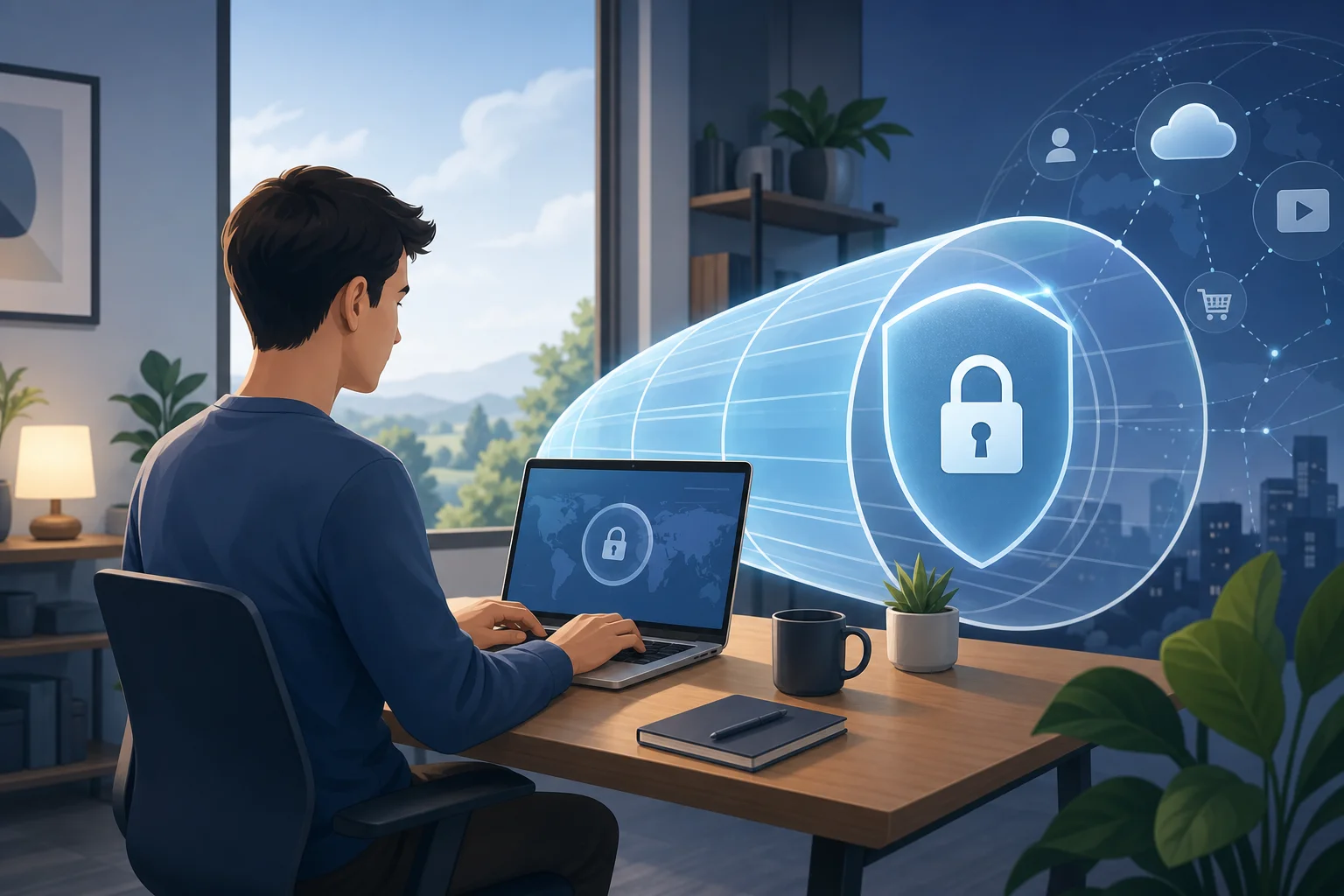
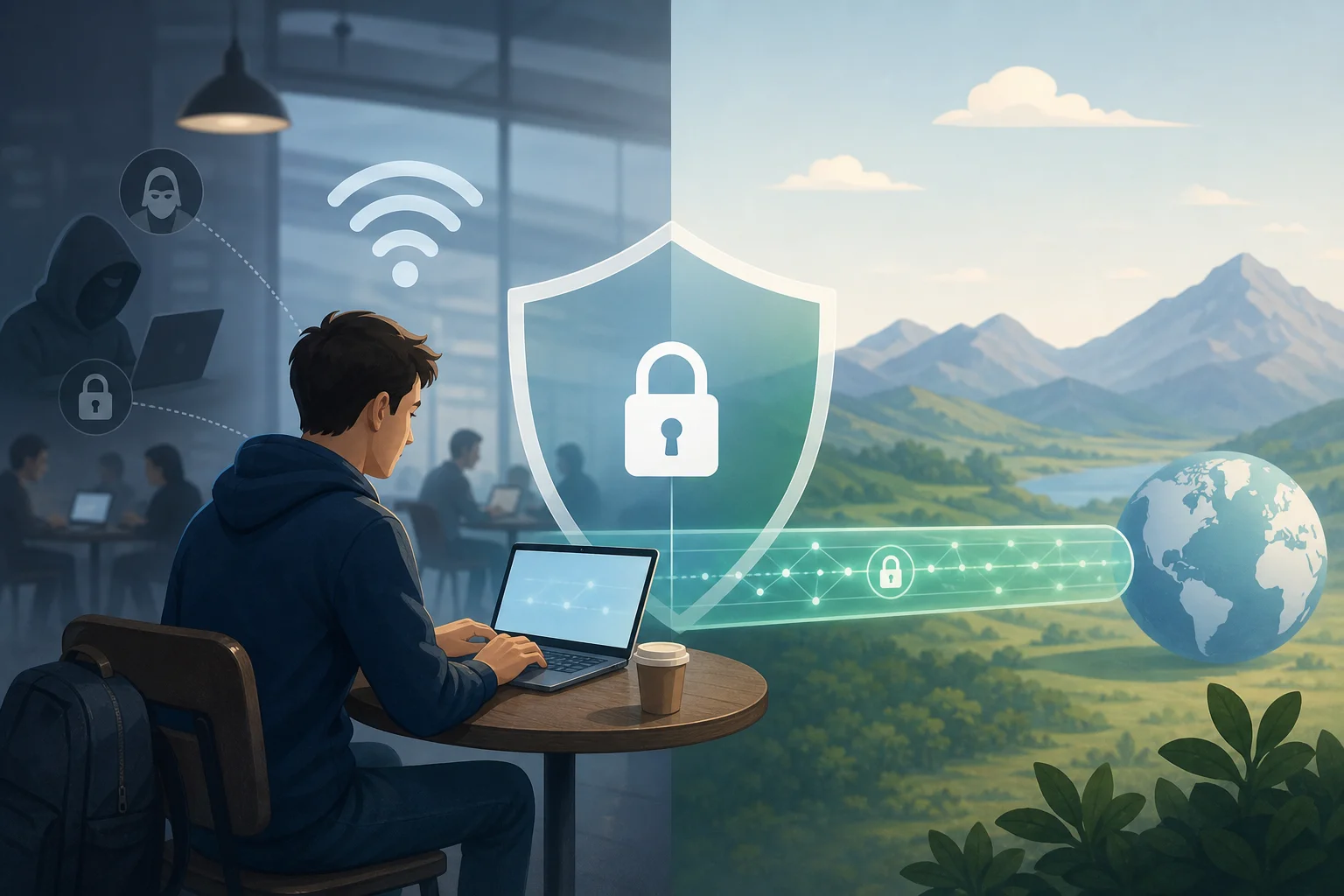
Think of a VPN as a private tunnel through the public internet. Without a VPN, your data may travel across networks in a more exposed way, especially on public Wi-Fi. With a VPN, your data is wrapped in encryption as it moves through this tunnel.

This tunnel does not make you invisible or immune to every online risk. However, it adds an important privacy layer. It can help protect sensitive activity such as checking email, logging in to accounts, or browsing while connected to a café, airport, or hotel network.

How to set up an online VPN in simple steps

You do not need to be technical to start using a VPN. Most beginner-friendly VPNs follow a process like this:

  1. Choose a VPN service that fits your needs, such as privacy, ease of use, and device support.
  2. Open the VPN website or app on your phone, tablet, or computer.
  3. Connect to a VPN server by pressing a connect button or choosing a location.
  4. Browse the internet as usual while the VPN runs in the background.
  5. Disconnect when needed, or keep it on for ongoing privacy protection.

The best setup is the one you will actually use. For beginners, a simple interface matters more than a long list of advanced settings.

2. Why is Online Privacy Important?

Online privacy matters because your internet activity can reveal more than you think. Websites, apps, advertisers, analytics tools, internet service providers, and public Wi-Fi operators may collect or observe different kinds of data.

This can include your approximate location, device type, browser details, search behavior, pages visited, and account activity. Some of this data is used for normal website functions. Some is used for advertising, tracking, fraud prevention, or analytics. The problem is that users often do not know what is being collected, how long it is stored, or who it is shared with.

Risks of unprotected internet surfing

Browsing without protection can create several privacy and security risks:

  • Public Wi-Fi snooping: On unsecured networks, attackers may try to monitor traffic or trick users into connecting to fake hotspots.
  • IP address exposure: Your IP address can reveal your approximate location and internet provider.
  • Tracking across websites: Advertisers and data brokers may use cookies, device fingerprints, and other signals to build profiles.
  • Account takeover risks: If you enter passwords on unsafe networks or fake pages, your accounts may be at risk.
  • Data misuse: Information collected for one purpose may later be shared, sold, breached, or used in ways you did not expect.

Real-life examples of data breaches

Data breaches are not rare edge cases. Large companies, healthcare providers, retailers, and social platforms have all experienced breaches where customer information was exposed. Consequences can include phishing attempts, identity theft, spam, financial fraud, and long-term loss of control over personal information.

For example, when email addresses and passwords are leaked, attackers may test those same login details on other sites. If someone reused a password, one breach can turn into several compromised accounts. When names, addresses, phone numbers, or payment-related data are exposed, victims may face scams that look more convincing because the attacker already knows personal details.

A VPN cannot prevent every data breach. Still, it can reduce certain exposure points, especially when you use public networks or want to limit how much your connection reveals.

3. How Does an Online VPN Protect Your Data?

An online VPN protects your data mainly through two privacy benefits: encryption and IP address masking.

Encryption turns readable data into scrambled information while it travels between your device and the VPN server. This helps prevent people on the same network from easily viewing your activity. It is especially useful on public Wi-Fi, where you may not know who controls the network or who else is connected.

IP masking means websites and online services see the VPN server’s IP address instead of your device’s real IP address. This can make it harder to link your activity directly to your home network or physical location.

Public browsing vs. using a VPN

SituationWithout a VPNWith an online VPN
Public Wi-Fi useNetwork operators or attackers may have more chances to inspect trafficTraffic is encrypted between your device and the VPN server
IP address visibilityWebsites can see your real public IP addressWebsites usually see the VPN server IP address
Location privacyYour approximate location may be easier to inferYour real location is less directly exposed
ISP visibilityYour provider may see domains or connection patterns depending on trafficYour provider sees a VPN connection, not every destination in the same way
Overall privacyBasic browser protections onlyAdded privacy layer for everyday browsing

A VPN is not a replacement for good habits. You should still use strong passwords, enable two-factor authentication, update your devices, avoid suspicious links, and check that websites use HTTPS. However, a VPN works well as part of a broader privacy routine.

vpn data encryption protection

4. What Features Should You Look for in an Online VPN?

Choosing an online VPN for internet privacy can feel confusing at first. Many services use similar language, so focus on practical features that matter for beginners.

No-log policy

A no-log policy means the VPN provider says it does not store records of your browsing activity. This is important because a VPN handles your traffic while you are connected. If privacy is your goal, you want a provider that is clear about what it does and does not collect.

Look for plain privacy explanations. Avoid services that are vague about data collection, advertising practices, or account tracking.

Free, no-registration access

A free, no-registration VPN like BeFreeVPN can be useful for beginners because it reduces friction. You do not have to create an account, share personal details, or go through a complicated setup before trying VPN protection.

This is especially helpful if you want quick privacy on public Wi-Fi or you are new to VPNs and want to understand how they work before making a long-term decision.

Device compatibility

A good VPN should work on the devices you use every day. Before choosing one, check whether it supports:

  • Windows or macOS computers
  • Android or iOS phones
  • Tablets
  • Browser-based use, if available
  • Multiple devices, if you switch between work and personal browsing

The easier it is to connect, the more likely you are to keep using it.

Simple user experience

For beginners, simplicity is a feature. Look for a VPN that offers:

  • A clear connect button
  • Fast setup
  • Easy server selection
  • Minimal technical terms
  • Stable browsing performance
  • Clear privacy information

Advanced settings can be useful later. But when starting out, the goal is simple: connect safely and browse with more privacy.

Frequently Asked Questions About Online VPNs

In many countries, using a VPN is legal. However, laws vary by location, and using a VPN does not make illegal activity legal. Always follow local laws and the terms of the services you use.

Will a VPN make me completely anonymous?

No. A VPN improves privacy, but it does not make you completely anonymous. Websites may still identify you if you log in, accept tracking cookies, or share personal details. A VPN is one layer of protection, not a magic shield.

Do I need a VPN at home?

A VPN can still be useful at home. It can help mask your IP address, reduce some forms of tracking, and add privacy from your internet provider. It is even more important when using public Wi-Fi.

Can beginners use a VPN without technical knowledge?

Yes. Many online VPN services are designed for beginners. In most cases, you simply open the VPN, tap or click connect, and browse as usual.

Final Thoughts

An online VPN is one of the simplest tools beginners can use to improve internet privacy. It helps encrypt your connection, mask your IP address, and reduce exposure on public networks. It will not solve every privacy problem, but it is a smart first step toward safer everyday browsing.

Ready to safeguard your privacy? Try BeFreeVPN today—it's free, requires no registration, and works seamlessly on multiple devices.

The ultimate guide to personal VPNs without registration: everything you need to know

· 17 min read

Why pay for a VPN when you can have a secure and free option like BeFreeVPN, offering protection without the hassle of registration? A personal VPN without registration helps you browse more privately, reduce exposure on public Wi-Fi, and avoid giving yet another company your email address, payment details, or personal profile. In this ultimate guide, you’ll learn what registration-free VPNs are, how they work, when they make sense, how to set one up, and what to check before choosing a free VPN service.

personal vpn without registration on laptop

Introduction: Why Choose a Personal VPN Without Registration?

A personal VPN without registration is a virtual private network service that lets you connect to an encrypted VPN server without creating an account first. Instead of signing up with an email address, setting a password, choosing a subscription, and entering payment information, you can open the app, connect, and start browsing with an added layer of privacy.

That simplicity matters. More of daily life now happens online: banking, shopping, messaging, work, travel planning, streaming, and reading the news. At the same time, users face more tracking, more data collection, and more risks on unsecured networks. A VPN cannot solve every privacy problem, but it can help protect your internet traffic from local snooping and reduce how much your real IP address is exposed to websites and networks.

Registration-free VPNs are especially attractive for people who want quick protection without a long setup process. They can also be useful for people who do not want to attach their browsing protection tool to personal data such as an email account or card number.

In this guide, we’ll cover:

  • What a personal VPN without registration means
  • How BeFreeVPN fits this category
  • Why free VPNs can save money compared with paid plans
  • How VPN encryption supports privacy
  • How to set up and use a no-sign-up VPN
  • What to compare before choosing a provider
  • Key takeaways and common questions

The goal is simple: help you decide whether a free, registration-free VPN is enough for your everyday privacy needs.

Quick Answer: What Is a Personal VPN Without Registration?

A personal VPN without registration is a VPN service designed for individual users that does not require account creation before use. You typically install the VPN app, select a server or connection mode, and connect. The service then routes your internet traffic through an encrypted tunnel between your device and the VPN server.

Core features of a registration-free personal VPN

Most no-registration VPN services focus on three core ideas:

  1. No account requirement — You do not need to submit an email address, username, password, or payment information to start.
  2. Encrypted connection — Your device sends traffic through a secure tunnel, which helps protect it from local network monitoring.
  3. IP address masking — Websites and online services see the VPN server’s IP address rather than your direct network IP address.

Some services also include additional features, such as automatic server selection, cross-device support, a simple connect button, or basic location choices.

Where BeFreeVPN fits

BeFreeVPN is a strong example of a personal VPN without registration because it is designed around quick access, no sign-up friction, and free use. For users who want protection without managing another online account, that model is appealing. You can use it for everyday browsing, public Wi-Fi protection, and basic privacy without committing to a paid subscription.

Benefits compared with traditional paid VPNs

Traditional VPN services often require you to register before you can use them. That process may include an email address, password, billing information, renewal settings, and sometimes identity-linked payment records. In contrast, a no-registration VPN reduces the amount of personal information you hand over.

Here is the practical difference:

FeaturePersonal VPN without registrationTraditional paid VPN
Account requiredUsually noUsually yes
Upfront costOften freeUsually monthly or yearly
Setup timeFastLonger
Personal data sharedMinimalOften email and payment details
Best forEveryday privacy and quick protectionAdvanced features, heavy use, specific locations

For many people, paying for a VPN may be unnecessary if their main needs are secure browsing on public Wi-Fi, simple IP masking, and a no-hassle setup. However, users with advanced needs should still compare features carefully.

The Financial Benefits: Save Money with Free VPNs

The cost of online privacy tools can add up. A paid VPN subscription may look inexpensive at first, but over months and years it becomes another recurring bill. If you already pay for cloud storage, streaming, password management, mobile data, and security software, adding a VPN subscription may not feel worthwhile.

A free VPN like BeFreeVPN changes that calculation. If your main goal is basic privacy protection without registration, free access can provide practical value without forcing you into a subscription.

The real cost of paid VPN services

Paid VPNs commonly use one of these pricing models:

  • Monthly plans, which are flexible but often cost more over time
  • Annual plans, which reduce the monthly average but require upfront payment
  • Multi-year plans, which may offer discounts but lock you into a longer commitment
  • Premium tiers, which may charge extra for more locations, faster speeds, or dedicated IP addresses

There can also be hidden costs in the form of auto-renewals, unused subscriptions, upgrade prompts, and paying for advanced features you do not need. For example, if you only use a VPN at airports, hotels, coffee shops, or while browsing casually, a full paid plan may be more than necessary.

Cost savings with BeFreeVPN

BeFreeVPN’s main financial advantage is straightforward: you can use a personal VPN without registration and without paying for a subscription. That makes it practical for:

  • Students who need privacy on campus Wi-Fi
  • Travelers using hotel or airport networks
  • Remote workers who want basic protection outside the office
  • Families who want simple privacy tools across devices
  • Budget-conscious users who do not want another monthly bill

A free VPN is also easier to test. You do not have to calculate whether you will use it enough to justify the cost. You can simply try it, see whether it fits your browsing habits, and keep using it if it works for you.

Why registration-free options are practical for budget-conscious users

Registration-free VPNs save more than money. They also save time. There is no long signup form, no account verification email, and no checkout page. That matters when you need protection quickly, such as before joining public Wi-Fi in a hotel lobby or airport terminal.

There is also a privacy benefit tied to cost. Paid services usually need payment details, and even privacy-focused providers may still process transactions through third-party payment systems. A VPN with no registration and no payment requirement reduces that data trail.

Still, free does not mean you should ignore quality. A responsible user should check the provider’s privacy policy, app permissions, connection stability, and whether the service is transparent about its limits. The best free VPN for you is the one that offers useful protection without asking for more data than it needs.

How Personal VPNs Without Registration Protect Your Privacy

A VPN protects privacy by creating an encrypted tunnel between your device and a VPN server. When you connect, your internet traffic travels through that tunnel before reaching websites, apps, or online services. This can make it much harder for people on the same local network to inspect what you are doing.

vpn privacy encryption protection

How VPN encryption works in everyday terms

Think of a normal internet connection like sending postcards through a public route. Some information may be visible to networks along the way. A VPN is more like placing those postcards into a sealed envelope before sending them through the first part of the route.

In practical terms, a VPN can help protect you when:

  • You use public Wi-Fi at a café, airport, library, or hotel
  • You connect through a shared office or campus network
  • You want websites to see the VPN server’s IP address instead of your direct IP address
  • You want an extra privacy layer when browsing on mobile data or home Wi-Fi

A VPN does not make you invisible online. Websites can still use cookies, account logins, browser fingerprints, and tracking scripts. However, it does reduce exposure at the network level and helps prevent simple local snooping.

Why no registration can improve privacy

When a VPN requires registration, you usually provide personal information. Even if it is only an email address, that creates an account record. If payment is required, the service or its payment processor may also handle billing data.

A personal VPN without registration avoids much of that. You can start using the service without connecting your VPN activity to a personal account. That is especially helpful for people who prefer data minimization: sharing only what is necessary, when it is necessary.

However, no registration is not the same as guaranteed anonymity. You should still review the VPN’s policies. Look for clear explanations of what data is collected, how long it is retained, and whether usage logs are stored. The advantage is that a no-sign-up VPN begins with less personal information from you.

Examples of risks a VPN can help reduce

A VPN can help reduce several common security risks:

  1. Public Wi-Fi snooping
    On an unsecured network, attackers may try to observe traffic or trick users into unsafe connections. A VPN adds encryption that makes local monitoring much less useful.

  2. IP-based tracking
    Websites often see your IP address when you visit. A VPN replaces your direct IP address with the VPN server’s IP address, reducing easy location-based identification.

  3. Man-in-the-middle attempts on weak networks
    Attackers may attempt to intercept traffic on poorly secured networks. VPN encryption helps protect the connection between your device and the VPN server.

  4. Untrusted network administrators
    On shared networks, administrators may be able to see connection metadata or browsing destinations. A VPN limits what the local network can observe, although it cannot hide everything from every party.

The key point is balance. A VPN is not a replacement for good passwords, two-factor authentication, software updates, and safe browsing habits. It is one important layer in a broader privacy and security routine.

Setting Up and Using a Personal VPN Without Registration

One of the biggest advantages of BeFreeVPN is ease of use. A registration-free VPN should feel simple from the first launch. You should not need technical knowledge, manual configuration files, or a long onboarding process.

Step-by-step guide to setting up BeFreeVPN

Follow these general steps to start using BeFreeVPN:

  1. Download the BeFreeVPN app
    Get the app from the official source for your device. Avoid unofficial downloads, especially from random file-sharing sites.

  2. Install and open the app
    Follow your device’s normal installation process. Once installed, open the app.

  3. Review permissions
    VPN apps usually ask permission to create a VPN connection on your device. This is normal, but you should still read the prompt before accepting.

  4. Choose your connection option
    Depending on the app interface, you may be able to select a location or use an automatic server option.

  5. Tap connect
    Start the VPN connection. Your device may show a VPN icon or status indicator when the tunnel is active.

  6. Browse as usual
    Once connected, open your browser or apps. Your traffic will route through the VPN until you disconnect.

  7. Disconnect when not needed
    If you want maximum speed for low-risk activities, you can disconnect and reconnect later. For public Wi-Fi, staying connected is usually the safer choice.

User interface overview and ease of use

A good personal VPN without registration should have a clean interface. The most important controls are simple:

  • A clear connect and disconnect button
  • Visible connection status
  • Server or location options, if available
  • Basic settings that are easy to understand
  • Minimal prompts and no forced signup screens

BeFreeVPN’s appeal is that it keeps the experience focused. Instead of pushing users through account creation, it lets them connect quickly. That is ideal for people who want privacy protection without studying VPN protocols or managing subscriptions.

Tips for getting the most out of a no-sign-up VPN

To use a free VPN effectively, follow these tips:

  • Connect before joining risky networks. Turn on the VPN before logging into banking, email, or work tools on public Wi-Fi.
  • Keep your apps updated. VPN protection is stronger when your operating system, browser, and apps are current.
  • Use HTTPS websites. A VPN encrypts part of your connection path, while HTTPS protects the connection between your browser and the website.
  • Avoid suspicious downloads. A VPN does not make unsafe files safe.
  • Check your connection status. Make sure the VPN is connected before assuming your IP address is masked.
  • Use strong passwords and two-factor authentication. VPNs protect traffic, not weak accounts.

By combining a VPN with these habits, you get more complete protection without paying for tools you may not need.

Comparing Personal VPN Options: What to Consider

Not every free VPN is equal. Some are easy to use but limited. Others offer more server options but require registration. Some may show ads, limit speeds, or restrict data usage. Before choosing a personal VPN without registration, compare the factors that matter most for your situation.

free vpn comparison across devices

Key factors to evaluate

Use this checklist when comparing free VPN services:

FactorWhy it mattersWhat to look for
Registration requirementLess signup means less personal data sharedNo email, no password, no payment details
Privacy policyExplains what data is collectedClear, readable policy with minimal data collection
CostAffects long-term useFree access without forced subscription
Ease of useHelps non-technical users stay protectedOne-tap connection and simple settings
SpeedImpacts browsing and streaming qualityStable performance for everyday browsing
Device supportDetermines where you can use itApps for the devices you actually own
Server optionsAffects connection flexibilityAutomatic or manual location choices
LimitsFree plans may have restrictionsUnderstand data, speed, or location limits
ReputationReduces risk from unknown providersConsistent user feedback and transparent support

BeFreeVPN compared with other free VPN options

BeFreeVPN stands out for users who care most about free access and no registration. Many free VPNs use a freemium model, where the free version exists mainly to push users toward a paid account. That can still be useful, but it may come with frequent upgrade prompts, strict limits, or mandatory account creation.

Here is a practical comparison:

Option typeStrengthsPossible drawbacksBest fit
BeFreeVPNFree, simple, registration-free accessMay not offer every advanced paid featureEveryday users who want quick privacy
Free tier from paid VPNOften backed by an established paid serviceMay require signup or have tight limitsUsers testing a provider before upgrading
Browser-only VPN extensionEasy to install and useMay protect only browser traffic, not all appsLight browsing on one browser
Built-in browser privacy toolConvenient and simpleUsually limited in scope and configurationCasual browsing, not full-device protection
Paid premium VPNMore advanced features and locationsRequires payment and usually registrationPower users with specific needs

For most everyday users, the best choice is the one they will actually use. A powerful VPN with a complex signup process may sit unused. A simple no-registration VPN can be more practical because it removes barriers.

User reviews and satisfaction metrics to check

Avoid relying on one glowing review or one negative comment. Instead, look for patterns. Useful satisfaction signals include:

  • Whether users say the app is easy to connect
  • Reports of stable or unstable connections
  • Complaints about intrusive ads or upgrade prompts
  • Comments about speed during normal browsing
  • Feedback on customer support or help resources
  • Recent reviews after app updates
  • Clear explanations from the provider about privacy practices

Do not treat app store ratings as the only measure of quality. Ratings can change, and they may not explain why users are satisfied or frustrated. Read recent reviews and compare them with the service’s own documentation.

FAQ: Common questions about personal VPNs without registration

Is a personal VPN without registration safe?

It can be safe if the provider uses reliable encryption, has a clear privacy policy, and does not ask for unnecessary permissions. No registration reduces the personal data you share, but you should still choose a trustworthy service.

Is a free VPN enough for everyday browsing?

For many users, yes. A free VPN can be enough for public Wi-Fi protection, basic IP masking, and casual browsing privacy. Heavy streaming, advanced location needs, or business requirements may call for extra features.

Does no registration mean no tracking?

Not automatically. No registration means you do not create an account, but the provider may still collect limited technical data. Always read the privacy policy to understand what is collected and why.

Can I use BeFreeVPN on public Wi-Fi?

Yes, public Wi-Fi is one of the most practical use cases for BeFreeVPN. Connect before signing into email, banking, work tools, or any service that handles sensitive information.

Do I need a paid VPN if BeFreeVPN works for me?

Not necessarily. If BeFreeVPN meets your needs for speed, privacy, and ease of use, a paid VPN may be unnecessary. Paid services can be useful for advanced features, but they are not required for everyone.

Key Takeaways: What You’ve Learned about Personal VPNs Without Registration

A personal VPN without registration gives users a simple way to improve online privacy without creating another account or paying another subscription. That combination is powerful because it removes two common barriers: cost and complexity.

BeFreeVPN is a practical option for people who want secure, free browsing without signup requirements. It is especially useful for everyday activities such as browsing on public Wi-Fi, masking your direct IP address, and reducing exposure to local network snooping.

The financial advantages are clear. Paid VPNs can be useful, but many users do not need a premium plan for basic protection. If your needs are simple, a free VPN can help you avoid recurring costs while still adding a valuable privacy layer.

The privacy advantages are also important. Because no registration is required, you do not have to provide an email address, password, or payment details just to turn on protection. That supports the principle of data minimization: share less personal information whenever possible.

At the same time, choose carefully. A good registration-free VPN should be transparent, easy to use, and clear about its privacy practices. Check permissions, read recent reviews, and understand any limits before relying on any service.

Ready to experience online freedom and security without spending a dime? Try BeFreeVPN today and enjoy a seamless, registration-free service across your devices.

5 reasons to use an anonymous VPN for phone privacy

· 8 min read

Worried about prying eyes every time you use your phone? Discover how an anonymous VPN can keep your mobile activities private and secure. An anonymous VPN for phone use helps protect your data on public Wi-Fi, hides your IP address, and adds a safer layer between your mobile apps and the wider internet. It is not a magic invisibility cloak, but it is one of the simplest tools for improving everyday mobile privacy.

Phones carry a lot: banking apps, private messages, work emails, photos, location data, and browsing history. Because you use your phone everywhere, it also connects to many networks you do not control. That is where a privacy-focused mobile VPN can make a real difference.

anonymous VPN for phone privacy

1. Protect Your Personal Data

Your phone sends and receives data constantly. Every time you open an app, load a website, check email, or send a message, information travels across a network. An anonymous VPN encrypts the data transmitted from your phone, helping shield it from people who may be watching the same connection.

This matters most on public Wi-Fi. Coffee shops, airports, hotels, libraries, and shopping centres often offer free internet, but those networks can be poorly secured. Without protection, attackers may try to intercept traffic or trick users into connecting to fake hotspots. A VPN creates an encrypted tunnel between your phone and the VPN server, making your activity much harder to read.

A mobile VPN can help protect:

  • Website visits and search activity
  • App traffic that travels over the internet
  • Login sessions on unsecured networks
  • Personal details shared through forms
  • Messages sent through web-based services

Just as importantly, it helps keep your browsing history confidential from the local network operator. Your school, workplace, hotel, or public Wi-Fi provider may still see that you are connected to a VPN, but they cannot easily inspect the contents of your encrypted traffic.

2. Anonymous Browsing Experience

One of the biggest reasons to use an anonymous VPN for phone browsing is IP masking. Your IP address can reveal your approximate location and can be used by websites, ad networks, and analytics tools to build a profile of your activity. A VPN replaces your visible IP address with the IP address of the VPN server.

As a result, advertisers and websites have a harder time linking your browsing activity directly to your home or mobile network. This does not stop every type of tracking, because cookies, browser fingerprinting, and app permissions can still identify you. However, hiding your IP address is a strong first step toward more private browsing.

A VPN can also help bypass geo-restrictions. If a website, streaming service, or online tool limits access based on region, connecting through a VPN server in another location may allow you to view content that is otherwise unavailable. Always check the rules of the service you use, but for travellers and remote workers, this can be very useful.

In short, anonymous mobile browsing gives you more control. It reduces how much personal data websites can collect and makes your phone less exposed when moving between networks.

3. Secure Your Online Transactions

Mobile shopping and banking are convenient, but they also involve sensitive information. Card details, account logins, one-time codes, addresses, and payment confirmations may all pass through your phone. A VPN helps protect these financial transactions from interception, especially when you are not on a trusted network.

When you use mobile banking or payment apps, encryption already plays a major role. Most reputable financial apps use secure HTTPS connections. Even so, a VPN adds another privacy layer. It helps prevent local snooping and reduces the risk of attackers gathering useful connection data on public Wi-Fi.

For everyday users, this means more peace of mind when you:

  • Buy products from mobile websites
  • Use banking apps while travelling
  • Log in to payment services
  • Manage subscriptions or invoices
  • Access work accounts from your phone

Some VPN services also include security features that block known phishing sites, suspicious domains, or malicious traffic. This can help protect mobile users from fake login pages and scams. However, you should still stay alert. A VPN is helpful, but it does not replace strong passwords, two-factor authentication, app updates, or common sense.

4. Avoid Network Restrictions

Mobile networks and Wi-Fi providers sometimes restrict what you can access. A school, office, hotel, or public hotspot may block certain websites or services. In some regions, access to news, messaging apps, social platforms, or entertainment sites may also be limited. A VPN can route your traffic through another server, helping you reach blocked websites and services with more privacy.

It may also help reduce certain forms of throttling. Some internet providers slow down specific types of traffic, such as streaming or downloads. Because a VPN encrypts your traffic, your provider has less visibility into what you are doing. This can make it harder to apply content-based throttling. That said, a VPN cannot fix every speed issue. Poor signal, overloaded servers, or weak Wi-Fi can still affect performance.

Here is a simple comparison:

Mobile activityWithout a VPNWith an anonymous VPN
Public Wi-Fi browsingLocal network may see more activity detailsTraffic is encrypted through a VPN tunnel
Streaming while travellingContent may be region-limitedServer location may improve access
Mobile downloadsProvider may identify some traffic typesTraffic type is harder to inspect
Visiting blocked sitesAccess may be restrictedVPN routing may restore access

For seamless streaming and downloading, choose a VPN with reliable mobile performance, simple server selection, and stable connections.

mobile VPN secure browsing

5. Keep Mobile Privacy Simple

Privacy tools only work if you actually use them. That is why the best anonymous VPN for phone users should be easy to install, quick to connect, and simple enough for daily use. You should not need technical knowledge to protect your mobile connection.

Look for a mobile VPN that offers:

  • One-tap connection
  • No unnecessary account friction
  • Clear privacy settings
  • Reliable performance on Wi-Fi and mobile data
  • Support for Android or iPhone
  • A transparent approach to data handling

Also, remember that VPN privacy depends on trust. Choose a provider that clearly explains what it does and does not collect. Avoid apps with vague policies, aggressive ads, or excessive permissions.

How to Use an Anonymous VPN on Your Phone

Follow these quick steps to get started:

  1. Choose a privacy-focused VPN app. Pick one that is easy to use and suitable for mobile browsing.
  2. Install it from a trusted source. Use the official app store or provider website.
  3. Open the app and connect. Select a server or use the recommended option.
  4. Check that protection is active. Look for the VPN icon on your phone.
  5. Use it on public Wi-Fi. Turn it on before banking, shopping, or signing in.
  6. Keep your phone updated. Updates help close security gaps.

FAQ About Using an Anonymous VPN for Phone Security

In most countries, using a VPN on your phone is legal. However, laws vary by location, so check local rules if you are unsure.

Does a VPN make my phone completely anonymous?

No. A VPN hides your IP address and encrypts traffic, but apps, cookies, account logins, and device settings can still identify you. Use it with good privacy habits.

Will a VPN slow down my phone?

It can, because your traffic is encrypted and routed through a VPN server. A good mobile VPN should keep the speed difference small for normal browsing, messaging, and streaming.

Should I keep my VPN on all the time?

For strong privacy, yes, especially on public Wi-Fi. If battery life or speed becomes an issue, use it whenever you handle sensitive data or connect to unfamiliar networks.

Final Thoughts

Your phone is part wallet, part inbox, part identity hub. Protecting it should be simple. An anonymous VPN helps secure personal data, supports private browsing, protects online transactions, and reduces network restrictions while you move through daily life. Explore how BeFreeVPN offers a free, no-registration way to maintain your phone's privacy and security effortlessly. Try it today!

Unlocking seamless YouTube streaming: a VPN for YouTube case study with BeFreeVPN

· 12 min read

Imagine effortlessly streaming your favorite YouTube videos without buffering or restrictions, thanks to one powerful tool. In this case study, we look at how Alex, a digital nomad, used a VPN for YouTube to reduce location blocks, improve playback stability, and keep access simple while moving between countries. Rather than offering generic advice, this story focuses on a practical streaming setup with BeFreeVPN, a free, no-registration VPN option built for quick access.

For intermediate users, the challenge is rarely “what is a VPN?” It is choosing a tool that works smoothly for video, does not slow every session down, and is easy enough to use every day. Alex needed exactly that.

vpn for youtube streaming setup

1. Meet Alex: The Avid YouTube Enthusiast

Alex works remotely as a video editor and content strategist. His days often start with YouTube tutorials, creator interviews, product reviews, analytics walkthroughs, and client research. After work, he uses the same platform for music sessions, travel channels, gaming videos, and long-form documentaries.

Because Alex is a digital nomad, his connection point changes often. One month he is in Portugal. The next, he may be working from Thailand, Mexico, or Turkey. Each location brings different networks, internet routes, and content availability.

At first, Alex treated YouTube access as something that should “just work.” However, that assumption broke down quickly. Videos that were available in one country were sometimes unavailable in another. Some live streams had regional limits. Certain music videos, sports clips, or licensed content simply would not play.

In addition, performance was inconsistent. Hotel Wi-Fi, coworking networks, and short-term apartment connections could be fast on paper but unstable during peak hours. Alex needed YouTube for both productivity and relaxation, so constant interruptions were more than a minor annoyance.

His goal was clear: find a reliable, simple, free VPN for YouTube that could help him watch more consistently without adding a complicated login process or technical overhead.

2. The Challenge: Accessing YouTube Without Compromises

Alex’s problem had three parts: content access, playback quality, and usability.

First, he frequently encountered location-based restrictions. This was not limited to entertainment. Sometimes, client research required checking ads, channel formats, or regional creator trends. If YouTube content was unavailable from his current country, his work slowed down.

Second, buffering made long sessions difficult. A short loading pause may be tolerable once. But when Alex was reviewing a 40-minute tutorial or comparing multiple product demos, repeated buffering broke his focus. He wanted a VPN for YouTube without buffering, or at least one that would not make buffering worse.

Third, the VPN market felt crowded. Searching for the best VPN for YouTube brought up premium tools, browser extensions, free apps with unclear limits, and services that required accounts before testing. Alex was not against paid tools in principle, but he wanted a no-friction option first. Finding a reliable free solution seemed daunting.

He also cared about other platforms. YouTube was the main priority, but his routine included Spotify during work, Netflix at night, and occasional TikTok and Twitch sessions. A VPN that only helped one site would be less useful than a broader VPN for online streaming.

Streaming needAlex’s issueWhat he looked for
YouTube videos and live streamsRegional restrictions and bufferingA fast VPN for YouTube with simple server access
Spotify musicCatalog differences while travelingA VPN for Spotify that stays stable in the background
Netflix and other video appsAccess changes by locationA practical VPN for Netflix and general streaming
TikTok and TwitchRegional availability and network instabilityA VPN for TikTok and VPN for Twitch without slowdowns
Public or shared Wi-FiInconsistent routes and privacy concernsA no-registration VPN that is quick to enable

The key point: Alex did not want a perfect laboratory benchmark. He wanted a dependable daily workflow.

3. The Solution: Discovering BeFreeVPN

Alex found BeFreeVPN while looking for a free VPN for YouTube that did not force him through a long registration process. The appeal was immediate: no account creation, no payment barrier, and a lightweight path to connect before opening YouTube.

BeFreeVPN matched his main requirements in three ways.

First, it was easy to start. Alex did not need to create a profile just to test whether a video would load. That mattered because his location changed often, and he wanted a tool he could use quickly from different networks.

Second, it helped bypass geo-restrictions. By routing his connection through another VPN location, Alex could check whether content availability changed and access videos that were restricted in his current region. As always, he still needed to respect local laws and platform terms, but the technical barrier was reduced.

Third, playback improved in his real-world use. A VPN can sometimes slow a connection if the server is overloaded or far away. However, in Alex’s case, choosing a suitable route through BeFreeVPN often gave him more consistent playback than relying only on the local network path.

How Alex set up BeFreeVPN for YouTube

Alex followed a simple process that became part of his daily routine:

  1. Check the local connection first. He opened YouTube and tested a normal video to see whether the issue was general Wi-Fi instability or content access.
  2. Enable BeFreeVPN. When he hit a regional block or repeated buffering, he connected through BeFreeVPN.
  3. Choose a practical VPN location. He selected a location close enough for speed but suitable for the content he needed.
  4. Refresh YouTube. He reloaded the page or restarted the app so YouTube could detect the new route.
  5. Test playback quality. He watched the first minute, checked resolution stability, and then continued working or streaming.
  6. Keep the setup minimal. Because BeFreeVPN did not require registration, he could use it quickly without managing another account.

This workflow also helped him answer a common question: how to watch YouTube with VPN without overcomplicating the process. For Alex, the best setup was not the most technical one. It was the one he would actually use.

4. Results: A Seamless YouTube Experience

After adding BeFreeVPN to his streaming routine, Alex noticed a clear improvement in day-to-day usability. Previously restricted videos became accessible more often when he selected an appropriate VPN location. Live streams loaded more reliably. Long tutorials were easier to watch from start to finish.

Most importantly, Alex’s buffering problem became manageable. During his normal viewing sessions, he experienced effectively zero buffering when the local internet connection was healthy and the VPN route was well matched. That distinction matters: no VPN can fix a completely broken Wi-Fi network. But a good VPN can improve routing consistency and help avoid some regional or network-based friction.

vpn for youtube without buffering

The benefits also extended beyond YouTube. Alex tested BeFreeVPN with other services in his routine and found it useful for general streaming access. For example, he used it as a VPN for Spotify when music availability changed while traveling. He also tested it as a VPN for TikTok and VPN for Twitch when content access or network performance felt inconsistent.

For video-on-demand services, Alex treated the VPN as a helpful access tool rather than a magic switch. Platforms such as Netflix, Hulu, Prime Video, Disney Plus, and HBO Max use their own licensing rules and VPN detection systems. Still, BeFreeVPN gave him a practical option when he needed a VPN for Netflix, a VPN for Prime Video, a VPN for Disney Plus, a VPN for Hulu, or a VPN for HBO Max during travel.

In other words, BeFreeVPN became more than a single-purpose YouTube fix. It became Alex’s default VPN for online streaming when he wanted quick access without registration.

What changed in Alex’s streaming workflow

Before BeFreeVPN, Alex often wasted time switching networks, lowering video quality, or searching for mirrored content. Afterward, his process became simpler:

  • If YouTube showed a location restriction, he turned on BeFreeVPN.
  • If playback stalled repeatedly, he tested a different VPN route.
  • If he moved to a new country, he used the VPN before assuming content was unavailable.
  • If another platform had similar access issues, he tried the same method.

This saved time and reduced frustration. It also made Alex more confident that he could work from different regions without losing access to important video resources.

5. Takeaways: The Power of BeFreeVPN for Streamers

Alex’s experience highlights a useful lesson: the best VPN for YouTube is not only about raw speed. It is about the full streaming experience. A good option should be easy to start, stable enough for video, flexible across regions, and practical for daily use.

For Alex, BeFreeVPN delivered that balance. It offered a cost-free way to test different routes, access more content, and keep YouTube running smoothly while traveling. The no-registration model was especially valuable because it removed a common barrier. He could connect, test, and watch.

The case study also shows why streamers often search beyond one platform. Someone looking for a free VPN for Netflix may also need a free VPN for YouTube, a free VPN for Spotify, or a free VPN for online streaming. The same applies to users comparing the best VPN for Netflix, best VPN for TikTok, best VPN for Twitch, best VPN for Disney Plus, best VPN for Prime Video, best VPN for Hulu, or best VPN for HBO Max. Their underlying need is similar: stable, flexible access to the content they care about.

Platform-by-platform streaming considerations

PlatformCommon VPN search intentPractical note
YouTubeHow to watch YouTube with VPNRefresh the app or page after connecting to the VPN.
NetflixHow to watch Netflix with VPNAvailability varies by region and platform rules.
TikTokHow to watch TikTok with VPNChoose a stable route for smooth short-form video playback.
TwitchHow to watch Twitch with VPNLow latency matters for live streams and chat.
SpotifyHow to watch Spotify with VPNA steady background connection is more important than peak speed.
Disney PlusHow to watch Disney Plus with VPNCheck local access rules and subscription availability.
Prime VideoHow to watch Prime Video with VPNStreaming rights can differ by country.
HuluHow to watch Hulu with VPNAvailability may depend on account region and service policies.
HBO MaxHow to watch HBO Max with VPNUse a reliable connection for HD playback.

If your priority is a VPN for online streaming without buffering, remember that server choice, distance, device performance, and local network quality all matter. A VPN can help, but it works best when paired with a stable internet connection.

FAQ: Using a VPN for YouTube and Other Streaming Platforms

What is the best VPN for YouTube?

The best VPN for YouTube is one that combines reliable streaming speed, easy access, and consistent regional flexibility. In Alex’s case, BeFreeVPN worked well because it was free, required no registration, and was simple enough to use every day.

Is there a free VPN for YouTube that does not require registration?

Yes. BeFreeVPN is positioned as a free, no-registration option, which made it a strong fit for Alex’s travel-heavy routine. As with any free VPN, performance can vary by network conditions and server availability.

How do I watch YouTube with a VPN?

Connect to the VPN, choose a suitable location, reopen or refresh YouTube, and then test the video. If playback is slow, try another route or a closer location. This is the same basic process Alex used with BeFreeVPN.

Can I get a VPN for YouTube without buffering?

A VPN can reduce buffering when poor routing, regional throttling, or access restrictions are part of the problem. However, no VPN can guarantee perfect playback on every network. For best results, use a stable connection, pick a nearby VPN location when possible, and avoid overloaded Wi-Fi.

Does the same VPN help with Netflix, TikTok, Twitch, Spotify, and other services?

Often, yes. A strong streaming VPN can help across multiple platforms, including Netflix, TikTok, Twitch, Spotify, Disney Plus, Prime Video, Hulu, HBO Max, and general online streaming. Still, each service has its own rules, regional catalogs, and detection methods.

Conclusion: Stream YouTube With Less Friction

Alex’s story shows how a simple VPN can make a real difference for a frequent YouTube user. By choosing BeFreeVPN, he reduced access issues, improved streaming consistency, and gained a flexible tool for other platforms too. If you want fewer interruptions and easier access while traveling or using shared networks, experience YouTube without limitations with BeFreeVPN, offering free, no-registration access to your favorite content anytime, anywhere.

Best VPN 2026: myths vs facts - choosing the right VPN for your needs

· 11 min read

Is everything you know about choosing the best VPN in 2026 based on outdated myths? Let's set the record straight with facts. This comparison looks at the top VPN 2026 choices for everyday privacy, streaming, work, phones, and computers, with a practical focus on speed, security, compatibility, and cost. Instead of assuming that the most expensive tool is automatically the best, we compare BeFreeVPN, SpeedyVPN, and SecureNetVPN against real-world needs.

VPN buyers often face the same problem: every service claims to be fast, private, and easy. However, the best vpn 2026 for one person may not be the right choice for another. A remote worker, a frequent traveler, and a streaming user all need different strengths. This guide uses a myths vs facts approach so you can make a clear, balanced decision.

best vpn 2026 comparison

Quick Comparison Table: Top VPNs of 2026

The table below gives a fast overview of three notable options in this vpn ranking 2026. It is designed for comparison, not hype. Use it as a starting point, then match the features to your actual use case.

VPN serviceSpeed profileSecurity focusDevice compatibilityPricing modelBest fit
BeFreeVPNGood for everyday browsing, work tools, and mobile useEncryption-focused connection with simple accessPhone and computer support for common daily useFree, no registration requiredUsers who want a reliable vpn service 2026 without subscriptions or account setup
SpeedyVPNBuilt around high-speed performanceStandard privacy tools with performance priorityStrong fit for desktop and streaming devicesPaid plansUsers looking for the fastest vpn 2026 for heavy streaming or large downloads
SecureNetVPNSecurity-first positioningAdvanced security controls and privacy settingsGood computer and work compatibilityPaid plansUsers who prioritize the most secure vpn 2026 for sensitive workflows

A comparison table makes one fact clear: the “best” VPN depends on the trade-off you are willing to make. SpeedyVPN may appeal to users who want the fastest vpn for streaming. SecureNetVPN may fit people who want more advanced controls. BeFreeVPN stands out because it removes two common barriers: payment and registration.

For many users, that matters. A free, no-registration service can be especially useful when you need quick protection on public Wi-Fi, temporary access from a phone, or a simple privacy layer on a computer without creating another online account.

Myth: Highest Price Equals Best Quality

The first myth is one of the most common: if a VPN costs more, it must be better. In reality, VPN pricing reflects many things, including marketing budgets, bundled features, server infrastructure, support levels, and subscription strategy. Price can indicate investment, but it does not automatically prove that a service is the best vpn for phone, the best vpn for computer, or the best vpn for work.

What VPN pricing really includes

Paid VPNs often charge for:

  • Multi-year subscription discounts
  • Larger server networks
  • Extra security features
  • Dedicated support teams
  • Streaming optimization
  • Business or family plans

Those features can be useful. For example, a frequent streamer may value a paid tool that focuses on stable access across regions. A professional handling sensitive data may prefer a provider with advanced security controls. However, many everyday users do not need every premium feature.

BeFreeVPN’s free model versus paid options

BeFreeVPN takes a different approach. Its main advantage is simple: it is free and does not require registration. That changes the cost-benefit equation. Users do not need to commit to a subscription, share payment details, or create an account before trying the service.

This is why BeFreeVPN can be a good vpn 2026 option for people who want practical protection with fewer barriers. It may also be a strong choice for students, travelers, freelancers, and casual users who need a reliable vpn service for phone or computer but do not want another recurring bill.

Paid services still have a place. SpeedyVPN may be attractive if raw speed is your main priority. SecureNetVPN may be worth considering if you need advanced security settings. Still, the myth that “higher price equals better quality” does not hold up. The better question is: what are you paying for, and do you actually need it?

A better way to compare value

Use this simple step-by-step checklist before choosing:

  1. Define your main task. Is it streaming, work, travel, browsing, or public Wi-Fi protection?
  2. Check device support. Confirm whether you need a top vpn for phone, a top vpn for computer, or both.
  3. Compare security basics. Look for encryption, clear policies, and modern VPN protocols.
  4. Test performance. A fast VPN on one network may behave differently on another.
  5. Review total cost. Free, monthly, annual, and renewal prices can change the real value.
  6. Avoid feature overload. Do not pay for tools you will never use.

This process is more reliable than choosing by price alone.

Fact: Security Features Are Crucial

While price can mislead, security should never be an afterthought. A VPN is meant to create a protected connection between your device and the internet. If a service is weak on security, speed and design matter less.

The most secure vpn 2026 should offer strong encryption, stable connection handling, and transparent privacy practices. It should also make secure use easy. Complicated tools may lead users to turn protection off, which defeats the purpose.

Key security features to evaluate

When comparing the most secure vpn for phone, computer, streaming, or work, focus on the essentials:

  • Encryption: Strong encryption helps protect traffic from local network snooping.
  • Protocols: Modern protocols can improve both security and speed.
  • Kill switch or connection protection: This can reduce exposure if a VPN connection drops.
  • No unnecessary account data: Less account information can mean less personal data tied to use.
  • Clear privacy policy: Users should understand what is collected and why.
  • Regular updates: VPN apps and systems need maintenance to stay secure.

How BeFreeVPN balances security and accessibility

BeFreeVPN’s key strength is accessibility. Because it does not require registration, users can start protecting a connection quickly. That is useful on public Wi-Fi, shared networks, and temporary work locations. It also reduces friction for people who might otherwise skip VPN protection because setup feels slow or invasive.

This does not mean every free VPN is safe. In fact, users should be careful with unknown free services. The important distinction is whether the provider offers a clear service model and avoids unnecessary account collection. For users seeking a good vpn for work or everyday browsing, BeFreeVPN’s no-registration model is a practical advantage.

Security comparison across top VPNs

BeFreeVPN is best for users who want easy, low-friction privacy. SpeedyVPN is better suited to users who prioritize performance and are comfortable paying for it. SecureNetVPN is aimed at users who want deeper security controls and may spend more time configuring settings.

So, the security “winner” depends on the user. For everyday needs, BeFreeVPN offers a balanced route. For highly sensitive workflows, SecureNetVPN may be worth reviewing. For bandwidth-heavy activity, SpeedyVPN may appeal. The key fact is simple: security features should be matched to risk, not chosen by brand name alone.

secure vpn for work

Which Should You Choose? Key Use Cases

A useful vpn ranking for phone or computer should be based on scenarios. Below are the most common use cases and the strongest fit for each.

Best VPN for phone

For phones, ease of use matters. Mobile users often connect to public Wi-Fi in cafes, airports, hotels, and offices. They need quick activation, low friction, and stable performance.

Recommended choice: BeFreeVPN for users who want a top vpn for phone without registration or payment. It is especially practical when you need protection fast and do not want to enter account details on a mobile device.

SpeedyVPN may be a fit if you stream heavily on mobile. SecureNetVPN may suit users who manage sensitive work apps from a phone.

Best VPN for computer

For laptops and desktops, users usually care about browser privacy, file transfers, video calls, and work platforms. A good vpn for computer should be stable and simple enough to leave on when needed.

Recommended choice: BeFreeVPN for general browsing, work tools, and everyday privacy. It is a strong option for users who want a reliable vpn service for computer without a subscription.

Choose SpeedyVPN if you need maximum throughput. Consider SecureNetVPN if you want more advanced security configuration.

Best VPN for streaming

Streaming needs speed, connection stability, and compatibility. The fastest vpn for streaming is not always the same as the most secure one. Performance can also vary by device, location, network quality, and streaming platform policies.

Recommended choice: SpeedyVPN for users whose top priority is streaming performance. Its speed-first positioning makes it a natural candidate for this use case.

BeFreeVPN remains a good vpn for streaming if you want a no-cost option for casual viewing. However, users who stream daily may prefer a paid service tuned for performance.

Best VPN for work

Work use requires a careful balance. You want privacy and stability, but you also need simple deployment. For freelancers, remote workers, and small teams, cost matters too.

Recommended choice: BeFreeVPN for users who need a top vpn for work with no registration and no subscription barrier. Its free model is useful for contractors, temporary work setups, and people who need a quick privacy layer while traveling.

SecureNetVPN may be a better fit for high-risk professional environments or roles with strict compliance needs. Still, BeFreeVPN is highly practical for everyday work tasks where ease and cost are major factors.

FAQ: Common VPN questions in 2026

What is the best vpn 2026 for everyday use?

For everyday browsing, public Wi-Fi, and basic privacy, BeFreeVPN is a strong choice because it is free and does not require registration. It offers a practical balance of accessibility, cost, and security.

What is the fastest vpn 2026?

Speed-focused users should compare services on their own network, but SpeedyVPN is the best fit in this comparison for people who prioritize high-speed streaming and downloads.

What is the most secure vpn 2026?

The most secure option depends on your risk level. SecureNetVPN is positioned for advanced security controls, while BeFreeVPN is better for simple, accessible protection without account setup.

Is a free VPN always worse than a paid VPN?

No. A free VPN is not automatically worse, just as a paid VPN is not automatically better. The right choice depends on security, transparency, performance, and whether the service fits your needs.

Verdict: Why BeFreeVPN Stands Out in 2026

After comparing price, security, compatibility, and use cases, BeFreeVPN stands out as the best choice for users who want balance. It is not positioned as the most complex tool or the most expensive service. Instead, it solves a common problem: people need a practical VPN that is easy to start using.

That makes BeFreeVPN a strong option in this top vpn 2026 comparison. Its free, no-registration model is useful for phones, computers, travel, and everyday work. It lowers the barrier to privacy without asking users to commit to a paid plan first.

The final decision should still reflect your priorities. Choose SpeedyVPN if your main goal is the fastest vpn for streaming. Choose SecureNetVPN if you need advanced security controls. Choose BeFreeVPN if you want a reliable vpn service 2026 that offers a smart balance of security, simplicity, and cost.

Explore BeFreeVPN to experience a free, registration-free solution that works seamlessly across devices, perfect for your needs in 2026.

Boost your Android experience with a fast VPN for Android download

· 10 min read

Tired of your Android device slowing down every time you connect to a VPN? You're not alone. Many people search for a vpn for android download because they want privacy, safer public Wi-Fi, and better control over mobile browsing, but they do not want lag, pop-ups, or complicated sign-ups. The good news is that the right Android VPN download can protect your connection while keeping everyday use smooth, especially if you choose a fast VPN for Android with no registration, no ads, and auto-connect.

1. The Problem: VPNs Slowing Down Your Android Experience

A VPN should make your Android experience safer, not more frustrating. Yet many users install a VPN app for Android download and quickly notice common problems: pages take longer to load, videos buffer, games feel delayed, and apps refresh slowly. On mobile data, the slowdown can feel even worse because the connection already changes as you move between towers.

This is why people look for a free VPN for Android download that feels light and simple. They want privacy when browsing, protection on public Wi-Fi, and a more secure path for everyday online activity. However, if the VPN drains speed or fills the screen with ads, it becomes hard to keep it turned on.

The frustration is easy to understand. You may need a secure VPN for Android download to help protect your traffic at airports, cafés, hotels, or shared networks. You may also want an Android VPN for mobile data so your connection stays protected when you switch from Wi-Fi to 4G or 5G. But if that protection makes streaming, messaging, maps, banking, or browsing harder, you may be tempted to disconnect.

That creates the real problem: users need VPN protection, but they also need speed. A good VPN for Android without registration should reduce friction. A good VPN for Android with no ads should avoid distractions. And a good VPN for Android with auto connect should protect you without making you remember to tap a button every time your network changes.

vpn for android speed problem

2. Why It Happens: Understanding VPN Speed Issues on Android

VPN speed issues are not random. They usually come from a few technical factors working together. Once you understand them, it becomes easier to choose the best VPN for Android download for your needs.

Encryption adds a small processing step

A VPN encrypts your internet traffic and sends it through a secure tunnel. This is useful because it helps protect your data from snooping on unsafe networks. However, encryption also adds work for your phone and for the VPN server. On modern Android phones, this process is often fast, but older devices or poorly optimized apps can struggle.

This is one reason why a lightweight VPN app matters. A fast VPN for Android without registration can save time during setup, but it also needs efficient software behind the scenes.

Server distance affects latency

Distance matters. If you are in Europe and your VPN connects to a server on another continent, your data has farther to travel. That can increase latency, which is the delay before a site or app responds. For streaming, the impact may be buffering. For gaming or video calls, it may feel like lag.

When choosing a fast VPN for Android download, look for apps that offer high-speed servers and smart connection options. The closer and less crowded the server, the better your experience usually feels.

Server load can reduce performance

Even a nearby server can slow down if too many users are connected. Server load is one of the biggest reasons some free VPN apps feel inconsistent. If a provider has limited capacity, peak times can mean slower browsing and unstable video playback.

A better Android VPN with auto connect can help by choosing a suitable server when available. This is useful for people who move between Wi-Fi and mobile data throughout the day.

Device compatibility and settings also matter

Android versions, battery saver settings, background data limits, and app permissions can all affect VPN performance. Some phones restrict VPN apps in the background to save power. Others may pause connections when the screen is off. If you want a VPN for Android for mobile data, check that the app works well with your Android version and does not require constant manual reconnects.

3. The Solution: Fast, Secure VPN Download on Android

The solution is not simply “install any VPN.” The better approach is to choose a secure VPN for Android that is easy to start, avoids unnecessary interruptions, and keeps speed in mind. If you want a VPN for Android without registration, the setup should be short. If you want an Android VPN with no ads, the app should not force you through pop-ups before you connect.

Step-by-step: how to download a fast VPN on Android

  1. Choose a trusted VPN source. Start with the official website or a reputable app store page. This helps reduce the risk of modified or unsafe APK files.
  2. Check the setup requirements. If you want a free VPN for Android without registration, confirm that you do not need to create an account before connecting.
  3. Install the VPN app. For most users, the standard app install is the safest path. If you need a VPN APK for Android download, only use the provider’s official APK source.
  4. Open the app and review permissions. Android will ask you to approve the VPN connection. This is normal for VPN apps, but you should still avoid apps that request unrelated permissions.
  5. Enable auto-connect if available. A VPN for Android with auto connect helps protect you when your network changes, such as moving from home Wi-Fi to mobile data.
  6. Test your speed. Open a browser, stream a short video, and try the apps you use daily. If the connection feels slow, switch to a closer or less busy server if the option exists.
  7. Keep the app updated. Updates can improve compatibility, stability, and performance on newer Android versions.

What to look for in the best VPN for Android download

FeatureWhy it matters on Android
No registrationFaster setup and less personal information required
No adsFewer interruptions and a cleaner mobile experience
Auto-connectHelps maintain protection when switching networks
Fast serversReduces buffering, lag, and slow browsing
Mobile data supportKeeps protection active outside Wi-Fi networks
Tablet and TV supportUseful if you also need a VPN for Android tablet download or VPN for Android TV download

Why BeFreeVPN stands out

BeFreeVPN is built for people who want simple VPN protection without unnecessary friction. If you are looking for a free VPN for Android with no ads, it is designed to keep the experience clean. If you prefer an Android VPN without registration, it helps you get started quickly. And if you want a fast VPN for Android for mobile data, auto-connect support can make protection easier when you are on the move.

This combination matters because speed is not only about raw download numbers. It is also about how quickly you can connect, how stable the VPN feels, and whether the app stays out of your way. For many users, the best VPN for Android with auto connect is the one they can leave on without thinking about it.

fast vpn for android download

4. Results/Benefits: Enhanced Android Experience with a VPN

A well-chosen VPN can make your Android device feel safer without making it feel slower. Instead of turning protection on only when you remember, you can keep it active during normal use.

Seamless streaming and browsing

With a fast VPN for Android download, you can reduce the common pain points that make VPNs feel heavy. Pages should open smoothly, videos should start faster, and daily apps should remain responsive. Your final speed still depends on your network, device, server distance, and server load, but a better VPN app helps remove avoidable delays.

Privacy and security without constant trade-offs

A secure VPN for Android helps protect your traffic on public Wi-Fi and shared networks. This is useful for travel, remote work, online shopping, and banking. When the app is simple, you are more likely to keep it enabled. That matters because privacy tools only help when you actually use them.

Consistent protection on the go

Auto-connect is especially useful on Android. Your phone may switch between Wi-Fi, 4G, and 5G many times each day. A VPN for Android with auto connect helps restore protection without extra taps. This is also helpful for tablets, shared family devices, and Android TV setups where you may not want to manage the VPN manually each time.

FAQ: VPN for Android Download Questions

What is the best VPN for Android without registration?

The best option is one that lets you connect quickly, avoids unnecessary account creation, and still offers stable performance. BeFreeVPN is a strong choice for users who want a VPN for Android without registration and a simple setup.

Can I use a free VPN for Android with no ads?

Yes. Some free VPN apps rely on ads, but not all do. If ads bother you or slow down your phone, choose a free VPN for Android with no ads so the app stays clean and easier to use.

Is a VPN APK for Android download safe?

It can be safe if it comes from the VPN provider’s official source. Avoid random APK sites, because modified apps may include malware or tracking. When possible, use the official download page or a trusted app store.

Does an Android VPN work on mobile data?

Yes. An Android VPN for mobile data can protect your connection over 4G or 5G as well as Wi-Fi. For the best experience, choose a fast VPN for Android for mobile data with auto-connect support.

Can I use the same VPN on Android TV or an Android tablet?

Often, yes. Many providers support phones, tablets, and Android TV. If you need a VPN for Android tablet download or VPN for Android TV download, check device compatibility before installing.

Conclusion: Get Speed and Protection Together

You should not have to choose between privacy and performance. By choosing a fast, secure, no-registration VPN with auto-connect, you can protect your Android phone, tablet, or TV while keeping browsing and streaming smooth. Upgrade your Android experience today by downloading BeFreeVPN, ensuring fast and seamless protection with no registration required.

The ultimate guide to VPN for iphone and ipad: download and optimize

· 17 min read

Living in a region where online freedom is restricted can be challenging — learn how to download and optimize a VPN for your iPhone and iPad to bypass censorship seamlessly. This guide explains vpn for iphone download options, privacy-first setup, auto-connect, no-registration choices, mobile data tuning, and protocol selection for advanced iOS users who need reliable access without unnecessary tracking or ads.

vpn for iphone download privacy

1. Understanding VPN for iPhone and iPad

A Virtual Private Network, or VPN, creates an encrypted tunnel between your device and a remote VPN server. On iPhone and iPad, this tunnel protects traffic from local network observers, hostile Wi-Fi operators, some ISP-level monitoring, and many forms of network filtering. For users in restrictive regions, a VPN can also help reach blocked sites, messaging tools, app services, research resources, and independent media.

However, a VPN is not magic anonymity. It changes who can see parts of your traffic. Your ISP may see that you connect to a VPN server. The VPN provider may see connection metadata unless it is designed to minimize logs. Websites can still identify you through account logins, browser fingerprinting, cookies, and device behavior. Therefore, the best setup combines a secure VPN, private DNS where appropriate, hardened browser settings, and careful account hygiene.

Why VPN matters on iOS in restrictive regions

For iPhone and iPad users, a VPN is especially useful because iOS devices often contain sensitive personal data: messages, photos, location history, banking apps, email, and work credentials. In restrictive environments, protecting this traffic can reduce exposure when using public Wi-Fi, hotel networks, campus networks, or mobile carriers that apply filtering.

A secure vpn for ios download should focus on three areas:

  • Confidentiality: strong encryption protects traffic inside the tunnel.
  • Integrity: modern protocols help prevent tampering and downgrade attacks.
  • Availability: reliable routing, obfuscation options, and auto-connect help keep access stable.

iPhone vs. iPad VPN usage

The VPN engine is similar across iPhone and iPad because both run iOS or iPadOS networking frameworks. Yet usage patterns differ.

AreaiPhoneiPad
Network typeFrequently moves between mobile data and Wi-FiOften used on Wi-Fi, sometimes with cellular models
Battery profileSmaller battery, more handoffsLarger battery, longer sessions
Common useMessaging, maps, mobile browsing, hotspotResearch, streaming, productivity, remote work
VPN priorityFast reconnect and mobile data stabilitySplit workflow, keyboard work, long sessions

A vpn for ipad download may prioritize productivity, large-screen browsing, and long Wi-Fi sessions. A vpn app for iphone download should also handle rapid carrier handoffs, captive portals, and background reconnection. If you need a vpn for mac and iphone download, choose a provider with consistent apps and configuration exports across Apple platforms.

2. How to Download and Install a VPN on iPhone and iPad

The safest path for most users is the App Store. Apple reviews apps, applies code-signing controls, and isolates VPN apps through system permissions. Still, users in restrictive regions may need alternatives if the App Store is filtered, a VPN app is removed locally, or they cannot use a personal Apple ID.

Step-by-step: standard iOS VPN download

  1. Open the App Store on iPhone or iPad.
  2. Search for a reputable term such as vpn for ios download, free vpn for iphone download, or the provider name.
  3. Check the developer name, privacy labels, update history, and reviews.
  4. Install the app.
  5. Open the app and choose a no-registration option if available.
  6. When iOS asks to add VPN configurations, review the permission prompt and tap Allow.
  7. Authenticate with Face ID, Touch ID, or passcode.
  8. Connect to a nearby server first, then test blocked services.

This process is best for most users because iOS handles the VPN profile at the system level. Once approved, the VPN can protect Safari, Mail, messaging apps, and most app traffic.

Can you download a VPN for iPhone without Apple ID?

A true vpn for iphone without apple id download is limited on standard iOS. In most regions, App Store installation requires an Apple ID or Apple Account. Be cautious with websites offering random .ipa files. They may contain outdated software, modified code, tracking, or malicious profiles.

Legitimate alternatives may include:

  • Existing purchase history: if the app is already linked to an account, it may be re-downloadable.
  • Family Sharing or managed accounts: useful for organizations, but not anonymous.
  • MDM or enterprise deployment: valid for companies, schools, and NGOs, but the administrator may control profiles.
  • TestFlight: possible for beta access, but it still depends on Apple infrastructure.
  • Regional marketplace options: availability depends on local law and iOS version.
  • Manual configuration: if you have server credentials, you can add IKEv2 or other supported profiles without installing a consumer app.

For most privacy-focused users, manual configuration is the cleanest non-app route. Go to Settings > General > VPN & Device Management > VPN > Add VPN Configuration. Then enter details supplied by a trusted provider. This can be useful for a secure vpn for ios without registration if the provider uses anonymous account numbers or configuration files.

Installing with privacy and no registration in mind

If your goal is vpn for iphone without registration, avoid apps that require email, phone number, social login, or invasive permissions. A VPN app normally does not need your contacts, photos, microphone, camera, or precise location. It may need permission to add VPN configurations. That is expected.

For a free vpn for iphone without registration, read the business model carefully. Free services may impose data caps, limited locations, slower speeds, or fewer protocols. Some show ads. If you need vpn for iphone with no ads, ad-free free plans are less common. Paid providers are often cleaner, but some privacy-first free options exist with limits.

App Store comparison checklist

CriterionWhy it mattersWhat to prefer
RegistrationReduces identity linkageNo email, anonymous account, or optional login
AdsAds can add tracking and instabilityvpn for ios with no ads or paid plan
ProtocolsDetermines security and speedWireGuard, IKEv2, OpenVPN, or audited custom protocols
Auto-connectProtects after network changesvpn for ios with auto connect support
Kill switch behaviorPrevents leaks during dropsSystem-level reconnect and block-on-drop options
DNS handlingPrevents DNS leaksEncrypted DNS or provider DNS inside tunnel
Support for iPad/MacEasier multi-device setupOne account or config for iPhone, iPad, and Mac

3. Key Features: Auto-Connect and No Ads

For users facing filtering, the best VPN is the one that stays connected when the network changes. iPhones move constantly between LTE, 5G, Wi-Fi, captive portals, and weak signal zones. That is why vpn for iphone with auto connect is more than convenience. It is operational resilience.

How auto-connect works

Auto-connect monitors network state and starts the VPN when a trigger occurs. Common triggers include:

  • joining an unknown Wi-Fi network;
  • switching from Wi-Fi to mobile data;
  • device wake from sleep;
  • VPN tunnel failure;
  • app launch;
  • system restart.

On iOS, auto-connect behavior depends on the provider app, VPN protocol, and Apple’s Network Extension framework. Some apps can also use on-demand rules. Advanced users may configure IKEv2 on-demand profiles through Apple Configurator or MDM.

Why no ads matters

A vpn app for iphone with no ads provides more than a cleaner interface. It can also reduce third-party SDK exposure, page load interruptions, and accidental taps. In restrictive regions, ads may load from blocked domains, causing timeouts or suspicious traffic patterns. Therefore, a free vpn for iphone with no ads is preferable to an ad-supported VPN if privacy is the priority.

Benefits include:

  • fewer third-party trackers;
  • less background network noise;
  • smoother connection flow;
  • lower risk of misleading pop-ups;
  • better battery behavior than ad-heavy apps.

vpn for ios with auto connect

Technical setup: enabling auto-connect on iPhone and iPad

The exact interface differs by provider, but the process is usually similar:

  1. Open your VPN app.
  2. Go to Settings, Preferences, or Connection.
  3. Enable Auto-connect, Connect on launch, or Always-on VPN if available.
  4. Choose triggers such as untrusted Wi-Fi, mobile data, or all networks.
  5. Enable leak protection or kill switch if offered.
  6. Select a reliable default protocol. IKEv2 and WireGuard-style protocols usually reconnect quickly.
  7. Test by switching Airplane Mode on and off.
  8. Test again by moving from Wi-Fi to mobile data.

If you need best vpn for iphone with auto connect, confirm that the feature works after device sleep and carrier handoff. Some apps claim auto-connect but reconnect only after you open the app.

4. VPN Protocols and Mechanisms for iOS

Protocol choice affects speed, censorship resistance, battery use, and reliability. Advanced users should understand the trade-offs before choosing a fast vpn for iphone download or a secure vpn for ios download.

IKEv2/IPsec

IKEv2 is deeply supported by Apple platforms. It is known for fast reconnection when a device changes networks. That makes it useful for iPhone users who move between Wi-Fi and cellular.

Strengths:

  • stable on mobile data;
  • good roaming support;
  • native iOS configuration;
  • efficient reconnect after sleep.

Limitations:

  • easier to identify and block than heavily obfuscated protocols;
  • configuration quality depends on provider settings;
  • may struggle on networks that block IPsec traffic.

For vpn for iphone for mobile data, IKEv2 remains a practical choice when censorship is not aggressively blocking VPN signatures.

OpenVPN

OpenVPN is mature and widely reviewed. On iOS, it often runs through provider apps or the official OpenVPN Connect app using .ovpn profiles.

Strengths:

  • flexible port and transport options;
  • can run over TCP 443 to resemble HTTPS-like traffic patterns;
  • broad provider support.

Limitations:

  • may use more battery than newer protocols;
  • reconnection can be slower;
  • requires profile management if not integrated into a provider app.

OpenVPN can be useful when you need a secure vpn for ios for mobile data and want granular configuration.

WireGuard and WireGuard-based protocols

WireGuard is modern, lean, and fast. Many providers use it directly or build privacy layers on top of it to reduce static key concerns.

Strengths:

  • high performance;
  • small codebase;
  • strong modern cryptography;
  • good battery profile.

Limitations:

  • static key design needs careful provider implementation;
  • default traffic patterns can be recognizable;
  • censorship resistance may require obfuscation.

For users searching fast vpn for iphone download, WireGuard-based options are often the first protocol to test. For restrictive regions, pair speed with obfuscation if available.

Apple Network Extension and per-app VPN

iOS VPN apps use Apple’s Network Extension framework. Managed environments can enable per-app VPN, where only selected apps use the tunnel. This is common in enterprise and NGO deployments. It can reduce bandwidth and battery use but may leak traffic from apps not included in the rule set.

For personal censorship bypass, full-device VPN is usually simpler. For high-risk work, managed per-app VPN should be planned carefully and audited.

Configuration tips for optimum performance

  • Choose a nearby server unless you need a specific country.
  • Prefer UDP-based protocols for speed, unless blocked.
  • Use TCP 443 or obfuscation when networks interfere with VPN traffic.
  • Enable provider DNS inside the tunnel.
  • Avoid chaining multiple VPN apps unless you understand route conflicts.
  • Re-test after iOS updates because network behavior can change.

5. Using VPNs on Mobile Data vs. Wi-Fi

A vpn for iphone for mobile data faces different conditions than a VPN on home Wi-Fi. Mobile networks use carrier-grade NAT, dynamic routing, radio handoffs, and changing signal quality. Wi-Fi may be faster, but it can include captive portals, local filtering, or unsafe access points.

Mobile data vs. Wi-Fi comparison

FactorMobile dataWi-Fi
StabilityVaries with signal and tower handoffVaries with router and congestion
FilteringCarrier-level blocking may applyRouter, ISP, workplace, or campus filtering
Captive portalsRareCommon in hotels, airports, and cafes
Battery impactHigher during weak signalUsually lower if signal is strong
Best protocolIKEv2 or WireGuard-styleWireGuard, OpenVPN, or obfuscated modes

A fast vpn for iphone for mobile data should reconnect quickly, avoid heavy background processes, and handle IP address changes. A vpn for ipad for mobile data has similar needs, especially on cellular iPad models used for travel or field work.

Tips for stable VPN on mobile data

  • Use auto-connect for all networks, not only Wi-Fi.
  • Select a nearby server to reduce latency.
  • Disable low-data mode if it breaks tunnel stability.
  • Keep the VPN app updated before entering restricted areas.
  • Test both 5G and LTE if your carrier behaves differently.
  • If the VPN stalls, toggle Airplane Mode before changing servers.
  • Keep at least two protocols configured.

Security differences

On public Wi-Fi, the local network operator can often observe DNS requests, connection timing, and unencrypted traffic. On mobile data, the carrier has broader visibility and may apply filtering at scale. In both cases, a VPN reduces local visibility but shifts trust to the VPN provider. Choose a provider with clear privacy practices and minimal registration.

6. Common Misconceptions About VPN for iOS Devices

VPN myths can lead to poor configuration. Here are the most common issues advanced users should separate from reality.

Does a VPN always slow down an iPhone?

No. A VPN adds encryption and routing overhead, so some loss is possible. But a well-implemented fast vpn for iphone without registration can feel almost transparent on modern devices. In some cases, routing through a VPN may even improve access to congested or throttled paths. The real variables are server load, distance, protocol, carrier quality, and censorship interference.

Legality depends on jurisdiction. VPNs are legal in many countries and are widely used for privacy, business, and security. Some regions restrict VPN use, require licensed providers, or block VPN protocols. If you live in or travel to a restrictive region, understand local rules and personal risk. This guide is technical information, not legal advice.

Does a VPN make you anonymous?

Not by itself. A VPN hides your IP address from websites and reduces exposure to local networks. It does not erase account logins, browser fingerprints, payment trails, location permissions, or cloud sync records. For higher privacy, combine a secure vpn for ios without registration with privacy-preserving browsers, separate identities, and strict app permissions.

Does a VPN drain battery heavily?

It can, but it should not be extreme. Battery impact depends on protocol, signal quality, reconnect loops, ads, and background analytics. A vpn for iphone with no ads may reduce unnecessary network calls. WireGuard-style protocols and IKEv2 are often efficient. Weak mobile signal usually drains more battery than encryption itself.

Does a VPN use too much mobile data?

VPNs add overhead, but the increase is usually modest compared with video, cloud backups, or app updates. The bigger risk is leaving bandwidth-heavy apps active while connected. For free vpn for iphone for mobile data, watch data caps and disable automatic downloads over cellular.

7. Choosing the Best VPN for Restricted Regions

The best vpn for iphone download in a restricted region is not always the one with the largest server list. It is the one that you can install safely, connect reliably, and use without exposing unnecessary identity data.

Selection criteria

Use this checklist before committing:

  1. Accessible download: App Store availability, manual profiles, or trusted deployment options.
  2. No registration option: useful for users who need vpn for ios without registration.
  3. No ads: prefer best vpn for iphone with no ads to reduce tracking and distractions.
  4. Auto-connect: essential for mobile users and unstable networks.
  5. Protocol diversity: WireGuard-style, IKEv2, OpenVPN, and obfuscation when possible.
  6. Transparent privacy policy: clear logging limits and jurisdiction details.
  7. DNS leak protection: DNS should route inside the tunnel.
  8. iPad and Mac support: helpful for vpn for mac and iphone download workflows.
  9. Mobile data performance: confirm secure vpn for ios for mobile data behavior before relying on it.
  10. Support channels: documentation should be reachable even when the main site is blocked.

The right answer depends on your threat model, payment access, and local blocking. Consider testing several before travel or before entering a high-filtering network.

OptionBest fitNotes
BeFreeVPNHassle-free iPhone and iPad browsingDesigned for quick access, no-registration use, and ad-free experience
MullvadAnonymous paid accountsUses account numbers instead of email; strong privacy reputation
IVPNAdvanced privacy controlsPaid, privacy-focused, supports modern protocols
Proton VPNGenerous free tierRequires account; useful where available
WindscribeFlexible locations and free limitsAccount model and limits vary by plan
Cloudflare WARPSimple encrypted transportNot a traditional location-changing VPN; may not bypass all censorship

For free vpn for iphone with auto connect, confirm whether auto-connect is available on the free tier. Some providers reserve it for paid plans. For fast vpn for iphone with no ads, a paid or privacy-funded service is often more sustainable than an ad-supported free app.

best vpn for iphone restricted regions

FAQ: common VPN for iPhone and iPad download questions

What is the safest vpn for iphone download method?

The safest method is usually the App Store, followed by manual configuration from a trusted provider. Avoid unknown .ipa files, random configuration profiles, and apps that request unrelated permissions.

Can I use a vpn for iphone without registration?

Yes, some providers offer no-registration access or anonymous account numbers. Check whether the app requires email, phone verification, or social login before installing.

Is there a vpn for ios with no ads?

Yes. Many paid VPNs have no ads, and some free or freemium services avoid ads by limiting data, locations, or speed. For privacy, no ads is usually better than ad-supported access.

What is the best vpn for ipad with auto connect?

The best choice is one that supports iPadOS auto-connect, reconnects after sleep, and lets you define trusted and untrusted networks. Test it on both Wi-Fi and cellular if you use a cellular iPad.

Can I use a vpn for mac and iphone without registration?

Yes, if the provider supports anonymous accounts or device configuration without personal details. Make sure the same protocol and server locations are available on both macOS and iOS.

Do I need a different VPN for mobile data?

Not always. But you should choose a VPN that handles network changes well. For mobile data, IKEv2 and WireGuard-style protocols are usually strong starting points.

Conclusion

A well-chosen VPN can make iPhone and iPad use safer, more private, and more reliable in restrictive regions. Start with a trusted download path, prefer no-registration and no-ad options, enable auto-connect, and test multiple protocols on both Wi-Fi and mobile data. Above all, match the VPN to your real threat model rather than relying on marketing claims.

Try BeFreeVPN for a hassle-free, ad-free browsing experience on your iPhone and iPad without the need for registration. Enjoy unrestricted internet access instantly.

Unlocking the world: how Alex streamed with an online VPN for computer

· 11 min read

Meet Alex, a remote worker who craved access to global streaming services but faced constant geo-restrictions on his computer. This case study follows how he used an online VPN for computer streaming to reduce location-based barriers, protect his privacy, and make his viewing routine simpler. Instead of a generic feature list, we will look at Alex’s real-world problem, the steps he took with BeFreeVPN, and the practical results he noticed when watching international shows and movies from his laptop.

For Alex, streaming was not just a way to relax. It was also part of how he stayed connected to different cultures, languages, and colleagues around the world. Yet each time he opened a platform and saw “not available in your region,” the experience became frustrating.

1. Meet Alex: The Remote Worker

Alex works for an international company with teammates across Europe, North America, and Asia. His workday often includes calls with people in different time zones, reading regional news, and following cultural references that come up in meetings. Because of that, he likes to watch shows, documentaries, and movies from different countries.

His main device is his computer. It is where he works, researches, streams, and plans travel. While he sometimes uses a phone or tablet, his laptop gives him the best screen size, keyboard control, and browser access. So when Alex searches for a series recommended by a colleague in another country, he usually does it from his computer first.

However, he kept running into the same issue. Popular streaming platforms, including services such as Netflix and Hulu, display different libraries depending on the viewer’s location. A show available to one teammate was missing from Alex’s account. Another movie appeared in search results, but the play button was blocked because it was not licensed for his region.

At first, Alex assumed this was a minor inconvenience. Over time, it became a pattern. He would hear about a new release, open his streaming account, and find that the title was unavailable. He wanted a practical way to browse more freely while still keeping his computer secure.

online vpn for computer streaming setup

2. The Challenge: Streaming Restrictions

The challenge was not that Alex lacked subscriptions or interest. The challenge was regional access. Streaming providers often license content country by country. As a result, a film, comedy special, anime season, or documentary can be visible in one location but hidden in another.

Alex discovered this in several ways:

  • A colleague recommended a thriller that appeared only in another country’s catalog.
  • A documentary he needed for a weekend watchlist was blocked from his home location.
  • A show he had started during a trip disappeared when he returned home.
  • Search results on fan sites did not match what he saw inside his streaming apps.

These restrictions disrupted his viewing. Instead of sitting down to watch, he had to search for availability, compare regions, or wait for a local release date. Sometimes he gave up entirely.

Alex also wanted the experience to be smooth. He did not want constant buffering, repeated logins, or complicated settings. Since he used his computer for both work and entertainment, he needed a tool that was simple enough for everyday use but reliable enough to stay connected during a full episode or movie.

Privacy mattered too. As a remote worker, Alex spends many hours online. He uses home Wi-Fi, hotel networks, coworking spaces, and airport lounges. A VPN for computer use could help add a layer of privacy by routing traffic through an encrypted connection, especially on networks he does not fully control.

Still, Alex had concerns. Would a VPN slow down his connection? Would setup take too long? Would he have to create another account, share payment details, or manage a complicated dashboard? These were the questions he needed answered before trying anything new.

3. The Solution: Discovering BeFreeVPN

Alex learned about BeFreeVPN while looking for a free, no-registration online VPN for computer use. The promise was simple: install it, choose a virtual location, and connect without a lengthy sign-up process.

That mattered to him. He did not want to spend an afternoon comparing technical settings. He wanted to test whether a VPN could help him stream more comfortably from his laptop, with less friction and more control over his virtual location.

BeFreeVPN stood out for three reasons:

Alex’s needWhy it matteredHow BeFreeVPN helped
Simple computer setupHe wanted to start quickly without advanced networking knowledge.BeFreeVPN was easy to install and use within minutes.
No registrationHe did not want to create another account just to test a VPN.BeFreeVPN allowed access without registration.
Virtual location choiceHe needed a way to view content availability from other regions.He could choose a desired VPN location before streaming.
Privacy while browsingHe often used shared or public networks.A VPN connection helped add privacy to his online activity.

How Alex set up BeFreeVPN on his computer

To keep the process simple, Alex followed a short step-by-step routine:

  1. He downloaded BeFreeVPN on his computer.
    He chose the version suitable for his device and installed it like a normal app or browser-based VPN tool, depending on his setup.

  2. He opened BeFreeVPN without creating an account.
    Because there was no registration step, he did not need to confirm an email address or enter payment information before trying it.

  3. He selected a virtual location.
    Alex picked a location connected to the streaming catalog he wanted to access. This helped him browse as if he were connecting from that region.

  4. He connected before opening his streaming platform.
    To avoid session conflicts, he started the VPN first, then refreshed or reopened his streaming service.

  5. He tested streaming quality.
    He played a short episode first, checked the loading time, and watched for buffering before starting a full movie.

  6. He kept privacy and platform rules in mind.
    Alex understood that streaming services may have their own terms for regional access. He used the VPN responsibly and checked service rules where needed.

This workflow gave Alex what he wanted most: a low-effort way to test international streaming access from his computer. He did not need to become a network expert. He only needed to connect, choose a location, and start watching.

4. Results: A World of Content Unlocked

After using BeFreeVPN, Alex noticed a clear change in his routine. The shows and movies he had struggled to access were easier to find when he selected the right virtual location. Instead of hitting a regional block and abandoning the search, he could explore different catalogs more efficiently.

The biggest improvement was convenience. Alex no longer treated geo-restrictions as an automatic dead end. When a colleague recommended a series, he could check whether changing his virtual location made it available. When a title disappeared after travel, he had a way to continue his search from his computer.

Streaming performance also mattered. A VPN can sometimes affect speed because traffic is routed through an extra server. In Alex’s case, he found the sessions smooth enough for regular viewing. He tested shorter videos first, then moved to full-length episodes. During his typical sessions, he did not experience the constant buffering he had worried about.

There was another benefit: peace of mind. Alex knew a VPN was not a magic shield against every online risk, but it helped protect his connection on networks outside his home. When he worked from a coworking space and later streamed during a break, using BeFreeVPN gave him more confidence than connecting directly through shared Wi-Fi.

vpn for computer unlocking global content

Before and after using an online VPN for computer streaming

AreaBefore BeFreeVPNAfter BeFreeVPN
Content discoveryMany recommended titles appeared unavailable.Alex could test access through different virtual locations.
Setup effortHe expected a complex technical process.Setup was quick and simple.
Account frictionHe wanted to avoid extra sign-ups.No registration made testing easier.
Streaming confidenceHe worried about interruptions and blocked catalogs.He had a repeatable process for smoother viewing.
PrivacyPublic Wi-Fi felt exposed.VPN use added a privacy layer to browsing and streaming.

The result was not only more content. It was a better process. Alex gained a practical tool he could use whenever streaming access became limited by location.

5. Takeaways: Embracing Freedom with BeFreeVPN

Alex’s experience shows why an online VPN for computer use can be valuable for people who stream across borders, travel often, or work with international teams. The main benefit is control. Instead of relying only on the default region assigned by his internet connection, Alex could choose a virtual location and explore content more flexibly.

Several lessons stand out:

  • A simple VPN is easier to use consistently. If setup takes too long, most people stop using the tool. BeFreeVPN’s no-registration approach helped Alex start fast.
  • Computer streaming benefits from stable setup. A laptop or desktop often provides better screen size and browser control than a phone, making it a natural place to use a VPN.
  • Virtual location choice is useful for global content. It helps users check regional availability without switching devices or networks.
  • Privacy still matters during entertainment. Streaming may feel casual, but online activity can still reveal location and connection details.
  • Responsible use is important. VPN users should understand local laws and the terms of the platforms they use.

For Alex, BeFreeVPN became part of a broader digital routine. He used it when traveling, when browsing on shared networks, and when exploring international streaming catalogs. Most importantly, he felt less limited by location-based restrictions.

FAQ: Online VPN for Computer Streaming

What is an online VPN for computer use?

An online VPN for computer use is a tool that routes your internet connection through a secure VPN server. This can help mask your visible IP address, add privacy, and let you choose a virtual location for browsing or streaming.

Can a VPN help with geo-restricted streaming content?

Yes, a VPN can help you access content based on a selected virtual location. However, streaming availability depends on platform licensing and terms of service, so it is wise to use a VPN responsibly.

Is BeFreeVPN free to use on a computer?

BeFreeVPN is presented as a free VPN option with no registration required, making it convenient for users who want to try VPN access without creating an account first.

Will a VPN always improve streaming speed?

Not always. A VPN may improve privacy and location flexibility, but speed depends on your internet connection, the VPN server, distance, network congestion, and the streaming platform. Choosing a nearby or stable server can help.

Why did Alex choose BeFreeVPN instead of a complicated VPN service?

Alex wanted quick access, simple setup, and no account creation. BeFreeVPN matched those needs, so he could test international streaming on his computer without a long onboarding process.

Conclusion: A More Open Streaming Routine

Alex’s story is a practical example of how the right VPN can change everyday streaming. He began with a common problem: regional restrictions blocking shows and movies on his computer. By trying BeFreeVPN, he found a simple way to choose a virtual location, explore more global content, and add privacy to his online sessions.

If you're like Alex and want to unlock a world of streaming possibilities, try BeFreeVPN today — it's free, requires no registration, and works seamlessly on your computer!